

Plum color is a deep purple with a red-wine undertone, similar to the skin of a ripe plum fruit. A widely used reference point is hex #8E4585, which sits between violet and burgundy and reads both elegant and cozy.
People often perceive it as creative and refined, with a slightly dramatic edge. Below, you'll find plum's key color codes, best pairings, popular variations, and practical ways to use it across digital, print, and interiors.
Plum Color: Codes & Values
If you want plum color to look consistent across screens and print, start with its core color values and work outward from there.
| Parameters | VALUE |
| HEX Code | #8E4585 |
| RGB DECIMAL | 142, 69, 133 |
| RGB PERCENTAGE | 55.7%, 27.1%, 52.2% |
| CMYK | 0%,51%,6%,44% |
| HSL | 307°, 35%, 41% |
| HSV (HSB) | 307°, 51%, 56% |
| Web Safe | #993399 |
Key Color Space Explanations:
- HEX - HEX is the most common way to specify plum in web design. Use #8E4585 in CSS to reproduce a consistent deep purple with a wine undertone.
- RGB - RGB defines the red, green, and blue light used on screens. Plum uses more red and blue than green, which is why it feels rich and purple-forward.
- CMYK - CMYK is used for print and describes ink percentages. Plum typically relies on a strong magenta component plus black to keep it deep without turning muddy.
- HSL - HSL describes hue, saturation, and lightness in a way that is intuitive for tweaking. It helps you quickly create lighter tints or darker shades while keeping the same plum hue.
- Web Safe - Web safe values approximate colors on older displays using a limited palette. The closest web-safe match to plum is #993399.
Use HEX/RGB for digital work (web, UI, video), and switch to CMYK when you're preparing plum-heavy assets for print so the color stays deep and clean.
Plum Color Conversions
Need plum in a different format for a design tool, printer profile, or CSS workflow? Here are the most common conversions in one place.
| Parameters | VALUE | CSS |
| HEX | #8e4585 | #8e4585 |
| RGB DECIMAL | 142, 69, 133 | rgb(142,69,133) |
| RGB PERCENTAGE | 55.7%, 27.1%, 52.2% | rgb(55.7%,27.1%,52.2%) |
| CMYK | 0%,51%,6%,44% | cmyk(0%,51%,6%,44%) |
| HSL | 307°, 35%, 41% | hsl(307°, 35%, 41%) |
| HSV | 307°, 51%, 56% | -- |
| Web Safe | 993399 | #993399 |
| CIE-LAB | 39.2, 43.1, -22.4 | -- |
| XYZ | 19.3, 12.4, 22.8 | -- |
| xyY | 0.350, 0.225, 12.4 | -- |
| CIE-LCH | 39.2, 48.5, 332.6° | -- |
| CIE-LUV | 39.2, 22.3, -39.6 | -- |
| Hunter-Lab | 35.2, 33.6, -15.8 | -- |
| Binary | 10001110 01000101 10000101 | -- |
Want to generate Plum Color photos or posters? Try Media.io's AI Image Generator now!
Plum Color Meaning & Symbolism
Plum is often linked with sophistication, creativity, and quiet confidence. Because it blends purple depth with a red undertone, it can feel both luxurious and approachable in everyday visuals. In spaces and interfaces, it commonly signals premium quality without relying on bright, attention-grabbing tones.
Psychological Effects
Plum tends to feel thoughtful and expressive, especially when paired with soft neutrals.
- Depth - Adds visual weight and makes simple layouts feel more intentional and curated.
- Calm Confidence - Reads refined in moderation, helping designs feel trustworthy and polished.
- Creativity - Suggests artistry and originality without the loudness of brighter purples.
- Warmth - The red-wine undertone keeps it cozy, especially next to creamy off-whites.
- Moodiness (If Overused) - Too much plum in low light or with dark grays can feel heavy and dramatic.
Positive Associations
When you want a premium look that still feels welcoming, plum delivers that balance.
- Sophistication - A mature, elevated tone that feels more grounded than bright violet.
- Luxury - Signals quality and craft without needing shiny, high-saturation accents.
- Elegance - Creates an editorial, curated vibe in branding and layouts.
- Expressiveness - Conveys personality and a slightly unconventional edge.
- Comfort - Pairs naturally with warm neutrals, making it easy to soften modern designs.
Cultural Significance Across the World
Purple-leaning shades often carry a sense of ceremony, artistry, and status—plum included.
- Historic Status - Purple dyes were once costly, so deeper purples became linked with prestige and importance.
- Art & Ceremony - Plum's jewel tone feels fitting for formal events, creative work, and special moments.
- Modern Versatility - Today, plum is used as a more wearable, modern alternative to brighter purple shades.
- Cross-Industry Symbol - It adapts well across cultures because it can read premium, calm, or expressive depending on context.
Design Applications
Plum works best when you treat it like a strong base tone: it anchors a palette, adds depth, and makes supporting elements feel more premium without shouting for attention.
Graphic Design Tips
- Use plum for headlines, section dividers, or hero accents to create an editorial hierarchy fast.
- Balance plum-heavy layouts with warm off-whites so the design stays airy and readable.
- Keep body text on light backgrounds; long paragraphs directly on plum need careful contrast checks.
- Try smooth gradients by blending plum with nearby violets, or warming it slightly with a rose-leaning tint.
- For print, watch ink density—plum often needs strong magenta plus black to stay rich (not muddy).
Pro tip: treat plum like a "premium neutral"—use it as your anchor color, then let whitespace and one supporting accent do the rest so it stays modern, not heavy.
Plum Color in Photography & Video
- Plum looks especially rich in low-key scenes, velvet textures, and moody lifestyle setups.
- In color grading, nudging shadows toward plum can add depth without the harshness of pure black.
- Under cool lighting plum can lean more violet; under warm lighting it brings out a wine undertone—plan your white balance accordingly.
- Use plum as a wardrobe or prop color to create a focal point against ivory, beige, or soft wood tones.
- For product shots, pair plum backgrounds with light typography or bright highlights to keep edges crisp.
Recommended Tool for Image Enhancement: When incorporating plum color into your photography projects, Media.io's AI Image tools can help you achieve more refined results. With AI-powered color enhancement, photo colorization, image upscaling, and old photo restoration, you can easily enrich plum color tones, improve overall image quality, and highlight the color's elegant and sophisticated aesthetic.
Color Combinations
Plum pairs beautifully with soft neutrals, muted greens, and warm metallics. If you want a bolder look, use it with clear teal or golden tones, then keep the rest of the palette simple.
Complementary Colors
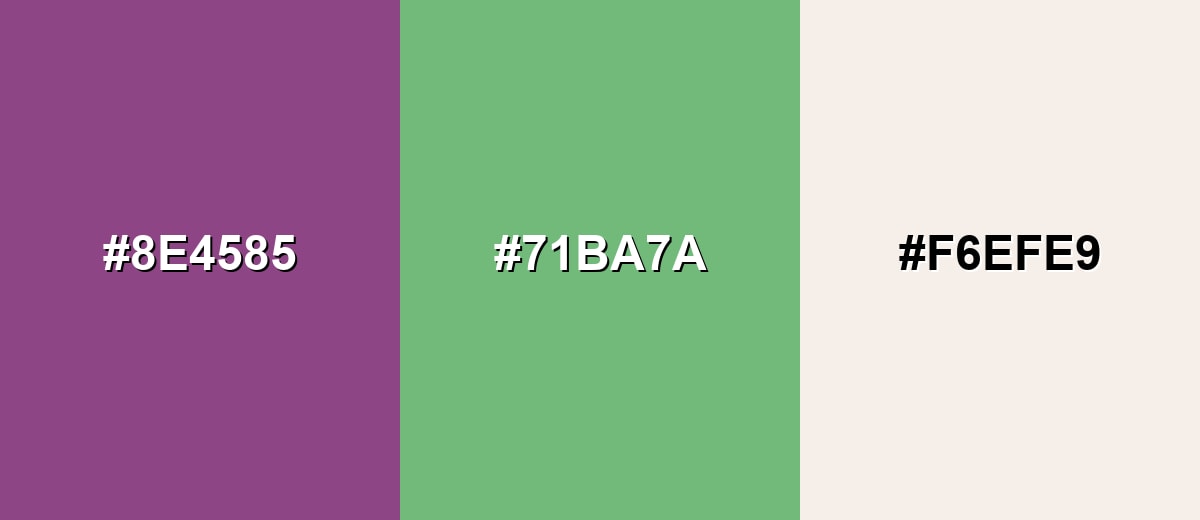
A complementary scheme places plum opposite a green-leaning tone, creating a lively contrast that still feels natural. It works well for callouts and modern brand palettes when softened with a light neutral.
Complementary Palette Example: Try plum with soft sage and warm ivory for a balanced, elegant contrast.
Analogous Color Schemes
Analogous colors sit adjacent to each other on the color wheel, creating harmonious, cohesive palettes with subtle variation.
Mulberry, plum, and indigo violet create a smooth, jewel-toned flow.
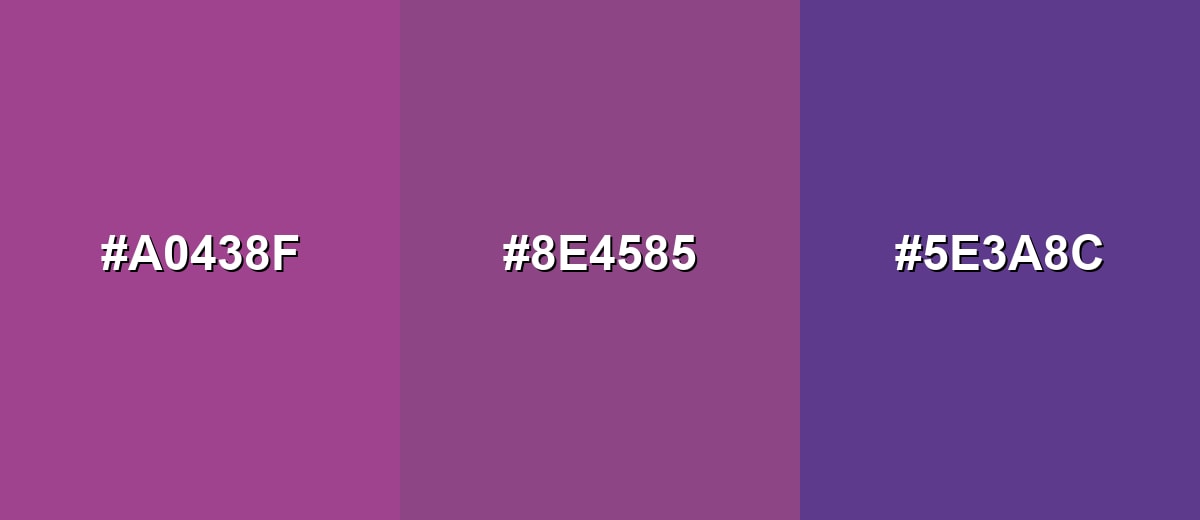
- Mulberry: #A0438F
- Plum: #8E4585
- Indigo Violet: #5E3A8C
Wine red, plum, and eggplant lean warm and dramatic without feeling neon.
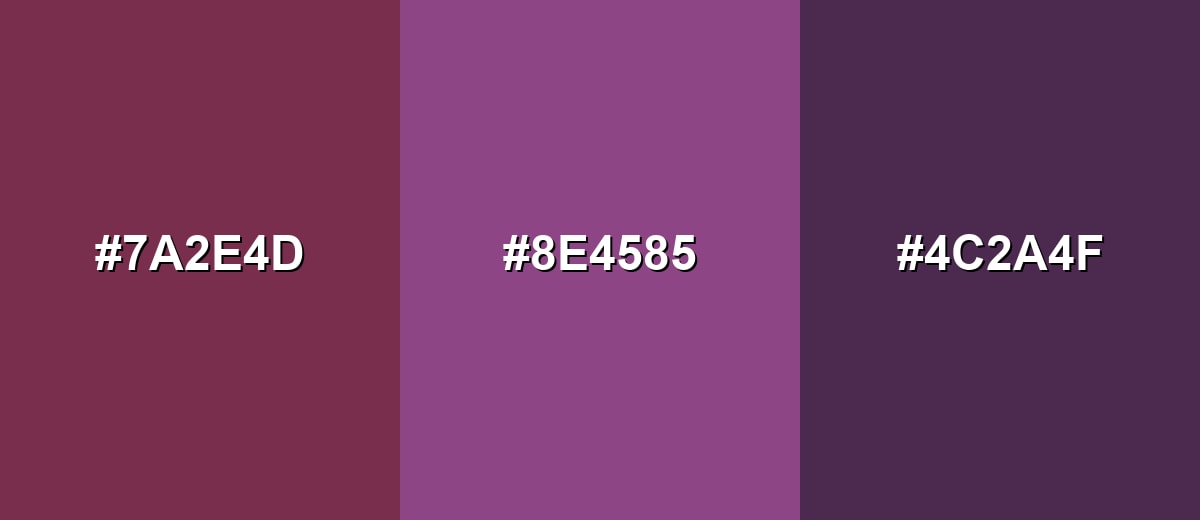
- Wine Red: #7A2E4D
- Plum: #8E4585
- Eggplant: #4C2A4F
Triadic & Tetradic Combinations
A triadic palette adds two evenly spaced accents, giving plum more energy and variety.
Plum, honey gold, and teal blue feel bold but still balanced for digital layouts.
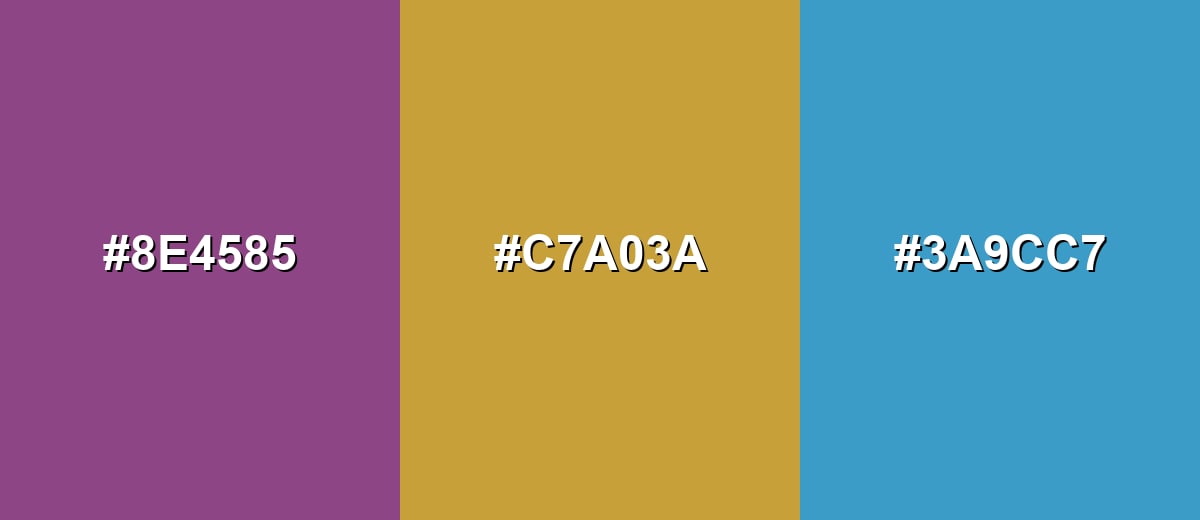
- Plum: #8E4585
- Honey Gold: #C7A03A
- Teal Blue: #3A9CC7
Colors to Avoid
While plum color is remarkably versatile, certain combinations can create problematic visual effects:
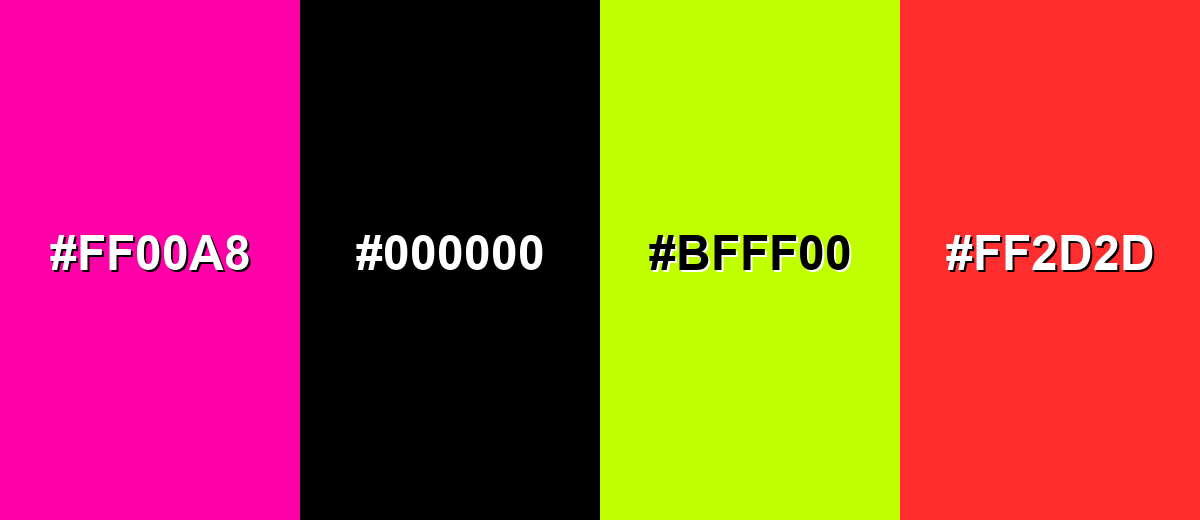
- Electric Magenta (#FF00A8) - It competes with plum's red-violet undertone and can look overly loud, especially in UI.
- Pure Black (#000000) - Together they can feel too heavy and reduce detail in shadows, particularly in dark-mode layouts.
- Neon Lime (#BFFF00) - The high intensity creates visual vibration and makes plum look dull by comparison.
- Bright Red (#FF2D2D) - Both are strong and warm-leaning, which can produce a harsh clash without careful spacing and neutrals.
Shades, Tints & Variations of Plum Color
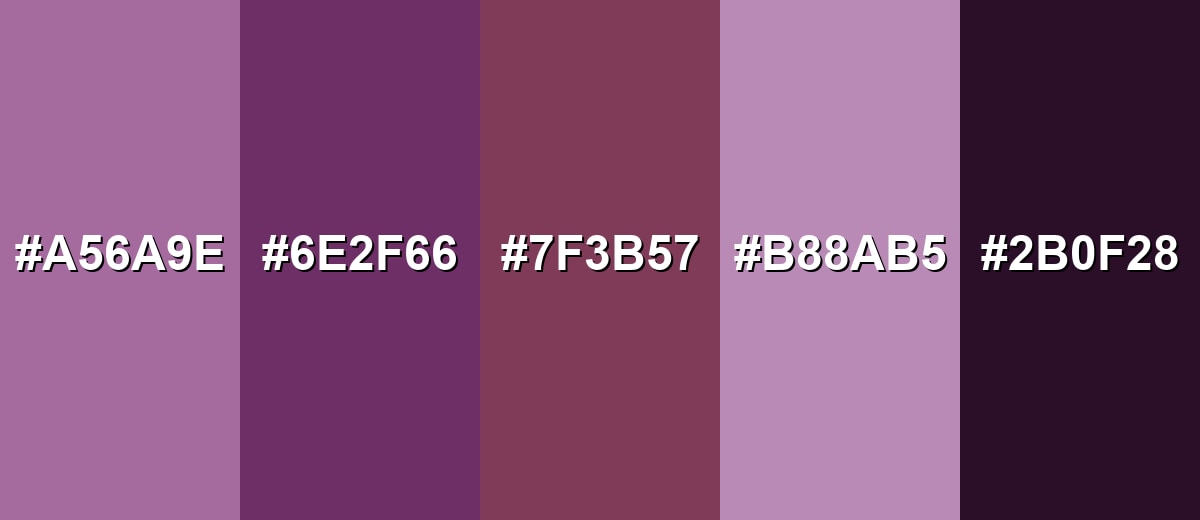
Plum isn't a single look—it spans from soft, dusty mauves to near-black purples with a subtle wine cast. Knowing the range helps you build a flexible palette for backgrounds, typography, accents, and moodier dark-mode surfaces.
- Dusty Plum (#A56A9E) - A softened, slightly muted plum that feels more casual and airy than the base shade. It's best used for Background panels, cards, and large surfaces where you want warmth without heaviness.
- Deep Plum (#6E2F66) - A darker, more dramatic version with stronger depth and a richer purple core. It's best used for Headers, luxury packaging accents, and dark-mode UI surfaces with light typography.
- Plum Wine (#7F3B57) - A warmer plum that leans toward wine and burgundy, adding a cozy, grounded feel. It's best used for Interiors, textiles, and lifestyle branding that wants warmth and maturity.
- Mauve Plum (#B88AB5) - A lighter, mauve-leaning variation that reads gentle and romantic. It's best used for Beauty, wedding, and editorial visuals, plus soft gradients and overlays.
- Near-Black Plum (#2B0F28) - An almost-black plum that keeps a subtle purple identity instead of a flat dark neutral. It's best used for High-end branding, borders, and deep shadows where pure black feels too harsh.
Industry Applications
Plum is versatile because it can read premium, creative, or comforting depending on what you pair it with. It often shows up where brands want depth and personality without relying on loud saturation.
Fashion & Beauty
- Use plum in beauty packaging and labels to suggest richness, elegance, and self-care.
- For fashion drops, plum works well as a statement shade that still feels wearable and mature.
- Pair plum with soft neutrals in lookbooks to keep the focus on texture (velvet, satin, knit).
- In campaign visuals, plum backgrounds make products feel premium without looking flashy.
Interior Design & Decor
- Try plum as an accent wall or in textiles (curtains, upholstery) for a refined, intimate mood.
- Natural wood warms plum up, while creamy whites help it feel softer and more open.
- Lighting matters: cool bulbs push plum toward violet; warm bulbs pull out the wine undertone.
- Use plum sparingly in small rooms to avoid a heavy feel—balance it with lighter surfaces.
Branding & Marketing
- Plum supports premium positioning by signaling quality and craftsmanship with a creative edge.
- It's a strong choice for tech and digital products that want to feel distinctive but still clean.
- For food and beverage, plum fits berry, grape, chocolate, and seasonal themes, especially with light neutrals.
- In events and hospitality, plum works beautifully for invitations, signage, and decor that feel elegant and warm.
Conclusion
Plum color stands out as a deep purple with a wine-like warmth that can feel both creative and sophisticated. Whether you're building a brand palette, designing a UI, or styling an interior space, #8E4585 is a reliable reference that's easy to reproduce across digital and print workflows. The key to making plum look modern is balance: pair it with light neutrals for breathing room, add soft greens or warm metallic accents for contrast, and keep readability front and center. Used thoughtfully, plum delivers a memorable, premium mood without needing overly bright colors.
Design Smarter with AI: Media.io is an online AI studio that empowers creators with advanced image generation and enhancement tools. From text-to-image and image-to-image creation to AI upscaling and color optimization, it enables fast, creative, and professional results—all in your browser.


Frequently Asked Questions About Plum Color
Quick answers to the most common questions about plum color, from codes to pairings and readability.
Plum is a deep purple with a noticeable red-wine undertone. It often resembles the skin of a ripe plum fruit and can shift slightly more violet or more burgundy depending on lighting.
A common hex value used for plum is #8e4585. It produces a rich, medium-dark purple with a warm, berry-like undertone.
Plum is usually considered a warmer purple because it contains a red undertone. Some plum variations can look cooler if they lean more toward violet or if they are viewed under cool lighting.
Plum pairs well with warm ivory, soft sage greens, muted pinks, and metallic accents like gold. For bolder palettes, teal and honey-gold create clean, energetic contrast.
Purple is a broad family that can range from blue-leaning violet to red-leaning tones. Burgundy is deeper and more red/brown, while plum typically sits between purple and burgundy with a clearer purple identity.
Light text is usually the safest choice on plum backgrounds, such as white or warm ivory. Mid-tone grays often need testing because they can lose contrast quickly on dark purple surfaces.


