

Hunter green color is a deep, muted green that brings to mind evergreen needles and shaded woodland foliage. With its cool, grounded tone, it reads rich without feeling loud—making it a favorite for classic, outdoorsy, and premium-leaning design.
Most people reference hunter green with the hex code #355E3B. Depending on lighting and surrounding materials, it can look darker, softer, or more neutral, so pairing and contrast choices matter.
Hunter Green Color: Codes & Values
Here are the most-used hunter green values for web, UI, print, and general design workflows.
| Parameters | VALUE |
| HEX Code | #355E3B |
| RGB DECIMAL | 53, 94, 59 |
| RGB PERCENTAGE | 21%, 37%, 23% |
| CMYK | 44%,0%,37%,63% |
| HSL | 129°, 28%, 29% |
| HSV (HSB) | 129°, 44%, 37% |
| Web Safe | #336633 |
Key Color Space Explanations:
- HEX - HEX is the most common way to specify hunter green for web and digital work. Use #355e3b in CSS, design tools, and UI systems for consistent rendering.
- RGB - RGB expresses the same shade as red, green, and blue light values. It is useful for screens, motion graphics, and any workflow built around digital displays.
- CMYK - CMYK approximates how hunter green is mixed with ink for print. Results can shift by paper type and ink profile, so proofs help when accuracy matters.
- HSL - HSL describes hue, saturation, and lightness, which makes it easier to create lighter or darker variations. It is especially helpful for building a UI palette from one base tone.
- Web Safe - Web-safe is the closest legacy-safe approximation for older palettes and strict constraints. For hunter green, the nearest web-safe match is #336633.
Use HEX and RGB for anything on-screen, and switch to CMYK when preparing print files so you can better predict how the green will reproduce on paper.
Hunter Green Color Conversions
If you're moving between tools (web, video, print, or 3D), these conversions help you keep hunter green consistent across formats.
| Parameters | VALUE | CSS |
| HEX | #355e3b | #355e3b |
| RGB DECIMAL | 53, 94, 59 | rgb(53,94,59) |
| RGB PERCENTAGE | 21%, 37%, 23% | rgb(21%,37%,23%) |
| CMYK | 44%,0%,37%,63% | cmyk(44%,0%,37%,63%) |
| HSL | 129°, 28%, 29% | hsl(129°, 28%, 29%) |
| HSV (or HSB) | 129°, 44%, 37% | -- |
| Web Safe | 336633 | #336633 |
| CIE-LAB | 29.0, -23.0, 14.0 | -- |
| XYZ | 7.5, 10.1, 7.0 | -- |
| xyY | 0.31, 0.42, 10.1 | -- |
| CIE-LCH | 29.0, 27.0, 148° | -- |
| CIE-LUV | 29.0, -24.0, 18.0 | -- |
| Hunter-Lab | 28.9, -22.8, 13.7 | -- |
| Binary | 00110101 01011110 00111011 | -- |
Want to generate hunter green color photos or posters? Try Media.io's AI Image Generator now!
Hunter Green Meaning & Symbolism
Hunter green is commonly tied to nature, durability, and a calm sense of authority. Because it is darker and more muted than many greens, it often reads as classic and dependable in everyday visuals. You will see it used when a grounded, heritage, or outdoors-forward impression is desired.
Psychological Effects
In design, hunter green often shapes the mood before anyone reads a word.
- Steady - Hunter green tends to feel stable and reassuring, helping pages and layouts look composed.
- Reliable - It supports messages like craftsmanship, trust, and long-term value without flashy accents.
- Premium - Because it's low-key, it can make products and interfaces feel more mature and refined.
- Structured - It works well for navigation bars, headers, and background blocks where you want clear hierarchy.
- Heavy If Overused - Too much can feel serious or dated, so balance it with light neutrals and breathing room.
Positive Associations
These are common "good vibes" people attach to hunter green in branding and everyday visuals.
- Nature - The shade connects quickly to forests, evergreen foliage, and outdoor spaces.
- Durability - It's often read as rugged and built-to-last, especially in materials and product design.
- Tradition - The muted depth feels classic, heritage-inspired, and timeless.
- Quiet Confidence - It signals authority in a calm way, without looking aggressive.
- Craft - Pairing it with textured neutrals or metal accents can emphasize quality and attention to detail.
Cultural Significance Across the World
Context matters—hunter green can carry different meanings depending on where and how it's used.
- Outdoor Heritage - The name connects to traditional hunting and outdoor clothing designed to blend into wooded environments.
- Uniform Influence - Dark greens are often linked to uniforms, which can add an authoritative, organized feel.
- Collegiate Style - It's commonly associated with heritage sportswear and classic campus aesthetics.
- Context-Dependent Meaning - In different settings, it can read as natural and calming—or overly formal if not softened with lighter tones.
Design Applications
Hunter green is a practical choice when you want an earthy, refined tone that still feels modern. It can act as a strong base color or a controlled accent, especially when paired with neutrals and warm materials.
Graphic Design Tips
- Use hunter green for headers, frames, and section blocks to create instant structure.
- Pair it with off-whites and warm neutrals for a premium, editorial look that doesn't feel cold.
- Keep CTA colors brighter and higher-contrast so buttons don't disappear against the dark base.
- Test type weight and size—dark greens can "swallow" thin fonts if the contrast isn't strong enough.
- When printing, run a quick proof: dark greens can shift toward gray or near-black on uncoated stock.
If you want hunter green to feel modern (not heavy), give it plenty of whitespace and choose a warm neutral background—think ivory rather than pure white.
Hunter Green in Photography & Video
- Use it in wardrobe or props to add depth without pulling focus from skin tones.
- In outdoor footage, hunter green helps scenes feel grounded and natural, especially in shaded environments.
- Balance it with warmer highlights (wood, brass, candlelight) to avoid a flat, cool cast.
- Watch the shadows—dark greens can lose detail in low light, so expose carefully and lift midtones when needed.
- For product shots, matte textures often make hunter green look richer than glossy surfaces.
Recommended Tool for Image Enhancement: When incorporating hunter green into your photography projects, Media.io's AI Image tools can help you achieve more refined results. With AI-powered color enhancement, photo colorization, image upscaling, and old photo restoration, you can easily enrich hunter green tones, improve overall image quality, and highlight the color's elegant and sophisticated aesthetic.
Color Combinations
Hunter green can be paired in classic or modern ways depending on how much contrast you want. Use the palettes below as starting points for branding, UI themes, and interiors.
Complementary Colors
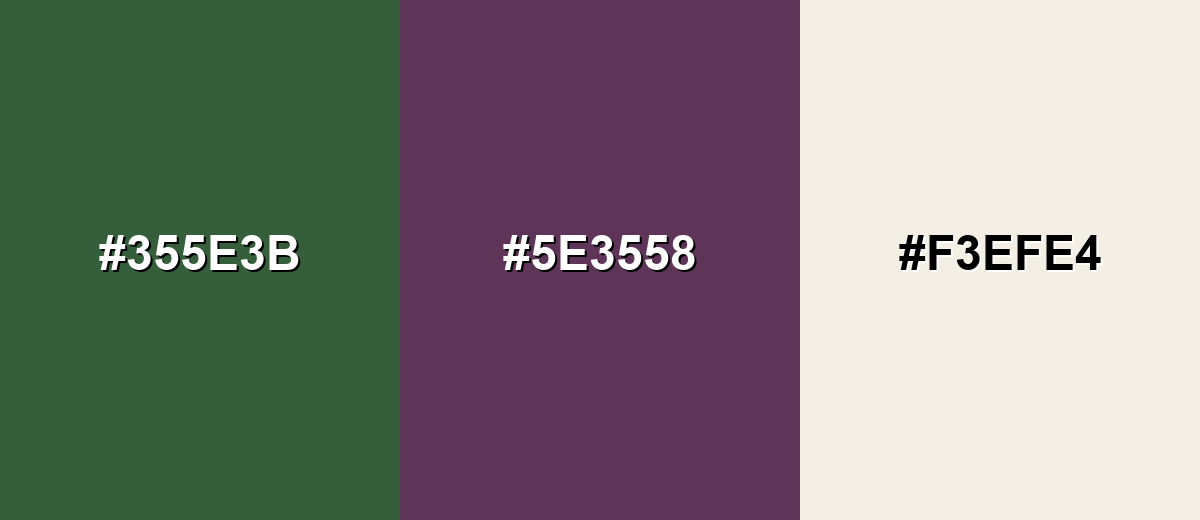
A complementary pairing adds energy by using a purple-leaning accent against the deep green base. Keep the accent controlled, then soften the overall look with a warm neutral.
Complementary Palette Example: Combine hunter green with a plum accent and a light ivory to create strong contrast that still feels refined.
Analogous Color Schemes
Analogous colors sit adjacent to each other on the color wheel, creating harmonious, cohesive palettes with subtle variation.
A cooler, woodland-leaning analogous scheme that stays calm and cohesive.
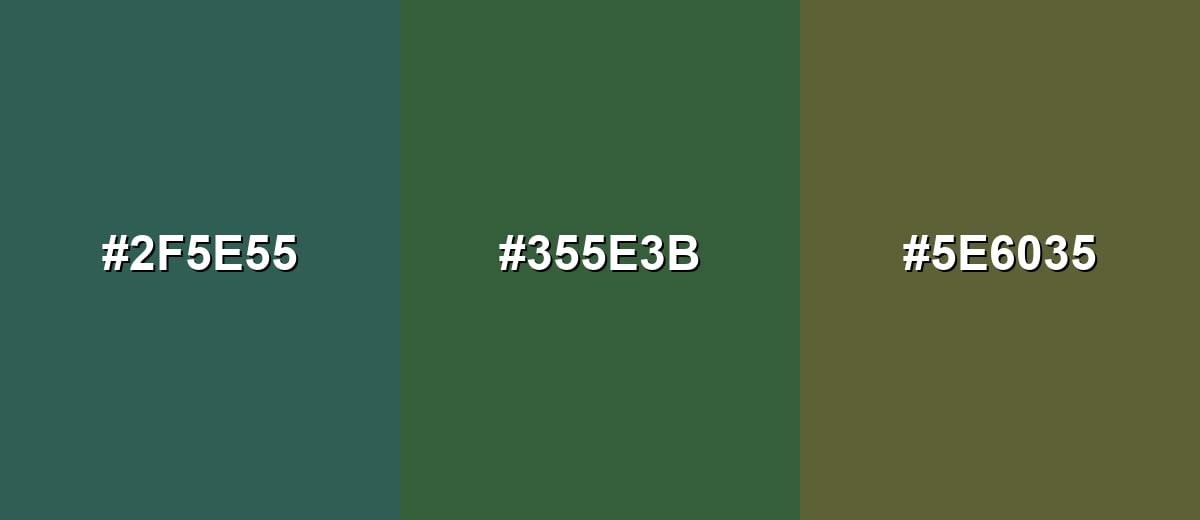
- Deep Teal Green: #2F5E55
- Hunter Green: #355E3B
- Olive Drab: #5E6035
A slightly warmer analogous mix that works well for natural themes and lifestyle design.
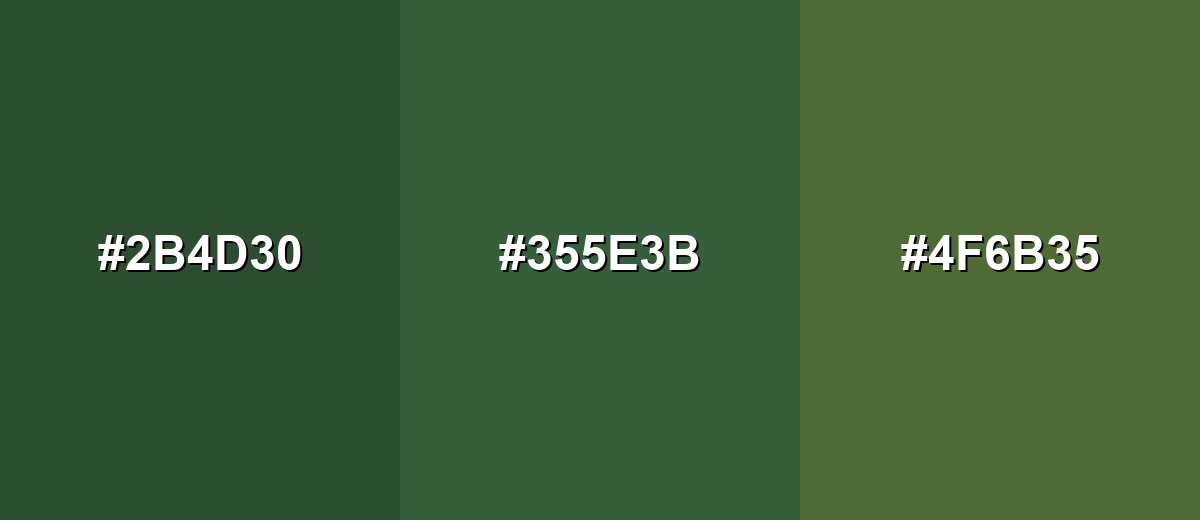
- Pine Shade: #2B4D30
- Hunter Green: #355E3B
- Moss Green: #4F6B35
Triadic & Tetradic Combinations
A triadic palette gives you three distinct directions while keeping balance.
Use hunter green with indigo and warm clay for a bold, design-forward mix that still feels grounded.
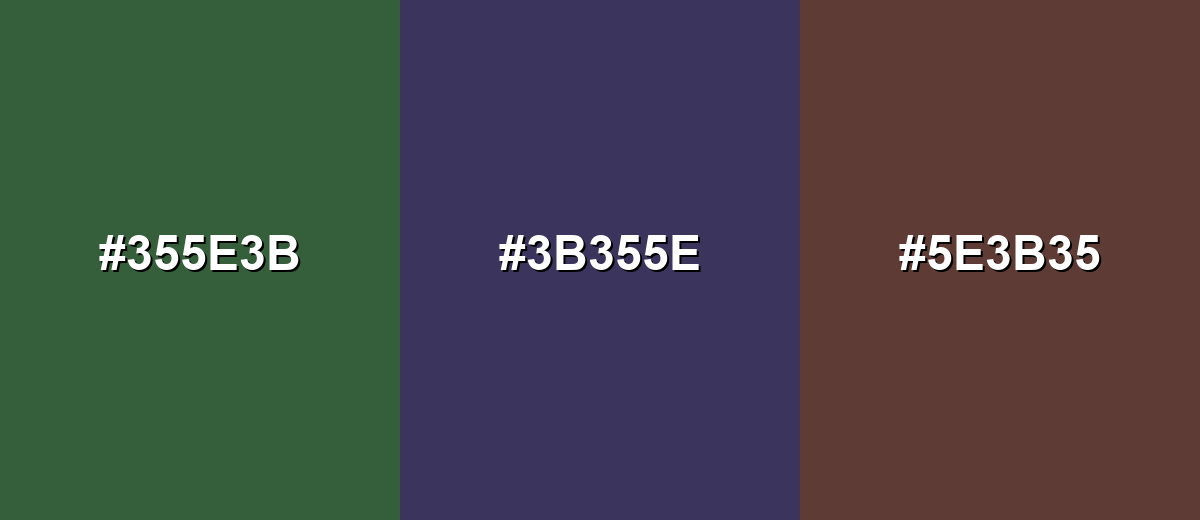
- Hunter Green: #355E3B
- Indigo Slate: #3B355E
- Warm Clay: #5E3B35
Colors to Avoid
While hunter green is remarkably versatile, certain combinations can create problematic visual effects:
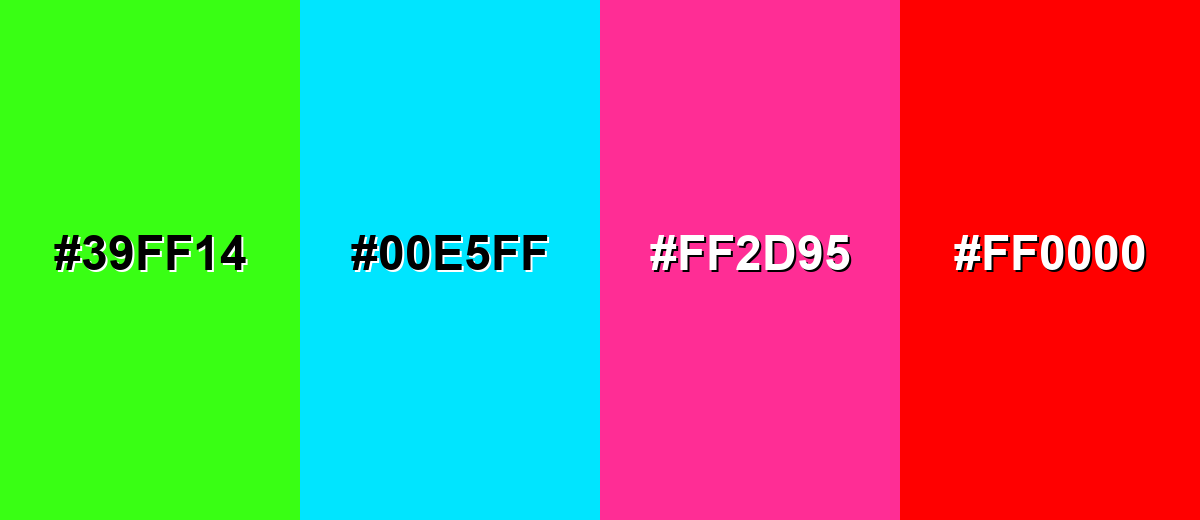
- Neon Green (#39FF14) - The extreme brightness can overpower hunter green and make designs feel harsh rather than grounded.
- Electric Cyan (#00E5FF) - High saturation and cool intensity can create a jarring, techy clash unless carefully restrained.
- Hot Pink (#FF2D95) - The contrast is loud and can push the overall mood into playful or chaotic territory.
- Pure Red (#FF0000) - This pairing can feel overly aggressive and can also introduce strong seasonal associations in some contexts.
Shades, Tints & Variations of Hunter Green
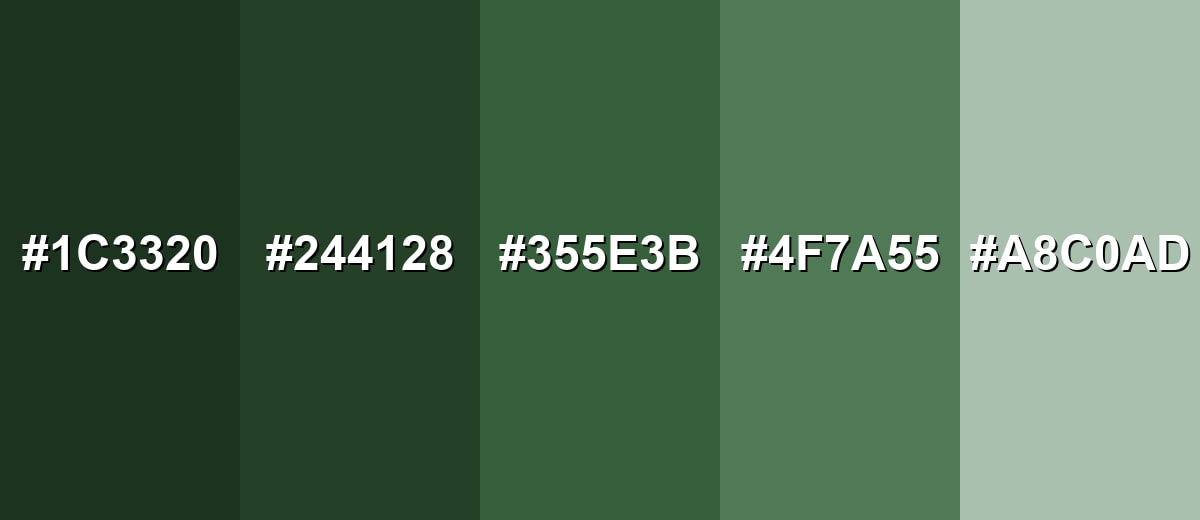
Hunter green isn't just one "forest" color—it spans near-black pines, deeper UI-friendly greens, and airy tints for backgrounds. Having a small range makes it easier to build hierarchy in branding, interfaces, and print layouts without changing the overall vibe.
- Midnight Pine (#1C3320) - A very dark green with a near-black depth and a subtle cool undertone. It's best used for Backgrounds, hero sections, and premium packaging where you want maximum depth.
- Dark Hunter Green (#244128) - A deeper, slightly cooler take that keeps the same muted character. It's best used for Navigation bars, footers, and dark-mode surfaces with light typography.
- Classic Hunter Green (#355E3B) - The recognizable hunter green balance of depth, neutrality, and natural feel. It's best used for Primary brand tone, accents, and balanced base areas in UI and print.
- Soft Evergreen (#4F7A55) - A lighter evergreen that reads friendlier while staying earthy. It's best used for Secondary UI states, highlights, and supporting blocks next to neutrals.
- Sage Tint (#A8C0AD) - A pale, desaturated tint that feels airy and calm rather than heavy. It's best used for Background fills, subtle section breaks, and gentle interior accents.
Industry Applications
Hunter green fits industries that benefit from trust, tradition, or nature-forward cues. It works in modern digital products, but it also holds up beautifully in print, packaging, and physical spaces.
Fashion & Beauty
- Outdoors and lifestyle: Apparel and equipment branding that leans natural and rugged.
- Wellness and skincare: Packaging accents and ingredient-led visuals that suggest calm, natural formulas.
- Heritage styling: Uniform-inspired and classic collegiate looks where muted depth feels intentional.
- Premium details: Pairs well with cream backgrounds and subtle metallic accents for a refined finish.
Interior Design & Decor
- Cabinetry and feature walls: Adds cozy depth without the harshness of black.
- Material pairings: Looks especially strong with light woods, tan leather, warm whites, and natural textures.
- Finish choices: Matte surfaces feel timeless; glossy finishes can skew more formal.
- Accent strategy: Use lighter tints for adjacent walls or textiles to keep rooms from feeling closed-in.
Branding & Marketing
- Finance and professional services: Supports stability and seriousness while staying more approachable than black.
- Food and beverage: Works for tea, herbs, coffee, and farm-to-table menus—especially with cream or kraft neutrals.
- Print and packaging: Great for labels and tags where you want a heritage vibe (proof in CMYK for accuracy).
- Digital systems: Strong for navigation, headers, and structural UI elements—reserve brighter accents for CTAs.
Conclusion
Hunter green stands out for its deep, muted look that feels natural, dependable, and quietly sophisticated. Whether you're building a brand palette, designing a UI, or planning packaging, #355E3B gives you a grounded base that plays nicely with warm neutrals, metals, and controlled accent hues like plum or indigo. The key is balance: let hunter green add structure and confidence, then bring in lighter values and clear contrast so the final design stays readable, modern, and easy to live with.
Design Smarter with AI: Media.io is an online AI studio that empowers creators with advanced image generation and enhancement tools. From text-to-image and image-to-image creation to AI upscaling and color optimization, it enables fast, creative, and professional results—all in your browser.


Frequently Asked Questions About Hunter Green Color
Quick answers to the most common questions designers and creators ask about hunter green.
Hunter green is a deep, muted green that resembles evergreen foliage and shaded forest tones. It is darker and more subdued than many standard greens.
A commonly used hex code for hunter green is #355e3b. This value is widely used in web design tools and CSS.
Forest green is often slightly brighter or more saturated, while hunter green usually looks more muted and traditional. The exact difference depends on the specific swatches being compared.
Warm neutrals like ivory, beige, and tan pair naturally, as do deeper accents like plum or indigo for contrast. Metallics such as gold or brass can also add a refined finish.
It can work well in UI as a background or structural tone, especially when paired with very light text and clear hierarchy. Avoid low-contrast mid-grays and do not use green alone to communicate status.
Hunter green symbolism often leans toward nature, steadiness, tradition, and quiet confidence. In everyday use it can feel grounded and dependable, but too much can read heavy if not balanced.


