

Carmine color is a deep, rich red with a slight bluish, wine-like cast that reads bold on screens and in textiles. Its standard web hex code is #960018.
People often connect it with passion, confidence, and dramatic elegance. The name also ties to the historic cochineal-derived carmine pigment, and this guide covers meaning, codes, combinations, shades, and practical uses.
Carmine Color: Codes & Values
Use the following values to match carmine accurately across web, UI, and print workflows.
| Parameters | VALUE |
| HEX Code | #960018 |
| RGB DECIMAL | 150, 0, 24 |
| RGB PERCENTAGE | 58.82%, 0%, 9.41% |
| CMYK | 0%,100%,84%,41% |
| HSL | 350°, 100%, 29% |
| HSV (HSB) | 350°, 100%, 59% |
| Web Safe | #990000 |
Key Color Space Explanations:
- HEX - HEX is the most common way to specify carmine for websites and digital design. Use #960018 to match the standard on-screen appearance.
- RGB - RGB defines the mix of red, green, and blue light used by displays. Carmine is strong red with almost no green and a small amount of blue.
- CMYK - CMYK is used for print and describes ink percentages. Carmine typically needs high magenta and yellow with a notable black component to keep it deep.
- HSL - HSL describes hue, saturation, and lightness, which is useful for picking related tints and shades. Carmine sits near the red-magenta edge with high saturation and a darker lightness.
- Web Safe - Web safe is the closest legacy palette approximation for older displays. The nearest web-safe match to carmine is #990000.
Start with HEX for digital design, switch to CMYK when preparing print files, and use HSL to build smoother tints and shades that still feel "on brand."
Carmine Color Conversions
Need carmine in a different format? This quick conversion table helps you copy the right value into design tools and CSS.
| Parameters | VALUE | CSS |
| HEX | #960018 | #960018 |
| RGB DECIMAL | 150, 0, 24 | rgb(150,0,24) |
| RGB PERCENTAGE | 58.82%, 0%, 9.41% | rgb(58.82%,0%,9.41%) |
| CMYK | 0%,100%,84%,41% | cmyk(0%,100%,84%,41%) |
| HSL | 350°, 100%, 29% | hsl(350°, 100%, 29%) |
| HSV (or HSB) | 350°, 100%, 59% | -- |
| Web Safe | 990000 | #990000 |
| CIE-LAB | 30.7, 54.0, 33.4 | -- |
| XYZ | 12.75, 6.55, 1.46 | -- |
| xyY | 0.614, 0.315, 6.55 | -- |
| CIE-LCH | 30.7, 63.5, 31.7° | -- |
| CIE-LUV | 30.7, 97.5, 17.0 | -- |
| Hunter-Lab | 25.6, 46.9, 14.3 | -- |
| Binary | 10010110 00000000 00011000 | -- |
Want to generate Carmine Color photos or posters? Try Media.io's AI Image Generator now!
Carmine Color Meaning & Symbolism
Carmine is widely seen as a statement-making red that signals intensity, determination, and refined drama. In everyday life, the Carmine Color meaning often lands somewhere between romantic and powerful, depending on context and how much of it you use.
Psychological Effects
Because it's deep and highly saturated, carmine tends to influence attention and mood quickly.
- Attention Pull - Carmine draws the eye fast, so it naturally boosts visual hierarchy for key elements.
- Controlled Intensity - Its darker, cooler lean can feel mature and composed compared to brighter reds.
- Perceived Urgency - Overusing carmine in UI can feel like constant alert mode, so spacing and neutrals matter.
- Premium Weight - The wine-like undertone often reads luxe, especially when paired with clean typography.
- Emotional Depth - Carmine can add drama and intimacy, which is great for storytelling but heavy for long reads.
Positive Associations
When balanced well, carmine communicates confidence without looking loud or flashy.
- Passion - A classic signal of strong emotion that feels richer and more refined than bright red.
- Confidence - Works as a decisive accent color for brands and products that want to feel bold.
- Elegance - The deep tone can suggest sophistication, especially in premium packaging and editorial layouts.
- Craft - Its pigment history supports a "made with care" feel in heritage and artisanal contexts.
- Focus - As a small highlight, carmine helps users find important actions or information quickly.
Cultural Significance Across the World
Carmine also carries heritage cues thanks to its long history in art, textiles, and ceremonial use.
- Historic Pigment - Carmine is linked to cochineal-based dyes and pigments used for centuries in textiles and art.
- Heritage Aesthetic - The color often feels classic because it's commonly seen in traditional materials and print.
- Ceremony & Status - Deep reds can signal importance and formality, though meaning shifts by culture and setting.
- Strong Emotion - Carmine sits in the "powerful red" family, often tied to love, determination, and intensity.
Design Applications
Carmine is best treated as a strategic accent or anchor rather than a background for dense content. Its depth gives designs a premium edge, but it needs thoughtful contrast to stay readable.
Graphic Design Tips
- Use carmine for call-to-action accents and key UI states, and keep it sparse for maximum impact.
- Balance it with light neutrals to keep layouts open and modern, especially for text-heavy pages.
- Pair it with cool complements (like teal-leaning greens) when you want crisp, modern contrast.
- For accessibility, favor white or warm off-white text on carmine blocks and avoid muddy dark-on-dark.
- In print, check a proof—paper, ink limits, and finishes can shift carmine warmer or darker.
Pro tip: treat carmine like a "headline color"—one strong hero element (button, badge, or header) often looks more premium than using it everywhere.
Carmine Color in Photography & Video
- Use carmine props or wardrobe as a focal point, then keep the rest of the scene neutral so it doesn't fight for attention.
- Watch white balance: warm lighting can push carmine toward brick, while cooler light can emphasize its wine undertone.
- In color grading, protect reds from clipping—deep reds can lose texture quickly if contrast is too aggressive.
- For portraits, keep carmine away from dominant skin-tone areas unless the look is intentional, since it can amplify warmth.
- Try carmine as a title-card or lower-third accent with ample spacing for a clean, cinematic feel.
Recommended Tool for Image Enhancement: When incorporating carmine color into your photography projects, Media.io's AI Image tools can help you achieve more refined results. With AI-powered color enhancement, photo colorization, image upscaling, and old photo restoration, you can easily enrich carmine color tones, improve overall image quality, and highlight the color's elegant and sophisticated aesthetic.
Color Combinations
Carmine pairs well with cool greens and teals, and it also holds its own next to deep blues and clean neutrals. The palettes below give you reliable options for branding, UI accents, and bold editorial layouts.
Complementary Colors
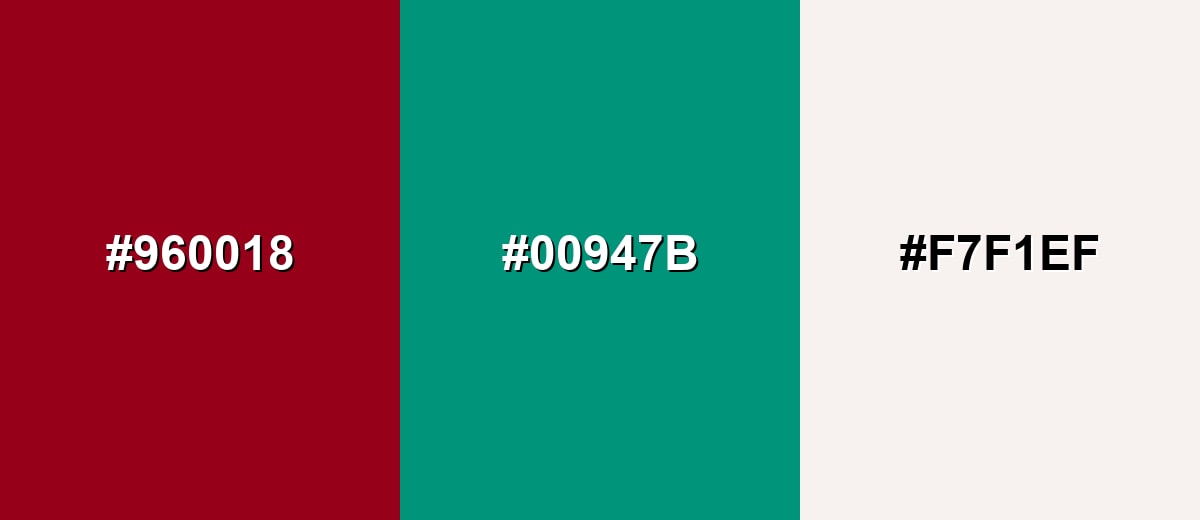
A teal-leaning green sits opposite carmine on the wheel, creating a vivid, modern contrast. This combination is useful when you want carmine to feel energetic but still polished.
Complementary Palette Example: Use #960018 as the focal accent, balance it with #00947b, and keep the layout breathable with #f7f1ef.
Analogous Color Schemes
Analogous colors sit adjacent to each other on the color wheel, creating harmonious, cohesive palettes with subtle variation.
For a tonal, dramatic look, blend carmine with nearby wine and raspberry reds.
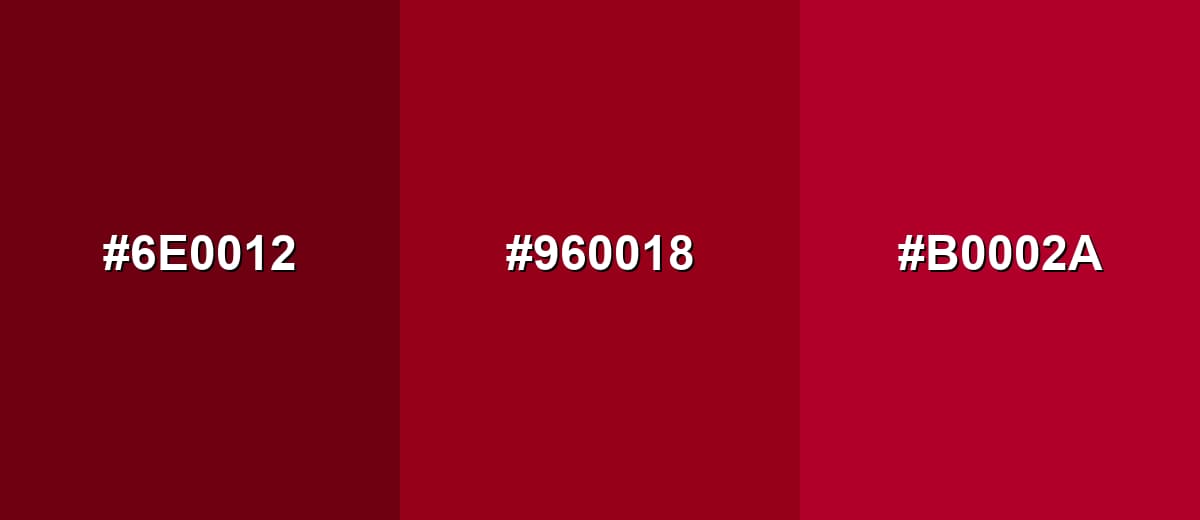
- Deep Burgundy: #6E0012
- Carmine: #960018
- Raspberry Red: #B0002A
To lean more romantic, pair carmine with rose and plum neighbors for a smoother gradient.
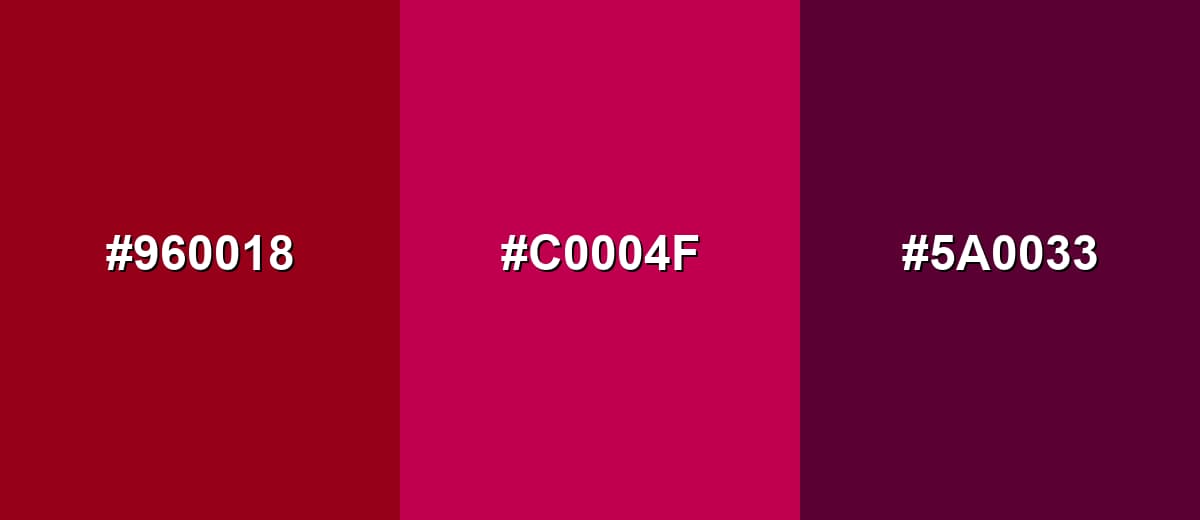
- Carmine: #960018
- Deep Rose: #C0004F
- Dark Plum: #5A0033
Triadic & Tetradic Combinations
A triadic palette brings high contrast while staying balanced across the wheel.
Combine carmine with a vivid green and a deep blue for punchy, modern graphics.
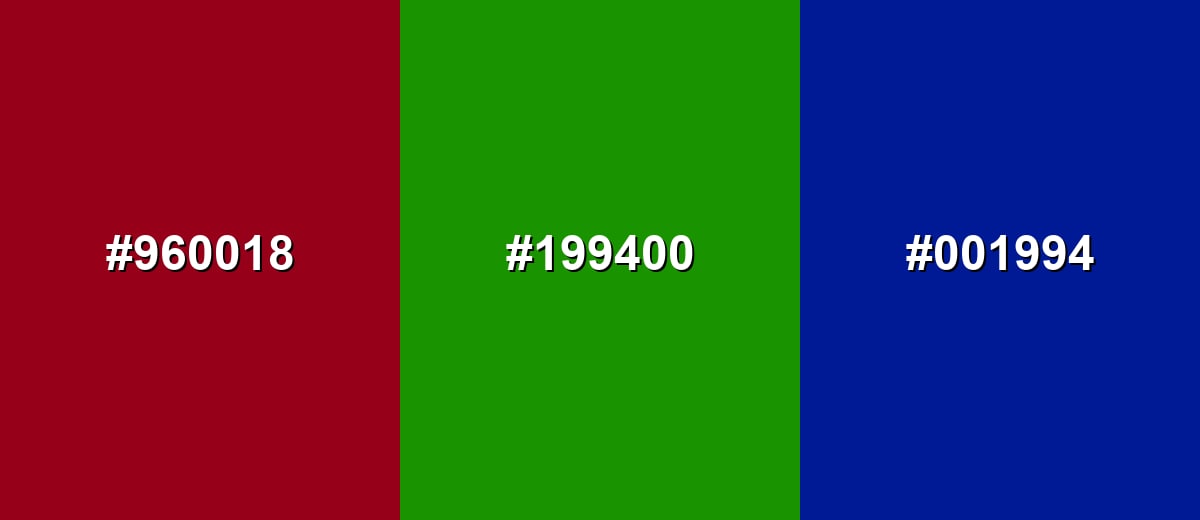
- Carmine: #960018
- Vivid Green: #199400
- Deep Blue: #001994
Colors to Avoid
While carmine color is remarkably versatile, certain combinations can create problematic visual effects:
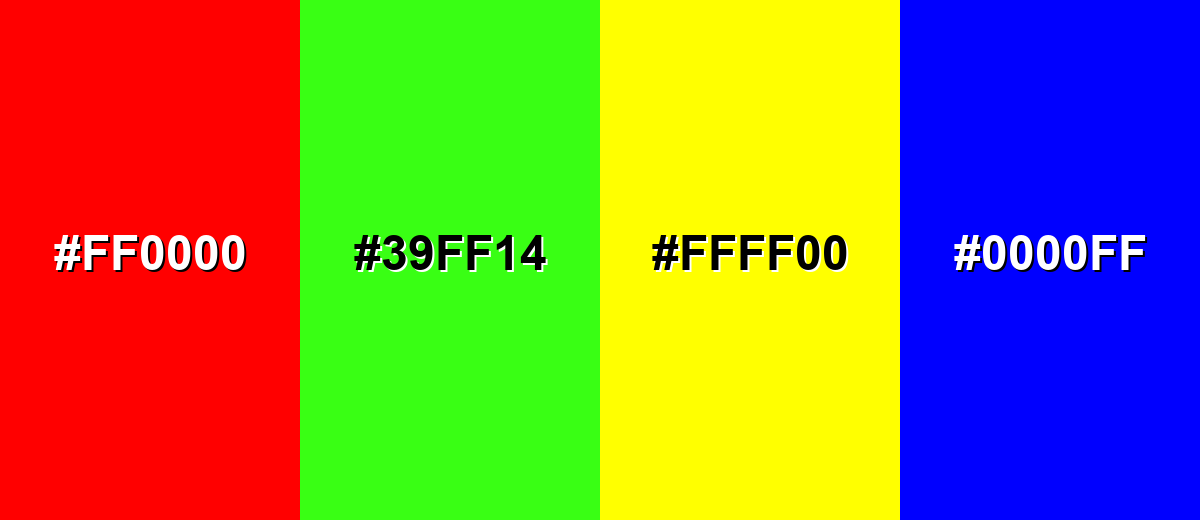
- Pure Red (#FF0000) - Stacking carmine with a bright primary red can flatten both and make the palette feel noisy rather than refined.
- Neon Green (#39FF14) - The extreme saturation creates visual vibration that can look harsh, especially in UI elements and text.
- Bright Yellow (#FFFF00) - This pairing can feel aggressive and reduce readability, particularly for small type or long viewing.
- Electric Blue (#0000FF) - Two highly saturated accents competing for attention can cause eye strain and make hierarchy unclear.
Shades, Tints & Variations of Carmine Color
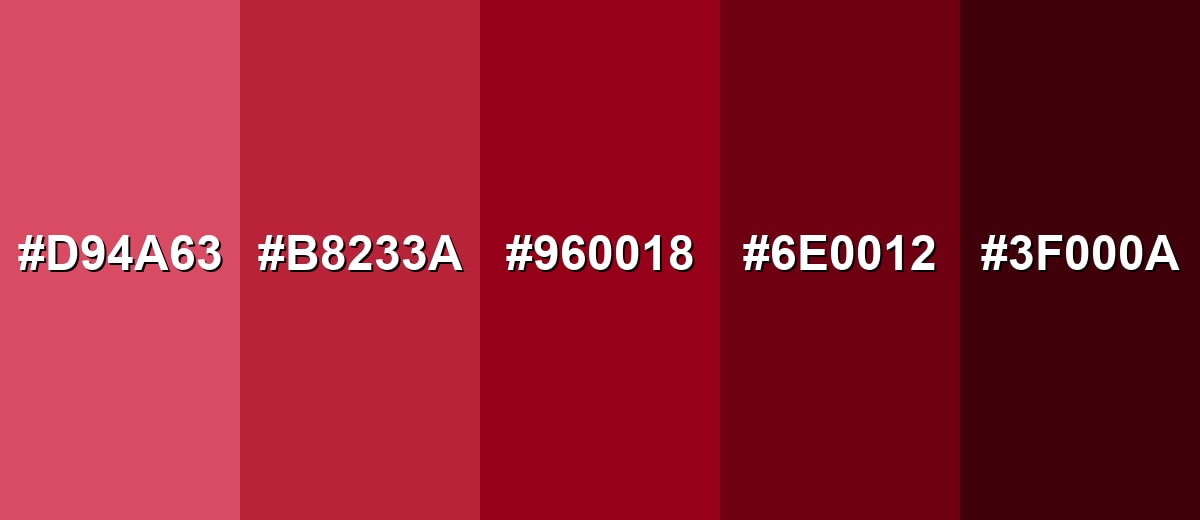
Carmine has a surprisingly flexible range—from softened pink-leaning tints to near-black reds. Having a few reliable variations makes it easier to build hierarchy (backgrounds, accents, and emphasis) without changing the overall mood.
- Light Carmine (#D94A63) - A softened, pink-leaning tint that keeps the warmth of carmine with less intensity. It's best used for Background panels, highlights, and friendly product accents..
- Soft Carmine (#B8233A) - A balanced mid-deep red that stays rich while feeling slightly more approachable than the classic tone. It's best used for Buttons, badges, and brand accents that need strong presence without heavy weight..
- Classic Carmine (#960018) - The signature deep red with a wine-like undertone and high visual impact. It's best used for Primary brand accents, hero elements, and editorial emphasis..
- Deep Carmine (#6E0012) - A darker, more dramatic shade that feels formal and grounded. It's best used for Headers, luxury packaging details, and dark-mode accents..
- Carmine Brown (#3F000A) - An ultra-deep, near-black red that reads sophisticated and restrained. It's best used for Borders, shadows, typography accents, and premium background applications with light text..
Industry Applications
Carmine shows up across industries wherever a deep red can signal confidence, craft, or intensity. The key is controlling quantity and contrast so it feels intentional rather than overwhelming.
Fashion & Beauty
- Use carmine as a statement tone for seasonal drops and formalwear accents that need instant presence.
- Pair it with light neutrals for classic, "heritage" styling in accessories and textiles.
- Work it into patterns as a dominant accent, keeping supporting colors quieter to avoid visual noise.
- In beauty visuals and campaigns, carmine reads bold and refined when lighting keeps reds from over-saturating.
Interior Design & Decor
- Use carmine on an accent wall, upholstery, or artwork to create a strong focal point.
- Keep surrounding surfaces light and neutral so spaces don't feel smaller or overly intense.
- Lean into dining and lounge settings where warmth and drama naturally fit the atmosphere.
- Test finishes: matte and textured materials can make carmine look deeper and more muted than glossy ones.
Branding & Marketing
- Use carmine as a premium brand accent or signature mark to communicate confidence and craft.
- Apply it to campaign highlights and limited-edition packaging for a rich, collectible feel.
- Build hierarchy with carmine for headlines, badges, and key callouts—then let neutrals carry the layout.
- In social graphics and posters, avoid stacking it with other high-saturation primaries in the same focal area.
Conclusion
Carmine stands out as a deep, wine-leaning red that feels classic, decisive, and a little dramatic—in the best way. It shines as an accent for UI, branding, and editorial design, especially when you balance it with clean neutrals or cool greens for contrast and breathing room. If you want a dependable starting point, anchor your palette on #960018, then move lighter or darker depending on the medium and finish. Used thoughtfully, carmine delivers strong hierarchy and premium energy without relying on loud brightness.
Design Smarter with AI: Media.io is an online AI studio that empowers creators with advanced image generation and enhancement tools. From text-to-image and image-to-image creation to AI upscaling and color optimization, it enables fast, creative, and professional results—all in your browser.


Frequently Asked Questions About Carmine Color
Carmine appears as a deep red with a slight bluish or wine undertone. It usually looks richer and darker than bright scarlet, especially under low or warm lighting.
A common digital hex code for carmine is #960018. This value is widely used as a standard reference for a deep carmine red.
It sits between crimson and burgundy: richer and deeper than many crimsons, but typically brighter and cleaner than very brown-leaning burgundies.
Carmine pairs well with soft neutrals like #f7f1ef, cool complements like deep teal #00947b, and dark blues like #001994. These combinations keep it bold while staying balanced.
Yes, but treat it as an accent and verify contrast for text and icons. It works best for primary actions or highlights when surrounded by neutral surfaces and ample spacing.
Both. Carmine is a named shade in digital design, and it also refers to a historic pigment traditionally made from cochineal, which influenced the name and its classic reputation.