
In this article
First Decide: Is the Emoji Still Editable or Already Baked In?
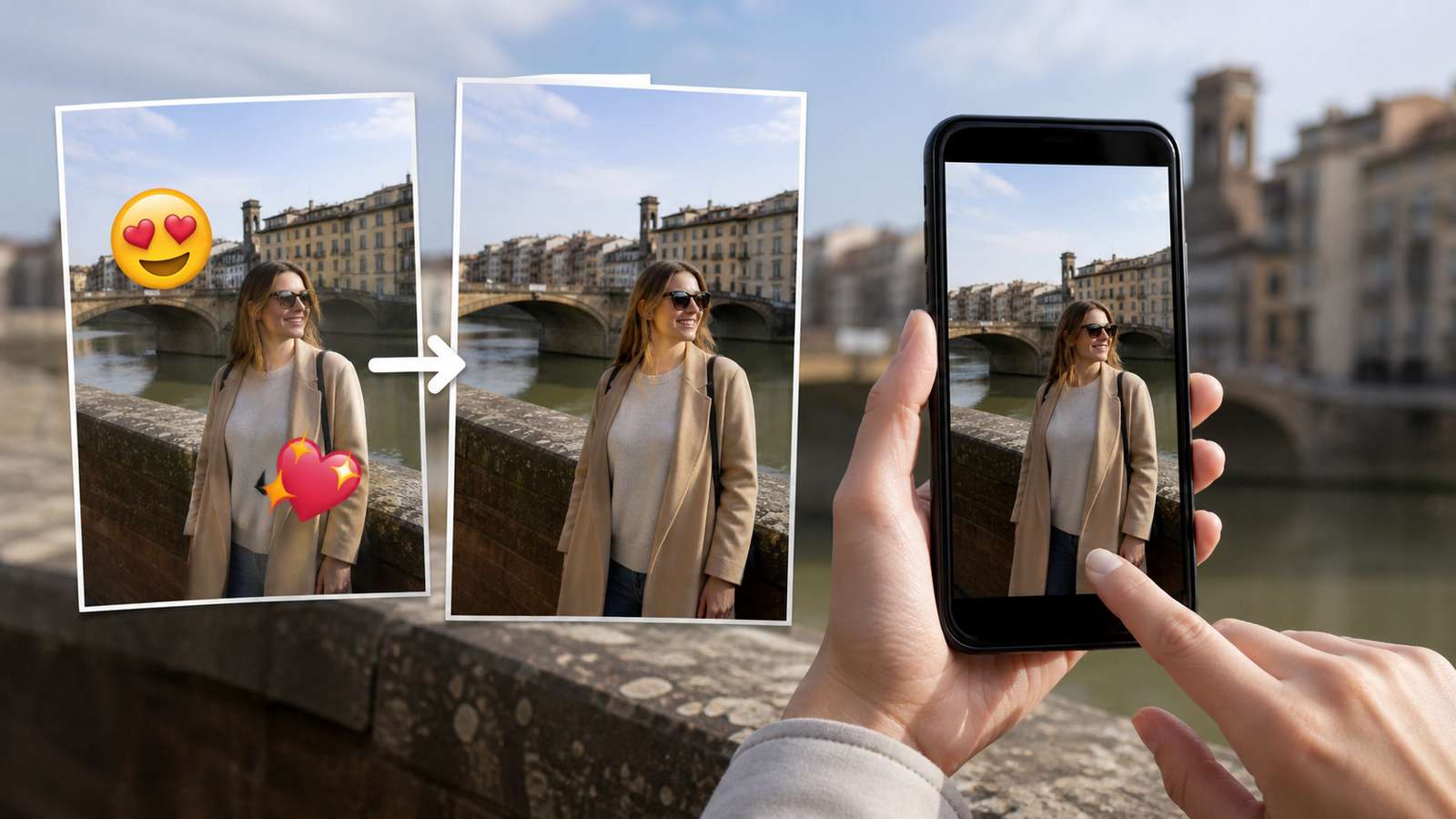
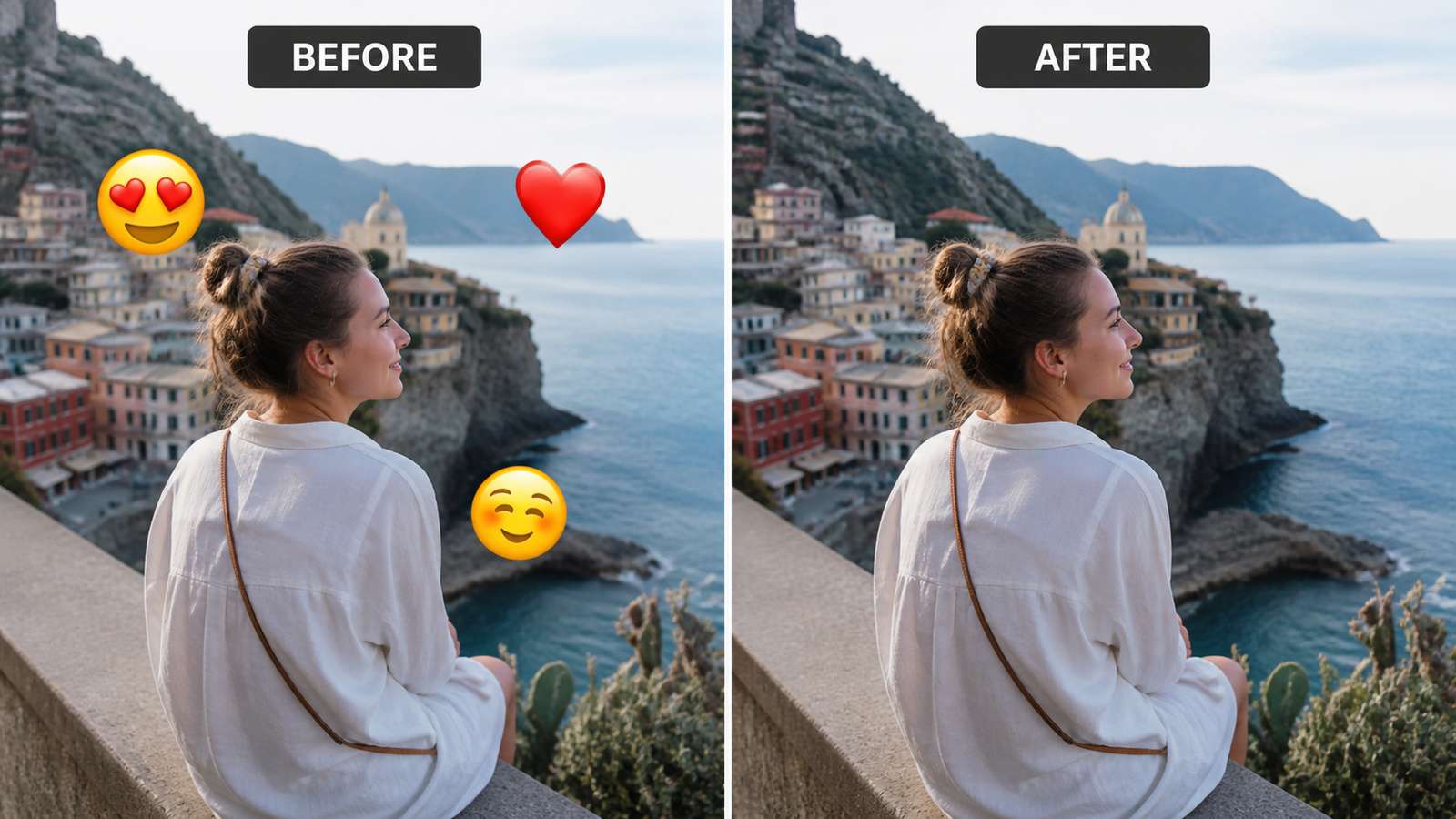
Before you search for an emoji remover on Android, identify what you actually have. If the emoji is still an editable sticker layer inside the app or project where it was added, delete that layer and save a new copy. That is lossless. If the emoji appears in a screenshot, downloaded image, flattened social-media post, or exported JPEG, it has become part of the pixels. No app can reveal the exact hidden pixels because the original detail was overwritten. The editor must reconstruct a plausible replacement from nearby texture and visual context.
That is why some removals look perfect while others look artificial. An emoji placed over a plain sky can be rebuilt from repeating blue texture. The same emoji over an eye, fingers, printed text, or patterned clothing hides information that may not exist anywhere else in the photo. AI can estimate what belongs there, but it is estimating rather than recovering a secret original.
| What you have | Best first action | Expected quality |
|---|---|---|
| Editable sticker in original app | Delete the sticker layer | Original pixels preserved |
| Emoji on simple wall, sky, floor, or table | Magic Eraser or AI inpainting | Often very good |
| Emoji over hair or clothing texture | Small inpainting passes | Usually usable with inspection |
| Emoji over face, fingers, tattoo, or text | AI plus manual cleanup | May require reconstruction or retouching |
| Emoji covers unique information | Find the original photo if possible | AI cannot recover exact hidden detail |
Method 1: Remove an Emoji with Google Photos on Android
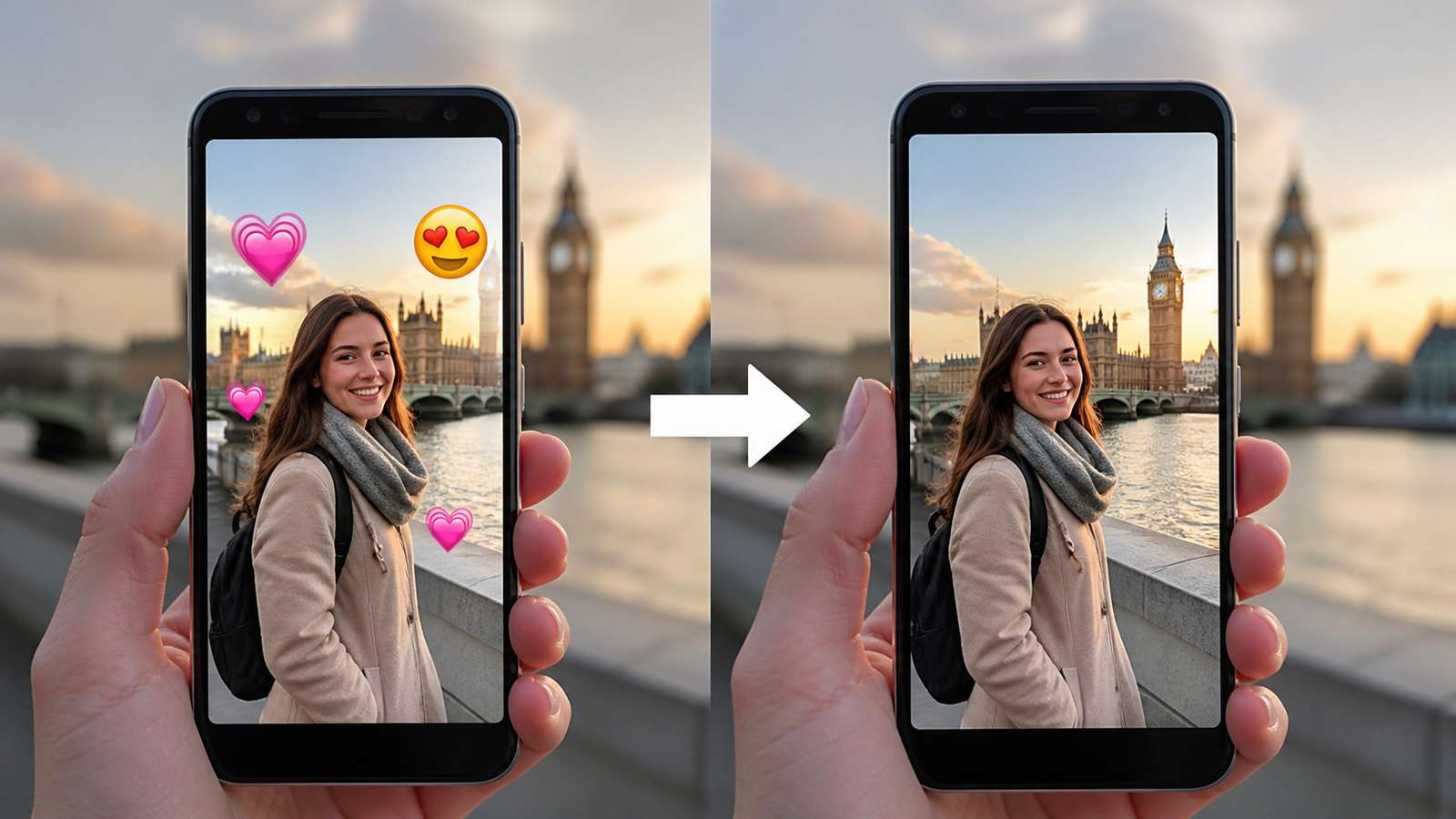
Google Photos includes Magic Eraser on supported Android setups. The current workflow lets you open a photo, enter Edit, search for Magic Eraser, brush or circle the object, refine the selection, and erase it. This is the fastest method to try because you do not need to upload the image to a separate website or learn a complex editor.
- Open the highest-resolution version of the photo in Google Photos. Avoid using a screenshot of the photo if the original file is available.
- Tap Edit, locate the editing tools, and open Magic Eraser. On current Android versions, Google Photos may also let you search for the tool by name.
- Circle or brush over the entire emoji. Include any drop shadow, glow, border, or small decorative particles around it.
- Use the refine-selection controls if the automatic selection touches hair, eyes, text, or another important edge.
- Apply the erase operation and zoom in to 100% or more. Look at texture direction, straight lines, skin edges, and repeated patterns.
- If the result is good, save a copy instead of overwriting your only original.
Do not assume a larger brush is safer. The replacement model has to synthesize everything inside the selected region. If you select half of a face just to remove a small emoji, you are asking the tool to invent unnecessary pixels. A close mask that includes the emoji and its shadow but protects nearby structure usually gives a more stable result.
Method 2: Use AI Inpainting When the Emoji Is Already Part of the Picture
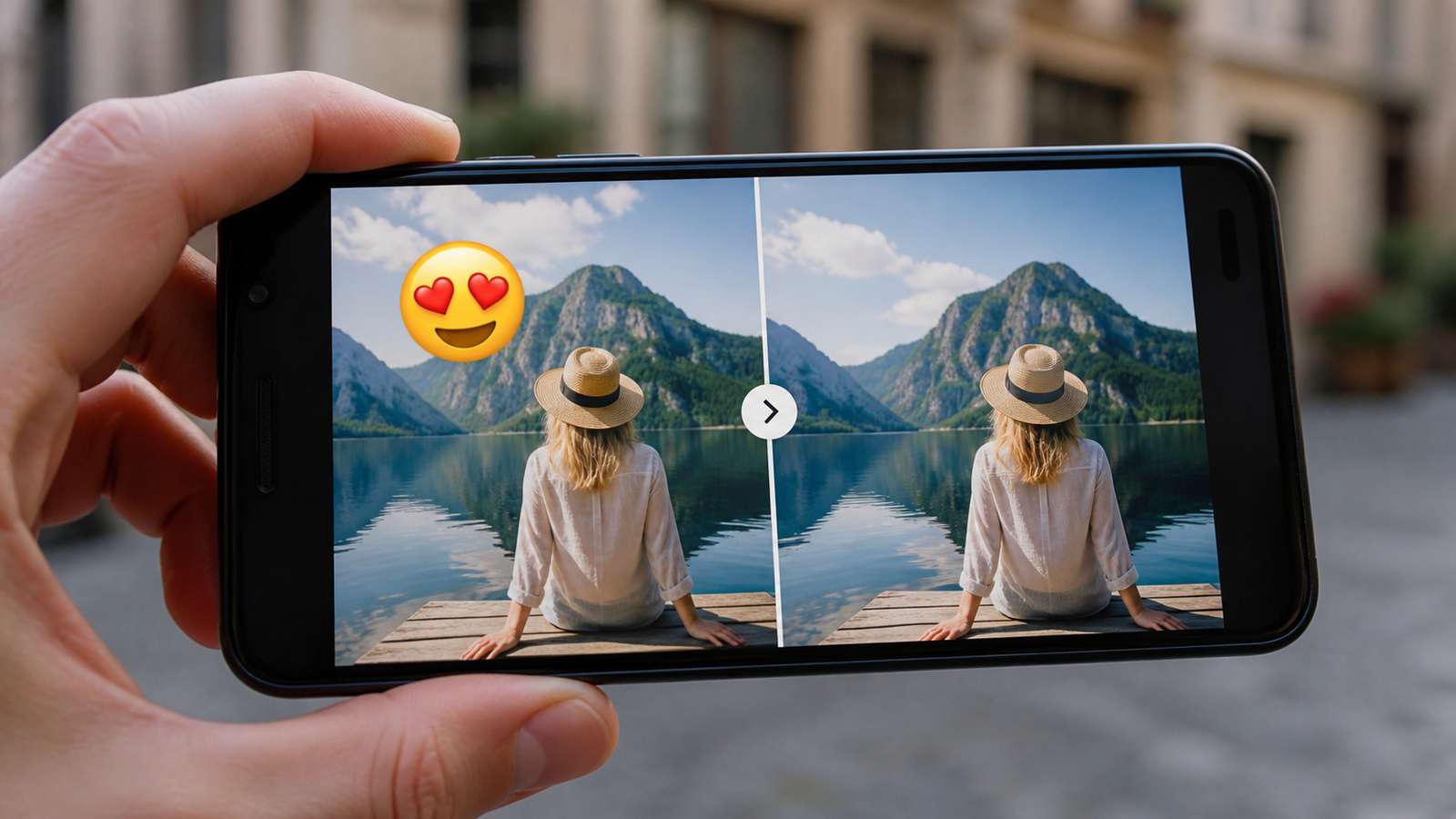
When Magic Eraser leaves a smear or your phone does not provide the result you need, browser-based AI inpainting gives you another option. You can use Media.io AI Object Remover in your Android browser to remove emojis from photos. You mark the emoji, let the model rebuild the covered area, and inspect the result before keeping it.
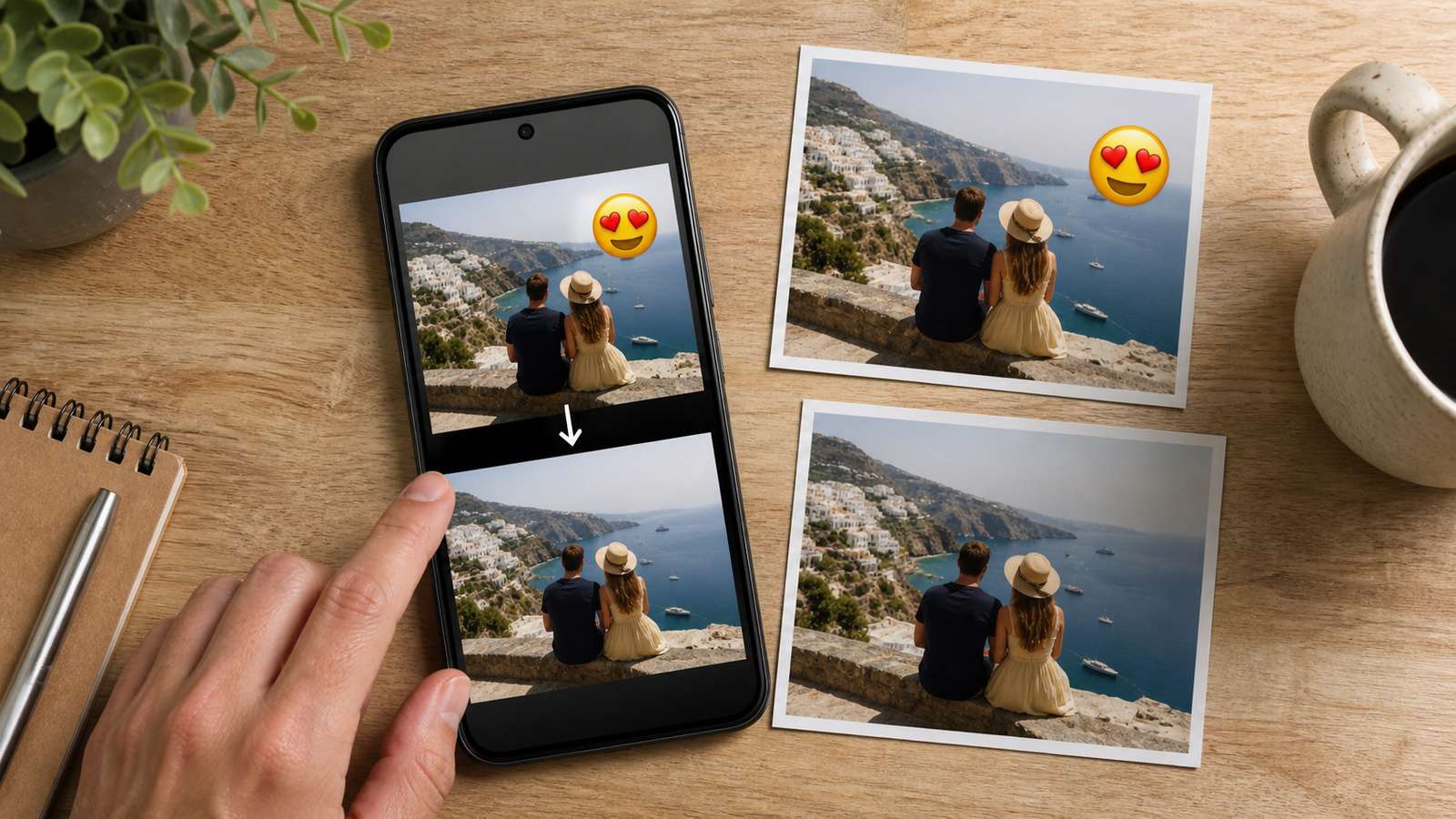
- Upload the original photo rather than a social-media screenshot whenever possible.
- Zoom in and brush slightly inside the emoji boundary first. If a colored halo remains, expand the selection by a few pixels.
- Process the image once and inspect the edge. Repeatedly erasing the same large region can make texture softer with every pass.
- If one area is wrong, repair only that area instead of selecting the whole previous mask again.
- Compare the edited result with the original at normal viewing size and at 100% zoom before downloading.
Why Emojis over Faces, Hair, Hands, and Text Are Harder
Human vision is unusually sensitive to faces and hands. A tiny error in a wall may be invisible, while a slightly misplaced eyelid or finger immediately looks wrong. Hair is difficult for a different reason: strands cross each other, change transparency, and follow a directional flow. An emoji can cover hundreds of small high-frequency details that an inpainting model must recreate consistently.
Emoji over a face
If an emoji hides part of an eye, nose, or mouth, compare the visible side of the face for symmetry, but do not expect exact identity recovery. A model may generate a plausible eye that does not match the person. For important portraits, the safest solution is still the uncensored original. If you only need a visually natural social image, small AI repairs may be acceptable after careful review.
Emoji over hair
Mask in the direction of the hair rather than using a huge round area. After the first fill, inspect whether strands stop abruptly or repeat. If the editor supports multiple passes, repair the hair boundary separately from the background behind it.
Emoji over text or a logo
AI is poor at recreating exact lettering from hidden pixels. If the emoji covers a sign, jersey number, product label, or document text, recreate the text manually only if you know what it should say. Otherwise, accept that the missing information cannot be recovered reliably.
How to Improve a Difficult Emoji Removal
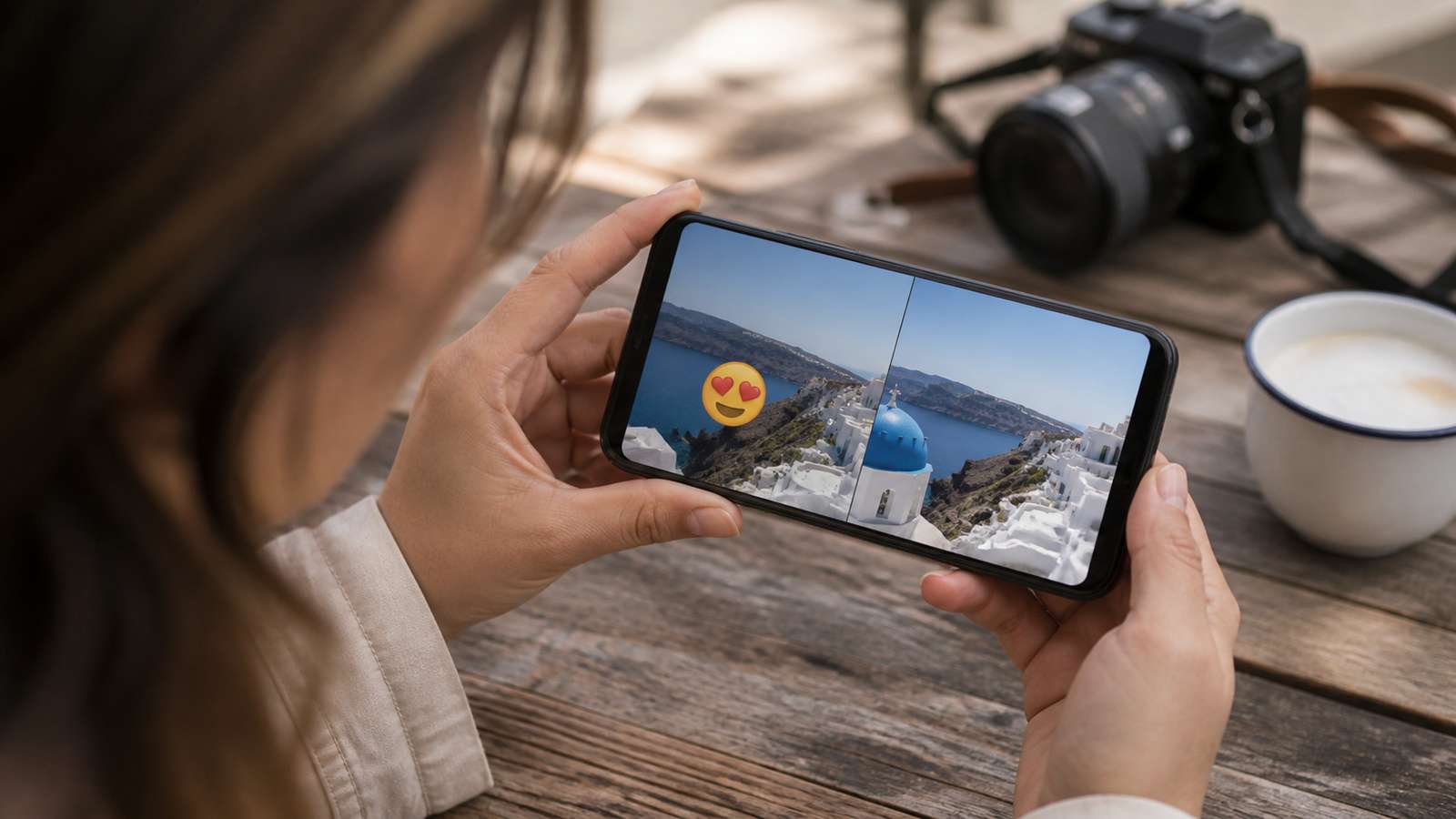
- Use the original file. Compression, screenshots, and repeated social downloads remove texture the model could have used.
- Work in small passes. Repair the center of a difficult region first, then refine the boundary instead of selecting a giant area.
- Protect structural edges. Straight table edges, eyeglass frames, jawlines, fingers, and typography should not be swallowed by the mask.
- Match grain after repair. A perfectly smooth AI patch can look fake in a noisy low-light photo. Small global grain after editing can make the patch blend better.
- Try a second model only when the first truly fails. Endless reruns can produce different but not necessarily better guesses.
- Stop when information is unknowable. If the emoji covered a unique face detail or text, do not claim the restored pixels are authentic.
One useful test is to hide the original emoji with your hand and look only at the surrounding image. Ask what visual evidence exists for the hidden area. If the background is a repeating brick wall, the answer is “a lot.” If the emoji covers an entire eye and half the eyebrow, the answer is “very little.” That simple test predicts how much confidence you should place in the AI result.
Which Android Workflow Should You Use?
| Situation | Recommended workflow | Why |
|---|---|---|
| You still have the editable story/project | Delete the emoji layer | No reconstruction needed |
| Simple background, fast cleanup | Google Photos Magic Eraser | Fast and built into the Android photo workflow |
| Large emoji or uneven background | AI Object Remover | More room for controlled inpainting |
| Portrait or detailed hair | AI plus manual retouching | Human-sensitive details need inspection |
| Private ID, medical image, or sensitive document | Prefer local/offline editing when possible | Avoid unnecessary upload of sensitive material |
| Emoji covers irreplaceable information | Locate original image | No inpainting tool can restore exact hidden data |
For most casual photos, start with the simplest tool already on your phone. Move to a dedicated AI remover when the default repair is visibly weak. The goal is not to use the most advanced tool; it is to use the least destructive workflow that produces a believable result.
Quality and Privacy Checklist Before You Save
- Zoom in on the repair edge and check for colored halos from the original emoji.
- Look for repeating texture, duplicated eyes, bent lines, or melted fingers.
- Compare skin tone and sharpness on both sides of the repaired area.
- Check whether the edited region becomes more obvious after increasing screen brightness.
- Keep an untouched original, especially when the photo matters emotionally or evidentially.
- For sensitive images, understand whether an online tool uploads the file and whether that workflow is appropriate for the material.
Three realistic Android examples
Example 1: an emoji over a beach sky. This is a best-case repair because the hidden area is mostly smooth blue gradient and soft cloud texture. A tight Magic Eraser or inpainting selection can borrow similar pixels from all sides. After removal, check only for a repeated cloud edge or a color patch that is slightly flatter than the rest of the sky.
Example 2: an emoji over a patterned shirt. The sticker may hide stripes, seams, buttons, and fabric folds. Remove the main emoji first, then inspect whether stripe spacing continues correctly. If the AI produces a soft patch, use a smaller second pass that follows the clothing pattern instead of repainting the whole torso. The goal is structural continuity, not maximum smoothing.
Example 3: an emoji over one eye in a selfie. This is a high-uncertainty edit. The other eye provides some visual clues, but real faces are not perfectly symmetrical. AI may generate a convincing eye that is still not the person's actual hidden eye. For a casual post, you may accept a plausible reconstruction. For identification, dating verification, school records, or any factual use, do not treat that generated feature as authentic.
When the edited photo will be posted again
Social platforms will usually compress the image again, which can hide tiny retouching defects but can also make a soft patch more visible around high-contrast edges. Export at the original dimensions when possible, avoid repeated screenshot-save cycles, and inspect the final uploaded version once. If the repaired area is near text, a face, or a product edge, compare it on both a bright phone screen and a larger desktop display before publishing.
FAQ About Removing Emojis from Pictures on Android
-
Can I remove an emoji from a picture on Android for free?
Often yes. Start with editing tools available in Google Photos or another editor already on your phone. Browser-based object-removal tools may also offer free use, but limits can change. -
Will removing an emoji reveal the original face underneath?
Not exactly. If the emoji is baked into the image, the original pixels were overwritten in that copy. AI generates a plausible replacement from context rather than recovering hidden data. -
Why does the repaired area look blurry?
The mask may be too large, the photo may be heavily compressed, or the hidden background may contain detail the model cannot infer. Try a smaller selection and use the highest-quality original file. -
Can Google Photos Magic Eraser remove emojis?
It can remove selected objects from a photo, including an emoji that has become part of the image. Results depend on what the emoji covers and the surrounding texture. -
What if the emoji covers text?
If you know the exact text, it is usually better to reconstruct it manually after cleaning the background. AI inpainting is not reliable for guessing hidden wording. -
Is an online emoji remover safe for private photos?
Treat any upload as a privacy decision. For highly sensitive images, prefer an editor whose storage and processing model you understand, or use a local workflow when available.


