
You can tell a listing photo is wrong the moment the box arrives looking different from the site. AI can make a gorgeous kitchen scene and still change the label, the color, or the bottle shape. Anyone comparing the best AI product image generators should care about SKU accuracy and listing specs first, not cinematic lighting.
I looked at Media.io, Photoroom, Claid.ai, Pebblely, Flair.ai, Shopify Magic, Pixelcut, and Booth.ai with two checks: after a background swap or lifestyle placement, is it still the same product, and will the file pass the channel's rules? Pretty lighting is a later filter.
In this article
- Marketplace Photos Fail When the SKU Changes in the Render
- Best AI Product Image Generators by Listing Job
- 8 AI Product Photography Tools for Packshots and Lifestyle Shots
- White Background, Lifestyle, and Mockup Are Different Production Lines
- The SKU Fidelity and Marketplace Spec Test
- How to Choose an AI Ecommerce Image Generator
- Final Product Image AI Recommendations
- AI Product Image Generator FAQ
Marketplace Photos Fail When the SKU Changes in the Render
A white-background packshot and a lifestyle shot go wrong in different ways. Packshots slip when edges, color, or labels drift. Lifestyle shots slip when the product is the right object at the wrong size, or the scene implies a claim the listing cannot support. Marketplace rules can still reject a beautiful file if the background or on-image text is not allowed.
Keep the physical SKU as the source of truth. The generator is allowed to change the world around the item. It is not allowed to redesign the item.
- Geometry: proportions, ports, stitching, and cap shape stay the same.
- Graphics: logos, labels, and regulatory marks stay readable and unwarped.
- Color: the listing colorway matches the rendered colorway.
- Spec: canvas size, background, and text rules match the destination.
Best AI Product Image Generators by Listing Job
Choose by the listing job: ghost mannequin, pure white, infographic, or lifestyle. A tool that is excellent at background cleanup can still be the wrong lifestyle renderer.
| Tool | Listing job | SKU fidelity focus | Spec strength | Trade-off |
|---|---|---|---|---|
| Media.io | Product images, backgrounds, and related ecommerce stills | Image-to-image with product-aware workflows | PNG and background tools for listing exports | Human QA on labels and geometry still required |
| Photoroom | Background removal and listing stills | Keeps the uploaded product as the hero | Fast white and studio backgrounds | Less of a full scene designer |
| Claid.ai | Catalog enhancement | Batch cleanup and upscale | Feed-scale operations | Scene invention is not the main value |
| Pebblely | Lifestyle from packshot | Product should stay recognizable | Quick scene variants | Simple scenes can look templated |
| Flair.ai | Styled brand sets | Depends on scene complexity | Art-directed layouts | More direction needed |
| Shopify Magic | Store-native image help | Works from merchant uploads | Lives next to the listing | Not a specialist studio for every channel |
| Pixelcut | Mobile listing cleanup | Upload-first product stills | Quick marketplace-ready crops | Phone-first, not a 3D studio |
| Booth.ai | Studio-like product scenes | Reference item to scene | Campaign stills more than infographics | Check labels after stylized lighting |
8 AI Product Photography Tools for Packshots and Lifestyle Shots
Each review includes a spec checklist. If the checklist fails, the pretty scene is irrelevant.
Media.io
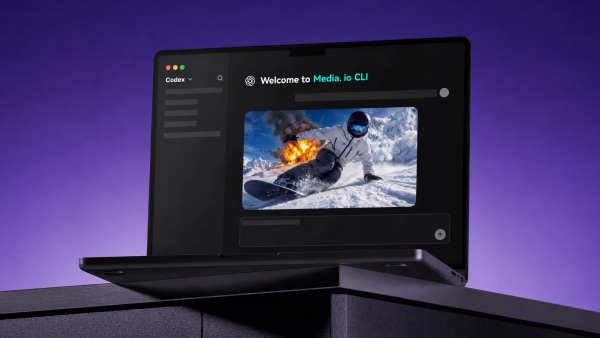
If you need product stills to move between cleanup, background replacement, and image-to-image variation without a dedicated studio app, Media.io is the easy browser default. Use the image to image workspace when you are editing from a trusted product photo. Current models on that page include Nano Banana 2, Nano Banana Pro, GPT Image 2, Seedream 5.0, ToMoviee Lite/Pro, and Imagen 4. The product describes commercial-ready outputs under Terms of Use.
- Check before you export: export a clean background with the product background generator or a PNG maker when the marketplace wants transparency.
- Compare label type and colorway against the physical SKU at 100% zoom.
- Do not ask the model to "improve" packaging copy.
Choose Media.io when the same team also needs related ecommerce stills and later video. Skip it if you only need a phone app for one white-background crop and nothing else.
Photoroom
If the job is a clean listing still, Photoroom is the specialist: remove the background, drop a studio floor, export. The product stays the uploaded object, which is why Photoroom often beats scene generators on SKU fidelity.
- Check before you export: white or studio background, edge quality, no leftover shadows that look like a second product.
- Keep original packaging graphics; do not restyle the label.
Choose Photoroom for catalog cleanup. Skip it when you need a highly art-directed brand world.
Claid.ai
If you have hundreds of SKUs, Claid is the feed-scale enhancer: upscale, background, and catalog consistency. The decision to include it is operations, not a single hero render.
- Check before you export: batch output size, compression, and background uniformity across the feed.
- Spot-check a sample of labels; batch jobs hide one warped SKU among hundreds.
Pebblely
If the listing needs lifestyle variants and you refuse to rebuild the product from text, Pebblely is the "put this packshot on a kitchen counter" tool.
- Check before you export: product scale in the scene, shadow direction, and no extra text baked into the image.
- Reject scenes that add props implying certifications you do not have.
Flair.ai
If you already have a style bible and need styled sets, Flair is for brand color, surfaces, and campaign stills. It needs more art direction than Photoroom. That is the point. Catalog teams without a bible will get random interiors.
- Check before you export: brand palette, product identity, and export without fashion-editorial crops that hide required packaging marks.
Shopify Magic
If the listing already lives in Shopify, Magic is the store-native helper sitting next to the SKU record. That reduces file-shuffle errors. It is not automatically the best renderer for Amazon spec or for a campaign lookbook.
- Check before you export: Shopify listing dimensions first; re-export if the same file must satisfy another marketplace.
Pixelcut
If you photographed on a table and need a listing this afternoon, Pixelcut is the phone-friendly cleanup path. Treat it as a field tool. The SKU is whatever you photographed, so the photo has to be honest before the AI starts.
- Check before you export: crop, background, and sharpness at marketplace pixel sizes.
- Do not use phone lighting that misrepresents color, then ask AI to "fix" it into a different colorway.
Booth.ai
If you want the product in a more produced environment, Booth.ai is the studio-scene option. Lighting can flatter and also hide. Zoom the label after every stylized render.
- Check before you export: geometry, label, and colorway at 100%, then scene quality.
- Keep campaign scenes off the marketplace main image if the channel wants pure white.
White Background, Lifestyle, and Mockup Are Different Production Lines
Do not run one prompt for all three. White-background packshots are compliance assets. Lifestyle shots are conversion assets. Mockups are packaging or merch previews and can be the most legally sensitive of the three if they invent graphics.
Build three export presets:
- Marketplace main image: required background, no text, true SKU.
- Lifestyle secondary images: real scale, honest props, no fake badges.
- Ad crops: may be more styled, but still the same SKU.
A generator that wins lifestyle can still fail the main-image preset. That is normal. Assign tools to presets instead of forcing a universal winner.
Color, compression, and the listing template
SKU fidelity is not only shape. Colorway errors are how returns start. If you photograph under warm indoor light and then ask the model to "make it studio," it may also shift the product toward a neighboring colorway in the catalog. Shoot a color-neutral packshot, or include a known reference card in the source capture that you crop out later. Do not ask the generator to guess the brand's red.
Compression is the quiet marketplace killer. A PNG with a clean edge can become a muddy JPEG in the listing template, and the mud looks like a halo that reviewers treat as a background fail. Export at the channel's exact pixel size rather than dumping a huge square and letting the marketplace rescale twice. Claid-style catalog tools earn their keep here because they think in feeds, not in one-off art.
Ghost mannequin, flat lay, and on-model are three more production lines beyond white versus lifestyle. Apparel teams should not run a bottle-style packshot workflow on a shirt. The SKU is a garment with drape. If the generator starches the fabric into plastic, fidelity failed even if the neckline logo is sharp. Choose tools and prompts that name the garment behavior you need.
Do not use text-to-image as a way to avoid photographing ugly packaging. Ugly honest packaging is still the product. Invented packaging is a different SKU. If you need a campaign retouch, do it in a prompt editor after the listing still exists, and keep the listing still as the source of truth.
The SKU Fidelity and Marketplace Spec Test
Use one physical product and one destination spec. Photograph or scan the real item. Then run every tool against the same source still.
- Capture a straight-on packshot and a label close-up of the real SKU.
- Write the destination spec: background color, pixel size, text rules, and whether infographics are allowed.
- Generate a white or required-background main image in each tool.
- Generate one lifestyle scene that must keep the same SKU.
- Fail geometry change, colorway change, warped type, extra badges, or banned text.
- Fail exports that do not meet pixel size or background rules even if the product is accurate.
- Record correction time and whether a marketplace-ready main image existed without a reshoot.
The winner is the tool that produces a spec-true main image and a lifestyle secondary without redesigning the item. A gorgeous wrong bottle is a fail.
Jewelry, bottles, and fabric are three different fidelity sports. Jewelry fails on prong count and stone color. Bottles fail on label wrap and cap geometry. Fabric fails on drape and repeat patterns. If your catalog mixes them, do not expect one lifestyle renderer to win every category. Photoroom-like cleanup may win jewelry. Scene generators may win home goods. Apparel may need a human photographer longer than founders want to admit.
When a marketplace asks for additional views, generate from extra real photos, not by hallucinating the back of a box you never shot. The back of the box is often where the legal text lives. Inventing it is how listings get pulled.
How to Choose an AI Ecommerce Image Generator
Start from the channel, then the asset, then the tool.
- If Amazon-style main images dominate, prioritize Photoroom, Claid, Pixelcut, or Media.io cleanup paths.
- If the brand site needs lookbook scenes, prioritize Flair, Pebblely, Booth, or Media.io image-to-image.
- If the catalog lives in Shopify and the team will not leave admin, start with Shopify Magic and add a specialist for the channels it cannot satisfy.
Keep a SKU board: source photo, approved main image, approved lifestyle, rejected renders. The board teaches the team faster than another round of prompts.
Product video is a related workflow, not this job. If you later need motion, move to a product-video generator after the stills are honest.
A worked Amazon main image plus lifestyle set
Photograph a bottle on a table, then a label close-up. The main-image job is a required background, true silhouette, readable label, and no badge. Photoroom, Pixelcut, Claid, or Media.io cleanup paths should attempt that first. If the label warps, stop. Do not "fix" the type by regenerating the whole bottle from text. You will invent a different SKU.
Only after the main image passes should you make lifestyle frames. Pebblely, Flair, Booth, or Media.io image-to-image can place the approved still on a counter, in a bag, or in a hand. Hands are a known failure: extra fingers, melted glass, wrong scale. If the lifestyle scene needs a hand, inspect it as carefully as the label. Marketplace secondary images can still get you pulled if the product is unrecognizable.
Infographics are a third line. They often violate main-image rules and should never be the first file in the listing. Generate them last, with text added in a design tool when the marketplace allows it, rather than asking the image model to spell your claims.
Final Product Image AI Recommendations
Protect the SKU. Then decorate the world around it.
- Use Media.io if you want browser image-to-image product stills, background replacement, and PNG exports in one place.
- Use Photoroom for fast listing stills that keep the uploaded product.
- Use Claid.ai for catalog-scale enhancement.
- Use Pebblely or Flair.ai for lifestyle and styled sets, with a fidelity check.
- Use Shopify Magic if the listing should stay next to the SKU record.
- Use Pixelcut for phone-first cleanup.
- Use Booth.ai for studio-like scenes after label QA.
AI Product Image Generator FAQ
-
What is the best AI product image generator in 2026?
Media.io is a strong browser option for product stills, backgrounds, and image-to-image variation. Photoroom, Claid, Pixelcut, and Shopify Magic help with listing cleanup and catalog operations. Pebblely, Flair, and Booth.ai help with lifestyle and studio-like scenes after a SKU check. -
Can AI replace a product photography studio?
It can replace some packshot and lifestyle work when you already have a truthful source photo. It cannot invent accurate packaging graphics you never photographed, and marketplace main images still need spec compliance. -
How do I keep AI from changing my product?
Start from a real packshot, forbid prompt language that restyles the item, zoom labels, and reject geometry or colorway drift. Tools that edit the uploaded object usually drift less than text-to-product generators. -
What marketplace rules break AI product photos?
Text on main images, badges, collage rules, background color, pixel size, and infographic limits. A scene can be on-brand and still be non-compliant. -
Is a white background different from a lifestyle render?
Yes. White or required-background packshots are compliance assets. Lifestyle shots are secondary conversion assets. Run them as separate production lines. -
Can I use AI product images on Amazon and Shopify at the same time?
You can reuse the SKU, not always the file. Export to each channel's spec. Shopify-native helpers may not satisfy Amazon main-image rules. -
Should I generate product images from text only?
Avoid it for listings. Text-only generation is how labels, proportions, and colorways drift. Start from a photograph of the real SKU. -
What is a SKU fidelity and marketplace spec test?
It is a two-output test (main image plus lifestyle) scored against the physical product and the destination's background, pixel, and text rules.