

An AI influencer can look polished in a single post and still fail as a brand. The real test is whether followers recognize the same personality a week later, understand what the account stands for, and want to return. That is why learning how to create an AI influencer requires more than an image prompt. You need a character system, a production pipeline, an editorial point of view, and clear rules for trust.
Start with the Audience Promise, Not the Face
Before choosing hair color or clothing, write one sentence that explains why someone should follow the account. A useful formula is: “This character helps specific people achieve or enjoy specific outcome through specific content style.”A virtual fashion editor who decodes affordable runway trends is more defensible than a generic attractive avatar.
Choose a niche with enough visual variety for months of publishing. Fashion, fitness, travel, gaming, beauty, food, productivity, and fictional storytelling all work, but the character needs a distinctive lens. Document the target audience, tone, values, forbidden topics, expertise boundary, and three to five recurring content pillars.
Create a Character Bible for AI Influencer Consistency
A character bible is the control document behind a consistent AI character generator workflow. It should define stable physical traits, personality, backstory, voice, wardrobe logic, preferred camera language, color palette, and behavior. Separate immutable traits from flexible traits. Face shape, age range, signature hairstyle, and core personality stay fixed; seasonal outfits, locations, and campaign props can change.
Create a neutral reference set before lifestyle images: front portrait, three-quarter portrait, profile, full body, and several expressions under simple lighting. These references help image and video tools preserve identity. Avoid defining a character through celebrity names. A fictional identity is safer, more original, and easier to own.
A reliable production sequence is base model first, additional images second, face correction third, and motion last. Trying to solve all four at once makes it impossible to identify why an output failed. Generate 20-30 neutral and medium-complexity images, select only the most stable five to eight, and use those as the approved reference library. Keep rejected images out of future reference sets because even small facial drift can compound across later generations.
Write AI Influencer Prompts as Reusable Blocks
Strong AI influencer prompts are modular. Keep an identity block unchanged and combine it with scene, action, wardrobe, camera, lighting, and quality-control blocks. This makes failures easier to diagnose.
Identity: fictional 25-year-old virtual creator, oval face, warm brown eyes, short textured black bob, small beauty mark below left eye
Scene: bright independent bookstore cafe, late afternoon
Action: annotating a paperback while looking naturally away from camera
Wardrobe: forest-green knit top, minimal silver jewelry
Camera: editorial lifestyle photo, 50mm lens, eye-level, realistic skin texture
Constraints: preserve facial proportions and beauty mark; natural hands; no logos; no text
Change one major variable at a time. If identity drifts, return to a neutral reference and reduce dramatic angles, heavy makeup, extreme lighting, or occlusion. Prompt length alone does not create consistency; reference quality and controlled variation matter more.
Use a Three-Layer Consistency System
Visual consistency is easier to maintain when it is divided into three layers. The identity layer controls face, body, signature details, and perceived age. The style layer controls photographic realism, camera language, color treatment, and skin texture. The continuity layer controls what must persist within a specific story or campaign, such as outfit, jewelry, product, room, or time of day.
Test each layer independently. First generate the same person against plain backgrounds and multiple angles. Next test the approved person under different lighting without changing wardrobe. Finally, create one short campaign with repeated clothing and props. This staged method reveals whether the problem comes from identity drift, style drift, or scene continuity instead of treating every inconsistency as a prompt failure.
Create the Virtual Identity with Media.io AI Characters
An AI influencer maker should help you move beyond one attractive portrait. Media.io AI Characters is the most relevant starting point because it brings character-focused creation scenarios into one workflow. You can develop a fictional virtual person, explore professional headshots, create side-profile and close-up references, and produce a turnaround sheet before expanding into lifestyle content.
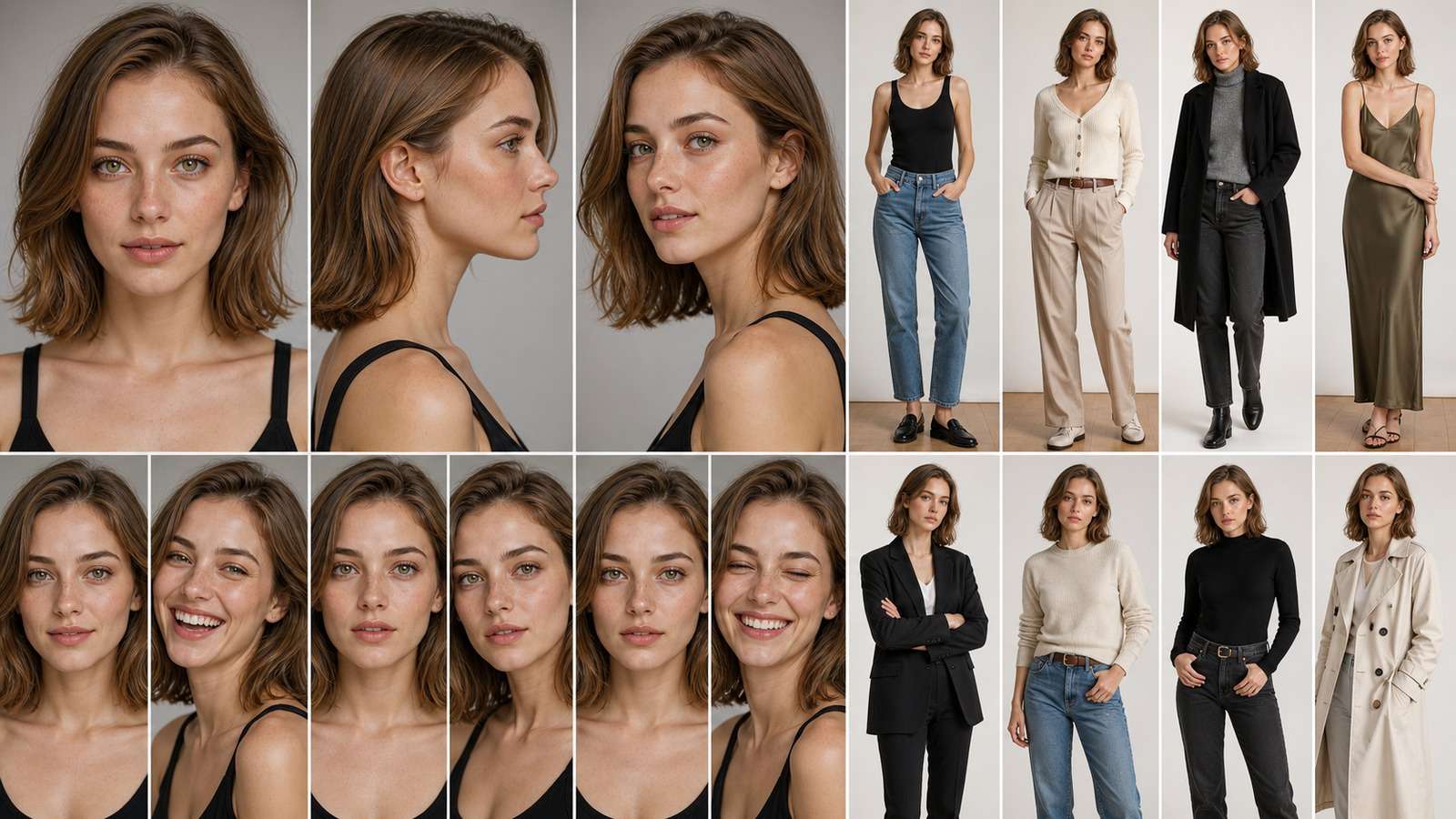
Start with the immutable identity details from the character bible: approximate age, facial structure, eye color, hairstyle, distinguishing marks, body proportions, and visual tone. Generate a neutral portrait first, then use the same approved identity direction for front, profile, three-quarter, expression, and full-body views. This produces a reusable casting pack instead of a collection of unrelated portraits.
Media.io's AI Character Turnaround Sheet is especially useful when the virtual influencer must remain recognizable in both image and video production. Once the identity is stable, the AI Influencer Generator can help explore campaign styling and social concepts. Approve only outputs that pass the identity checklist, and reuse those references throughout production.
Test Identity Before You Scale Content
Run a consistency test across six deliberately different scenes: close portrait, full-body street scene, indoor product shot, outdoor movement, evening lighting, and short video. Compare facial geometry, hairline, eye color, body proportions, signature details, and perceived age. If followers would mistake two frames for different people, the reference system is not ready.

Build a rejection checklist. Common failures include fused accessories, inconsistent jewelry, unreadable product labels, mismatched shadows, waxy skin, impossible reflections, and wardrobe changes that contradict the character. Human review is essential because technical similarity does not guarantee believable continuity.
Turn Still Images into a Repeatable Content Pipeline
A practical pipeline moves from idea to channel-ready assets: content brief, script or caption, reference selection, image generation, motion, voice, edit, captioning, disclosure, and final review. Batch by format rather than generating random posts. For example, produce four educational carousels, four opinion clips, and four behind-the-scenes posts in one cycle.
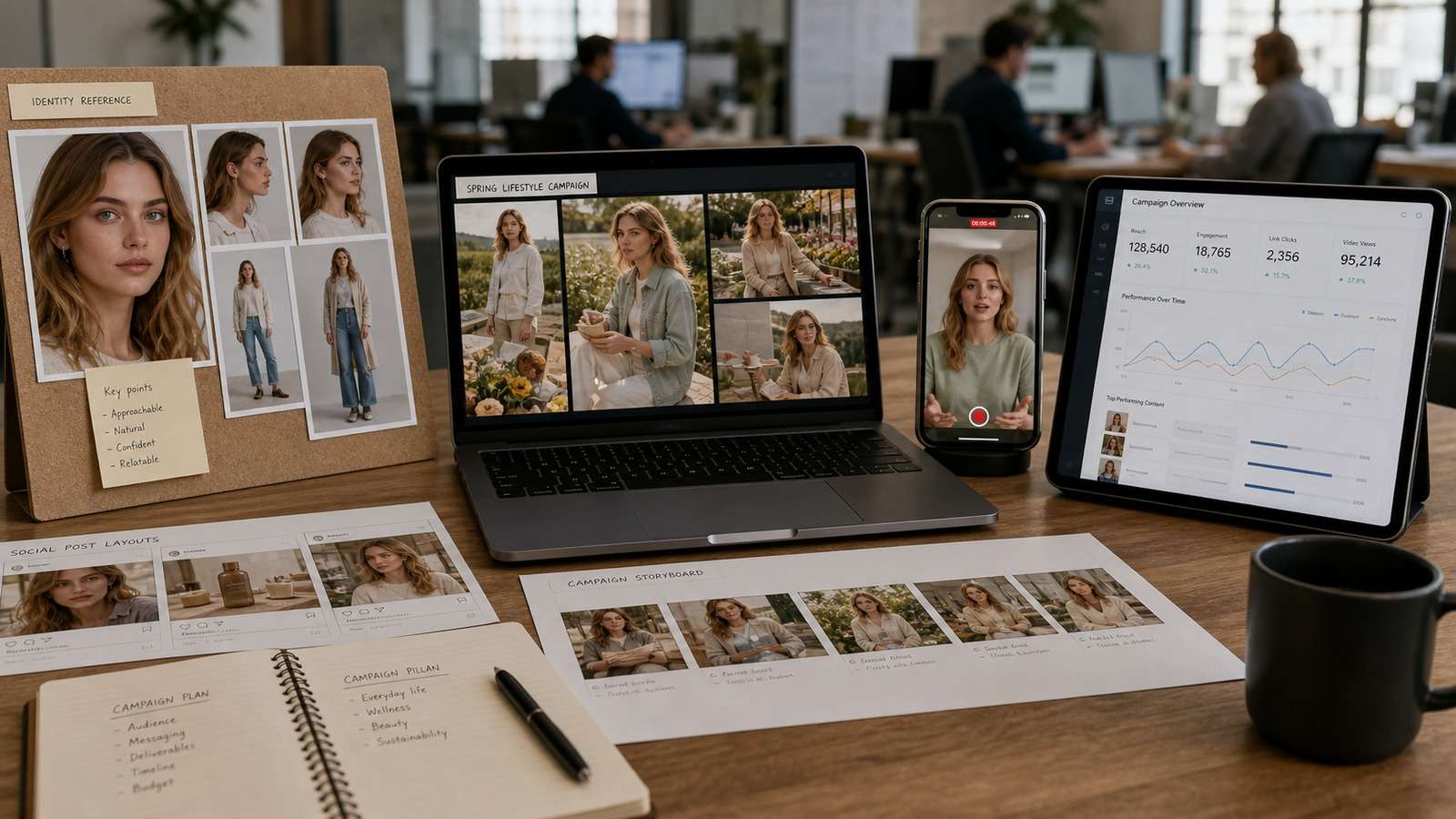
When building a presence for Instagram, emphasize a coherent grid, carousel education, Stories, and saveable posts. For anyone researching how to create a virtual influencer for Instagram, the key is visual continuity combined with community interaction. For TikTok, prioritize a fast hook, a recognizable recurring format, native pacing, and audience replies. The answer to how to create an AI influencer for TikTok is not simply making vertical video; it is giving the character a repeatable behavior viewers can anticipate.
Media.io Viral Studio can support the research-to-production loop by surfacing content directions and helping creators adapt ideas into social-ready formats. Use trend signals as inputs, but filter them through the character's established point of view so the account does not feel opportunistic.
Give the Virtual Influencer a Human Voice
Voice is broader than synthetic speech. Define sentence length, vocabulary, humor, opinions, emotional range, and response rules. Create sample captions for education, entertainment, promotion, apology, disagreement, and community replies. If multiple people operate the account, the voice guide prevents sudden personality shifts.
For video, keep early shots simple: subtle head movement, speaking to camera, walking, or interacting with one object. Complex hand actions, rapid cuts, crowd scenes, and long uninterrupted motion increase artifacts. Short clips can be assembled into a stronger sequence than one ambitious generation.
Choose video methods according to the shot. Image-to-video is useful when the opening appearance must be locked. Talking-avatar or lip-sync workflows suit direct address. Character replacement can preserve a performance while changing the on-screen identity, but it requires extra checks around hands, hair edges, occlusion, and lighting. Do not assume one model will be best for every shot; route each scene to the simplest method that preserves the character.
Launch with a 30-Day Content System
| Week | Goal | Recommended content | Metric |
|---|---|---|---|
| 1 | Establish identity | Origin story, point of view, recurring visual signatures | Profile visits and follows |
| 2 | Prove usefulness | Tutorials, recommendations, niche explainers | Saves and completion rate |
| 3 | Build participation | Polls, comments, audience choices, response videos | Comments and shares |
| 4 | Test conversion | Affiliate concept, lead magnet, brand-fit pilot | Clicks and qualified actions |
Do not automate community engagement without supervision. Replies are where credibility is won or lost. Maintain response boundaries for medical, financial, political, legal, and sensitive personal topics. Escalate uncertain questions to a human operator.
Measure the Account Like a Media Product
Follower count is an incomplete signal. Track hook retention for video, completion rate, saves, shares, profile visits, follow conversion, returning viewers, qualified link clicks, and the percentage of comments that show genuine audience understanding. Compare formats over several posts rather than judging a concept from one unusually strong or weak result.
Keep a simple experiment log containing the hypothesis, audience segment, creative variable, publication time, result, and next decision. Test one meaningful element at a time, such as hook, opening visual, content length, or call to action. If every variable changes, the result cannot improve the production system. Also monitor negative signals: hidden posts, unfollows after promotional content, confused comments about identity, and unusually low repeat viewing. These often reveal a trust or positioning problem earlier than revenue reports.
Plan AI Influencer Monetization Without Damaging Trust
AI influencer monetization usually begins after the account demonstrates a clear audience and consistent engagement. Potential revenue streams include sponsored posts, affiliate marketing, licensed character appearances, digital products, subscription communities, virtual merchandise, and creative services. The right model depends on audience intent: a virtual fitness coach may sell programs, while a fictional fashion commentator may monetize affiliates and campaigns.
Separate audience monetization from platform or tool incentive programs. Referral rewards and temporary creator bonuses can accelerate early revenue, but they are not durable proof of audience demand. A healthier test is whether followers click, subscribe, purchase, or request a collaboration because of the character's content. Track revenue per thousand qualified views, refund rate, repeat purchases, and the share of income controlled by one platform.
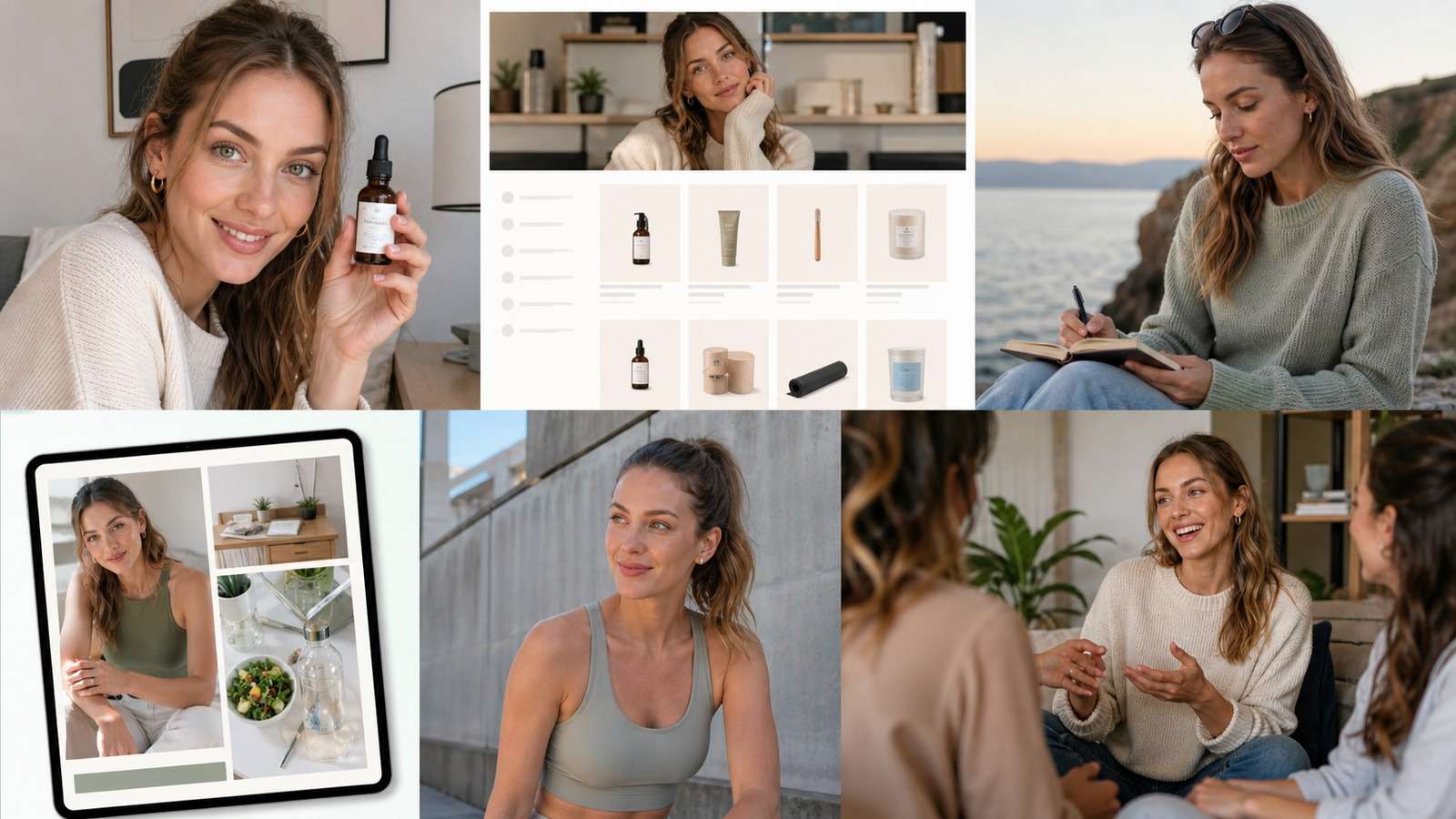
For AI influencer marketing, prepare a media kit that clearly labels the character as virtual, explains the audience, shows content examples, and defines usage rights. Brands need to know who controls the account, how assets may be reused, whether synthetic media is disclosed, and what performance is realistically expected.
Avoid the Most Common Failure Modes
- Beautiful but generic: the account has no editorial reason to follow.
- Identity drift: every post resembles a different model because no reference system exists.
- Over-automation: captions, replies, and trends feel disconnected from the character.
- False realism: the account hides that the personality is virtual or invents unverifiable experiences.
- No rights plan: operators use celebrity likenesses, protected characters, or brand marks without permission.
- Premature selling: monetization arrives before the account has earned attention or trust.
How to Choose the Best AI Influencer Generator
The best AI influencer generator is the one that supports your highest-risk requirement. Score candidates on reference-image fidelity, pose control, expression range, video support, export quality, commercial terms, moderation, speed, cost per usable asset, and privacy. Test with the same character bible and six-scene benchmark. Count usable outputs, not total outputs.
Ultimately, successful virtual influencer examples feel coherent because their operators make deliberate creative decisions. The technology supplies assets; the brand earns recognition through consistency, usefulness, transparency, and disciplined publishing.
Frequently Asked Questions
-
How do I create an AI influencer for free?
Use free or trial image tools to build a small reference set, publish a limited pilot, and validate the concept before paying for advanced video or automation. -
What is the best AI influencer generator?
Choose according to your priority: fast concepting, identity consistency, talking video, or an integrated social workflow. Benchmark tools with the same brief. -
Can an AI influencer make money?
Yes, through sponsorships, affiliates, licensing, digital products, memberships, and services, with transparent disclosure and clear usage rights. -
Should an AI influencer be disclosed as virtual?
Yes. Transparent disclosure supports audience trust and reduces advertising and consumer-protection risk.
Ready to test the concept? Build one strong identity sheet, one recurring content format, and one measurable audience promise before scaling production. You can start with Media.io AI Characters and validate the identity across several scenes before committing to a full publishing calendar.


