
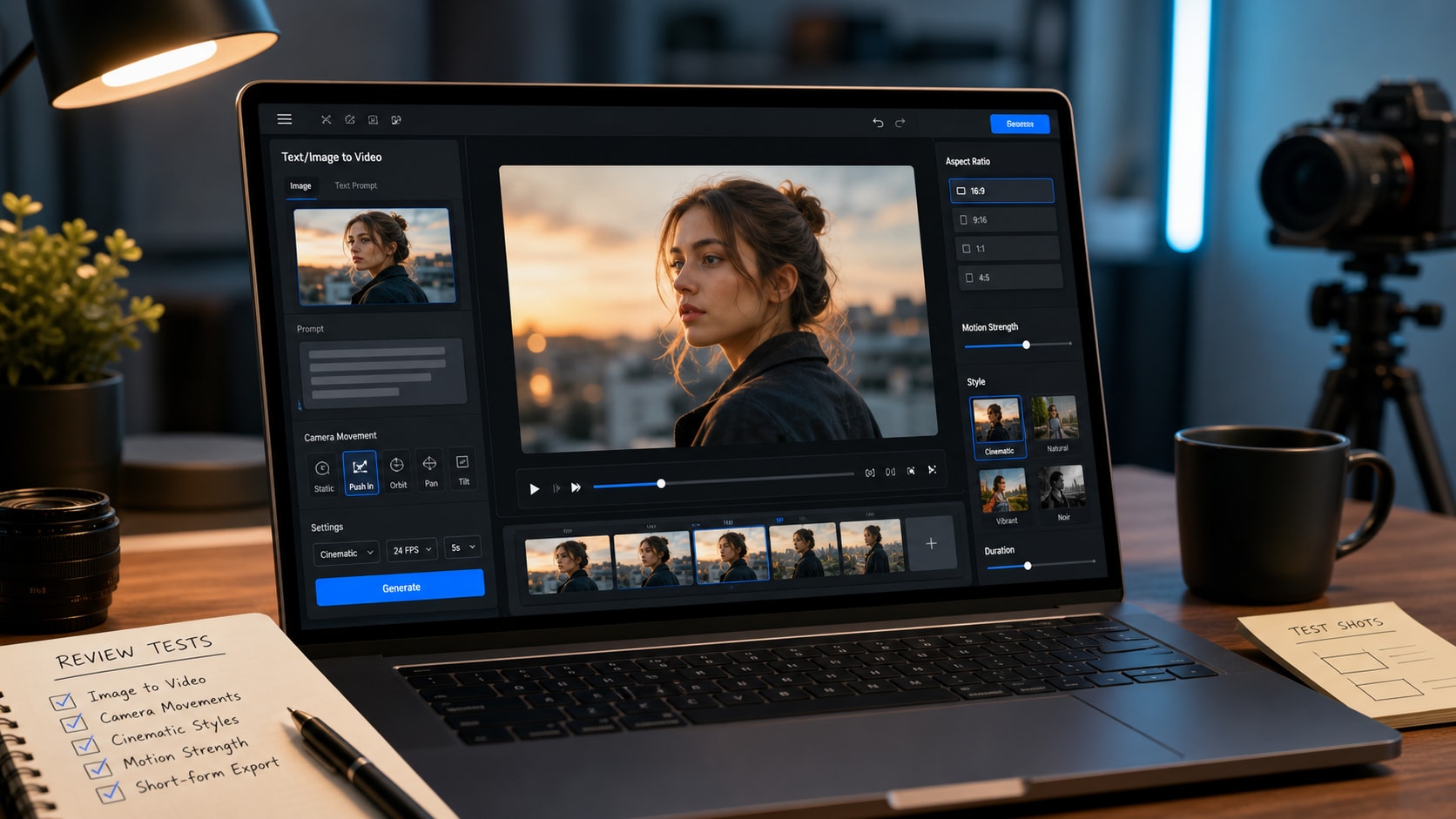
Magic Hour AI is an AI video creation platform focused on short-form generation, image-to-video animation, face swap, talking-photo, and lip-sync workflows. This Magic Hour AI review explains where those tools fit best, what to check around free or paid access, and how motion quality, identity consistency, credits, exports, consent, and commercial-use rules affect real projects.
Magic Hour AI is especially relevant for creators experimenting with social clips, animated portraits, face-driven video effects, and short visual concepts without building a complex editing pipeline first. It becomes less predictable when a project requires exact identity preservation, precise motion, strict brand control, long-form continuity, or clear rights for commercially sensitive faces and source media.
In this article
Part 1: Quick Verdict
How this review was prepared: This review is based on official Magic Hour AI product, pricing, and FAQ information available at the time checked, together with editorial evaluation. It does not claim private hands-on generation testing.
Part 2: What Is Magic Hour AI?
Magic Hour AI is an AI video platform built around short-form generation and face-driven creative workflows. Its tools include video generation, image-to-video animation, face swap, talking-photo creation, lip sync, and related export workflows that can turn a still image or visual idea into short motion content.
Magic Hour is therefore more useful to evaluate as a creative-effects and short-video platform than as a traditional video editor. Its main appeal is the ability to experiment quickly with movement, faces, speech-driven animation, and short social concepts, while more demanding production requires closer checks around identity preservation, consent, motion quality, export limits, and usage rights.
- Best-fit reader
Creators, marketers, social-content users, and visual experimenters who want to animate images, create talking photos, explore face swaps, or test short AI video concepts.
- Decision point
Magic Hour AI makes the most sense when fast short-form generation and face-driven effects matter more than deep timeline editing or long-form production control.
- What to compare
Compare image-to-video quality, identity consistency, face-swap realism, lip sync, motion stability, credits, clip limits, export quality, consent requirements, and commercial-use terms.
Part 3: How Magic Hour AI Works
Magic Hour AI works best as an iterative short-video workflow rather than a guaranteed one-click route to a finished asset. Start with a real prompt, source image, face, or talking-photo use case, choose the appropriate workflow, generate a small set of results, and review identity, motion, speech sync, exports, and rights before publishing.
| Step | What the user does | What to verify |
| 1. Start with the source | Use a realistic prompt, portrait, source image, face, or short-video concept that matches the type of content you actually plan to create. | Make sure you have the appropriate permission to use any recognizable person, likeness, voice, or protected source material. |
| 2. Choose the mode | Select video generation, image-to-video, face swap, talking photo, lip sync, or another available Magic Hour AI workflow. | Confirm feature availability, current plan requirements, credits, clip limits, and whether the workflow fits the intended publishing use. |
| 3. Generate and review | Create a small set of outputs, keep the strongest result, and inspect the complete clip for facial consistency, movement, sync, artifacts, and unwanted changes. | Track how many generations or revisions are required before one result is genuinely usable. |
| 4. Export or finish elsewhere | Download, enhance, resize, caption, translate, or continue editing the selected clip when additional production work is required. | Confirm watermark behavior, resolution, file format, credits or generation allowance, privacy, consent, and current commercial-use terms. |
This workflow is particularly important for face-driven AI video. A result can look convincing in one frame but still fail when facial features drift, mouth movement feels unnatural, the swapped identity changes during motion, or the full clip reveals artifacts that were not obvious in the preview.
Part 4: Magic Hour AI Features
Magic Hour AI's most distinctive features are centered on turning faces and still images into short motion content. Talking-photo, lip-sync, face-swap, image-to-video, and export workflows should be judged by how well they preserve identity and visual coherence across the complete clip.
| Feature | Best use case | Clear limitation to check |
| Talking photo workflow | Animating a portrait or still character so it appears to speak in a short social, explainer, character, or creative clip. | Check mouth movement, facial stability, blinking, head motion, speech timing, and whether the source face remains recognizable throughout the clip. |
| Lip-sync workflow | Synchronizing visible mouth movement with speech when a source face or character needs to appear to deliver audio. | Review timing, mouth shapes, difficult words, facial movement, and whether sync remains convincing from beginning to end. |
| Subtitle or translation workflow | Preparing short video content for different languages or audiences when the workflow includes speech or localized text. | Check translated meaning, subtitle timing, language accuracy, voice fit, and whether any localized version changes the intended message. |
| Templates | Starting from a predefined creative format or effect when the goal is to produce a quick social or short-form result rather than build the visual structure manually. | Check whether the template fits the source asset, final platform, brand requirements, and intended audience rather than forcing the content into a generic result. |
| Video export workflow | Turning a generated image-to-video, face-swap, or talking-photo result into a downloadable short clip for review or publishing. | Check clip duration, resolution, watermark behavior, file format, credit use, and whether further enhancement or editing is required. |
For a meaningful Magic Hour AI test, use one straightforward asset and one difficult face-driven case. A simple portrait can test basic animation, while a recognizable face with head movement, speech, or a more demanding image-to-video action can reveal whether identity and motion remain stable enough for the intended use.
Part 5: Magic Hour AI Output Quality and Practical Limitations
Magic Hour AI output quality should be judged by full-clip motion, identity preservation, face consistency, and usable exports rather than by a single strong frame. Face-driven AI video is particularly sensitive to small visual errors because viewers notice changes in eyes, mouths, facial structure, and identity quickly.
| Evaluation area | Expected fit | What to inspect | Practical takeaway |
| Motion quality | Test first | Use a prompt or source image with the actual movement you need, then watch the full clip for subject drift, broken motion, camera changes, and visual artifacts. | Magic Hour AI creates more value when most of the exported clip remains usable rather than only the opening or strongest frames. |
| Prompt or reference control | Test first | Use a recognizable source image or detailed prompt and compare the generated clip with the requested subject, identity, style, composition, and action. | Better reference control reduces retries and matters especially when a face, product, or recurring subject must remain recognizable. |
| Editing and export fit | Test first | Take a promising clip through the final export process and check whether resolution, watermark behavior, aspect ratio, quality, and any required correction fit the publishing channel. | A generation is useful only when the exported version is good enough for the intended platform or workflow. |
| Cost per usable clip | Test first | Record generations, retries, face-swap attempts, lip-sync revisions, effects, and exports required before one clip meets the project's standard. | The most useful pricing metric is the credits or plan capacity required to reach an approved clip, not the cost of the first attempt. |
Practical limitations to check
- Face-driven workflows increase the importance of identity review: Face swap, talking-photo, and lip-sync results should be checked through the entire clip for facial drift, unnatural mouth movement, eye behavior, and changes in the recognizable subject.
- Free or paid limits can change the real cost of experimentation: Credits, clip duration, available models, exports, watermark behavior, and the number of retries required all influence the cost of reaching one usable result.
- Consent matters more when real faces are involved: A technically convincing face swap or talking-photo result should not be treated as permission to use another person's likeness in public or commercial content.

Part 6: Magic Hour AI Pricing, Free Access, and Credits
Magic Hour AI pricing was checked on 2026-08-05. Use the live pricing or account screen as the final source for current plan names, credits, supported tools, video duration, model access, export limits, renewal conditions, and refund rules.
| Pricing question | What to check | Why it matters |
| Free access | Trial allowance, supported tools, clip duration, credits, watermark behavior, queue limits, export resolution, and account region. | A free test is useful only when it represents the face, motion, and export workflow you actually plan to use. |
| Paid plans | Current monthly or annual price, included credits, tool access, clip limits, renewal terms, and cancellation rules. | The best plan is the one that supports enough usable face-swap, image-to-video, or talking-photo outputs for the intended workload. |
| Extra usage | Additional credits, premium models, effects, exports, lip-sync or other actions that may affect the final cost. | Face-driven workflows often require retries, so extra usage can materially affect cost per accepted clip. |
Credits and usage limits
Magic Hour AI should be evaluated by usable clips per allowance rather than headline generation count alone. Image-to-video, face swap, talking-photo, or lip-sync workflows may require several attempts before identity, motion, and export quality are acceptable.
- Confirm which video-generation, face-swap, lip-sync, talking-photo, and export actions consume the current allowance.
- Test one real face-driven or image-to-video project before upgrading mainly for additional capacity.
- Calculate usage based on accepted clips after retries and revisions rather than total generation attempts.
Part 7: Magic Hour AI Pros and Cons
Magic Hour AI's main advantage is its focus on short-form and face-driven creative workflows. Image-to-video, face swap, talking-photo, and lip-sync tools make it useful for visual experimentation, while the main trade-offs are identity consistency, consent requirements, credit planning, and the need to review the full clip before publishing.
Part 8: Is Magic Hour AI Safe? Privacy, Consent, and Commercial Use
Magic Hour AI is a public AI video platform, but safe and commercially appropriate use depends on current terms, privacy rules, consent, and the rights attached to any face, voice, image, music, brand, or other source material used. Face swap and talking-photo workflows deserve particular care because recognizable likenesses can create privacy, consent, and commercial-rights concerns.
| Question | What to check before use |
| Privacy and uploads | Avoid uploading confidential images, unreleased campaign material, private documents, client assets, or another person's face unless Magic Hour AI's current policies and your own permissions support that use. |
| Consent | Before creating face swaps, talking photos, lip-sync videos, or other content involving a real person's likeness or voice, confirm that you have permission for both the generation and intended publication. |
| Commercial use | Magic Hour AI commercial use should be checked against current terms, the selected plan, and the rights attached to uploaded faces, voices, images, music, logos, products, and other third-party material. Downloading a generated file does not automatically resolve likeness, copyright, trademark, or licensing questions. |
| Paid plans and refunds | The reviewed information states that a one-time refund may be available when the subscription purchase was made within the past 7 days and fewer than 500 credits have been used after purchase. Confirm current checkout, renewal, cancellation, eligibility, and refund terms before subscribing. |
Personal experiments using authorized material may require only basic checks. Advertising, client work, ecommerce, branded social content, public face swaps, and other commercial projects should use approved source assets and review current consent and usage terms before publishing.
Part 9: Magic Hour AI vs Media.io: Which Workflow Fits the Job?
Magic Hour AI and Media.io fit different parts of a short-video workflow. Magic Hour AI is especially relevant when the creative task involves image-to-video generation, face swaps, talking photos, or other face-driven effects. Media.io becomes more useful when a selected clip needs enhancement, resizing, or another focused finishing step before publication.
| Workflow question | Magic Hour AI | When to compare Media.io |
| First creative result | Evaluate Magic Hour AI primarily on identity consistency, motion quality, face or lip-sync realism, clip duration, and current credit limits. | Compare Media.io after the core creative result is selected and a specific finishing task still remains. |
| Before publishing | Check watermark behavior, resolution, consent, output rights, facial consistency, and whether additional editing is required. | Use focused follow-up tools when enhancement, resizing, cleanup, captions, or export preparation remains part of the workflow. |
| Still image to motion | Magic Hour AI supports image-to-video workflows when the main goal is creating a short AI-driven motion result. | AI Image to Video provides another direct route for animating a source image into a social or creative clip. |
| Quality enhancement | Magic Hour AI is strongest during the generation and face-driven effects stage. | Video Enhancer can improve a selected generated or uploaded clip before publishing. |
Part 10: Final Verdict: Is Magic Hour AI Worth It?
Part 11: Magic Hour AI Review FAQs
-
Is Magic Hour AI worth it in 2026?
Magic Hour AI is worth trying in 2026 if you regularly create short image-to-video clips, face swaps, talking photos, lip-sync videos, or other face-driven AI effects. It is less suitable when exact identity preservation, long-form editing, or highly predictable production output is required. -
Is Magic Hour AI free?
Magic Hour AI may provide free or trial generation depending on the current account and offer. Use the lowest-risk access to test clip duration, face or motion quality, watermark behavior, credits, queue limits, and export quality before paying. -
How much does Magic Hour AI cost?
Magic Hour AI pricing can change, so use the live pricing or account page as the final source for plan names, credits, available tools, clip limits, model access, export conditions, renewal terms, and refund eligibility. -
How do Magic Hour AI credits or usage limits work?
Magic Hour AI may limit usage through credits, generation counts, clip duration, model access, or other plan allowances. For face-swap, lip-sync, or image-to-video workflows, measure how many accepted clips the allowance produces after retries rather than counting initial generations alone. -
What is Magic Hour AI best for?
Magic Hour AI is best for image-to-video animation, face swap, talking photos, lip sync, short AI video generation, social effects, animated portraits, and other face-driven creative experiments. -
What are the main limitations of Magic Hour AI?
Magic Hour AI's main limitations are identity consistency, face and lip-sync artifacts, motion stability, plan-dependent credit and export limits, and the additional consent requirements involved when real people or recognizable likenesses are used. -
Is Magic Hour AI safe and legit?
Magic Hour AI is a public AI video platform with official product, pricing, and FAQ pages. Safe use still depends on current privacy rules, account terms, consent, and the faces, images, voices, brands, music, or other source material used in the workflow. -
Can Magic Hour AI be used commercially?
Magic Hour AI commercial use should be checked against current plan terms and the rights attached to every source face, voice, image, logo, music track, or other protected asset involved. Face swaps and talking-photo videos may require explicit likeness or usage permission. -
Does Magic Hour AI add a watermark?
The public information reviewed here did not establish one universal watermark rule for every Magic Hour AI workflow. If watermark-free export is important, confirm the current plan, tool, resolution, file format, credit requirement, and export conditions in the live account. -
What is the best alternative to Magic Hour AI?
The best Magic Hour AI alternative depends on the workflow. Compare another face-driven AI platform when face swap or talking-photo generation is the priority, or Media.io when a finished clip mainly needs image-to-video creation, enhancement, resizing, or other post-generation processing.
Part 12: Sources
- Official source: Magic Hour AI product overview (official, checked 2026-08-05)
- Official source: Magic Hour AI pricing and plan information (official, checked 2026-08-05)
- Official source: Magic Hour AI FAQ, usage, and refund information (official, checked 2026-08-05)


