
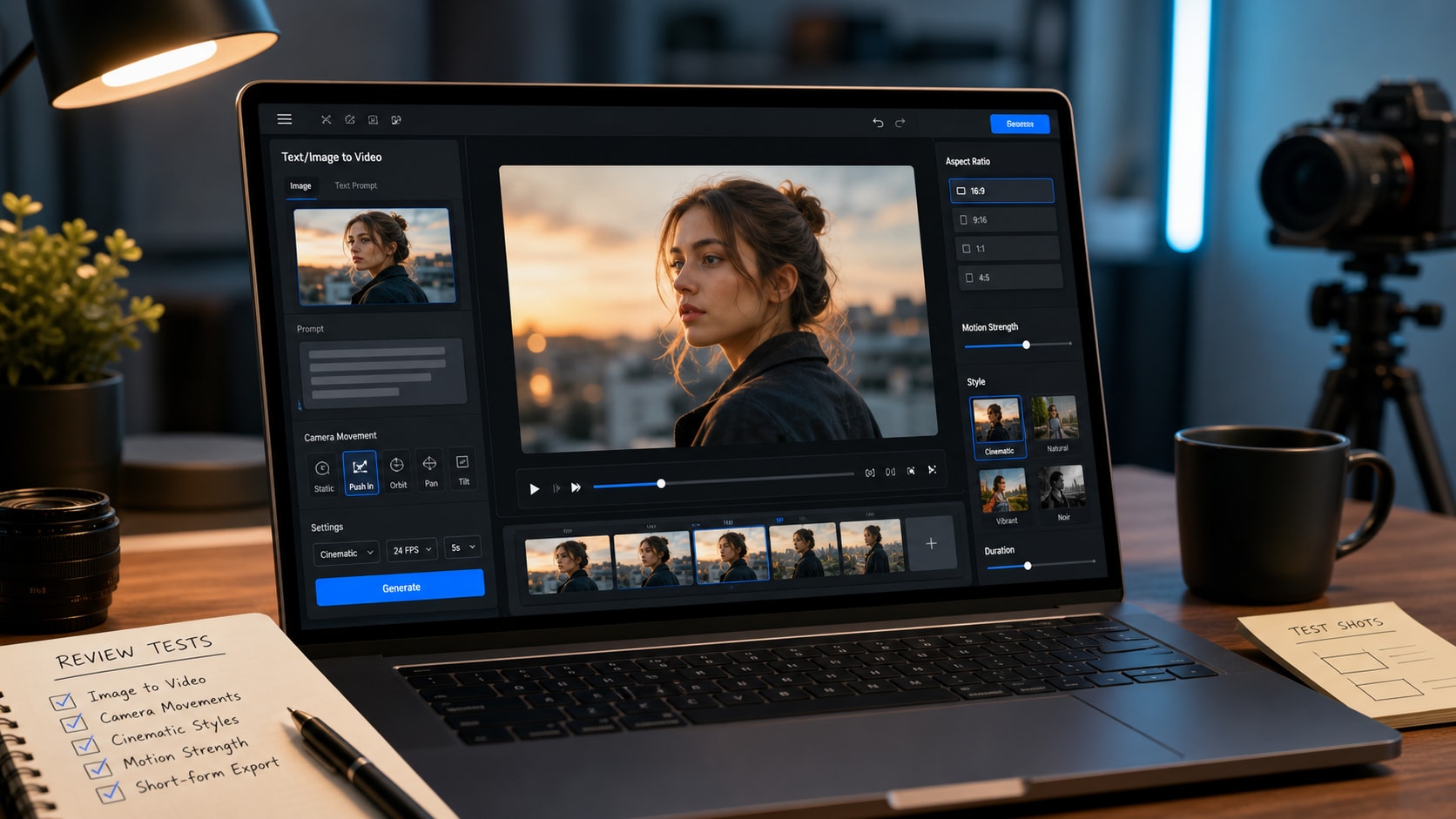
Animaker AI is an online video creation platform built around animated characters, avatars, templates, voice options, and AI-assisted video generation. This Animaker AI review examines how those tools fit explainers, training videos, social content, branded presentations, and localized video production, while also covering free or paid access, export limits, safety, and commercial-use considerations.
Animaker AI is especially relevant when a team wants to create presenter-style or animated videos without filming every scene from scratch. Its practical value depends on character and avatar credibility, voice quality, template flexibility, localization accuracy, brand consistency, export rules, and whether the current plan supports repeated production.
In this article
Part 1: Quick Verdict
How this review was prepared: This review is based on official Animaker product, pricing, and terms information available at the time checked, together with editorial evaluation. It does not claim private hands-on generation testing.
Part 2: What Is Animaker AI?
Animaker AI is an online video creation platform for building animated and presenter-style content using characters, avatars, templates, voice options, localization tools, and AI-assisted workflows. Rather than functioning only as an AI avatar generator, Animaker combines character-based video production with reusable layouts and broader visual storytelling tools.
That makes Animaker particularly relevant to teams that need repeatable video formats. A training department can reuse visual structures, a marketing team can adapt branded explainers, and a social creator can create character-led versions without rebuilding every scene from scratch.
- Best-fit reader
Marketers, educators, training teams, social creators, internal-communications teams, and businesses producing animated explainers, avatar presentations, or template-based video content.
- Decision point
Animaker AI makes the most sense when characters, templates, voices, localization, and repeatable scene structures reduce the amount of manual video production required.
- What to compare
Compare animated-character flexibility, avatar credibility, voice quality, template customization, localization accuracy, brand consistency, export resolution, plan limits, and commercial-use terms.
Part 3: How Animaker AI Works
Animaker AI works best as a template-and-character-driven production workflow rather than a one-click AI video generator. Start with the real script or video brief, choose the appropriate character, avatar, template, voice, or localization path, customize the scenes, review the complete video, and confirm export and usage rules before publishing.
| Step | What the user does | What to verify |
| 1. Start with the real brief | Use the actual explainer, training, social, product, educational, or internal-communication brief you plan to produce. | Define script length, visual style, target audience, brand requirements, language needs, and final publishing channel. |
| 2. Choose the production path | Select an animated character, AI avatar, template, voice, localization workflow, or another Animaker video mode that matches the project. | Check whether the chosen assets and features are included in the current plan and whether export or usage restrictions apply. |
| 3. Customize and review | Adjust scenes, characters, voices, subtitles, templates, branding, and timing, then watch the complete video rather than judging one frame. | Check voice quality, character behavior, lip sync where relevant, text accuracy, brand consistency, subtitle timing, and scene pacing. |
| 4. Export or finish elsewhere | Download, enhance, caption, translate, resize, or continue editing the approved video when another production step remains. | Confirm watermark behavior, resolution, file format, plan allowance, privacy, output rights, and current commercial-use terms. |
This workflow is more useful than evaluating a single AI feature in isolation. Animaker creates the most value when a team can move from script to reusable scenes, characters, branded layouts, voice, localization, and export without recreating the same production structure for every new video.
Part 4: Animaker AI Features
Animaker AI's most useful features are tied to repeatable animated and presenter-style production. Animated characters, avatars, templates, voices, and localization should be judged by how well they work together to produce consistent videos rather than as isolated AI effects.
| Feature | Best use case | Clear limitation to check |
| Animated characters | Creating explainers, educational videos, training content, storytelling, or social clips where illustrated characters communicate the message. | Check character customization, pose and motion flexibility, visual consistency, scene transitions, and whether the style fits the intended audience. |
| AI avatar presentation | Creating presenter-style training, onboarding, educational, marketing, or internal videos without filming a speaker. | Check facial credibility, lip sync, voice quality, pacing, consent, likeness rights, and whether the avatar remains appropriate for customer-facing use. |
| Templates | Building repeatable explainers, social videos, campaign assets, training modules, or branded presentations without designing every scene from scratch. | Check whether templates can be adapted enough to preserve brand colors, typography, legal copy, layout requirements, and channel-specific formats. |
| Voice options | Adding narration to animated or avatar-led videos when recording every version manually would slow production. | Test pronunciation, names, numbers, acronyms, pacing, emotional fit, and whether the selected voice sounds credible across the full script. |
| Language and localization support | Preparing videos for different markets, training audiences, or regions without rebuilding the entire production from scratch. | Check translated meaning, terminology, subtitle timing, accent fit, character or avatar consistency, and whether human review is still required. |
For a meaningful first test, use one straightforward animated explainer and one difficult production brief. The harder test should include a branded layout, a recurring character or avatar, product terminology, long narration, subtitles, and at least one localized version. That reveals whether Animaker remains efficient once consistency matters.
Part 5: Animaker AI Output Quality and Practical Limitations
Animaker AI output quality should be judged by complete-video consistency, not only by the quality of one character or template. A useful production workflow needs believable characters or avatars, readable text, clear narration, stable branding, accurate localization, and an export that meets the intended publishing requirements.
| Evaluation area | Expected fit | What to inspect | Practical takeaway |
| Animated-character consistency | Test first | Check recurring characters across scenes for clothing, visual style, pose, proportions, motion, expression, and whether the character still feels consistent throughout the video. | Character-based production becomes more valuable when repeat scenes look related instead of appearing like separate visual assets. |
| Avatar and voice credibility | Task-dependent | Watch the full presenter sequence for facial movement, eye behavior, lip sync, pronunciation, pauses, emphasis, and overall delivery. | Avatar quality matters most when the presenter supports the message instead of distracting viewers with synthetic behavior. |
| Template and brand consistency | Test first | Apply a real brand brief and check fonts, colors, logos, layouts, legal copy, text hierarchy, scene repetition, and how easily variants can be produced. | Templates create real production value only when they speed up publishing without forcing the brand into an unsuitable generic layout. |
| Localization readiness | Task-dependent | Check translated wording, subtitles, pronunciation, timing, cultural phrasing, voice fit, and whether longer translated text breaks the template or scene layout. | Localization saves time when translated versions require limited manual repair after generation. |
Practical limitations to check
- Templates can become restrictive in brand-heavy work: A layout that speeds up production may still require substantial customization when typography, legal copy, product detail, or visual hierarchy must follow strict guidelines.
- Character and avatar credibility varies by use case: Animated explainers can tolerate stylization more easily than customer-facing presenter videos, where speech, lip sync, body language, and identity may receive closer scrutiny.
- Localization affects both language and layout: Translated text can change subtitle length, scene timing, narration pace, and template spacing, so localized versions should be reviewed as complete videos rather than text substitutions.

Part 6: Animaker AI Pricing, Free Access, and Credits
Pricing was checked on 2026-08-05. Use the live Animaker pricing or account screen as the final source for current plan names, animated-character access, avatars, voices, exports, watermark rules, video resolution, usage allowances, renewal conditions, cancellation rules, and refunds.
| Pricing question | What to check | Why it matters |
| Free access | Available templates, characters, avatars, voices, watermark behavior, resolution, export allowance, and account region. | A free test is useful only when it represents the type of animated or presenter-style video you intend to produce repeatedly. |
| Paid plans | Current monthly or annual price, asset access, exports, video resolution, characters, voices, avatars, collaboration or premium features, renewal terms, and cancellation conditions. | The best plan is the one that supports completed branded videos rather than simply providing the largest headline feature list. |
| Extra usage | Additional premium assets, exports, character features, localization, stock media, or other actions that may be restricted by the selected plan. | Repeated variants and localized versions can increase the real cost of one approved campaign or training video. |
Credits and usage limits
Animaker AI should be evaluated by approved finished videos rather than by individual credits, exports, or feature counts alone. One real project can involve animated characters, templates, voices, avatar generation, subtitles, localization, stock assets, revisions, and multiple exports.
- Check which characters, avatars, templates, premium assets, voices, exports, and localization features are limited by the current plan.
- Run one realistic project from script through final export before choosing a higher tier.
- Measure plan value by completed publishable videos rather than isolated AI actions.
Part 7: Animaker AI Pros and Cons
Animaker AI's main advantage is structured video production: characters, avatars, templates, voices, and localization can reduce the effort required to build repeatable explainers or presenter-style content. Its main trade-offs are template constraints, avatar realism, plan-dependent asset access, and the need to review localized or commercial content carefully.
Part 8: Is Animaker AI Safe? Privacy, Consent, and Commercial Use
Animaker AI is a public online video creation platform, but safe and commercially appropriate use depends on current terms, privacy rules, and the rights attached to uploaded media, voices, likenesses, characters, music, templates, and other production assets. This becomes especially important when avatar or voice workflows represent real people or when videos are created for clients, advertising, training, or other paid use.
| Question | What to check before use |
| Privacy and uploads | Avoid uploading confidential scripts, client footage, private documents, unreleased brand assets, or another person's likeness unless current Animaker policies and your own permissions support that use. |
| Consent | For real people, voices, likenesses, brand marks, music, product images, stock assets, and copyrighted references, confirm that you have the required permission before uploading, generating, or publishing. |
| Commercial use | Animaker AI commercial use should be checked against current terms, plan status, selected templates or assets, voices, avatars, likenesses, music, logos, product claims, and other third-party rights involved in the final video. Exporting a file does not automatically clear those rights. |
| Paid plans and refunds | The reviewed pricing material includes subscription cancellation and Enterprise messaging, but it does not establish one universal refund rule for every purchase. Confirm current checkout, renewal, cancellation, and refund terms before choosing a larger plan. |
Personal experiments using authorized assets may require only basic checks. Client work, advertising, ecommerce, training, education, and branded campaigns should use approved scripts, characters, voices, media, and templates and review the current commercial-use terms before publication.
Part 9: Animaker AI vs Media.io: Which Workflow Fits the Job?
Animaker AI and Media.io fit different stages of a video-production workflow. Animaker is strongest when the main job is building the animated or avatar-led video itself through characters, templates, voices, and scenes. Media.io becomes more relevant when that finished draft needs focused subtitle, translation, enhancement, resizing, or publishing preparation. Learn more about Animaker AI VS Media.io.
| Workflow question | Animaker AI | When to compare Media.io |
| First creative result | Evaluate Animaker primarily on animated characters, avatars, template flexibility, voice quality, branding, localization, and how efficiently scenes can be reused. | Compare Media.io after the core video structure is approved and a focused finishing task remains. |
| Before publishing | Check watermark behavior, export resolution, voice or avatar quality, brand consistency, subtitles, plan limits, and output rights. | Use follow-up tools when subtitle cleanup, translation, enhancement, resizing, or export preparation remains part of the workflow. |
| Captions and subtitles | Animaker can include text and subtitle elements as part of its broader animated-video production workflow. | Auto Subtitle Generator can add or clean subtitles when caption accuracy is the remaining publishing task. |
| Translation review | Animaker is relevant when the same animated or avatar-led video needs localized versions. | AI Video Translator provides another route for preparing translated versions for a different audience. |
Part 10: Final Verdict: Is Animaker AI Worth It?
Part 11: Animaker AI Review FAQs
-
Is Animaker AI worth it in 2026?
Animaker AI is worth trying in 2026 if you regularly create animated explainers, avatar videos, training content, educational videos, or reusable branded assets with characters and templates. It is less suitable when highly realistic presenter performance or advanced cinematic editing is required. -
Is Animaker AI free?
If Animaker AI currently provides free or trial access, use it to test one complete short video with a character or avatar, voice, template, and export. Check watermark behavior, resolution, premium asset access, plan limits, and commercial-use conditions before upgrading. -
How much does Animaker AI cost?
Animaker AI pricing can change, so use the live Animaker pricing or account page as the final source for current plans, exports, resolution, animated characters, avatars, voices, premium assets, renewal terms, cancellation conditions, and refunds. -
What is Animaker AI best for?
Animaker AI is best for animated-character videos, explainers, avatar presentations, training content, educational videos, social media, reusable templates, and teams that want structured video production without filming every scene manually. -
Can Animaker AI create animated characters?
Yes. Animated characters are one of the core ways Animaker differs from avatar-only tools. Character-led workflows are useful for explainers, educational content, storytelling, social media, and repeatable videos where illustrated presentation fits the audience. -
Does Animaker AI support avatars?
Yes. Animaker AI includes avatar-oriented presentation workflows alongside animated characters and templates. Avatar videos should still be reviewed for facial credibility, lip sync, voice quality, consent, and whether the presenter is appropriate for the intended audience. -
What are the main limitations of Animaker AI?
Animaker AI's main limitations are template constraints, plan-dependent premium assets and exports, avatar or voice review, localization accuracy, and less editing depth than specialist professional timeline-based video software. -
Is Animaker AI safe and legit?
Animaker AI is a public online video creation platform with official product, pricing, and terms pages. Safe use still depends on current privacy policies, account terms, consent, and whether you have permission to use the voices, likenesses, characters, music, stock media, brands, and other assets involved. -
Can Animaker AI be used commercially?
Animaker AI commercial use should be checked against current terms, plan status, templates, stock assets, voices, avatars, likenesses, music, logos, product material, and any other third-party rights involved in the finished video. -
Does Animaker AI add a watermark?
Watermark behavior can depend on the current Animaker plan and export conditions. If watermark-free output matters, confirm the exact plan, video resolution, asset type, file format, and live export rules before publishing. -
What is the best alternative to Animaker AI?
The best Animaker AI alternative depends on whether you need another character-and-template video platform or a more focused media-processing workflow. Media.io is worth comparing when an Animaker video mainly needs subtitle cleanup, translation, enhancement, resizing, or final publishing preparation.
Part 12: Sources
- Official source: Animaker product, animated characters, avatars, and video creation overview (official, checked 2026-08-05)
- Official source: Animaker pricing, plans, exports, and account information (official, checked 2026-08-05)
- Official source: Animaker terms, policies, and commercial-use information (official, checked 2026-08-05)