
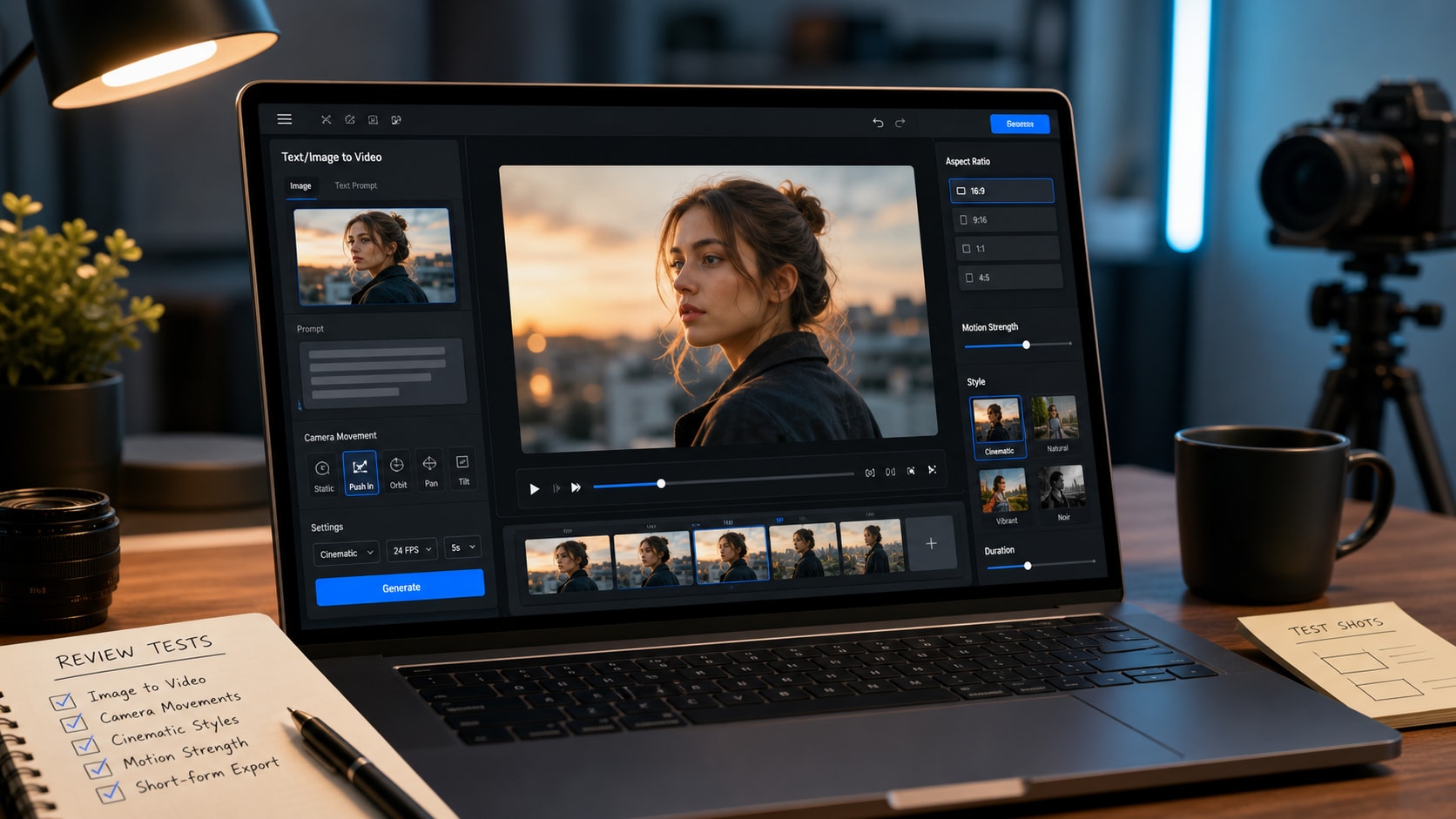
Animaker AI is useful for animated explainers, presentations, characters, templates, and business videos. An Animaker AI alternatives search usually means the user still wants approachable video creation, but needs stronger script handling, presenter options, editing depth, or export polish.
This guide compares tools by practical output: explainers, training videos, avatar-led messages, social edits, brand templates, and finished video files that can be delivered without heavy cleanup.
In this article
Part 1: Quick Verdict: What is the Best Animaker AI Alternative?
Part 2: Animaker AI alternatives at a Glance
The table below focuses on where each Animaker AI competitor improves the workflow: script-to-video, animation, templates, avatars, online editing, or final delivery.
| Alternative | Best For | Main Advantage Over Animaker AI | Main Tradeoff | Generation + Editing | Free Access |
| Media.io Best Publish-ready Workflow |
creators who need script-to-video, ads, enhancement, subtitles, resizing, and export-ready explainers. | Stronger finishing workflow after AI generation. | Less focused on hand-built animated characters. | Strong | Free or introductory access may be available; limits vary by tool. |
| Steve AI Best Script Explainers |
educators, trainers, and marketers turning written scripts into animated explainers. | More direct script-to-animation workflow. | Less broad for final editing and social repurposing. | Moderate | Free or trial access may be available; verify current plan limits. |
| Renderforest Best Brand Templates |
small businesses that need promos, intros, logo videos, and repeatable brand assets. | Stronger brand-template workflow. | Less flexible for custom animated scenes. | Moderate | Free access may be available; verify watermark and export limits. |
| Powtoon Best Training Explainers |
teams creating training, presentations, education, and internal communication videos. | Better fit for presentation-style explainers. | Less focused on AI-native generation. | Strong for Explainers | Free or trial access may be available; verify current export limits. |
| InVideo AI Best Fast Assembly |
creators who want prompts or scripts assembled into social, YouTube, or explainer videos. | Faster AI-assisted video assembly. | Less focused on character animation. | Strong | Free or trial access may be available; check current export and watermark limits. |
| VEED Best Online Editing |
teams editing explainer drafts with subtitles, translations, layouts, and social formats. | Stronger editing layer after the first video exists. | Less specialized for animation creation. | Strong Editing | Free plan may be available; verify watermark and export limits. |
| Kapwing Best Team Editing |
teams that need captions, templates, approvals, social clips, and collaborative edits. | Better collaborative review and repurposing workflow. | Less centered on animated explainers. | Strong Editing | Free plan may be available; check watermark and export limits. |
| HeyGen Best Avatar Presenters |
business teams that need avatar presenters, localization, onboarding, sales, and training videos. | Stronger avatar and localization workflow. | Less useful for animated character scenes. | Strong for Avatars | Free access or trials may be available; verify avatar and export limits. |
Part 3: What Does Animaker AI Do Well?
Animaker AI does well for teams that need animated explainers, template-based videos, simple characters, presentations, and business communication without a traditional animation pipeline.
It is especially useful when the message is structured and the team wants predictable animated scenes rather than open-ended cinematic AI generation.
Part 4: Why look for a Animaker AI Alternative?
1. You need stronger script-to-video output
If written content is the starting point, a script-led video generator may assemble scenes and narration faster than a template editor.
2. You need presenter or localization workflows
Animated characters are useful, but training, sales, and customer education may need realistic avatars, voices, translation, or talking presenters.
3. You want better editing after the first draft
Explainers often need captions, resizing, cuts, compression, and social versions after the initial video is created.
4. You need brand templates with less manual setup
Some teams need fast intros, promos, and branded formats more than hand-building scenes.
5. You want a clearer publishing path
The best alternative may be the tool that gets the final file approved and exported faster, not the one with the biggest template library.
Part 5: How We Compared These Animaker AI Alternatives?
We compared Animaker AI alternatives using official product pages, pricing or plan pages where available, help documentation, and the workflow each product is designed to support. Product claims and access models were reviewed in July 2026.
Each product was evaluated against the reason someone would leave Animaker AI, not against a generic feature checklist. A narrower tool can rank highly when it solves one recurring problem better than a broader suite.
- Core workflow fit: how directly the platform solves the main creation job behind the keyword.
- Creative control: prompt control, references, scene structure, editing options, and output correction.
- Production completeness: whether the workflow continues into subtitles, enhancement, resizing, ads, localization, or publishing.
- Use-case clarity: whether the tool has a distinct reason to be selected instead of repeating another option.
- Access and cost risk: free access, plan limits, credit usage, queue speed, watermark rules, and likely retry cost.
Because AI model access, prices, credits, and commercial-use rules change often, readers should verify current official plan details before moving paid production work.
Part 6: Best Animaker AI Alternatives by Use Case
The best Animaker AI alternative depends on whether your bottleneck is the first script draft, template animation, avatar presentation, brand video, or editing after the explainer is built.
1. Media.io: Best Animaker AI Alternative for Script Videos and Final Delivery
Media.io is a Animaker AI alternative for creators who need script-to-video, ads, enhancement, subtitles, resizing, and export-ready explainers. It makes the most sense when the user knows the exact bottleneck and wants a tool built around that production step.
Compared with Animaker AI, Media.io is stronger when you need to turn scripts, clips, and product assets into polished videos. The tradeoff is that less focused on hand-built animated characters, so it should be tested with the same prompt, script, source image, product URL, or video clip before switching.
Where Media.io is stronger
- Workflow fit: Stronger finishing workflow after AI generation for teams that need a clearer path than Animaker AI provides.
- Use-case clarity: Best suited to creators who need script-to-video, ads, enhancement, subtitles, resizing, and export-ready explainers
- Production value: Useful when the decision depends on usable output, revision time, and how much polish remains after generation.
- Switching signal: Most worth testing when you need to turn scripts, clips, and product assets into polished videos.
Where Animaker AI may still be better
Animaker AI may still be better when its native workflow already solves the core job faster, or when the project depends on features that Media.io does not specialize in.
Pros and Cons:
Choose Media.io if: you need to turn scripts, clips, and product assets into polished videos
Skip it if: you need a deep character animation editor
2. Steve AI: Best Animaker AI Alternative for Script-to-Animation
Steve AI is a Animaker AI alternative for educators, trainers, and marketers turning written scripts into animated explainers. It makes the most sense when the user knows the exact bottleneck and wants a tool built around that production step.
Compared with Animaker AI, Steve AI is stronger when you want a script to become an explainer quickly. The tradeoff is that less broad for final editing and social repurposing, so it should be tested with the same prompt, script, source image, product URL, or video clip before switching.
The practical reason to test Steve AI: more direct script-to-animation workflow. This matters most for users who already know their bottleneck and want the alternative to solve a specific production step instead of adding another tool to compare.
Where Steve AI is stronger
- Workflow fit: More direct script-to-animation workflow for teams that need a clearer path than Animaker AI provides.
- Use-case clarity: Best suited to educators, trainers, and marketers turning written scripts into animated explainers
- Production value: Useful when the decision depends on usable output, revision time, and how much polish remains after generation.
- Switching signal: Most worth testing when you want a script to become an explainer quickly.
Where Animaker AI may still be better
Animaker AI may still be better when its native workflow already solves the core job faster, or when the project depends on features that Steve AI does not specialize in.
Pros and Cons:
Choose Steve AI if: you want a script to become an explainer quickly
Skip it if: you need advanced online editing or avatar localization
3. Renderforest: Best Animaker AI Alternative for Branded Template Videos
Renderforest is a Animaker AI alternative for small businesses that need promos, intros, logo videos, and repeatable brand assets. It makes the most sense when the user knows the exact bottleneck and wants a tool built around that production step.
Compared with Animaker AI, Renderforest is stronger when your videos are mostly promos, intros, or brand assets. The tradeoff is that less flexible for custom animated scenes, so it should be tested with the same prompt, script, source image, product URL, or video clip before switching.
A useful way to evaluate Renderforest is to run the same script, source image, or reference clip you would normally test in Animaker AI. Watch how it handles workflow fit, use-case clarity, and production value, then compare how much cleanup remains before the asset can be used.
Where Renderforest is stronger
- Workflow fit: Stronger brand-template workflow for teams that need a clearer path than Animaker AI provides.
- Use-case clarity: Best suited to small businesses that need promos, intros, logo videos, and repeatable brand assets
- Production value: Useful when the decision depends on usable output, revision time, and how much polish remains after generation.
- Switching signal: Most worth testing when your videos are mostly promos, intros, or brand assets.
Where Animaker AI may still be better
Animaker AI may still be better when its native workflow already solves the core job faster, or when the project depends on features that Renderforest does not specialize in.
Pros and Cons:
Choose Renderforest if: your videos are mostly promos, intros, or brand assets
Skip it if: you need detailed animation control
4. Powtoon: Best Animaker AI Alternative for Workplace and Training Videos
Powtoon is a Animaker AI alternative for teams creating training, presentations, education, and internal communication videos. It makes the most sense when the user knows the exact bottleneck and wants a tool built around that production step.
Compared with Animaker AI, Powtoon is stronger when you need clear training or business communication. The tradeoff is that less focused on AI-native generation, so it should be tested with the same prompt, script, source image, product URL, or video clip before switching.
In day-to-day work, Powtoon is best understood through its workflow: presentation and explainer workflow for business, training, education, and animated communication. It makes the most sense for teams creating training, presentations, education, and internal communication videos, especially when you need the replacement to improve workflow fit, use-case clarity, and production value.
Where Powtoon is stronger
- Workflow fit: Better fit for presentation-style explainers for teams that need a clearer path than Animaker AI provides.
- Use-case clarity: Best suited to teams creating training, presentations, education, and internal communication videos
- Production value: Useful when the decision depends on usable output, revision time, and how much polish remains after generation.
- Switching signal: Most worth testing when you need clear training or business communication.
Where Animaker AI may still be better
Animaker AI may still be better when its native workflow already solves the core job faster, or when the project depends on features that Powtoon does not specialize in.
Pros and Cons:
Choose Powtoon if: you need clear training or business communication
Skip it if: you want model-first AI video effects
5. InVideo AI: Best Animaker AI Alternative for Prompt-to-Video Creation
InVideo AI is a Animaker AI alternative for creators who want prompts or scripts assembled into social, YouTube, or explainer videos. It makes the most sense when the user knows the exact bottleneck and wants a tool built around that production step.
Compared with Animaker AI, InVideo AI is stronger when speed from idea to narrated video matters most. The tradeoff is that less focused on character animation, so it should be tested with the same prompt, script, source image, product URL, or video clip before switching.
The practical reason to test InVideo AI: faster AI-assisted video assembly. This matters most for users who already know their bottleneck and want the alternative to solve a specific production step instead of adding another tool to compare.
Where InVideo AI is stronger
- Workflow fit: Faster AI-assisted video assembly for teams that need a clearer path than Animaker AI provides.
- Use-case clarity: Best suited to creators who want prompts or scripts assembled into social, YouTube, or explainer videos
- Production value: Useful when the decision depends on usable output, revision time, and how much polish remains after generation.
- Switching signal: Most worth testing when speed from idea to narrated video matters most.
Where Animaker AI may still be better
Animaker AI may still be better when its native workflow already solves the core job faster, or when the project depends on features that InVideo AI does not specialize in.
Pros and Cons:
Choose InVideo AI if: speed from idea to narrated video matters most
Skip it if: you need character-led animated scenes
Explore InVideo AI free video generator
6. VEED: Best Animaker AI Alternative for Captions and Social Cuts
VEED is a Animaker AI alternative for teams editing explainer drafts with subtitles, translations, layouts, and social formats. It makes the most sense when the user knows the exact bottleneck and wants a tool built around that production step.
Compared with Animaker AI, VEED is stronger when editing and repurposing take longer than generation. The tradeoff is that less specialized for animation creation, so it should be tested with the same prompt, script, source image, product URL, or video clip before switching.
A useful way to evaluate VEED is to run the same script, source image, or reference clip you would normally test in Animaker AI. Watch how it handles workflow fit, use-case clarity, and production value, then compare how much cleanup remains before the asset can be used.
Where VEED is stronger
- Workflow fit: Stronger editing layer after the first video exists for teams that need a clearer path than Animaker AI provides.
- Use-case clarity: Best suited to teams editing explainer drafts with subtitles, translations, layouts, and social formats
- Production value: Useful when the decision depends on usable output, revision time, and how much polish remains after generation.
- Switching signal: Most worth testing when editing and repurposing take longer than generation.
Where Animaker AI may still be better
Animaker AI may still be better when its native workflow already solves the core job faster, or when the project depends on features that VEED does not specialize in.
Pros and Cons:
Choose VEED if: editing and repurposing take longer than generation
Skip it if: you need the tool to build animated scenes from scratch
7. Kapwing: Best Animaker AI Alternative for Collaborative Video Work
Kapwing is a Animaker AI alternative for teams that need captions, templates, approvals, social clips, and collaborative edits. It makes the most sense when the user knows the exact bottleneck and wants a tool built around that production step.
Compared with Animaker AI, Kapwing is stronger when multiple people need to review and publish the video. The tradeoff is that less centered on animated explainers, so it should be tested with the same prompt, script, source image, product URL, or video clip before switching.
In day-to-day work, Kapwing is best understood through its workflow: collaborative online editing workflow for captions, templates, review, repurposing, and social publishing. It makes the most sense for teams that need captions, templates, approvals, social clips, and collaborative edits, especially when you need the replacement to improve workflow fit, use-case clarity, and production value.
Where Kapwing is stronger
- Workflow fit: Better collaborative review and repurposing workflow for teams that need a clearer path than Animaker AI provides.
- Use-case clarity: Best suited to teams that need captions, templates, approvals, social clips, and collaborative edits
- Production value: Useful when the decision depends on usable output, revision time, and how much polish remains after generation.
- Switching signal: Most worth testing when multiple people need to review and publish the video.
Where Animaker AI may still be better
Animaker AI may still be better when its native workflow already solves the core job faster, or when the project depends on features that Kapwing does not specialize in.
Pros and Cons:
Choose Kapwing if: multiple people need to review and publish the video
Skip it if: you only need solo animation creation
8. HeyGen: Best Animaker AI Alternative for Presenter-led Training
HeyGen is a Animaker AI alternative for business teams that need avatar presenters, localization, onboarding, sales, and training videos. It makes the most sense when the user knows the exact bottleneck and wants a tool built around that production step.
Compared with Animaker AI, HeyGen is stronger when the message should be delivered by an AI presenter. The tradeoff is that less useful for animated character scenes, so it should be tested with the same prompt, script, source image, product URL, or video clip before switching.
The practical reason to test HeyGen: stronger avatar and localization workflow. This matters most for users who already know their bottleneck and want the alternative to solve a specific production step instead of adding another tool to compare.
Where HeyGen is stronger
- Workflow fit: Stronger avatar and localization workflow for teams that need a clearer path than Animaker AI provides.
- Use-case clarity: Best suited to business teams that need avatar presenters, localization, onboarding, sales, and training videos
- Production value: Useful when the decision depends on usable output, revision time, and how much polish remains after generation.
- Switching signal: Most worth testing when the message should be delivered by an AI presenter.
Where Animaker AI may still be better
Animaker AI may still be better when its native workflow already solves the core job faster, or when the project depends on features that HeyGen does not specialize in.
Pros and Cons:
Choose HeyGen if: the message should be delivered by an AI presenter
Skip it if: you prefer animated explainer characters and scenes
Explore HeyGen AI video generator alternatives
Part 7: Which Animaker AI Alternative Should you Choose?
Choose an Animaker AI alternative by deciding whether the final video is an animated explainer, presenter-led training asset, brand promo, or edited social cut. Those workflows need different tools.
Decision rule: Stay with Animaker AI if its animated templates are the fastest route. Switch when scripts, avatars, editing, brand templates, or export polish are the repeated bottleneck.
Part 8: What Are the Best Free Animaker AI Alternatives?
Free Animaker AI alternatives can help test templates and explainers, but check watermark rules, export resolution, stock limits, AI feature access, team seats, and commercial-use terms.
- Whether free credits renew or are one-time only
- Which models, avatars, effects, or export formats are included
- Maximum duration, resolution, and queue priority
- Watermark and commercial-use restrictions
- Whether failed generations consume credits
- Whether the free workflow includes editing, enhancement, subtitles, or resizing
Part 9: How to Switch from Animaker AI without Disrupting Your Workflow
- Write down the reason for switching. Decide whether Animaker AI is limiting you on output quality, control, cost, editing, localization, character consistency, or final delivery.
- Choose two serious candidates first. Pick one specialist for the biggest bottleneck and one broader workflow tool, then compare them before expanding the test list.
- Reuse the same assets. Run the same script, prompt, reference image, product image, or voiceover through each tool so the comparison is fair.
- Measure usable output. Track retries, queue time, credit usage, edit time, and whether the final asset can be published without rebuilding it elsewhere.
- Check export and rights rules. Review watermark limits, commercial-use terms, face and likeness policies, team controls, and uploaded media handling before committing.
Part 10: Animaker AI Alternatives FAQs
-
What is the best Animaker AI alternative?
The best Animaker AI alternative depends on the workflow. Media.io is the strongest first choice for creators who need script-to-video, ads, enhancement, subtitles, resizing, and export-ready explainers. Steve AI is better when you want a script to become an explainer quickly, while Renderforest is worth testing when your videos are mostly promos, intros, or brand assets. Media.io is the practical option when final delivery and cleanup matter. -
Is Media.io a good Animaker AI alternative?
Media.io is a good alternative when the AI output still needs enhancement, resizing, subtitles, conversion, compression, or export-ready delivery in the browser. -
Is there a free Animaker AI alternative?
Many Animaker AI alternatives provide free access, free trials, or introductory credits, but the limits can include watermarks, export caps, slower queues, shorter video duration, lower resolution, restricted models, or limited commercial rights. Verify the current plan before production. -
Which Animaker AI alternative is best for final editing?
Media.io, VEED, Kapwing, Clipchamp, and Descript are the strongest options to compare when the problem is editing, captions, resizing, cleanup, repurposing, or export rather than first-generation quality. -
What should I check before switching from Animaker AI?
Compare output quality, workflow speed, editing control, export resolution, watermark rules, commercial-use terms, team review needs, credit cost per usable asset, and how much cleanup is required after the first result.