
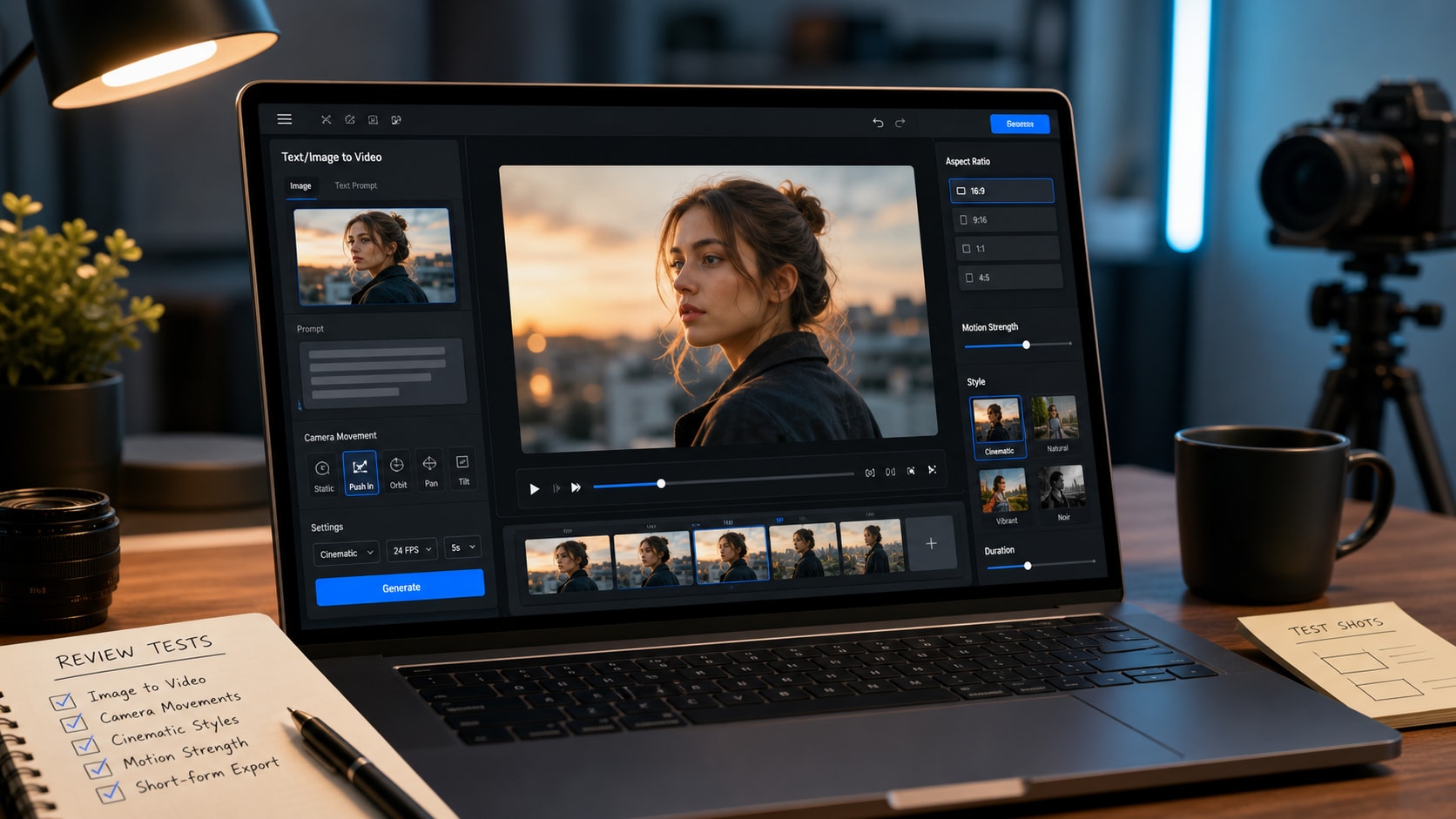
MagicLight AI is built around turning ideas, stories, and scripts into complete videos with scenes, characters, voices, and visual styles. That makes the search for a Magic Light AI alternative different from a normal AI video generator comparison.
This guide compares tools by the job a creator needs to finish: long-form storytelling, script-to-video, explainer videos, talking presenters, social cuts, or a cleaner path from generated scenes to final export.
In this article
Part 1: Quick Verdict: What is the Best MagicLight AI Alternative?
Part 2: MagicLight AI alternatives at a Glance
The table below focuses on story workflow fit rather than generic video features. A MagicLight AI competitor is only useful if it improves scene planning, script handling, editing, avatars, or final delivery.
| Alternative | Best For | Main Advantage Over MagicLight AI | Main Tradeoff | Generation + Editing | Free Access |
| LTX Studio Best Story Planning |
filmmakers, agencies, and story creators who need scripts, storyboards, characters, scenes, and timelines. | Stronger project structure for planning connected scenes before final generation. | More setup than a fast one-prompt story video workflow. | Strong | Free access or trial availability may change; verify the current plan. |
| Media.io Best Practical Story Workflow |
creators who need script-to-video generation, story videos, enhancement, subtitles, resizing, and export-ready results. | Connects story generation with practical editing and finishing tools. | Less specialized for long cinematic story continuity than a storyboard-first platform. | Strong | Free or introductory access may be available; limits vary by tool. |
| InVideo AI Best Fast Assembly |
creators who want a fast way to turn prompts, scripts, or rough ideas into narrated videos. | Faster assembly workflow for social, YouTube, and explainer-style videos. | Less focused on deep character continuity and cinematic story planning. | Strong | Free or trial access may be available; check current export and watermark limits. |
| Steve AI Best Explainers |
educators, trainers, and marketers who need animated explainers, lessons, and script-based business videos. | More direct fit for explainer, lesson, and training content. | Less suited to cinematic or character-heavy long-form stories. | Moderate | Free or trial access may be available; verify current plan limits. |
| Animaker Best Template Animation |
teams that need templates, characters, presentations, animated explainers, and lightweight video editing. | Stronger template and animated presentation workflow. | Less focused on AI-native story generation from long scripts. | Strong | Free plan or trial access may be available; check current export limits. |
| Runway Best Video Control |
advanced creators who need generative video control, editing, camera guidance, and image-to-video experiments. | More advanced control around generated footage and visual direction. | Not as guided for complete story assembly from a script. | Strong | Free or trial access may be available; verify current model and credit limits. |
| HeyGen Best Presenters |
training, sales, course, and business videos that need AI presenters, voices, translations, and lip-sync. | Stronger avatar and localization workflow for presenter-led content. | Not a broad replacement for narrative scene generation. | Strong for Avatars | Free access or trials may be available; check current avatar and export limits. |
Part 3: What Does MagicLight AI Do Well?
MagicLight AI does well when a creator starts with a script, story idea, or educational concept and wants the platform to build scenes, characters, narration, subtitles, and a finished video in one guided workflow.
It is especially useful for long-form story videos, children stories, lessons, faith-based stories, animated explainers, and creators who want a scene-by-scene process without traditional editing software.
Part 4: Why look for a MagicLight AI Alternative?
1. You need more control over scenes after the first draft
A guided story workflow can save time, but creators may need finer control over shot order, pacing, revisions, captions, and final edit structure.
2. You are making explainers rather than narrative stories
For training, business, and educational videos, tools built around templates, avatars, or script-to-video layouts may be faster than a story-first engine.
3. You want a stronger publishing workflow
If the finished asset needs resizing, enhancement, subtitles, compression, or repurposing, the best alternative may be a broader finishing platform.
4. You need presenter or localization tools
Story characters and business presenters are different problems. Avatar-first tools can be better for training, sales, and multilingual explainers.
5. You want to control cost per usable video
Longer videos can magnify credit usage, revision time, and export limits, so comparing only the entry price can be misleading.
Part 5: How We Compared These MagicLight AI Alternatives?
We compared MagicLight AI alternatives using official product pages, pricing or plan pages where available, help documentation, and the workflow each product is designed to support. Product claims and access models were reviewed in July 2026.
Each product was evaluated against the reason someone would leave MagicLight AI, not against a generic feature checklist. A narrower tool can rank highly when it solves one recurring problem better than a broader suite.
- Core workflow fit: how directly the platform solves the main creation job behind the keyword.
- Creative control: prompt control, references, scene structure, editing options, and output correction.
- Production completeness: whether the workflow continues into subtitles, enhancement, resizing, ads, localization, or publishing.
- Use-case clarity: whether the tool has a distinct reason to be selected instead of repeating another option.
- Access and cost risk: free access, plan limits, credit usage, queue speed, watermark rules, and likely retry cost.
Because AI model access, prices, credits, and commercial-use rules change often, readers should verify current official plan details before moving paid production work.
Part 6: Best MagicLight AI Alternatives by Use Case
The best MagicLight AI alternative depends on whether your bottleneck is the story plan, the first generation, the avatar, or the final publishable video.
1. LTX Studio: Best MagicLight AI Alternative for Storyboards and Scenes
LTX Studio is the clearest MagicLight AI alternative when the project needs planning depth before generation. It is built for creators who think in scenes, shots, and storyboards rather than isolated clips.
Compared with MagicLight AI, LTX Studio gives more production structure. It can take longer to set up, but that structure helps when a story has recurring characters, planned locations, and a sequence that needs to stay coherent.
In day-to-day work, LTX Studio is best understood through its workflow: story-led, with scripts, boards, scenes, characters, and timeline decisions tied together. It makes the most sense for filmmakers, agencies, and story creators who need scripts, storyboards, characters, scenes, and timelines, especially when you need the replacement to improve storyboard-first workflow, continuity planning, and team production fit.
Where LTX Studio is stronger
- Storyboard-first workflow: organize scenes before committing to generated footage.
- Continuity planning: track characters, locations, and creative intent across a project.
- Team production fit: better for agencies or filmmakers building more than a single quick story.
- Timeline thinking: helps connect generated scenes into a complete video structure.
Where MagicLight AI may still be better
MagicLight AI may still be simpler for creators who want a guided story generator that moves quickly from script to finished video.
Pros and Cons:
Choose LTX Studio if: you need storyboard control and continuity across connected scenes.
Skip it if: you want the fastest guided route from a simple story idea to a finished video.
2. Media.io: Best MagicLight AI Alternative for Script-to-Video and Finishing
Media.io is a strong MagicLight AI alternative when the story video must become a polished asset, not just a generated draft. It is relevant for scripts, story videos, subtitles, enhancement, and social delivery.
The main difference is the post-generation path. MagicLight AI focuses on guided story creation, while Media.io is more useful when the same asset needs cleanup, resizing, captions, ad versions, or format conversion before publishing.
The practical reason to test Media.io: connects story generation with practical editing and finishing tools. This matters most for users who already know their bottleneck and want the alternative to solve a specific production step instead of adding another tool to compare.
Where Media.io is stronger
- Script and story tools: turn written ideas into video while keeping final delivery in view.
- Finishing workflow: enhancement, subtitles, resizing, and export tools reduce app switching.
- Creator-friendly interface: works well for marketers, educators, and social creators.
- Cross-media support: use image, video, and audio tools around the same project.
Where MagicLight AI may still be better
MagicLight AI may be better when the entire goal is a long, guided story with recurring characters and minimal manual finishing.
Pros and Cons:
Choose Media.io if: you want script-to-video creation plus practical finishing tools in one browser workflow.
Skip it if: your highest priority is deep scene continuity across a long narrative project.
Try Media.io AI Story Video Generator
3. InVideo AI: Best MagicLight AI Alternative for Prompt-to-Video Speed
InVideo AI is useful when speed matters more than deep story architecture. It is a practical option for creators who want a script or prompt turned into a structured video quickly.
Compared with MagicLight AI, InVideo AI is stronger for everyday social, explainer, and YouTube-style production. It is less ideal when the key requirement is a recurring cast across a long narrative.
A useful way to evaluate InVideo AI is to run the same script, source image, or reference clip you would normally test in MagicLight AI. Watch how it handles quick video assembly, script and prompt workflows, and social and youtube fit, then compare how much cleanup remains before the asset can be used.
It is not automatically better than MagicLight AI. It is better when its strengths line up with the repeated work you actually do, and weaker when the project depends on the parts of MagicLight AI that still feel faster or more complete.
Where InVideo AI is stronger
- Quick video assembly: turn ideas into edited videos with less manual setup.
- Script and prompt workflows: good for creators who start from written content.
- Social and YouTube fit: better for publishable informational videos than cinematic stories.
- Accessible editing: supports adjustments after the first automated draft.
Where MagicLight AI may still be better
MagicLight AI may remain better when the content is a character-driven story rather than a narrated informational video.
Pros and Cons:
Choose InVideo AI if: you need fast narrated videos from a script or prompt.
Skip it if: your project depends on consistent story characters across many scenes.
Explore InVideo AI alternatives
4. Steve AI: Best MagicLight AI Alternative for Educational and Explainer Videos
Steve AI is a better MagicLight AI alternative when the video is an explainer, lesson, or business presentation rather than a narrative story. Its workflow is closer to script-to-animation.
Compared with MagicLight AI, Steve AI is less about extended story worlds and more about turning a message into a clear, structured video. That makes it useful for training, internal communication, and educational content.
In day-to-day work, Steve AI is best understood through its workflow: template and script-led, aimed at explainers and business communication. It makes the most sense for educators, trainers, and marketers who need animated explainers, lessons, and script-based business videos, especially when you need the replacement to improve explainer workflow, animation styles, and template support.
The tradeoff is that it is less suited to cinematic or character-heavy long-form stories. If you want to turn educational or business scripts into clear animated videos, Steve AI deserves a serious test; if you need cinematic scenes or long-form narrative continuity, it may be a weaker replacement even if the first demo looks impressive.
Where Steve AI is stronger
- Explainer workflow: well matched to scripts, lessons, and business topics.
- Animation styles: useful when a polished animated look matters more than cinematic realism.
- Template support: helps non-designers structure videos quickly.
- Clear message delivery: better for teaching or explaining than open-ended story generation.
Where MagicLight AI may still be better
MagicLight AI may be better for dramatic stories, recurring characters, and longer narrative formats.
Pros and Cons:
Choose Steve AI if: you want to turn educational or business scripts into clear animated videos.
Skip it if: you need cinematic scenes or long-form narrative continuity.
5. Animaker: Best MagicLight AI Alternative for Animated Business Videos
Animaker is a good MagicLight AI alternative when a team needs animated explainers, presentations, and brand-friendly videos instead of generated cinematic story scenes.
It is more structured around templates and editing than long-form AI storytelling. That tradeoff can be helpful when the output needs to be repeatable for marketing, HR, education, or social channels.
The practical reason to test Animaker: stronger template and animated presentation workflow. This matters most for users who already know their bottleneck and want the alternative to solve a specific production step instead of adding another tool to compare.
This is why the decision should come down to usable output, not feature count. If the result still needs heavy repair, the apparent advantage over MagicLight AI may disappear during editing, exporting, or client review.
Where Animaker is stronger
- Template library: helps teams produce consistent animated videos quickly.
- Business video fit: useful for presentations, explainers, and internal content.
- Editing controls: gives more hands-on control after the initial draft.
- Brand consistency: better for repeatable corporate formats than open-ended story generation.
Where MagicLight AI may still be better
MagicLight AI may be better when you want the platform to generate scenes and characters directly from a story prompt.
Pros and Cons:
Choose Animaker if: you need repeatable animated business or educational videos.
Skip it if: you want AI-generated story scenes from a long narrative script.
Explore Animaker AI alternatives
6. Runway: Best MagicLight AI Alternative for Advanced Video Control
Runway is worth considering when MagicLight AI feels too guided and you want more control over the generated footage. It is stronger for visual direction, camera behavior, and post-generation edits.
Runway is not a story-video assistant in the same way MagicLight AI is. It is better when an experienced creator wants to direct, revise, and integrate generated shots into a broader production workflow.
A useful way to evaluate Runway is to run the same script, source image, or reference clip you would normally test in MagicLight AI. Watch how it handles generative control, editing depth, and image-to-video fit, then compare how much cleanup remains before the asset can be used.
It is not automatically better than MagicLight AI. It is better when its strengths line up with the repeated work you actually do, and weaker when the project depends on the parts of MagicLight AI that still feel faster or more complete.
Where Runway is stronger
- Generative control: better for directing motion, framing, and visual behavior.
- Editing depth: supports more work around footage after generation.
- Image-to-video fit: useful when story scenes start from reference images.
- Professional workflow: appeals to creators comfortable with advanced tools.
Where MagicLight AI may still be better
MagicLight AI may be easier for complete story assembly with characters, voices, and scenes in one guided path.
Pros and Cons:
Choose Runway if: you need control over the generated shots more than guided story assembly.
Skip it if: you want the platform to handle script, storyboard, voice, and export with minimal setup.
Explore Runway image-to-video alternatives
7. HeyGen: Best MagicLight AI Alternative for Presenter-led Stories
HeyGen is the better MagicLight AI alternative when your story should be delivered by a presenter. It is built around avatars, voices, lip-sync, and localization rather than scene-by-scene animation.
Compared with MagicLight AI, HeyGen is narrower but more practical for business communication. Use it when the viewer needs a clear speaker, not a generated narrative world.
In day-to-day work, HeyGen is best understood through its workflow: avatar-led, with presenter, voice, translation, and localization tools. It makes the most sense for training, sales, course, and business videos that need AI presenters, voices, translations, and lip-sync, especially when you need the replacement to improve avatar presenters, localization, and business templates.
The tradeoff is that it is not a broad replacement for narrative scene generation. If you need a presenter, voice, or localized business video, HeyGen deserves a serious test; if you need multi-scene animated storytelling rather than a talking presenter, it may be a weaker replacement even if the first demo looks impressive.
Where HeyGen is stronger
- Avatar presenters: stronger for talking-head training and sales videos.
- Localization: useful when the same message needs multiple languages.
- Business templates: helps teams create repeatable presenter-led assets.
- Voice and lip-sync: more specialized than general story-video tools.
Where MagicLight AI may still be better
MagicLight AI may be better for animated stories, scene variety, and long-form narrative videos.
Pros and Cons:
Choose HeyGen if: you need a presenter, voice, or localized business video.
Skip it if: you need multi-scene animated storytelling rather than a talking presenter.
Explore HeyGen AI video generator alternatives
Part 7: Which MagicLight AI Alternative Should you Choose?
Start by deciding what part of the story-video process is slowing you down. MagicLight AI alternatives are not interchangeable: some help with planning scenes, some assemble scripts quickly, and some are better for polishing the finished video.
Decision rule: Use MagicLight AI if guided story creation is still the easiest path. Switch when one step is weak: scene planning, script assembly, presenter delivery, visual control, or the polishing work needed before publication.
Part 8: What Are the Best Free MagicLight AI Alternatives?
Free MagicLight AI alternatives are useful for testing a workflow, but long-form videos can expose limits quickly. Always test the same script length, export format, and revision path before choosing.
- Whether free credits renew or are one-time only
- Which models, avatars, effects, or export formats are included
- Maximum duration, resolution, and queue priority
- Watermark and commercial-use restrictions
- Whether failed generations consume credits
- Whether the free workflow includes editing, enhancement, subtitles, or resizing
Part 9: How to Switch from MagicLight AI without Disrupting Your Workflow
- Write down the reason for switching. Decide whether MagicLight AI is limiting you on output quality, control, cost, editing, localization, character consistency, or final delivery.
- Choose two serious candidates first. Pick one specialist for the biggest bottleneck and one broader workflow tool, then compare them before expanding the test list.
- Reuse the same assets. Run the same script, prompt, reference image, product image, or voiceover through each tool so the comparison is fair.
- Measure usable output. Track retries, queue time, credit usage, edit time, and whether the final asset can be published without rebuilding it elsewhere.
- Check export and rights rules. Review watermark limits, commercial-use terms, face and likeness policies, team controls, and uploaded media handling before committing.
Part 10: MagicLight AI Alternatives FAQs
-
What is the best MagicLight AI alternative?
The best MagicLight AI alternative depends on the type of story video. LTX Studio is best for structured storyboards and scene continuity, Media.io is useful for script-to-video plus finishing, InVideo AI is good for fast narrated videos, Steve AI and Animaker fit explainers, and HeyGen is stronger for presenter-led content. -
Is Media.io a good MagicLight AI alternative?
Media.io is a good alternative when the story video needs practical finishing after generation. It connects script-to-video and story tools with enhancement, subtitles, resizing, and export workflows. MagicLight AI may remain better if you want a guided long-form story engine with recurring characters and minimal manual setup. -
Which MagicLight AI alternative is best for long stories?
LTX Studio is one of the strongest choices for longer stories because it gives more structure around scripts, scenes, storyboards, characters, and timelines. MagicLight AI itself is also built for long-form storytelling, so compare both with the same script before switching. -
Which MagicLight AI alternative is best for explainers?
Steve AI and Animaker are strong choices for explainers, lessons, and business animation. They are less cinematic than advanced video generators, but they make it easier to turn a script into a clear educational or marketing video with predictable structure. -
Which MagicLight AI alternative is best for avatar videos?
HeyGen is the strongest option in this list for avatar and presenter-led videos. It is better suited to training, sales, onboarding, and localization. MagicLight AI is more relevant when the output should feel like a generated story with multiple scenes. -
Is Runway better than MagicLight AI?
Runway is better when you need advanced visual control, camera guidance, image-to-video, and editing around generated footage. MagicLight AI is better when you want a guided story workflow that handles script, scenes, characters, voice, and a complete video path. -
What should I test before switching from MagicLight AI?
Test the same story script in two alternatives. Compare scene coherence, character consistency, narration, subtitles, edit time, export quality, credits, and whether the final video needs another editing tool before it can be published.