
A campaign image can look ready to post and still get stopped in legal review. If you are choosing the best AI image generators for commercial use, taste is not the first question. You need to know what the license covers, how the vendor talks about training data, and what risk is left after you pay.
I put Adobe Firefly, Media.io, Canva, Shutterstock AI, Microsoft Designer, Ideogram, Leonardo, and OpenAI Images through a Commercial Rights Gate: current terms, indemnity language if any, and leftover risk. The prettiest texture does not matter if the file cannot run in ads.
In this article
- A Beautiful Image Is Useless If Legal Cannot Ship It
- Best AI Image Generators for Commercial Use by Rights Risk
- What Commercial Use Actually Covers in AI Image Tools
- 8 Business-Safe AI Image Generators to Compare
- The Commercial Rights Gate
- When a "Commercial License" Still Leaves Residual Risk
- Final AI Images for Commercial Projects Recommendations
- Commercial Use AI Image Generator FAQ
A Beautiful Image Is Useless If Legal Cannot Ship It
Clearance work starts before anyone argues about style. A file can fail because the plan is personal-only, because indemnity does not apply, or because the image looks like a real person or a known brand. The tool that wins a moodboard can still lose the campaign.
Commercial-use searchers are usually trying to answer four questions:
- What data was the model trained on, according to the vendor?
- What does the current license actually allow: ads, packaging, resale, client work?
- Is there indemnity, and if so, for which plans and which models?
- What residual risk remains even after you pay?
If a page cannot help with those questions, it is an art roundup, not a commercial-use comparison.
Best AI Image Generators for Commercial Use by Rights Risk
Group tools by rights posture, not by pretty output. Low residual-risk vendors still need a human check for trademarks and likeness. Higher-risk aesthetic tools can still be used for internal concepting if they never ship.
| Tool | Rights posture | Typical commercial fit | Indemnity story | Residual risk |
|---|---|---|---|---|
| Adobe Firefly | Commercially safer trained-data story | Brand and enterprise campaigns | Adobe has offered IP indemnification on qualifying Firefly use; confirm current plan terms | Still avoid trademarked lookalikes and unlicensed likenesses |
| Media.io | Commercial-ready marketing language plus Terms of Use | Browser marketing images | Do not treat Media.io as Firefly-style indemnity; review current terms and plan | Model and plan dependent; paid commercial claims are clearer on music than on a blanket image indemnity |
| Canva | Design-suite license wrapping | Social, decks, and template-led campaigns | Follow Canva's current commercial terms for AI features | Template plus AI plus brand-kit mixing can create extra clearance work |
| Shutterstock AI | Stock-company licensing culture | Teams already buying stock | Stock-like commercial framing; read the AI-specific terms | Not a substitute for trademark clearance |
| Microsoft Designer | Microsoft 365-adjacent commercial context | Internal and marketing assets in Microsoft stacks | Use Microsoft's current Copilot/Designer terms | Enterprise agreements can differ from consumer terms |
| Ideogram | Quality-first; rights vary by plan | Text-in-image drafts | No reason to assume indemnity | Legal must review before paid media |
| Leonardo | Creator-platform terms | Concept art and style exploration | Plan-specific; not an enterprise indemnity default | Better as a concept stage than as a clearance stage |
| OpenAI Images | OpenAI usage policies and plan terms | Chat-based commercial drafts | Read current OpenAI terms; do not invent indemnity | Policy, publicity, and trademark issues remain |
Move left to right on this table as the asset gets closer to paid media. Concepting can be riskier. Insertion orders should not be.
What Commercial Use Actually Covers in AI Image Tools
"Commercial use" is not one permission. It can mean a social post, a paid ad, packaging, a product you resell, a client deliverable, or training your own model. Vendors often allow some of those and silence others.
Before you generate, write the use on one line: "paid Meta ads in NA, 90 days, no packaging, no resale as stock." Then read the vendor terms against that line. If the terms talk about "commercial-ready" without matching your use, ask legal. Marketing pages are not licenses.
Media.io's image workspace describes commercial-ready outputs and points to Terms of Use. That is not the same as Adobe's Firefly indemnity framing. Media.io's paid-plan commercial language is explicit on the music side; for images, stay with what the current Terms of Use and product pages actually say. Do not upgrade that into an insurance policy the vendor did not publish.
8 Business-Safe AI Image Generators to Compare
Each review ends with a residual-risk paragraph. That paragraph is the commercial decision. Aesthetic notes stay short on purpose.
Adobe Firefly
If legal already trusts Adobe and you need published IP indemnification for qualifying Firefly use, start here. Confirm the current plan, model, and output type before you assume indemnity applies. Firefly is not a free pass to generate logos that imitate someone else's mark.
What still sits with you: trademark, publicity, and "looks like a real person or brand" issues still sit with you. Indemnity, where it applies, is not a creative-direction waiver.
Media.io
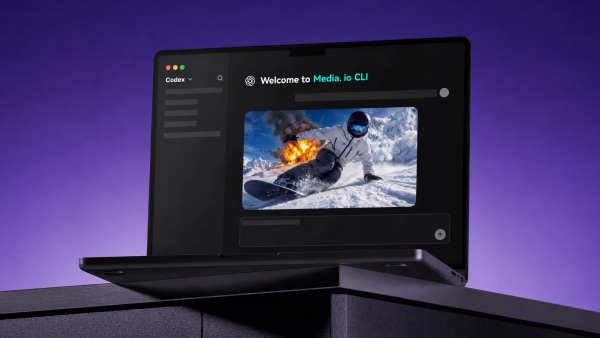
If you need marketing images in a browser and do not want to stand up Creative Cloud, Media.io is the practical option. The text to image workspace and the image to image workspace are the commercial production surfaces. Current image models on the image-to-image page include Nano Banana 2, Nano Banana Pro, GPT Image 2, Seedream 5.0, ToMoviee Lite/Pro, and Imagen 4. The product describes commercial-ready images and points to Terms of Use. Creations are stored for 7 days unless you have membership.
What still sits with you: do not invent Firefly-style indemnity for Media.io. Review the current Terms of Use for the plan and model you actually run. That honesty is part of why Media.io can sit in a commercial stack: you know what was claimed and what was not.
Canva
If the marketing team already lives in Canva, this is the commercial path that will actually get used: brand kits, templates, resize, and AI inside a file they already know how to finish. Rights are wrapped in Canva's license, including AI-feature terms that can change. It is often the most convenient way to a deck or social set that legal has already seen in other Canva work.
What still sits with you: mixing AI generations, licensed templates, and uploaded brand assets can confuse provenance. Keep a record of which layer is AI.
Shutterstock AI
If your company already buys stock, Shutterstock AI lets the AI conversation sound like a stock conversation. That cultural fit matters in legal review. It does not automatically make every generation safer than a consumer model, but it does put the license in a format many brand teams already understand.
What still sits with you: stock habits can hide AI-specific exclusions. Read the AI addendum, not only the familiar stock license in your head.
Microsoft Designer
If the company already ships Copilot under an enterprise agreement, Microsoft Designer is often easier to approve than a new consumer AI site. Terms still differ between consumer and enterprise, so do not assume the Office login equals campaign clearance.
What still sits with you: enterprise agreements can be broader than the button you clicked. Have procurement and legal identify the covering contract.
Ideogram
If the paid image still has to spell a headline, Ideogram is here for readable text, not for a cleaner rights story. Generate the layout, then decide whether the asset can ship under Ideogram's current plan terms or must be rebuilt in a lower-risk tool.
What still sits with you: text-in-image success can tempt teams to skip clearance. Do not.
Leonardo
If you need style controls for concepting before the rights gate, Leonardo is the art-director sketchbook. Keep it upstream of the rights gate unless legal has already approved the current Leonardo terms for the destination. Many teams storyboard in Leonardo and rebuild finals in Firefly, Canva, or another cleared path.
What still sits with you: style-heavy models increase the chance of looking like a living artist or brand world you do not own.
OpenAI Images
If stakeholders already review ideas in ChatGPT, OpenAI Images is the conversational commercial draft path. It is useful for exploring a campaign idea. Shipping requires the current OpenAI usage policies and your own trademark/likeness review. Do not treat a chat export as a cleared master.
What still sits with you: policy-permitted is not the same as brand-safe. A generation can be allowed by the vendor and still be a lawsuit if it imitates a person or a mark.
Who signs, and what they need in the folder
Commercial-use decisions stall when creative hands legal a moodboard and legal hands creative a PDF of terms. Put both in one folder: the use line, the vendor terms screenshot, the model name, the prompt, and the output. If that folder cannot be produced, the image is not cleared even if someone paid for a "pro" plan. Paying is not filing.
Agencies must also track client contracts. A client who forbids generative imagery cannot be saved by Firefly's story. A client who requires indemnity may not accept a browser tool that only points to Terms of Use. Media.io can still be the right production surface for drafts and for campaigns where the current terms match, but it should not be sold as an indemnity twin of Adobe. That overclaim is how commercial-use pages lose trust.
Stock-adjacent tools help when the organization already speaks that language. They do not help when the designer treats Shutterstock AI like an unlimited private art director and then drops the file into a second model. Provenance dies in the second hop. If you need a second hop, get legal to approve the hop, or rebuild in the cleared tool.
Internal-only concepting should be labeled as such in the filename. The most expensive mistake is a concept image that accidentally ships because it lived in the campaign folder without a "NOT CLEARED" mark. Process is part of the generator choice.
The Commercial Rights Gate
Run this gate before any aesthetic bake-off. Use the actual campaign use, not a hypothetical personal project.
- Write the use line: destination, paid or unpaid, geography, duration, packaging or not, client or in-house.
- Collect the current terms, AI-feature addendum, and any indemnity page for each vendor and plan.
- Mark each tool as allowed, internal-only, or blocked for that use line.
- Generate the same brief in the allowed tools only.
- Screen outputs for trademarks, celebrity likeness, and copyrighted character resemblance.
- Keep prompts, model names, dates, and plan screenshots with the asset.
- Legal signs the allowed list. Creative may pick winners only from that list.
If a vendor cannot produce current terms that match the use line, the tool fails the gate even if the image is the most attractive.
When a "Commercial License" Still Leaves Residual Risk
Paying does not erase every risk class.
- Trademark: a generated logo or product that evokes a known brand is still your problem.
- Publicity: a face that looks like a real person can create a claim even if the vendor allowed the generation.
- Training-data disputes: vendor terms allocate risk; they do not make the underlying lawsuits disappear from the news.
- Model mixing: using one vendor's image as input into another vendor's editor can break the first license.
- Plan mismatch: a commercial toggle in the UI may not match the contract procurement signed.
Residual risk is why this article refuses to crown an aesthetic winner. The commercially usable image is the one that survives the gate and the residual-risk list.
A worked campaign clearance
A retailer wants 20 lifestyle images for a 60-day paid social burst in the US, no packaging, no celebrity lookalikes, no competitor trade dress. Write that use line first. Firefly or another legally preferred vendor becomes the production path if the current indemnity and training-data story match. Media.io or Canva can still produce drafts, but drafts are not insertion-order files until terms match the use line.
Keep a folder named by vendor, model, date, and plan. If a designer later runs a Firefly image through a second model "to make it cooler," the first license may no longer apply. That mix step is one of the quietest ways commercial-use projects get into trouble. The rights gate is not only which generator you opened. It is which generators touched the file.
For packaging, merch, or anything a customer takes home, raise the bar again. Social ads and physical goods are different residual-risk classes. A tool that is acceptable for an organic post can still be the wrong tool for a label.
Final AI Images for Commercial Projects Recommendations
Pick a cleared production path and a separate concept path. Do not mix them at the last minute.
- Use Adobe Firefly if legal wants the strongest published commercially safer training-data and indemnity story.
- Use Media.io if you need a browser marketing-image workflow and will review current Terms of Use rather than assume indemnity.
- Use Canva or Microsoft Designer if the file has to live in an already approved design or Office suite.
- Use Shutterstock AI if the organization already thinks in stock licenses.
- Use Ideogram, Leonardo, or OpenAI Images for drafts and concepting unless legal has cleared them for the paid destination.
Commercial Use AI Image Generator FAQ
-
What is the best AI image generator for commercial use in 2026?
Adobe Firefly is the usual enterprise default when legal wants a commercially safer training-data story and published indemnity on qualifying plans. Media.io, Canva, Shutterstock AI, and Microsoft Designer are practical production paths when their current terms match the campaign. Ideogram, Leonardo, and OpenAI Images often stay in concepting until cleared. -
Does a commercial license mean I can run ads with AI images?
Not automatically. Commercial language may cover some marketing uses and exclude others. Match the vendor terms to paid media, geography, and duration, then review trademarks and likeness separately. -
Does Media.io indemnify AI images like Adobe Firefly?
Do not assume that. Media.io describes commercial-ready images and Terms of Use. Firefly has a distinct, published indemnity story on qualifying use. Read Media.io's current terms for the plan and model you use. -
Can I use Midjourney for commercial campaigns?
Some teams do, under Midjourney's current paid terms, but rights vary and many legal teams treat it as higher residual risk than Firefly-class vendors. This article focuses on tools with clearer commercial conversations and still recommends a legal review. -
What should legal collect before approving an AI image tool?
Current terms, AI-feature addenda, indemnity pages if any, plan screenshots, model names, and a written use line for the campaign. -
Are AI product photos safer than AI lifestyle scenes?
Product photos add SKU-accuracy risk as well as license risk. Lifestyle scenes add likeness and location risk. Neither is automatically safer; they fail in different ways. -
Can I train a brand model on commercially generated images?
Only if the vendor terms allow it. Many licenses restrict training. Treat model training as a separate permission from running an ad. -
What is a commercial rights gate?
It is a pre-aesthetics checklist that maps each tool's current terms to the campaign use line, then allows creative to pick winners only from legally allowed generators.