
 ChatGPT
 Perplexity
 Gemini
 Claude
 Grok
Grok
StarryAI looks appealing if you want to turn a simple idea into anime art, fantasy illustrations, portraits, or other stylized images without dealing with complicated settings. It is easy to start, works across web and mobile, and offers a large collection of ready-made and community-created styles. The harder question is whether it remains worth using once image consistency, Lumens, subscription limits, and advanced editing needs enter the picture.
This StarryAI review breaks down what the platform does well, where it can feel limiting, how much it currently costs, and what recent users say about the experience. We also explain when Media.io may be the better fit for creators who want to edit, scale, or animate their generated images.
In this article
Part 1: Quick Verdict
How we researched this review: we checked StarryAI's official product pages, help documentation, pricing disclosures, recent App Store feedback, and published hands-on reviews. Where we discuss output quality, we attribute the observation to public tests or user feedback rather than presenting it as our own large-scale benchmark.
Part 2: What Is StarryAI, and What Is It Designed to Do?
StarryAI is an AI image-generation platform available on the web, iPhone, iPad, and Android. It can create images from text, photos, or sketches; apply a wide range of visual styles; reimagine and enhance existing images; upscale results; and remove backgrounds. StarryAI also has a community layer where users can publish work and share custom styles.
The easiest way to understand the product is as a style-led AI art app. It is designed to help a user move quickly from an idea to a finished-looking visual without configuring a local model or learning advanced generation controls. That focus is a genuine advantage for casual creators, but it also explains why StarryAI may feel less complete when a project requires precise editing, repeatable brand assets, or several output formats.
- Primary use: Text-to-image and stylized AI art
A natural fit for anime, fantasy, illustration, portraits, concepts, and experimental visuals.
- Platforms: Web, iOS, and Android
The mobile experience is one of StarryAI's clearest points of differentiation.
- Standout feature: Custom style training
Users can train a reusable visual aesthetic from a selected image dataset and publish it to the community.
- Commercial use: Permitted under StarryAI's terms
Users still need the legal right to any uploaded image or reference material.
Part 3: What Does StarryAI Do Well?
StarryAI is most convincing when the goal is creative exploration rather than precision production. It removes much of the technical setup between an idea and a polished-looking image, and it gives users several ways to discover a visual direction without writing an elaborate prompt.
1. Low-friction creation
Enter a prompt, choose a style, adjust a few basic settings, and generate. The workflow is easy to understand even if you have never used an AI image tool before.
2. Styles make discovery easier
StarryAI promotes more than 1,000 styles. That variety helps users explore anime, fantasy, photography, illustration, 3D, and other looks without building every aesthetic from scratch.
3. Custom style training is genuinely useful
A creator can train a reusable visual style from a curated dataset and share it with the community. StarryAI says training typically takes around 45 minutes, with longer waits during busy periods.
4. Ownership guidance is easy to find
StarryAI says users own their creations and may use them commercially or non-commercially, provided they have rights to the input material and comply with the platform's policies.
5. Reference images add more control
StarryAI is not limited to a text box. Users can upload an image and guide the result through Style, Face, and Composition references. This helps when a prompt needs to retain part of a person, scene, or visual direction while allowing the model to reinterpret the rest.
That does not turn StarryAI into a surgical photo editor, but it makes the platform more flexible than a text-only generator. The feature is especially useful for visual reinterpretation: preserving the broad identity or composition of a source while exploring a different aesthetic.
Part 4: Where Can StarryAI Become Frustrating?
The main drawbacks are not a lack of features. They are the difficulty of knowing which parts of the workflow are included in a plan, how consistent the output will be for a demanding task, and whether another tool will be needed to finish the asset.
1. Free access is not described consistently
StarryAI's official marketing pages advertise free creation and up to 25 images per day, while recent app reviews describe different daily Lumen allowances. Treat the offer shown inside your own account as the most relevant version.
2. "Unlimited" has important boundaries
Unlimited Pro covers standard image generation with supported styles, but image edits, transformations, video generation, and 8× or 16× upscaling still require Lumens.
3. Exactness can take more attempts
Public hands-on reviews report stronger results for illustration and style exploration than for realistic people, hands, precise text, or scenes with several exact relationships.
4. Finishing a commercial asset may require another stage
A visually appealing generation is not always a finished deliverable. Product labels, brand colors, identity consistency, multiple campaign versions, and motion often need a more controlled editing or production workflow.
Part 5: How Good Is StarryAI's Image Quality?
StarryAI's strongest results are likely to be the ones that give the model room to interpret the idea.
Published hands-on reviews tend to praise the platform's illustrations and style variety while reporting more mixed performance with photorealistic people, hands, exact text, and complex instructions. That pattern is common across AI image tools, but it matters more when you are paying for usable commercial output rather than inspiration.
For an anime portrait or fantasy scene, an unexpected detail may feel creative. For a product ad, realistic headshot, or recurring character, the same surprise becomes an error. Image quality therefore needs to be judged against the job—not against the prettiest image in a public gallery.
| Use case | Expected fit | What quality means here | Practical takeaway |
| Fantasy, anime, illustration | Strong fit | Style, atmosphere, composition, and visual detail matter more than literal realism. | StarryAI is easy to recommend when artistic exploration is the final goal. |
| Photorealistic portraits | Mixed | Check hands, eyes, teeth, skin texture, accessories, identity retention, and lighting. | Test several difficult portraits before subscribing. For edits to a real photo, a prompt editor such as Media.io may be more efficient. |
| Product and marketing images | Depends on the brief | Product shape, label accuracy, placement, brand color, negative space, and repeatability all matter. | Expect a separate revision stage when the asset must match a brand or be adapted into several campaign versions. |
| Text inside images | Test first | Judge spelling, hierarchy, typography, and whether a correction changes the rest of the composition. | For important copy, generate the visual first and finish the text in a dedicated design or editing tool. |
| Image-to-video content | Available with limits | Motion quality, Lumen cost, camera control, and how easily the still can be refined before animation. | Compare total cost and control with a dedicated prompt-guided image-to-video workflow. |
Five prompts to test before buying StarryAI
Use prompts that resemble the hardest part of your actual work. Review every variation, not only the best image, and judge how many results could move into production without major repair.
| Test | Prompt |
| Photorealistic portrait test | A realistic editorial portrait of a woman in her early thirties, natural skin texture, subtle freckles, silver hoop earrings, soft window light, 85mm lens, neutral studio background, accurate hands visible, no beauty filter. |
| Stylized illustration test | A lone botanist crossing a glowing bioluminescent forest at night, detailed storybook illustration, layered depth, expressive lighting, coherent anatomy, rich blue and amber palette. |
| Product scene test | A premium white skincare bottle on pale travertine, exact cylindrical proportions, soft morning sunlight, realistic reflections, minimalist luxury campaign, clean negative space for a headline. |
| Text rendering test | A modern square poster with the exact headline "CREATE WITHOUT LIMITS", bold sans-serif typography, balanced grid, violet gradient background, high contrast, no extra words. |
| Complex prompt-adherence test | Three friends at a rooftop cinema: one holding red popcorn, one wearing a green jacket, one adjusting a small projector; city skyline behind them, blue hour, cinematic realism, no duplicated people. |
Our editorial score breakdown
The 3.8/5 score weighs accessibility and style variety against output consistency, pricing clarity, editing flexibility, and end-to-end workflow depth. It is a decision aid based on the evidence cited in this article, not a laboratory benchmark.
| Evaluation area | Score |
| Ease of use | 4.4/5 |
| Style variety | 4.6/5 |
| Output consistency | 3.5/5 |
| Editing flexibility | 3.4/5 |
| Pricing clarity | 3.2/5 |
| End-to-end workflow | 3.3/5 |
Part 6: StarryAI Pricing: What You Get, and Where Lumens Still Apply
The paid plans are easier to understand once you separate standard image generations from Lumens. Lumens are a usage currency for selected advanced actions; they are not simply another name for every image the platform creates.
| Plan | Displayed price | Highlighted allowance | Best for |
| Starter | $12/month | 800 image generations per month and 200 Lumens. | Occasional creators who already know StarryAI suits their preferred style. |
| Unlimited Pro | $28/month | 4,000 fast generations per month, 1,000 Lumens, and unlimited standard image generations. | Regular users whose work is still centered on standard image generation. |
| Unlimited Pro Max | $76/month | 12,000 fast generations per month, 3,000 Lumens, and unlimited standard image generations. | High-volume users who understand which finishing actions require additional Lumens. |
Pricing checked July 30, 2026. Plan names, annual totals, app-store prices, regional offers, trials, allowances, and billing periods may differ. Confirm the final amount and renewal terms at checkout.
What "Unlimited" really means
StarryAI says Unlimited Pro members can continue generating standard images with supported StarryAI and community styles after included Lumens run out. Slow-mode 4× upscaling also remains available. Image edits, transformations, video generation, and 8× or 16× upscaling still require Lumens.4
This distinction matters because "unlimited generation" can sound like an unlimited end-to-end workflow. In practice, the operations that turn a promising image into a finished asset may still draw from a separate allowance.
Part7: StarryAI Pros and Cons
Here is the trade-off in one view: StarryAI is easy to start, visually varied, and well suited to artistic exploration, but its pricing language and finishing workflow require closer attention.
Part 8: What Recent StarryAI Users Say
The U.S. App Store showed StarryAI at 4.6 out of 5 from roughly 22,000 ratings when checked in July 2026. That high aggregate score suggests that many users have had a positive long-term experience with the product.
The written reviews add useful nuance. Positive comments frequently mention the simple interface, creative freedom, portrait improvements, prompt experimentation, and the ability to create or reuse a favorite style. Several long-time users describe StarryAI as the app that made AI art feel accessible.
Critical comments focus less on the basic generation experience and more on product changes: confusion around Unlimited plans, reduced or changed Lumen allowances, missing artwork or credits, altered community features, and occasional reliability or support concerns. These reports do not prove that every user will encounter the same issue, but they are important questions to check before buying a long subscription.

Part 9: Who Is StarryAI Best For?
StarryAI is not only for beginners, but its strengths are clearest when speed, visual style, and mobile convenience matter more than exact production control.
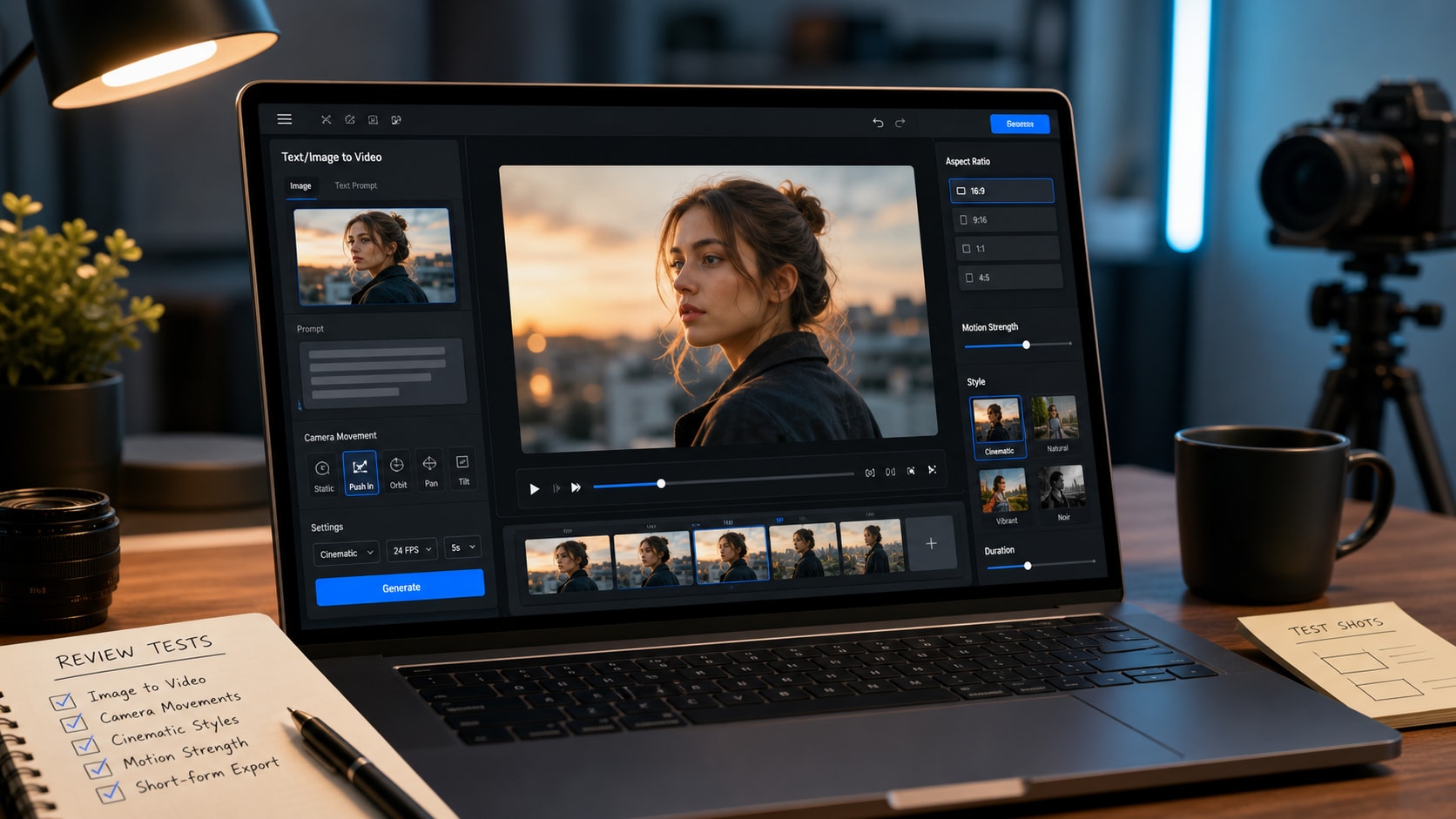
Media.io is more naturally aligned with a workflow that starts with an image, continues through prompt-based edits and variants, and ends with an animated asset for social or marketing use.
Part 10: StarryAI vs Media.io: Which Workflow Fits the Job?
This is not a winner-takes-all comparison. StarryAI is stronger as a mobile, style-led AI art experience. Media.io becomes more useful when the image is one stage in a larger content workflow—especially when you plan to edit a real photo, create several versions, or turn the result into video.
| Capability | StarryAI | Media.io | Better fit |
| Text-to-image | Style-led generation with a large community and custom-style ecosystem. | Text- and reference-based generation for portraits, concepts, product-style images, social visuals, and other everyday creative tasks. | StarryAI for style discovery; Media.io when the output must continue into a broader content workflow. |
| Reference-image creation | Uses Style, Face, and Composition references to guide reinterpretation. | Starts from a source image and supports prompt-guided transformation or revision. | StarryAI for artistic reinterpretation; Media.io when the source image needs to remain central. |
| Prompt-based photo editing | Editing is available, although advanced actions may consume Lumens. | Designed for instructions such as changing hair, makeup, clothing, age, lighting, background, or small objects in an existing photo. | Media.io for practical edits to portraits, profile photos, product shots, and other source images. |
| Custom style community | A major strength, including trainable and publishable styles. | More focused on generation models and task-based image and video workflows. | StarryAI for artists who enjoy discovering, training, and sharing visual aesthetics. |
| Batch image creation | Not the central product proposition. | Offers a batch AI image generator for producing multiple images and variations from prompts. | Media.io for marketers, sellers, publishing teams, and repeatable content production. |
| Image-to-video | Available, but video operations require Lumens. | Animates portraits, product photos, landscapes, or AI artwork with prompt-guided motion, camera direction, and atmosphere. | Media.io when the still is intended for Reels, TikTok, Shorts, ads, or other motion content. |
Where Media.io becomes the more practical choice
Part 11: Best StarryAI Alternatives to Consider
The right starryAI alternative depends on what StarryAI does not cover for your project. Some tools are stronger in artistic composition; others offer more production control, conversational revision, or a wider image-and-video workflow.
Part 12: Final Verdict: Is StarryAI Worth It?
Part 13: StarryAI Review FAQs
-
Is StarryAI worth it in 2026?
StarryAI is worth trying for beginners, mobile creators, and artists who prioritize stylized images, community aesthetics, and custom style training. It is less compelling when the job requires exact text, highly consistent realism, batch campaign assets, or a continuous image-to-video workflow. -
Is StarryAI free?
StarryAI's official pages advertise free creation and up to 25 images per day without a watermark, although recent user reports describe different daily Lumen allowances. Check the free offer shown in your account because availability may vary by platform, account, region, or promotion. -
How much does StarryAI cost?
The public web pricing page displayed Starter at $12 per month, Unlimited Pro at $28 per month, and Unlimited Pro Max at $76 per month when checked on July 30, 2026. Prices, allowances, app-store offers, and billing periods can change. -
What are StarryAI Lumens?
Lumens are StarryAI's usage currency for selected operations. A plan can include image generations and Lumens at the same time, while edits, transformations, video generation, and higher-resolution upscales may consume Lumens separately. -
Is StarryAI Unlimited really unlimited?
Unlimited Pro covers unlimited standard image generation with supported StarryAI and community styles, plus slow-mode 4× upscaling after included Lumens are exhausted. Image edits, transformations, video generation, and 8× or 16× upscaling still require Lumens. -
Is StarryAI good for realistic images?
StarryAI can create realistic-looking images, but public tests and recent feedback suggest that stylized artwork is its more dependable strength. Test faces, hands, text, products, and reference consistency before buying a high-volume plan. -
Can I use StarryAI images commercially?
StarryAI says users own the images they create and may use them commercially or non-commercially. Users remain responsible for having rights to uploaded images and references and for following the platform's license, content rules, and applicable law. -
Does StarryAI add a watermark?
StarryAI's official image-generator page advertises up to 25 daily images without a watermark. Because plan and account conditions can change, confirm the export shown in your own account. -
Can StarryAI make videos?
Yes. StarryAI supports video generation, but its official Unlimited Pro guidance says video operations require Lumens. Frequent image-to-video creators should compare both workflow control and total cost with a dedicated option such as Media.io. -
What is the best alternative to StarryAI?
It depends on the task. Media.io is a strong fit for image generation, prompt-based photo editing, batch variations, and image-to-video in one broader workflow. Midjourney, Leonardo AI, Adobe Firefly, NightCafe, and ChatGPT are better suited to other artistic, production, or ecosystem priorities. -
Why use Media.io instead of StarryAI?
Choose Media.io when the generated image is only the beginning. You can start with text or an uploaded image, continue through prompt-based editing and variations, and then animate the selected still for social, marketing, product, or creator content. -
How do I cancel StarryAI or request a refund?
Cancel on the same platform where the subscription was purchased. StarryAI's help center says eligible web purchases may qualify for a refund within seven days when less than 5% of the monthly Pro Lumens or purchased Lumen pack has been used. Apple and Google Play purchases are handled through those stores.15