

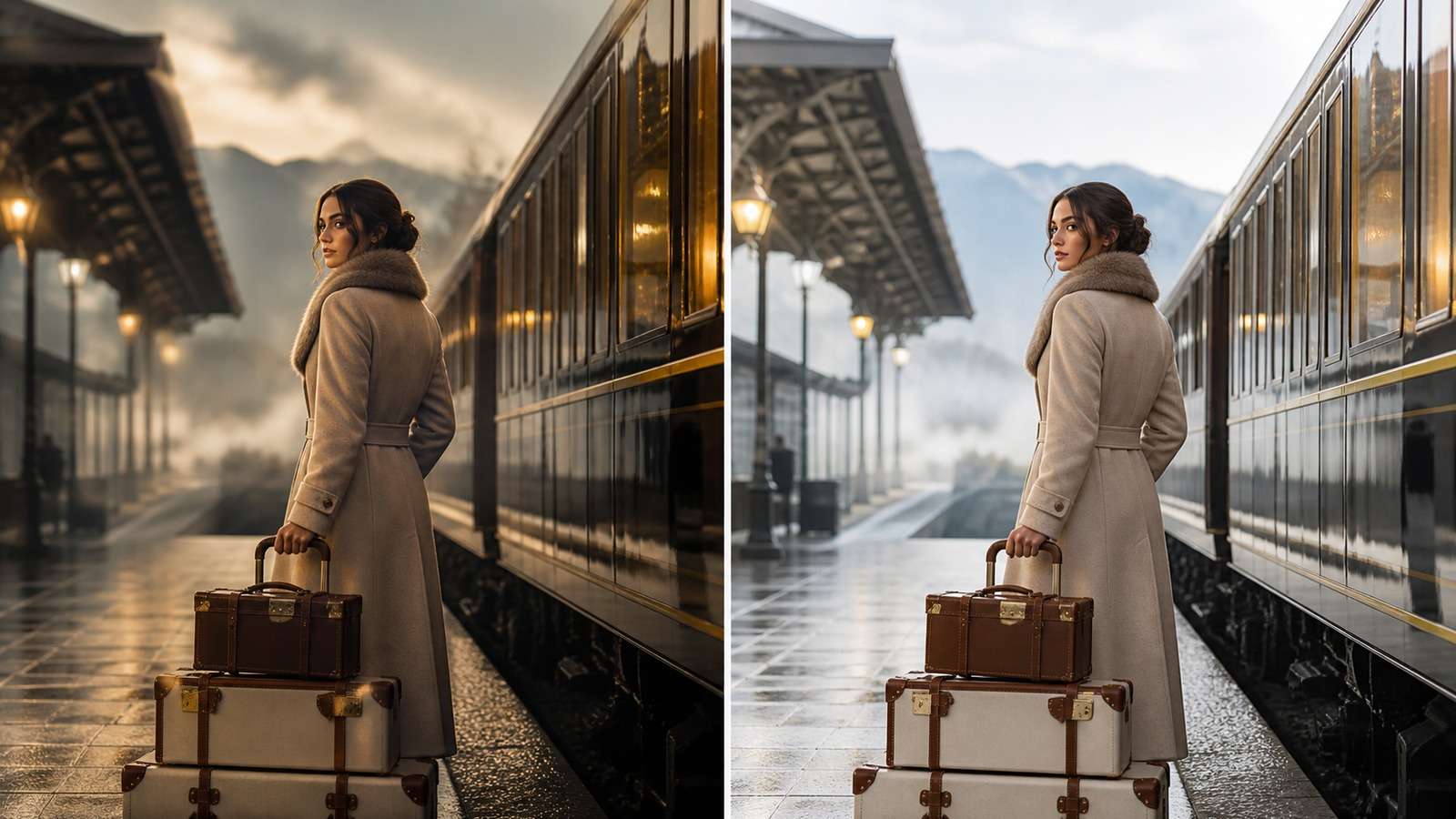
Two image models can both produce an impressive hero frame and still behave very differently once a real production brief introduces reference images, exact copy, product geometry, revisions and consistency requirements. This Seedream 5 vs Nano Banana 2 comparison evaluates the decisions that matter after the first attractive result.
In this article
Seedream 5 Pro vs Nano Banana 2: Comparison at a Glance
| Criterion | Seedream 5 | Nano Banana 2 |
| Best strength | High-end generation and cinematic art direction | Instruction-led editing and reference control |
| Photorealism | Strong material, lighting and lens character | Strong when grounded by a clean reference |
| Targeted edits | Good, but can reinterpret more of the frame | Usually precise with explicit preserve rules |
| Typography | Useful for poster concepts | Often strong for copy-aware layouts and revisions |
| Character consistency | Good visual identity with careful references | Good iterative preservation across edits |
| Product work | Premium campaign imagery | Fast variants and controlled scene changes |
| Learning curve | Rewards visual prompting | Rewards clear conversational constraints |
The phrase best AI image model is misleading without a job definition. A creator making a film poster values atmosphere and composition. A retail team values label accuracy, product silhouette and repeatable variants. A social designer may care more about turnaround time and editable text zones than microscopic texture.
How to Run a Fair AI Image Editing Comparison
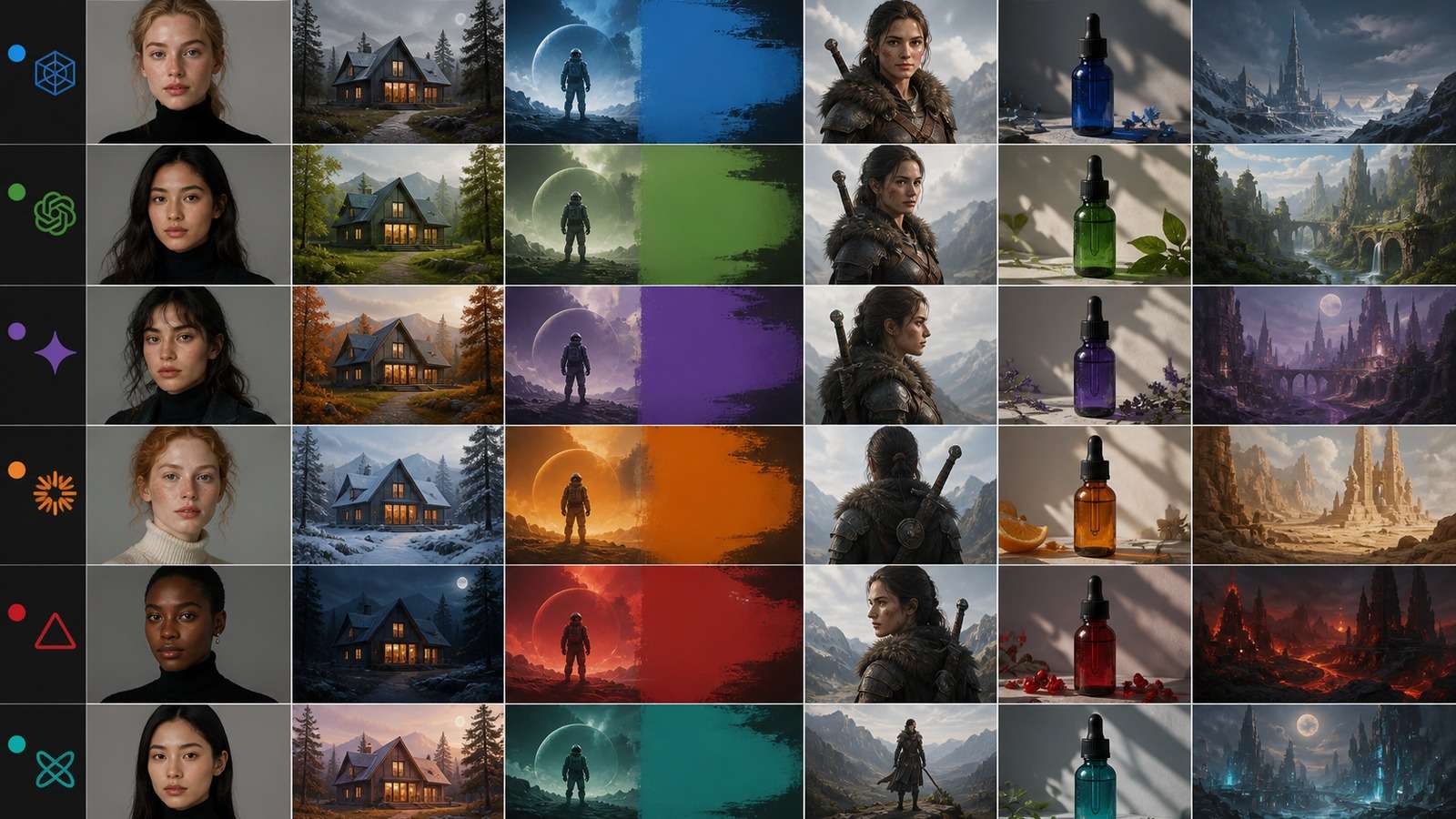
A useful benchmark includes more than a single prompt. Test at least six task families: text-to-image, portrait realism, product staging, typography, reference-based restyling and a narrow edit such as replacing only a background. Hold the source assets, aspect ratio and number of candidates constant. Score the first output and the corrected output separately; revision behavior is often more important than luck on the first generation.
- Define pass criteria before generating. For a product, record allowed color drift, label errors and geometry changes.
- Use multiple seeds or candidates. One exceptional frame does not describe reliability.
- Measure correction cost. Count the prompts and manual edits required to reach publishable quality.
- Inspect at full size. Faces, fingers, reflections, small text and repeated patterns reveal failures hidden in thumbnails.
- Save prompts and outputs. A repeatable model decision is more valuable than a subjective favorite.
Image Quality, Realism and Art Direction
Seedream 5 tends to excel when the brief is expressed as a photographic or cinematic setup: lens, camera position, key light, environmental depth, material response and color grade. Its strongest results feel deliberately art-directed rather than merely detailed. It is especially useful for editorial portraits, fashion, environments and campaign key art.
Nano Banana 2 can produce convincing realism, but its advantage often appears when realism must survive a sequence of changes. A portrait may remain recognizably the same person while wardrobe, location or lighting changes. The result can be less stylized than Seedream's best frames, yet more controllable for production.

Editing, References and Preservation Rules
For AI replacing Photoshop tasks, the decisive question is edit scope. Nano Banana 2 responds well to instructions such as “replace the wall behind the subject, preserve face, hair, jacket, pose, crop and light direction.” Clear constraints reduce collateral changes. Seedream 5 can deliver a richer transformed scene, but that creative interpretation can become a disadvantage when only five percent of the pixels should change.
A practical browser test is available through Media.io Nano Banana 2 image-to-image editing. Upload one reference, specify the editable region in words, list what must remain unchanged and compare the output at 100% zoom. This is more informative than testing a vague “make it cinematic” prompt.

Text, Product Accuracy and Character Consistency
Typography should be tested as a system: exact spelling, hierarchy, line breaks, kerning, logo fidelity and the ability to revise one line without rebuilding the poster. Nano Banana 2 is often a better fit for instruction-heavy correction. Seedream 5 can create more expressive poster compositions, but final copy should still be rebuilt in a design tool.
For ecommerce, separate product identity from art direction. Lock silhouette, cap, label position, material and brand color; vary surface, environment, camera and lighting. Seedream 5 is attractive for premium campaign scenes. Nano Banana 2 is efficient for many controlled variants. Media.io's Nano Banana product mockup generator is a relevant option when the source product must remain recognizable across new scenes.

Workflow, Speed and Real Production Cost
Do not compare only subscription prices. Calculate cost per approved asset: generation credits, failed attempts, revision rounds, upscaling, retouching and operator time. A cheaper model becomes expensive if every usable frame needs masking and reconstruction. A premium model can also be wasteful if its strengths are unnecessary for simple catalog variants.
A resilient workflow uses models by role: concept generation, controlled editing, upscale, typography and final QA. Use AI image upscaling only after composition and details are approved; upscaling a flawed hand or label makes the defect larger, not better.
Which AI Image Model Should You Choose?
| Use case | Recommended starting point | Reason |
| Cinematic key art | Seedream 5 | Lighting, atmosphere and premium finish |
| Targeted photo edit | Nano Banana 2 | Explicit preservation and conversational revision |
| Product campaign hero | Seedream 5, then controlled edit | Combine visual finish with reliable variants |
| Catalog background variants | Nano Banana 2 | Repeatable scene replacement |
| Poster with editable copy | Nano Banana 2 plus design QA | Instruction-aware text changes |
| Editorial concept exploration | Seedream 5 | Stronger aesthetic range |
The strongest answer to Seedream 5 Pro vs Nano Banana 2 is therefore not a universal winner. Seedream is a visual director; Nano Banana is often a more cooperative editor. Select by failure tolerance, revision pattern and the asset's commercial purpose.
Failure Cases That Matter More Than a Beauty Test
A model comparison becomes useful when it explains how each system fails. Attractive samples often hide the operational problems that consume the most time: a face changing during a background edit, product proportions drifting between variants, small text becoming decorative symbols, or lighting that looks dramatic but contradicts the scene. These errors should be classified by whether they are easy to repair, expensive to repair, or impossible to accept.
Seedream 5 may produce a stronger first-frame aesthetic but occasionally interprets a revision as permission to redesign the scene. Nano Banana 2 may preserve the source more faithfully yet deliver a safer, less expressive composition. Neither behavior is universally bad. The correct choice depends on whether the brief rewards visual exploration or penalizes deviation.
| Failure type | Production impact | Recommended response |
| Identity drift | High for campaigns and recurring characters | Strengthen references, reduce the edit scope and compare facial landmarks |
| Product geometry drift | Critical for ecommerce | Use the original product as a locked reference and composite when necessary |
| Unreadable text | High for posters and ads | Reserve a clean text area and rebuild final typography manually |
| Lighting mismatch | Medium to high | Specify light direction, temperature, shadow softness and environmental spill |
| Over-stylization | Depends on brand | Describe material realism and provide a restrained visual reference |
How Teams Should Benchmark Both Models
Create a small internal benchmark instead of relying on public galleries. Select three assets that represent the team's actual work: a portrait, a branded product and a scene with typography. Write acceptance criteria before generation, including elements that must remain unchanged. Run the same number of candidates, record generation time and credits, and allow one revision round. Then ask a reviewer who does not know which model produced each result to score accuracy, aesthetics and repair effort.
The final metric should be approved assets per hour, not the number of visually interesting generations. Include the time spent downloading, renaming, correcting, upscaling and recreating text. This approach may reveal that one model is better for ideation while the other is better for production versions. A mixed pipeline can therefore be more economical than forcing every task through one subscription.
Prompt Adaptation Without Biasing the Comparison
A fair test does not always mean pasting identical wording. Seedream benefits from concrete art direction: lens, light, atmosphere, materials and composition. Nano Banana benefits from explicit task boundaries: what to change, what to preserve and how the new content should integrate with the reference. Begin with an equivalent creative brief, then translate that brief into the instruction style each model understands best. Record both versions so another operator can reproduce the result.
When a result fails, change one variable at a time. If identity drifts, do not simultaneously change the camera, wardrobe and location. If product text breaks, isolate typography from scene generation. Controlled iteration produces a more reliable Seedream 5 Pro vs Nano Banana 2 conclusion than repeatedly rewriting the entire prompt until one lucky image appears.
Frequently Asked Questions
-
Is Seedream 5 better than Nano Banana 2?
Seedream 5 is generally the stronger choice for polished generation, cinematic lighting, texture and production-ready aesthetics. Nano Banana 2 is often more useful for instruction-led editing, reference preservation, text handling and fast iterative changes. The better model depends on the task. -
Which model is better for image editing?
Nano Banana 2 is usually easier for targeted edits because it follows conversational instructions and preservation constraints well. Seedream 5 remains competitive when the edit also requires a substantial visual restyle or premium art direction. -
Which model should ecommerce teams use?
Use the model that preserves product geometry, label placement and brand color most reliably on your own assets. Nano Banana 2 is convenient for controlled variants; Seedream 5 can be preferable for high-end campaign scenes. -
Can either model create readable text?
Both can produce useful typography, but neither should replace final design QA. Check spelling, kerning, logo geometry and legal copy before publishing. -
Should I compare models with the same prompt?
Start with the same intent, reference files, aspect ratio and output count, then adapt the prompt format to each model. A literal identical prompt can unfairly favor one model's instruction style.


