
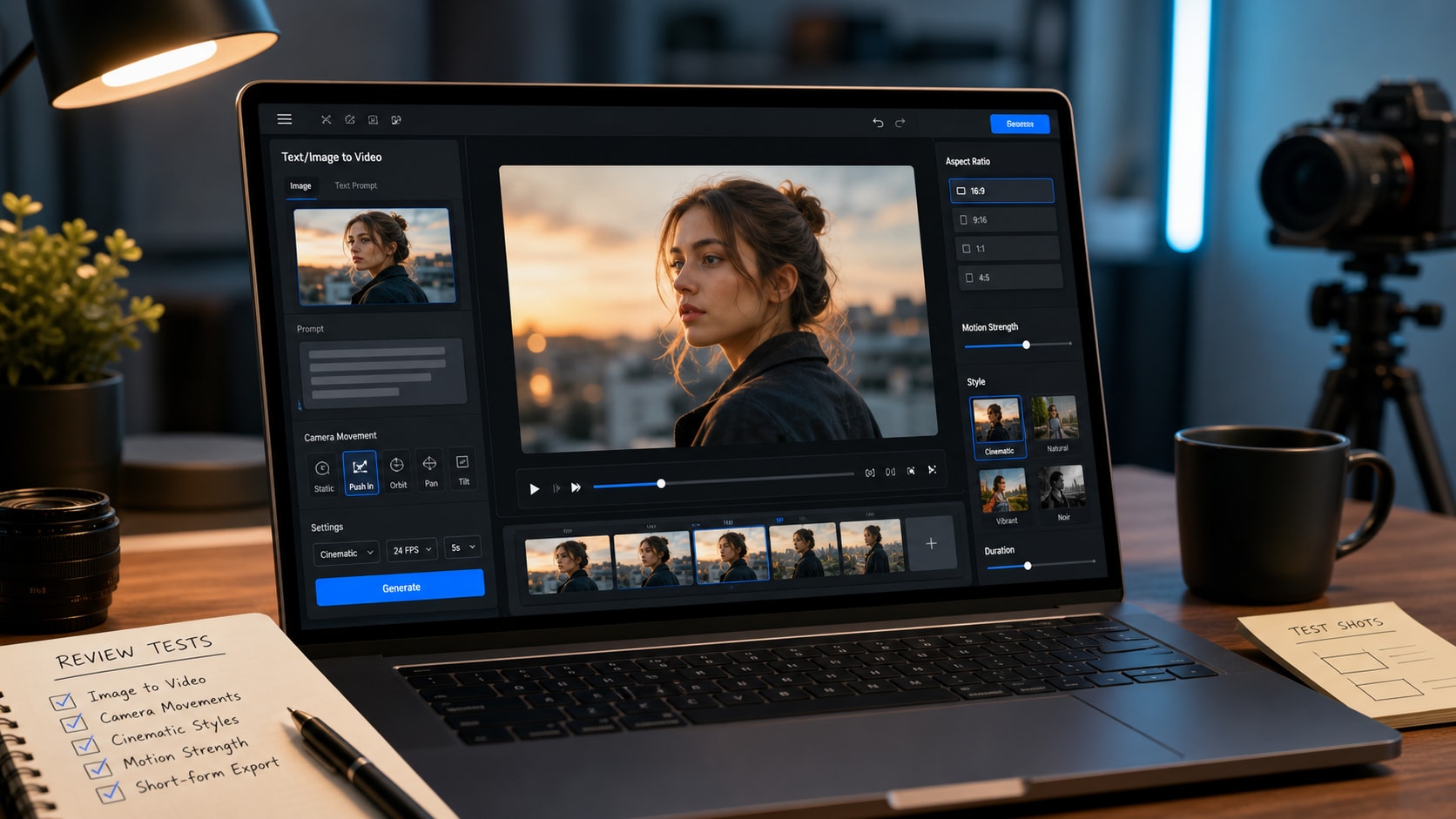
Picsart AI combines AI image generation, image editing, visual styles, templates, and creative production tools in one workflow for social graphics, thumbnails, concept images, product visuals, and other digital assets. This Picsart AI review examines how its generation and editing workflow fits real projects, what to check around free or paid access, and how prompt control, edit reliability, exports, usage rights, and commercial-use requirements affect the final result.
Picsart AI is especially appealing when the goal is not only to generate an image, but to revise it, adapt the design, create variants, and prepare the visual for publishing. It becomes less predictable when a project requires exact text, precise product details, consistent identities, strict brand layouts, or minimal manual correction before release.
In this article
Part 1: Quick Verdict
How this review was prepared: This review is based on official Picsart AI product and pricing information available at the time checked, together with editorial evaluation. It does not claim private hands-on generation testing.
Part 2: What Is Picsart AI?
Picsart AI is an AI-assisted image creation and editing workflow that combines image generation with broader visual-production tools. Rather than stopping at a prompt-to-image result, Picsart can be evaluated by how well users can generate a concept, refine it, adjust the background or composition, apply visual styles, create related variants, and prepare the asset for publishing.
That makes Picsart AI particularly relevant to creators who need both ideation and editing. Its strongest value appears when the first AI-generated image becomes a starting point for a finished social graphic, thumbnail, promotional visual, product mockup, or other reusable design asset.
- Best-fit reader
Creators, marketers, social-media users, and small teams that need AI image generation alongside editing, styles, templates, and repeatable visual-production tasks.
- Decision point
Picsart AI is most useful when its generation and editing tools reduce the total work required to move from an idea to a publishable image.
- What to compare
Compare prompt adherence, edit control, style consistency, background editing, template fit, variant production, free or paid allowances, export quality, and current commercial-use terms.
Part 3: How Picsart AI Works
Picsart AI works best as an iterative generate-edit-publish workflow rather than a one-prompt route to a finished image. Start with a realistic brief or source image, choose the appropriate generation or editing mode, create a small set of results, refine the strongest option, and judge the final exported visual rather than the first AI output.
| Step | What the user does | What to verify |
| 1. Start with the brief | Use a real prompt, source image, campaign idea, product concept, or social-content brief that resembles the asset you actually plan to publish. | Define the subject, style, composition, text, brand requirements, and final channel before judging the result. |
| 2. Choose the mode | Select the Picsart AI generation, editing, background, style, template, or related workflow that matches the task. | Check whether the required feature is available in the current account and whether free or paid limits apply. |
| 3. Generate and revise | Create or edit a small set, keep the strongest version, and inspect text, faces, products, logos, backgrounds, composition, and visual consistency. | Track how many generation and editing attempts are required before one asset meets the intended publishing standard. |
| 4. Export or finish elsewhere | Download, enhance, resize, adapt, animate, or continue editing the selected visual if additional production work remains. | Confirm watermark behavior, resolution, format, current allowance, privacy, and commercial-use terms. |
This workflow highlights Picsart's practical advantage over a generator that ends with the first image. The more important question is whether a promising result can be corrected and adapted efficiently when a face, product, text element, background, or layout is close but not yet ready to publish.
Part 4: Picsart AI Features
Picsart AI features are most useful when evaluated as parts of a connected image-production workflow. Generation creates the first visual direction, while templates, background editing, variants, and other editing tools help move that image closer to a finished social, campaign, or publishing asset.
| Feature | Best use case | Clear limitation to check |
| Templates | Turning a generated or edited image into social graphics, promotional visuals, product assets, and other repeatable design formats. | Check whether the template preserves required text hierarchy, product information, brand styling, composition, and final-channel specifications. |
| Video export workflow | Extending a selected visual into motion or another short-form media workflow when a static image is not the final deliverable. | Check whether the motion or export workflow preserves the source image, resolution, visual quality, and important subject details. |
| Background editing | Removing, replacing, or refining the background of a generated or uploaded image when the main subject is already close to usable. | Inspect subject edges, hair, shadows, lighting, transparency, and whether the edit changes details that should remain untouched. |
| Batch or variant production | Creating related versions of a visual for different social formats, campaign concepts, product directions, or publishing needs. | Check whether repeated variants remain visually consistent rather than drifting away from the approved subject or creative direction. |
| AI image generation | Turning written ideas into concept images, thumbnails, promotional drafts, style experiments, social visuals, or starting points for further editing. | Review exact text, hands, faces, products, logos, composition, and how many attempts are required before one image becomes worth editing further. |
For a meaningful Picsart AI test, use one straightforward image brief and one production-style challenge. A simple concept image can test general quality, while exact copy, product packaging, a recognizable face, recurring subject, or strict layout can reveal whether Picsart's editing tools are strong enough to repair a near-miss instead of forcing complete regeneration.
Part 5: Picsart AI Output Quality and Practical Limitations
Picsart AI output quality should be judged by how efficiently a generated draft becomes a publishable visual. A strong first image is useful, but the workflow becomes more valuable when text, backgrounds, composition, style, or product details can be corrected without rebuilding the entire asset.
| Evaluation area | Expected fit | What to inspect | Practical takeaway |
| Prompt adherence | Test first | Use a prompt with a specific subject, visual style, composition, and constraints, then compare the output with each requested detail. | Better prompt adherence reduces the amount of editing required after generation. |
| Style or reference fit | Test first | Compare several visual styles or related outputs against the same brief and check whether the preferred direction can be repeated consistently. | Style range matters most when a chosen direction can be reused across more than one asset. |
| Editing control | Test first | Make one precise change to a nearly usable image and check whether the rest of the composition, subject, and styling remain intact. | Picsart adds the most value when editing can fix a near-miss without introducing new problems elsewhere. |
| Cost per usable asset | Test first | Record how many generation, editing, and revision attempts are required before the asset is approved for its intended channel. | The useful cost metric is the allowance or spend required to reach a finished visual, not simply the number of initial generations. |
Practical limitations to check
- Generation quality and editing quality should be judged together: Picsart AI becomes more valuable when a promising result can be corrected inside the same workflow rather than exported to another editor immediately.
- Exact brand and product details still require manual review: Text, logos, packaging, faces, proportions, colors, and recurring subject details should be checked before public or client use.
- Plan limits can change the effective cost of finished visuals: Generation attempts, editing actions, premium features, downloads, and exports should all be considered when comparing free and paid access.

Part 6: Picsart AI Pricing, Free Access, and Credits
Picsart AI pricing was checked on 2026-08-05. Use the live pricing or account screen as the final source for image-generation allowances, edit limits, downloads, watermark rules, premium features, renewal terms, and refund conditions.
| Pricing question | What to check | Why it matters |
| Free access | Generation allowance, available editing tools, watermark behavior, download options, export resolution, and account region. | A free test is useful only when it reflects both the generation and editing workflow you plan to use regularly. |
| Paid plans | Current monthly or annual price, included AI access, premium editing features, downloads, renewal terms, and cancellation rules. | The best plan is the one that reduces the total work required to create accepted visuals rather than simply offering more AI generations. |
| Extra usage | Additional generation, premium editing, exports, enhancement, or other actions that may be restricted or charged separately. | Retries and editing steps can increase the practical cost of one publishable asset. |
Credits and usage limits
Picsart AI should be evaluated by finished assets per allowance rather than by generation count alone. A useful plan needs to support not only the first AI image, but also the corrections, variants, and exports required before that image is ready for publication.
- Confirm which AI-generation and editing actions count against current plan limits.
- Test one realistic project from generation through final export before upgrading mainly for additional capacity.
- Measure accepted visuals after revisions rather than total generations alone.
Part 7: Picsart AI Pros and Cons
Picsart AI's main advantage is workflow continuity: users can move from image generation into editing, styling, templates, and variants without treating every AI result as a standalone asset. Its main trade-offs are plan-dependent limits, variable precision, and the need to review exact brand or product details before publishing.
Part 8: Is Picsart AI Safe? Privacy, Consent, and Commercial Use
Picsart AI is a public image creation and editing platform, but safe and commercially appropriate use depends on current terms, privacy rules, account settings, and the material used in the workflow. Professional projects should review both AI-generated output and any source images, people, brands, products, or protected references included in the final asset.
| Question | What to check before use |
| Privacy and uploads | Avoid uploading confidential images, private documents, unreleased campaign material, client assets, or another person's likeness unless Picsart's current policies and your own permissions support that use. |
| Consent | Before using recognizable people, likenesses, trademarks, product imagery, copyrighted references, or other protected material, confirm that you have the permission required for both editing and publication. |
| Commercial use | Picsart AI commercial use should be checked against current terms, plan status, source assets, likenesses, logos, product claims, and other third-party rights involved in the final visual. Downloading or editing an image does not automatically resolve copyright, trademark, likeness, or licensing questions. |
| Paid plans and refunds | The official pages reviewed here did not provide a clear and complete refund or cancellation rule in the accessible text used for this article. Confirm current checkout, renewal, cancellation, and refund terms before choosing a larger plan. |
Personal image experiments may require only basic checks. Advertising, ecommerce, client work, social campaigns, product visuals, and other commercial projects should begin with non-confidential sample assets and review current usage terms before protected material is introduced.
Part 9: Picsart AI vs Media.io: Which Workflow Fits the Job?
Picsart AI and Media.io fit different stages of an AI visual workflow. Picsart is most relevant when the main task is generating, editing, styling, and adapting the still image itself. Media.io becomes more useful when the selected visual needs a focused finishing step such as animation, additional retouching, or enhancement before publishing.
| Workflow question | Picsart AI | When to compare Media.io |
| First creative result | Evaluate Picsart AI primarily on image-generation quality, edit control, style consistency, template fit, and how easily the visual can become a finished asset. | Compare Media.io after the image direction is selected and a specific motion or finishing task remains. |
| Before publishing | Check current plan limits, watermark behavior, image quality, rights, and whether all required variants or edits are complete. | Use focused follow-up tools when enhancement, animation, retouching, resizing, or other media processing remains part of the brief. |
| Still image to motion | Picsart AI is strongest when the main work involves generating and editing the source image. | AI Image to Video can turn a selected visual into a short social or creative clip. |
| Image retouching | Picsart can handle image editing inside its own workflow, especially when the asset still needs stylistic or design changes. | AI Photo Editor provides another focused workflow for retouching or revising a selected generated image. |
Part 10: Final Verdict: Is Picsart AI Worth It?
Part 11: Picsart AI Review FAQs
-
Is Picsart AI worth it in 2026?
Picsart AI is worth trying in 2026 if you want image generation, editing, styles, templates, and visual adaptation inside the same creative workflow. It is less suitable when exact text, products, identities, or strict brand layouts must be correct from the first result. -
Is Picsart AI free?
Picsart AI may provide free image-generation or editing access depending on the current account and offer. Use free access to test prompt control, editing quality, watermark behavior, downloads, and whether important image details survive revision. -
How much does Picsart AI cost?
Picsart AI pricing can change, so use the live Picsart pricing or account page as the final source for current plans, AI allowances, editing limits, downloads, watermark rules, renewal conditions, and other premium features. -
How do Picsart AI credits or usage limits work?
Picsart AI usage should be evaluated across both generation and editing. Check which AI actions, revisions, premium tools, downloads, or exports are limited by the current plan, then compare how many finished assets the allowance actually produces. -
What is Picsart AI best for?
Picsart AI is best for AI image generation, visual editing, style exploration, background work, templates, variants, thumbnails, social graphics, and creators who want to move from an AI draft into a more complete designed image. -
What are the main limitations of Picsart AI?
Picsart AI's main limitations are exact-detail reliability, edit consistency, plan-dependent AI limits, and the amount of manual review still required for text, products, logos, faces, and brand-sensitive visuals. -
Is Picsart AI safe and legit?
Picsart AI is part of a public image creation and editing platform with official product and pricing pages. Safe use still depends on current privacy rules, account terms, and whether you have the necessary rights for uploaded images, people, brands, and other source material. -
Can Picsart AI be used commercially?
Picsart AI commercial use should be checked against current terms, the selected account or plan, and the rights attached to source images, likenesses, logos, product material, and other third-party assets involved in the final visual. -
Does Picsart AI add a watermark?
The public information reviewed here did not establish one universal watermark rule for every Picsart AI workflow. If watermark-free output matters, confirm the current plan, feature, export format, resolution, and live download conditions. -
What is the best alternative to Picsart AI?
The best Picsart AI alternative depends on whether you need stronger image generation, deeper editing, or a different finishing workflow. Media.io is worth comparing when a selected image mainly needs retouching, enhancement, or image-to-video animation before publishing.
Part 12: Sources
- Official source: Picsart AI image generator and product information (official, checked 2026-08-05)
- Official source: Picsart pricing and plan information (official, checked 2026-08-05)
- Official source: Picsart AI pricing and usage information (official, checked 2026-08-05)


