

Hazelnut AI has attracted searches for an image generator, editor, prompt guide and Nano Banana competitor. The first thing a useful review must establish, however, is whether the product can actually be verified. As of August 2026, “Hazelnut” appears in third-party reporting as a possible OpenAI image-model codename or testing label, but there is no clearly documented standalone Hazelnut product, official model page, public pricing page or confirmed free tier on OpenAI's website.
That means screenshots labeled as a finished Hazelnut interface, definitive feature lists and claims about Hazelnut AI pricing should be treated cautiously. This guide separates what is known from speculation, explains how to evaluate any future release, and compares the rumored model with image tools that people can use today.
In This Article
What Is Hazelnut AI?

Hazelnut has been described in AI-news coverage as a next-generation OpenAI image model appearing alongside another codename, Chestnut. Third-party commentary has positioned these possible models against Google's Nano Banana family, particularly around natural color, realistic editing and reduced “AI-looking” output.
A codename can refer to an experiment, internal checkpoint, evaluation candidate or model that later launches under a different name. It does not prove that consumers can sign up for a service called Hazelnut AI. Search results are also contaminated by unrelated businesses, stock images containing hazelnuts and pages created to capture interest in an unconfirmed release.
Until an official announcement exists, the responsible definition is: Hazelnut AI is an unconfirmed or pre-release image-model name discussed by third-party sources. It should not be presented as an established product with guaranteed capabilities.
Hazelnut AI Claims vs What Can Be Verified

| Search claim | Current evidence status | How to verify later |
|---|---|---|
| Hazelnut text-to-image | Plausible category, not officially documented | Official model card and public generation access |
| Hazelnut image editing | Discussed in third-party coverage | Repeatable edit tests with masks and references |
| Hazelnut inpainting | Not confirmed as a named feature | Official documentation and local-edit controls |
| Character consistency | Unverified | Same identity across poses, lighting and scenes |
| Realistic images | Subjective early claim | Blind tests across skin, hands, materials and optics |
| Hazelnut AI free | No confirmed public tier | Official product and pricing page |
| Hazelnut AI pricing | No reliable public price | Published plan, API or credit documentation |
Do not treat an anonymous model-comparison result as a final product review. Arena tests can reveal user preference, but model names, system prompts, safety layers, resolution and post-processing may change before release. A strong benchmark records the exact version, input, number of attempts and selection method.
How to Review Hazelnut AI if It Launches
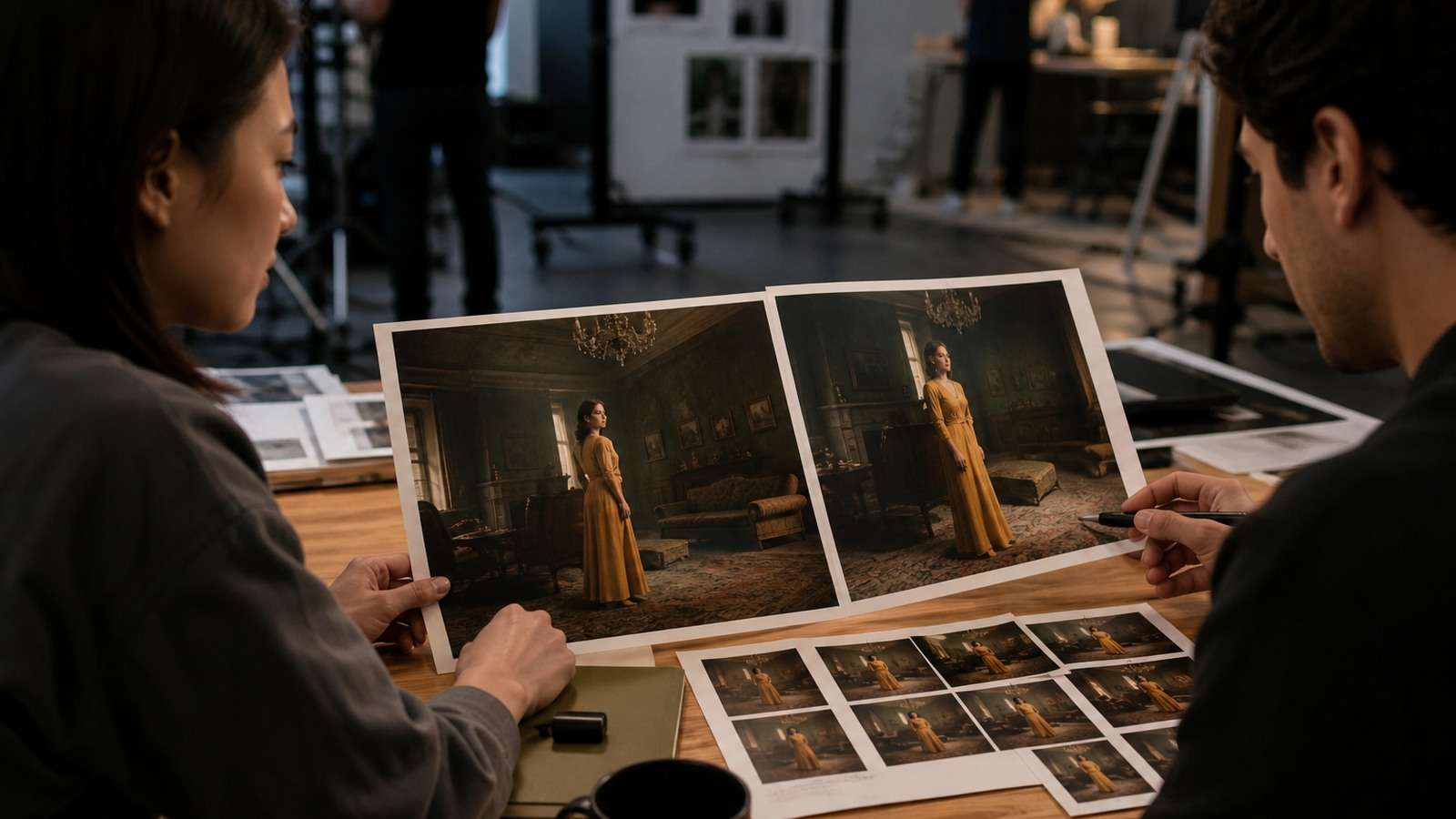
A useful Hazelnut AI review should test difficult production tasks instead of collecting attractive examples. Use the same prompt and source assets across every competitor, keep the first result, then allow a fixed number of revisions.
- Prompt adherence: Does the image include every required subject, action and spatial relationship?
- Text rendering: Test a product label, poster headline, small subtitle and curved packaging text.
- Local editing: Change one object without altering the face, pose, camera or background.
- Identity consistency: Preserve the same person across close-up, profile, full-body and different lighting.
- Product accuracy: Maintain shape, logo placement, color and packaging proportions.
- Realism: Inspect hands, teeth, hair, reflections, contact shadows, lenses and material response.
- Composition control: Request empty copy space, exact framing and multiple aspect ratios.
- Cost per accepted image: Count failed generations, edit rounds and operator time.
For a neutral baseline, run the same brief through Media.io Text to Image. It offers an immediately accessible creation path, so the result can be evaluated rather than inferred from rumors.
Five Hazelnut AI Alternatives Available Now
The comparison below is task-based. Product plans and model versions change, so verify current terms before purchasing or using outputs commercially.
1. Media.io AI Image Generator: Best for a Browser-Based Creation Workflow
Media.io is the most direct alternative for readers who need to generate a visual and continue into editing or video without waiting for an unconfirmed model. It supports text-led image creation in a browser and fits social graphics, concept art, thumbnails, stylized portraits and campaign ideation.

Its advantage is workflow accessibility rather than a claim that one model wins every benchmark. A creator can generate an image, upscale it, prepare a transparent or cleaned asset and animate an approved frame. This makes it useful when the search intent is “create something now,” not merely follow model news.
2. Google Nano Banana Pro: Best for Conversational Image Editing
Nano Banana became prominent because it could follow natural-language editing instructions while retaining important details from a source image. High-view demonstrations emphasize placing a consistent person into new environments, transforming photos and iterating through conversation.
Test it carefully on crowded scenes, small text and edits that require exact geometry. Conversational convenience does not guarantee that every unchanged pixel will remain fixed.
3. Openai's Released Image Generation: Best for Instruction-Led Creation Inside ChatGPT
The appropriate comparison is with OpenAI's officially released image capability, not an assumed Hazelnut product page. It is useful for iterative briefs, diagrams, designed imagery, text-heavy concepts and edits where conversation helps refine intent.
Review the actual model and plan shown in the interface. Do not infer that current OpenAI image generation is Hazelnut unless OpenAI explicitly makes that identification.

4. Midjourney: Best for Visual Exploration and Art Direction
Midjourney remains a strong option for stylized, cinematic and design-led exploration. It is especially effective when creators want many compelling visual directions before committing to one. Its aesthetic strength should be evaluated separately from precise object placement, text accuracy and local-edit repeatability.
5. Freepik AI: Best for Stock-Connected Design Production
Freepik combines generation with a broader design and stock-asset environment, which can suit marketing teams assembling layouts rather than generating isolated art. Media.io's Freepik AI image generator review provides more context for comparing its workflow, strengths and limitations.

A Better Hazelnut AI Prompt and Editing Workflow
Even if Hazelnut launches with strong instruction following, prompt quality will still depend on the task definition. Use a layered brief:
- Purpose: thumbnail, ecommerce hero, portrait, storyboard or social post.
- Subject: identity, clothing, product and defining features.
- Action and relationships: what is happening and where objects are placed.
- Composition: lens feel, camera height, crop and copy space.
- Lighting and material: direction, softness, color temperature and surface response.
- Style: photographic, illustrated, editorial or cinematic references.
- Constraints: text that must be exact and details that cannot change.
For artistic prompt expansion, examine the structure of a watercolor image prompt or a more experimental swirl-effect editing prompt. Use them as structural references, not text to paste into unrelated tasks.
Use Edit Instructions That Define What Must Stay Fixed
“Make it better” encourages broad reinterpretation. Instead write: “Replace only the red chair with a walnut chair; preserve the person's face, hands, pose, clothing, lighting, camera, floor shadows and all other objects.” For removing distractions, follow a controlled workflow for removing unwanted objects from photos and inspect texture repetition or invented edges at full resolution.
Hazelnut vs Nano Banana Pro vs Midjourney
| Decision | Choose now | Reason |
|---|---|---|
| Need a browser-based image today | Media.io | Accessible generation and adjacent media workflow |
| Need conversational source-image edits | Nano Banana Pro | Established editing-oriented demonstrations |
| Need iterative OpenAI image creation | Official released OpenAI image model | Documented access rather than a codename |
| Need broad aesthetic exploration | Midjourney | Strong visual ideation and style variation |
| Need generation plus stock/design assets | Freepik AI | Integrated design-production ecosystem |
| Need Hazelnut specifically | Wait for official confirmation | No reliable standalone access or pricing to review |
Other established products may suit specific buyers. Review the Shutterstock AI image generator when licensed-stock workflow matters, or the Fotor AI image generator review for a consumer photo-editing context.
From Image Generation to Usable Asset
A generated image often needs finishing. Upscale only after composition, identity and text are approved; AI image upscaling can improve delivery resolution but will not correct wrong geometry. If the visual is intended for motion, use Image to Video after locking the keyframe. Animation should not begin while the source image is still changing.
Hazelnut AI Review Verdict
Hazelnut is an interesting model-watch keyword, not yet a dependable product recommendation. The absence of official documentation means no responsible reviewer can confirm its final architecture, interface, price, free allowance, commercial terms or production performance.
Readers should avoid unofficial “Hazelnut AI” sites that imply a relationship without evidence. Check the domain owner, privacy terms and where uploaded photos are stored before submitting faces, client assets or confidential product designs.
If an official model launches, judge it on controlled editing and accepted-output economics rather than showcase quality. The winning tool will be the one that preserves what matters, changes only what was requested and fits the creator's downstream workflow.
Frequently Asked Questions
-
Is Hazelnut AI a real image generator?
Hazelnut has appeared in third-party reporting as a possible OpenAI image-model codename, but there is no clearly verified standalone public product or official Hazelnut model page as of August 2026. -
Is Hazelnut AI free?
No official free tier or public access limit can currently be verified. Avoid sites making definitive claims unless they link to an official provider announcement. -
How much does Hazelnut AI cost?
There is no reliable official Hazelnut pricing page. Any price presented before a confirmed release should be treated as speculation or the price of an unrelated third-party service. -
Is Hazelnut better than Nano Banana Pro?
There is not enough reproducible public evidence for a fair comparison. Nano Banana Pro can be tested now, while Hazelnut requires official access and a disclosed version. -
What is the best Hazelnut AI alternative?
Choose by task: Media.io for accessible browser-based generation, Nano Banana Pro for conversational edits, released OpenAI image tools for iterative instruction-led work, and Midjourney for visual exploration. -
How should Hazelnut AI be tested after release?
Use identical prompts and source images to test adherence, text, local edits, identity, product accuracy, realism, composition and cost per accepted result.


