
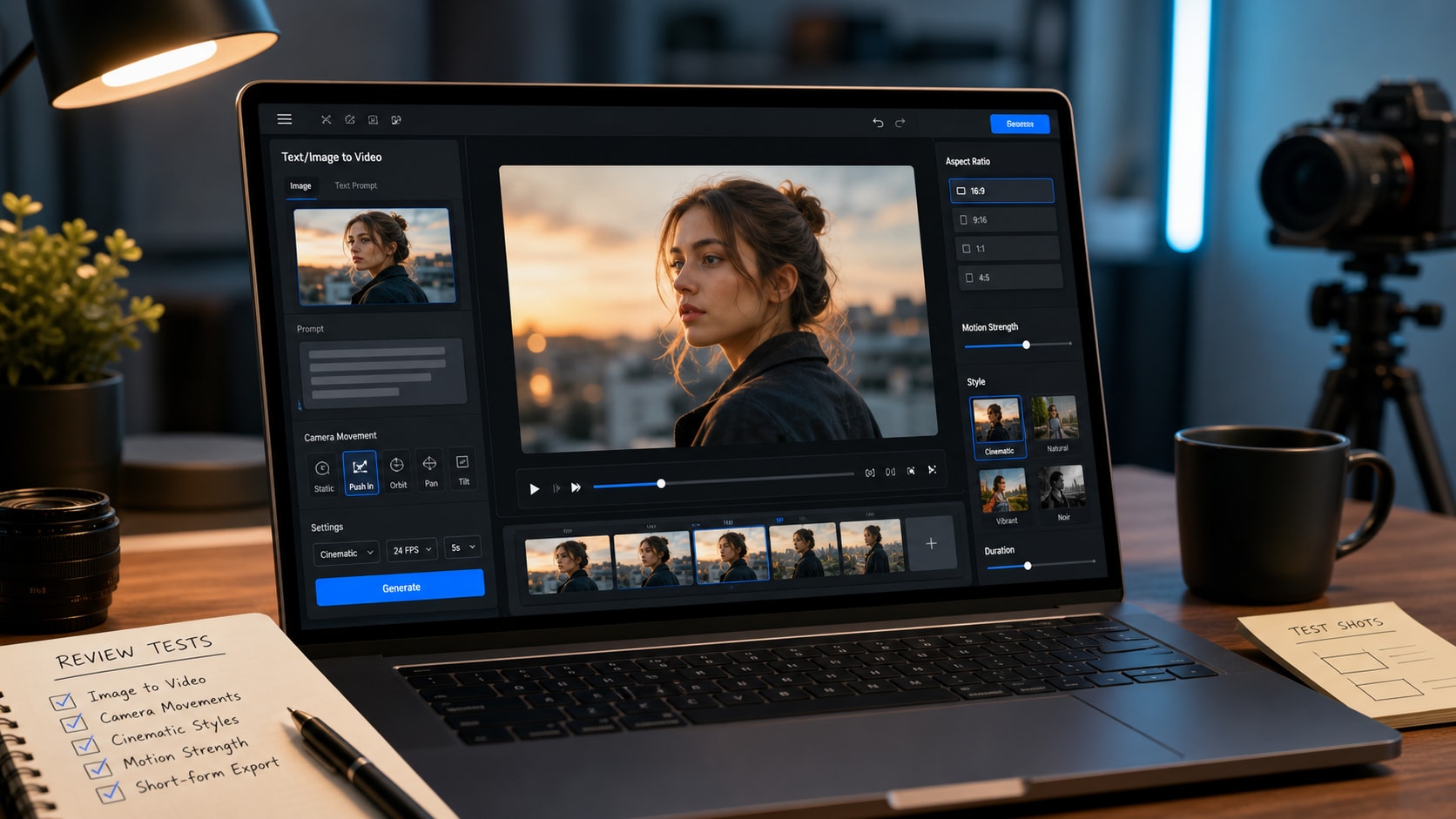
Fliki works well when the starting point is a script, article, recording, voiceover, or educational message rather than a cinematic prompt. A fliki alternatives search usually means the user wants the same end result, but with a better balance of quality, control, access, editing, cost, or delivery.
Script-led video tools are usually judged by how quickly a message becomes a clear, publishable video. This guide compares direct competitors and adjacent workflows in the places where they naturally help the project, from first output to final export.
In this article
Part 1: Quick Verdict: What is the Best Fliki Alternative?
Part 2: Fliki alternatives at a Glance
The table below compares Fliki competitors by use case, workflow fit, learning curve, access route, and the production step where each one is strongest.
| Alternative | Best For | Main Advantage Over Fliki | Main Tradeoff | Generation + Editing | Free Access |
| Pictory Best Script Repurposing |
Marketers and educators turning scripts, blogs, webinars, or long recordings into videos | Strong script and repurposing workflow | Less cinematic than model-first generators | Script + long-video repurposing | Free access, trials, or introductory credits may be available; verify current limits, watermark rules, and commercial-use terms. |
| InVideo AI Best Prompt-to-video Assembly |
Creators turning written briefs into narrated social, YouTube, and explainer videos | Fast prompt-to-video assembly workflow | Less deep for custom model control | Prompt-to-video + script assembly | Free access, trials, or introductory credits may be available; verify current limits, watermark rules, and commercial-use terms. |
| Synthesia Best Enterprise Avatars |
Companies producing training, compliance, onboarding, and internal communication videos | Strong enterprise governance and avatar workflow | Less flexible for open creative experimentation | Enterprise avatar workflow | Free access, trials, or introductory credits may be available; verify current limits, watermark rules, and commercial-use terms. |
| HeyGen Best Avatar Presenter |
Teams creating polished AI presenters, digital twins, voices, translation, and business videos | Strong avatar and localization workflow | Less focused on cinematic scenes | Avatar workflow | Free access, trials, or introductory credits may be available; verify current limits, watermark rules, and commercial-use terms. |
| Lumen5 Best Content Repurposing |
Teams turning articles, blogs, or marketing content into social videos | Good content-to-video repurposing workflow | Less flexible for open-ended ai generation | Text-to-video content marketing | Free access, trials, or introductory credits may be available; verify current limits, watermark rules, and commercial-use terms. |
| VEED Best Online Editing |
Creators who need captions, trimming, translations, layouts, and quick exports | Stronger editor and repurposing workflow | Not always the first generator for new footage | Video editing + repurposing | Free access, trials, or introductory credits may be available; verify current limits, watermark rules, and commercial-use terms. |
| Kapwing Best Collaborative Editor |
Teams editing, reviewing, captioning, and publishing social videos together | Better collaborative editing workflow | Less specialized for deep ai generation | Collaborative editing | Free access, trials, or introductory credits may be available; verify current limits, watermark rules, and commercial-use terms. |
| Media.io Best Finished Media Workflow |
Creators who need generation, enhancement, subtitles, resizing, compression, conversion, ads, and final delivery | Combines generation support with practical finishing tools | Does not replace deep model control, local nodes, or developer infrastructure | Creation + finishing workflow | Free access, trials, or introductory credits may be available; verify current limits, watermark rules, and commercial-use terms. |
| Colossyan Best Training Videos |
Teams creating learning videos, scenario training, and localized workplace content | Strong learning and training workflow | Less suited to open-ended video effects | Training avatar workflow | Free access, trials, or introductory credits may be available; verify current limits, watermark rules, and commercial-use terms. |
| Descript Best Transcript Editing |
Creators editing podcasts, screen recordings, interviews, and videos from transcripts | Strong transcript-led editing workflow | Less focused on ai generation from scratch | Video editing + transcription | Free access, trials, or introductory credits may be available; verify current limits, watermark rules, and commercial-use terms. |
Part 3: What Does Fliki Do Well?
Fliki works well when the starting point is a script, article, recording, voiceover, or educational message rather than a cinematic prompt. It is useful when voiceovers, scripts, localization, and quick narrated videos matter more than cinematic generation.
Its limits usually appear when the project needs a different balance of generation quality, control, setup effort, team handoff, editing, commercial-use clarity, or delivery.
Part 4: Why look for a Fliki Alternative?
1. Output quality is uneven on real briefs
A different tool may handle your subjects, prompts, references, text, motion, or brand assets with fewer failed attempts.
2. The workflow after generation is too fragmented
A strong first result still has to survive editing, enhancement, resizing, review, localization, or final export.
3. Access or setup slows production
Queues, credits, regional access, hardware, local dependencies, API work, or plan limits can make an otherwise strong tool impractical.
4. The team needs a more specific workflow
Some alternatives are better for ads, avatars, storyboards, local control, model discovery, API integration, or design handoff.
5. Commercial use needs clearer review
Licenses, model terms, likeness rules, asset rights, and export conditions should be checked before moving production work.
Part 5: How We Compared These Fliki Alternatives?
We compared Fliki alternatives using official product pages, pricing or plan pages where available, help documentation, and the workflow each product is designed to support. Product claims and access models were reviewed in July 2026.
Each product was evaluated against the reason someone would leave Fliki, not against a generic feature checklist. A narrower tool can rank highly when it solves one recurring problem better than a broader suite.
- Core workflow fit: how directly the platform solves the main creation job behind the keyword.
- Creative control: prompt control, references, scene structure, editing options, and output correction.
- Production completeness: whether the workflow continues into subtitles, enhancement, resizing, ads, localization, or publishing.
- Use-case clarity: whether the tool has a distinct reason to be selected instead of repeating another option.
- Access and cost risk: free access, plan limits, credit usage, queue speed, watermark rules, and likely retry cost.
Because AI model access, prices, credits, and commercial-use rules change often, readers should verify current official plan details before moving paid production work.
Part 6: Best Fliki Alternatives by Use Case
The best Fliki alternative depends on the actual video job: animating a source image, improving motion realism, adding social effects, restyling footage, or finishing the generated clip for publication.
1. Pictory: Best Fliki Alternative for Script and Long-video to Short Videos
Pictory makes sense when the clip already exists and the real work is editing, formatting, review, or repurposing. Captions, trimming, translations, layouts, brand polish, and social exports can matter more than generating another draft.
Its strongest case is strong script and repurposing workflow. The tradeoff is that it is less cinematic than model-first generators. It is not always the best first-generation tool, but it can save time when the output must be prepared for publishing.
Where Pictory is stronger
- Post-generation editing: Strong script and repurposing workflow.
- Repurposing: helps turn one asset into social formats, short clips, presentations, or campaign variants.
- Publishing workflow: keeps export, review, and formatting closer to the final delivery step.
- Team usability: useful when non-specialists need to polish generated media quickly.
Where Fliki may still be better
Fliki may still be better when the main task is generating the original clip. Pictory is stronger after the footage exists and the remaining work is editing, captions, repurposing, or export.
Pros and Cons:
Choose Pictory if: the clip already exists and the remaining work is captions, trimming, translation, repurposing, or export.
Skip it if: you still need the tool to generate the original footage from scratch.
2. InVideo AI: Best Fliki Alternative for Narrated Marketing Videos
InVideo AI is stronger when the output is judged as a campaign asset, not just a generated clip. It fits product videos, UGC-style concepts, marketing scripts, landing-page inputs, and multiple variations for paid or organic social testing.
Its strongest case is fast prompt-to-video assembly workflow. The tradeoff is that it is less deep for custom model control. It is most useful when creative volume, messaging, and export formats matter more than open-ended cinematic experimentation.
Where InVideo AI is stronger
- Product-led creation: Fast prompt-to-video assembly workflow.
- Ad variation: supports testing multiple hooks, presenters, scripts, formats, and messages.
- Campaign workflow: more useful when the finished asset needs to fit ecommerce, paid social, or brand review.
- Speed to publish: reduces the distance between a product idea and an export-ready marketing video.
Where Fliki may still be better
Fliki may still be better for open-ended generation or creative exploration. InVideo AI is stronger when product messaging, UGC-style variations, and campaign delivery matter more.
Pros and Cons:
Choose InVideo AI if: product URLs, UGC-style scripts, ad variations, and campaign delivery are the main job.
Skip it if: you mainly need open-ended cinematic generation rather than product messaging and ad variations.
3. Synthesia: Best Fliki Alternative for Training and Workplace Videos
Synthesia is a clearer Fliki alternative when the video depends on a presenter, face, voice, or localized message. Its value shows up in avatar workflows, lip-sync, translation, digital twins, and business videos where the human delivery carries the content.
Its strongest case is strong enterprise governance and avatar workflow. The tradeoff is that it is less flexible for open creative experimentation. If the project is cinematic scene generation rather than presenter-led communication, Fliki or a motion-focused generator may still be the better starting point.
Where Synthesia is stronger
- Presenter workflow: Strong enterprise governance and avatar workflow.
- Voice and lip-sync: useful for training, sales, support, localization, and other speech-led videos.
- Localization: helps teams adapt messages across languages, markets, or audiences without reshooting.
- Business-video fit: better suited to repeatable communication than open-ended cinematic generation.
Where Fliki may still be better
Fliki may still be better for cinematic scenes, effects, or non-presenter content. Synthesia is stronger when the message depends on avatars, voice, lip-sync, or localization.
Pros and Cons:
Choose Synthesia if: the video depends on a presenter, voice, lip-sync, digital twin, or localized message.
Skip it if: the project is mainly cinematic scene generation, visual effects, or non-presenter video.
4. HeyGen: Best Fliki Alternative for AI Presenters and Localization
HeyGen is a clearer Fliki alternative when the video depends on a presenter, face, voice, or localized message. Its value shows up in avatar workflows, lip-sync, translation, digital twins, and business videos where the human delivery carries the content.
Its strongest case is strong avatar and localization workflow. The tradeoff is that it is less focused on cinematic scenes. If the project is cinematic scene generation rather than presenter-led communication, Fliki or a motion-focused generator may still be the better starting point.
Where HeyGen is stronger
- Presenter workflow: Strong avatar and localization workflow.
- Voice and lip-sync: useful for training, sales, support, localization, and other speech-led videos.
- Localization: helps teams adapt messages across languages, markets, or audiences without reshooting.
- Business-video fit: better suited to repeatable communication than open-ended cinematic generation.
Where Fliki may still be better
Fliki may still be better for cinematic scenes, effects, or non-presenter content. HeyGen is stronger when the message depends on avatars, voice, lip-sync, or localization.
Pros and Cons:
Choose HeyGen if: the video depends on a presenter, voice, lip-sync, digital twin, or localized message.
Skip it if: the project is mainly cinematic scene generation, visual effects, or non-presenter video.
5. Lumen5: Best Fliki Alternative for Blog and Article Videos
Lumen5 is a clearer Fliki alternative when the video depends on a presenter, face, voice, or localized message. Its value shows up in avatar workflows, lip-sync, translation, digital twins, and business videos where the human delivery carries the content.
Its clearest advantage is good content-to-video repurposing workflow. The tradeoff is that it is less flexible for open-ended AI generation. If the project is cinematic scene generation rather than presenter-led communication, Fliki or a motion-focused generator may still be the better starting point.
Where Lumen5 is stronger
- Presenter workflow: Good content-to-video repurposing workflow.
- Voice and lip-sync: useful for training, sales, support, localization, and other speech-led videos.
- Localization: helps teams adapt messages across languages, markets, or audiences without reshooting.
- Business-video fit: better suited to repeatable communication than open-ended cinematic generation.
Where Fliki may still be better
Fliki may still be better for cinematic scenes, effects, or non-presenter content. Lumen5 is stronger when the message depends on avatars, voice, lip-sync, or localization.
Pros and Cons:
Choose Lumen5 if: the video depends on a presenter, voice, lip-sync, digital twin, or localized message.
Skip it if: the project is mainly cinematic scene generation, visual effects, or non-presenter video.
6. VEED: Best Fliki Alternative for Subtitles, Editing, and Social Exports
VEED makes sense when the clip already exists and the real work is editing, formatting, review, or repurposing. Captions, trimming, translations, layouts, brand polish, and social exports can matter more than generating another draft.
Its clearest edge is a stronger editor and repurposing workflow. The tradeoff is that it is not always the first generator for new footage. It is not always the best first-generation tool, but it can save time when the output must be prepared for publishing.
Where VEED is stronger
- Post-generation editing: Stronger editor and repurposing workflow.
- Repurposing: helps turn one asset into social formats, short clips, presentations, or campaign variants.
- Publishing workflow: keeps export, review, and formatting closer to the final delivery step.
- Team usability: useful when non-specialists need to polish generated media quickly.
Where Fliki may still be better
Fliki may still be better when the main task is generating the original clip. VEED is stronger after the footage exists and the remaining work is editing, captions, repurposing, or export.
Pros and Cons:
Choose VEED if: the clip already exists and the remaining work is captions, trimming, translation, repurposing, or export.
Skip it if: you still need the tool to generate the original footage from scratch.
7. Kapwing: Best Fliki Alternative for Team Editing and Repurposing
Kapwing makes sense when the clip already exists and the real work is editing, formatting, review, or repurposing. Captions, trimming, translations, layouts, brand polish, and social exports can matter more than generating another draft.
Its clearest edge is a better collaborative editing workflow. The tradeoff is that it is less specialized for deep AI generation. It is not always the best first-generation tool, but it can save time when the output must be prepared for publishing.
Where Kapwing is stronger
- Post-generation editing: Better collaborative editing workflow.
- Repurposing: helps turn one asset into social formats, short clips, presentations, or campaign variants.
- Publishing workflow: keeps export, review, and formatting closer to the final delivery step.
- Team usability: useful when non-specialists need to polish generated media quickly.
Where Fliki may still be better
Fliki may still be better when the main task is generating the original clip. Kapwing is stronger after the footage exists and the remaining work is editing, captions, repurposing, or export.
Pros and Cons:
Choose Kapwing if: the clip already exists and the remaining work is captions, trimming, translation, repurposing, or export.
Skip it if: you still need the tool to generate the original footage from scratch.
Explore Kapwing AI alternatives
8. Media.io: Best Fliki Alternative for Generation, Editing, and Export
Media.io is the most practical Fliki alternative when the first AI output still has to become a finished asset. It is useful when generation needs to continue into enhancement, subtitles, resizing, compression, conversion, ad creation, or final export without rebuilding the project in several separate tools.
That makes Media.io especially relevant when finished media delivery matters more than technical setup. Fliki may still be stronger for its native generation experience, but Media.io is easier to justify when the slowest part of the job is polishing and delivering the result.
Where Media.io is stronger
- Generation-to-delivery workflow: Connects AI generation with enhancement, subtitles, resizing, compression, conversion, ads, and export.
- Image-to-video finishing: Useful when a still image or first AI clip needs motion plus practical cleanup before publishing.
- Scenario-based tools: Keeps common jobs such as ads, effects, product visuals, and social formats easier to start.
- Lower production friction: A good fit for creators who care more about the finished asset than managing advanced model settings.
Where Fliki may still be better
Fliki may still be better if you mainly want its native generation interface, model behavior, presets, or technical controls. Media.io becomes stronger when the output has to move into enhancement, formatting, ads, or final delivery.
Pros and Cons:
Choose Media.io if: you want one accessible place to generate a clip, polish it, and export a usable ad, social post, product video, or campaign asset.
Skip it if: your only priority is technical generation testing, local setup, or frame-level control.
9. Colossyan: Best Fliki Alternative for Workplace Learning and Scenarios
Colossyan is a clearer Fliki alternative when the video depends on a presenter, face, voice, or localized message. Its value shows up in avatar workflows, lip-sync, translation, digital twins, and business videos where the human delivery carries the content.
Its strongest case is strong learning and training workflow. The tradeoff is that it is less suited to open-ended video effects. If the project is cinematic scene generation rather than presenter-led communication, Fliki or a motion-focused generator may still be the better starting point.
Where Colossyan is stronger
- Presenter workflow: Strong learning and training workflow.
- Voice and lip-sync: useful for training, sales, support, localization, and other speech-led videos.
- Localization: helps teams adapt messages across languages, markets, or audiences without reshooting.
- Business-video fit: better suited to repeatable communication than open-ended cinematic generation.
Where Fliki may still be better
Fliki may still be better for cinematic scenes, effects, or non-presenter content. Colossyan is stronger when the message depends on avatars, voice, lip-sync, or localization.
Pros and Cons:
Choose Colossyan if: the video depends on a presenter, voice, lip-sync, digital twin, or localized message.
Skip it if: the project is mainly cinematic scene generation, visual effects, or non-presenter video.
10. Descript: Best Fliki Alternative for Transcript-based Video and Audio Editing
Descript makes sense when the clip already exists and the real work is editing, formatting, review, or repurposing. Captions, trimming, translations, layouts, brand polish, and social exports can matter more than generating another draft.
Its strongest case is strong transcript-led editing workflow. The tradeoff is that it is less focused on AI generation from scratch. It is not always the best first-generation tool, but it can save time when the output must be prepared for publishing.
Where Descript is stronger
- Post-generation editing: Strong transcript-led editing workflow.
- Repurposing: helps turn one asset into social formats, short clips, presentations, or campaign variants.
- Publishing workflow: keeps export, review, and formatting closer to the final delivery step.
- Team usability: useful when non-specialists need to polish generated media quickly.
Where Fliki may still be better
Fliki may still be better when the main task is generating the original clip. Descript is stronger after the footage exists and the remaining work is editing, captions, repurposing, or export.
Pros and Cons:
Choose Descript if: the clip already exists and the remaining work is captions, trimming, translation, repurposing, or export.
Skip it if: you still need the tool to generate the original footage from scratch.
Part 7: Which Fliki Alternative Should you Choose?
Choose a Fliki alternative by separating the reason for switching from the kind of asset you need to publish.
Decision rule: Stay with Fliki if it already handles the recurring job with fewer steps. Switch when another alternative removes a real bottleneck in quality, control, editing, cost, or delivery.
Part 8: What Are the Best Free Fliki Alternatives?
Free Fliki alternatives are useful for early testing, but check watermarks, generation limits, export resolution, model access, commercial rights, and whether the result can be used in production.
- Whether free credits renew or are one-time only
- Which models, avatars, effects, or export formats are included
- Maximum duration, resolution, and queue priority
- Watermark and commercial-use restrictions
- Whether failed generations consume credits
- Whether the free workflow includes editing, enhancement, subtitles, or resizing
Part 9: How to Switch from Fliki without Disrupting Your Workflow
- Write down the reason for switching. Decide whether Fliki is limiting you on output quality, control, cost, editing, localization, character consistency, or final delivery.
- Choose two serious candidates first. Pick one specialist for the biggest bottleneck and one broader workflow tool, then compare them before expanding the test list.
- Reuse the same assets. Run the same script, prompt, reference image, product image, or voiceover through each tool so the comparison is fair.
- Measure usable output. Track retries, queue time, credit usage, edit time, and whether the final asset can be published without rebuilding it elsewhere.
- Check export and rights rules. Review watermark limits, commercial-use terms, face and likeness policies, team controls, and uploaded media handling before committing.
Part 10: Fliki Alternatives FAQs
-
What is the best Fliki alternative?
Pictory is one of the best Fliki alternatives for script-to-video, long-video repurposing, captions, and narrated content. Also compare InVideo AI for script-led videos, templates, stock assets, and social publishing, Synthesia for enterprise presenter videos, training content, localization, and team governance, and HeyGen for AI presenters, digital twins, voices, translation, and business videos. There is no single replacement that beats Fliki at every task. The right option is the platform that removes your most expensive bottleneck: output quality, control, editing, cost, production speed, or final delivery. -
Is Media.io a good Fliki alternative?
Media.io is useful when the final asset needs generation support, enhancement, editing, resizing, conversion, compression, subtitles, ads, or export. It should not be presented as a replacement for every specialized Fliki feature; it is strongest when creators want a simpler route to publishable media. -
Is there a free Fliki alternative?
Many Fliki alternatives offer free access, trials, or introductory credits, but limits can include watermarks, queues, restricted models, shorter duration, lower resolution, fewer exports, or unclear commercial rights. Check the current official plan before using any result in production. -
How should I compare Fliki competitors fairly?
Use the same prompt, source image, script, product asset, or brand brief across two or three serious candidates. Judge the final usable asset, retry cost, rights, review time, and export workflow rather than the most impressive demo result. -
Should I choose a model, a creator app, or an editor instead of Fliki?
Choose a model when output behavior and prompt fidelity are the main questions, a creator app when you need a usable no-code workflow, and an editor when the first asset already exists but needs captions, resizing, cleanup, translation, or social formats.