
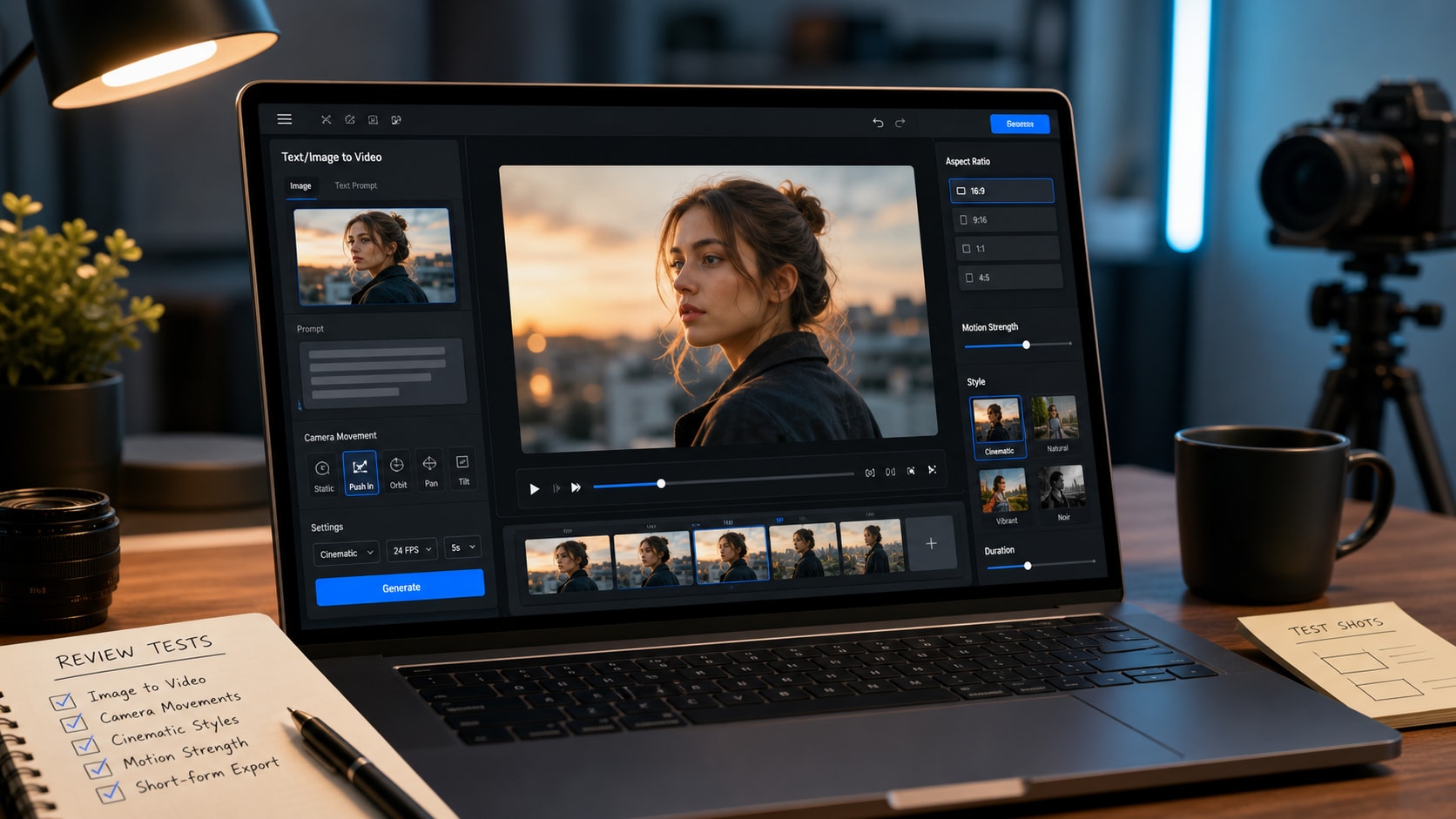
DomoAI is an AI video creation platform focused on video-to-video animation, AI video effects, image-to-video generation, and short-form visual transformation. This DomoAI review examines how well those workflows preserve motion, subjects, and source composition, while also covering free or paid access, credits, export limits, watermark rules, safety, and commercial-use considerations.
DomoAI is especially relevant when a creator already has an image or video and wants to transform it into a new animated or stylized result rather than build a full production from scratch. The main buying questions are whether the source remains recognizable, motion stays coherent, the visual transformation is consistent across the clip, and the current credit or export limits support repeated publishing.
In this article
Part 1: Quick Verdict
How this review was prepared: This review is based on official DomoAI product, pricing, and terms information available at the time checked, together with editorial evaluation. It does not claim private hands-on generation testing.
Part 2: What Is DomoAI?
DomoAI is an AI video platform designed around transforming visual source material into new short-form video results. Its core use cases include AI video effects, video-to-video animation, and image-to-video generation, making it more relevant to creators who already have a visual starting point than to users looking only for a blank-prompt video generator.
The product is best understood as a source-to-transformation workflow. A creator can begin with an existing clip or image, apply an AI-driven visual direction, review whether the subject and movement remain coherent, and then export or further edit the strongest result.
- Best-fit reader
Creators experimenting with video restyling, animated visual effects, image-to-video motion, short social clips, and alternate versions of existing source media.
- Decision point
DomoAI makes the most sense when the transformed video preserves enough of the source subject, motion, and composition to reduce the need for repeated regeneration.
- What to compare
Compare video-to-video consistency, image-to-video motion, source preservation, visual transformation quality, clip duration, credits, watermark behavior, export quality, and commercial-use terms.
Part 3: How DomoAI Works
DomoAI works best as a source-transform-review workflow rather than a one-click path to a finished video. Start with the actual clip or image you want to transform, choose the available effect or generation mode, create a small number of outputs, review the complete motion sequence, and keep only the result that preserves the important parts of the source.
| Step | What the user does | What to verify |
| 1. Start with the source | Use a real video, still image, or visual concept that resembles the asset you actually plan to publish. | Make sure the test includes the movement, subject, framing, identity, or visual details that matter in the final project. |
| 2. Choose the mode | Select video-to-video animation, image-to-video, AI video effects, or another DomoAI workflow available in the current account. | Confirm feature availability, credit requirements, clip limits, model options, and whether the mode is included in the current plan. |
| 3. Generate and review | Create a small set of transformed clips and inspect subject consistency, motion, visual style, source preservation, and artifacts through the complete sequence. | Track how many attempts are required before one result is strong enough to export or continue editing. |
| 4. Export or finish elsewhere | Download, enhance, resize, caption, or continue editing the selected clip when additional production work remains. | Confirm watermark behavior, resolution, format, credits or generation quota, privacy, and current commercial-use terms. |
This workflow is particularly important for video-to-video generation. A transformed clip can look impressive in isolated frames while still becoming unusable if the subject changes, movement breaks, visual style flickers, or details drift from the original source during the sequence.
Part 4: DomoAI Features
DomoAI's most relevant features are centered on transforming source videos and images rather than presenter-style AI workflows. Video-to-video animation, visual effects, image-to-video generation, and related source-driven tools should be judged by how well they preserve the original motion and subject while creating a meaningful new visual direction.
| Feature | Best use case | Clear limitation to check |
| Video-to-video animation | Restyling or transforming existing footage while retaining the underlying movement, timing, and scene structure. | Check whether the subject, pose, camera movement, scene continuity, and important details remain recognizable throughout the transformed clip. |
| AI video effects | Creating stylized variations, social-video effects, visual experiments, and alternate looks from existing video or visual material. | Review whether the effect stays visually consistent instead of flickering, changing style unexpectedly, or distorting the main subject. |
| Image-to-video | Animating a still image into a short motion clip for social content, visual testing, or creative experimentation. | Check whether the source subject remains recognizable, generated movement looks natural, and important visual details remain stable. |
| Text-to-video | Creating a short motion concept from a written prompt when no existing source clip or image is available. | Check prompt adherence, motion quality, subject consistency, clip duration, watermark rules, resolution, and credit use before repeated generation. |
| Source-based creative transformation | Producing several visual versions of an existing clip or image while keeping the original movement or composition as the creative foundation. | Check whether repeated outputs preserve the source closely enough for the project rather than creating unrelated interpretations. |
For a meaningful DomoAI test, use one simple source clip and one difficult transformation. A clear subject with steady movement can reveal baseline quality, while a face, fast action, product, detailed costume, camera move, or partially obscured subject can expose consistency problems more quickly.
Part 5: DomoAI Output Quality and Practical Limitations
DomoAI output quality should be judged by transformation consistency across the complete video rather than by individual frames. The tool adds the most value when the source movement remains coherent, the selected visual style stays stable, and the transformed subject does not drift between frames.
| Evaluation area | Expected fit | What to inspect | Practical takeaway |
| Motion quality | Test first | Watch the entire transformed clip for broken movement, jitter, subject drift, unexpected camera behavior, and visual artifacts. | DomoAI is more useful when the original motion remains readable and natural after transformation. |
| Source or reference preservation | Test first | Compare the transformed clip with the original source for identity, clothing, products, framing, pose, scene structure, and other important details. | Video-to-video workflows become practical when the new style does not destroy the information that made the source useful. |
| Style consistency | Test first | Inspect whether the chosen visual treatment remains consistent across faces, backgrounds, objects, lighting changes, and the full duration of the clip. | A strong single frame is not enough if the transformation visibly changes style between frames. |
| Cost per usable clip | Test first | Record how many video-to-video, image-to-video, effect, or regeneration attempts are required before one clip meets the intended quality standard. | The most useful cost metric is credits or plan capacity per accepted export rather than one generation attempt. |
Practical limitations to check
- Video-to-video transformations can amplify source problems: Blur, occlusion, fast movement, difficult faces, or unclear details in the original footage can become more noticeable after stylization.
- Consistency matters more than one attractive frame: Visual style, faces, clothes, products, objects, and backgrounds should be reviewed throughout the complete clip before publishing.
- Credits and export limits affect real production cost: Model choice, clip length, retries, premium generation modes, watermark conditions, and final export quality should all be considered when estimating cost per usable video.

Part 6: DomoAI Pricing, Free Access, and Credits
Pricing was checked on 2026-08-05. Use the live DomoAI pricing or account page as the final source for current plan names, credits, video duration, generation modes, model access, export limits, renewal terms, and refund rules.
| Pricing question | What to check | Why it matters |
| Free access | Trial availability, generation allowance, video duration, model access, watermark behavior, export resolution, and account region. | A free test is useful only when it reflects the video-to-video or image-to-video workflow you actually intend to repeat. |
| Paid plans | Current monthly or annual price, included credits, model access, clip limits, queue behavior, renewal terms, and cancellation rules. | The best plan is the one that produces enough accepted transformations rather than simply offering the largest headline credit allowance. |
| Extra usage | Premium models, longer clips, repeated generations, exports, upscaling, or other actions that may consume additional credits. | Video-to-video retries can increase effective production cost quickly when difficult source footage requires several attempts. |
Credits and usage limits
DomoAI may use credits, generation allowances, or other plan limits across its video workflows. For video-to-video and image-to-video creation, the important metric is how many accepted clips the available allowance produces after retries rather than how many generation attempts are included on paper.
- Check which video-to-video, image-to-video, text-to-video, and effect workflows consume credits.
- Test the most difficult source footage you regularly expect to transform before buying a larger allowance.
- Calculate usage based on accepted exports after retries rather than total generation attempts.
Part 7: DomoAI Pros and Cons
DomoAI's main advantage is source-driven AI video transformation: creators can start with existing movement or imagery and turn it into a different visual direction rather than relying entirely on a text prompt. Its main trade-offs are transformation consistency, credit planning, export limits, and the need to review source rights before commercial use.
Part 8: Is DomoAI Safe? Privacy, Consent, and Commercial Use
DomoAI is a public AI video transformation platform, but safe and commercially appropriate use depends on current terms, privacy rules, and the rights attached to uploaded videos, images, people, brands, music, and other source material. Source-driven generation deserves particular attention because the transformed result still originates from media that may contain protected or confidential content.
| Question | What to check before use |
| Privacy and uploads | Avoid uploading confidential footage, private images, unreleased campaign material, client assets, or another person's likeness unless current DomoAI policies and your own permissions support that use. |
| Consent | For real people, likenesses, brand marks, music, product footage, copyrighted media, and other protected material, confirm that you have the permissions required before uploading, transforming, or publishing. |
| Commercial use | DomoAI commercial use should be checked against current terms, plan status, uploaded footage or images, likenesses, music, logos, products, and other third-party rights involved in the final asset. Transforming or downloading media does not automatically clear those rights. |
| Paid plans and renewals | DomoAI states that subscription details and renewal dates can be reviewed from the account billing area. The reviewed information also notes that subscriptions using Indian or Russian payment methods do not auto-renew. Confirm current checkout, renewal, cancellation, and refund terms before purchasing. |
Personal experiments using your own authorized footage may require relatively simple checks. Client work, advertising, music videos, branded social content, product campaigns, and other paid projects should confirm source rights before uploading or transforming protected media.
Part 9: DomoAI vs Media.io: Which Workflow Fits the Job?
DomoAI and Media.io fit different stages of an AI video workflow. DomoAI is especially relevant when the main task is transforming an existing video or image into a new animated or stylized version. Media.io becomes more relevant when the selected result needs focused enhancement, subtitles, image-to-video creation, or another publishing-oriented finishing step.
Learn the difference between DomoAI and Media.io.
| Workflow question | DomoAI | When to compare Media.io |
| First creative result | Evaluate DomoAI primarily on video-to-video transformation quality, image-to-video motion, source preservation, style consistency, credit use, and export limits. | Compare Media.io after the transformed creative direction is accepted and a focused finishing step remains. |
| Before publishing | Check credits, watermark behavior, resolution, output rights, visual consistency, and whether additional cleanup is still required. | Use follow-up tools for enhancement, captions, resizing, cleanup, or another export-preparation task. |
| Still image to motion | DomoAI supports image-to-video as part of its broader AI transformation workflow. | AI Image to Video provides another focused route for animating a selected source image into a short social clip. |
| Quality enhancement | DomoAI is strongest during video transformation and stylization rather than final-quality enhancement. | Video Enhancer can improve a generated, transformed, or uploaded video before publication. |
Part 10: Final Verdict: Is DomoAI Worth It?
Part 11: DomoAI Review FAQs
-
Is DomoAI worth it in 2026?
DomoAI is worth trying in 2026 if you want to transform existing videos or images into animated, stylized, or short-form AI video variations. It is less suitable when exact identity, product detail, long-form continuity, or advanced timeline editing is required. -
Is DomoAI free?
If DomoAI provides free or trial generation in the current account, use it to test video-to-video transformation, image-to-video quality, clip duration, watermark behavior, credits, and export resolution before paying. -
How much does DomoAI cost?
DomoAI pricing can change, so use the live pricing or account page as the final source for current plans, included credits, generation modes, video duration, model access, export limits, renewal terms, and refund conditions. -
How do DomoAI credits or usage limits work?
DomoAI may use credits or other plan allowances across video-to-video, image-to-video, text-to-video, effects, and export workflows. The useful metric is how many accepted clips the allowance produces after retries rather than the total number of generation attempts. -
What is DomoAI best for?
DomoAI is best for video-to-video animation, AI video effects, stylized transformations, image-to-video generation, social-video experiments, and creators who already have source footage or images they want to reinterpret. -
What are the main limitations of DomoAI?
DomoAI's main limitations are transformation consistency, subject or identity drift, credit consumption, plan-dependent clip and export limits, and less editing depth than a professional timeline-based video editor. -
Is DomoAI safe and legit?
DomoAI is a public AI video platform with official product, pricing, and terms pages. Safe use still depends on current privacy policies, account rules, and whether you have permission to upload, transform, and publish the videos, images, people, brands, music, and other material involved. -
Can DomoAI be used commercially?
DomoAI commercial use should be checked against current terms, plan status, source-video rights, image rights, likenesses, music, trademarks, products, and other third-party material involved in the finished video. -
Does DomoAI add a watermark?
The reviewed public information does not establish one universal watermark rule for every DomoAI workflow. If watermark-free export matters, confirm the current plan, generation mode, resolution, file format, credits, and live export conditions. -
What is the best alternative to DomoAI?
The best DomoAI alternative depends on whether you need another video-transformation platform or a more focused finishing workflow. Media.io is worth comparing when a selected clip mainly needs image-to-video creation, enhancement, subtitles, or other publishing preparation.
Part 12: Sources
- Official source: DomoAI product and AI video transformation overview (official, checked 2026-08-05)
- Official source: DomoAI pricing, credits, and plan information (official, checked 2026-08-05)
- Official source: DomoAI terms, billing, and usage information (official, checked 2026-08-05)


