Canva AI Generator combines AI image generation with Magic Media, templates, and Canva's broader design workflow for creating campaign visuals, social content, product graphics, and reusable marketing assets. This Canva AI Generator review looks at where its AI tools fit best, what to check around plan limits and commercial use, and whether Canva's biggest advantage is generation itself or the ability to move an AI concept into a finished design.
Canva AI Generator is particularly appealing for marketers, creators, and small teams that already work with templates and need to turn one idea into multiple campaign or channel-ready visuals. It becomes less predictable when exact product details, strict brand layouts, approval workflows, rights-sensitive source material, or highly controlled AI outputs determine whether an asset can actually be published.
In this article
Part 1: Quick Verdict
How this review was prepared: This review is based on official Canva product, pricing, and policy information available at the time checked, together with editorial evaluation. It does not claim private hands-on generation testing.
Part 2: What Is Canva AI Generator?
Canva AI Generator is best understood as AI-assisted creation inside a broader design platform rather than as a standalone image generator. Its value comes from combining Magic Media and image generation with templates, existing design assets, campaign variations, and the wider Canva editing workflow.
That distinction matters when comparing Canva with dedicated AI generators. A standalone generator may be judged mainly on the quality of its first image, while Canva becomes more useful when the generated concept needs to be resized, adapted, placed into a template, reused across channels, or prepared for a marketing workflow.
- Best-fit reader
Marketers, social-content teams, ecommerce creators, designers, and small businesses that already think in terms of campaigns, templates, and reusable visual assets.
- Decision point
Canva AI Generator is most valuable when AI generation reduces the time between a creative brief and a publishable design rather than simply producing an attractive standalone image.
- What to compare
Compare image quality, template integration, brand consistency, campaign variant quality, plan limits, export requirements, commercial-use terms, and how much manual cleanup remains.
Part 3: How Canva AI Generator Works
Canva AI Generator works best as part of an iterative design workflow: generate the concept, place it into the real layout, revise the important details, and judge the final asset rather than the first AI output. For campaign or commercial work, the practical test is whether Canva reduces the total time from brief to approved design.
| Step | What the user does | What to verify |
| 1. Start with the real asset | Use a campaign brief, product concept, visual direction, source image, or prompt that resembles what you actually need to publish. | Define the intended audience, format, brand requirements, copy, and channel before judging the AI result. |
| 2. Choose the workflow | Select the Canva AI or Magic Media workflow that fits the task, then move the result into the relevant template or design format. | Confirm feature availability, account limits, plan requirements, and whether the workflow supports the output you need. |
| 3. Generate and refine | Create several visual directions, keep the strongest option, and check text, faces, product details, composition, and brand fit. | Measure how much editing is required before the asset is ready for internal review or publishing. |
| 4. Adapt and export | Reuse the selected design across campaign variants, social sizes, product graphics, or other templates, then export the required version. | Confirm resolution, format, plan limits, brand accuracy, privacy, rights, and commercial-use requirements. |
This makes Canva AI Generator different from tools that end at image generation. The real value appears when a usable concept can remain inside the same design environment while copy, format, template, layout, and campaign variants are prepared for publication.
Part 4: Canva AI Generator Features
Canva AI Generator features are most useful when evaluated as parts of a connected design workflow rather than as isolated AI functions. Magic Media and image generation can create the initial visual, while templates, reusable assets, and campaign variation workflows help move that concept closer to a finished marketing deliverable.
| Feature | Best use case | Clear limitation to check |
| Templates | Turning an AI-generated concept into social graphics, campaign assets, promotional layouts, and other repeatable design formats. | Check whether the template preserves the required brand hierarchy, legal copy, product information, and final-channel specifications. |
| Batch variants | Creating multiple versions of a campaign idea for different formats, audiences, messages, or publishing channels. | Check whether each variation remains consistent with the original campaign rather than drifting into a different visual direction. |
| Campaign asset reuse | Extending one visual direction into related social posts, product graphics, promotional assets, or other campaign materials. | Review typography, product treatment, composition, messaging, localization, and visual consistency across the asset set. |
| AI image generation | Turning a prompt into a visual concept, mood image, campaign draft, thumbnail, background, or starting point for a larger Canva design. | Check exact text, hands, faces, logos, products, packaging, and how many attempts are required before one image can be used. |
| Brand assets | Supporting a workflow in which AI-generated material needs to coexist with established brand visuals and repeatable campaign elements. | Confirm that AI output follows rather than conflicts with existing brand rules, approvals, copy requirements, and visual standards. |
For a meaningful Canva AI test, do not stop at a visually attractive prompt result. Place the image into the real campaign format, add the actual copy, create at least one variation, and check whether the finished design still meets the brief. That test is much more useful than comparing isolated AI images.
Part 5: Canva AI Generator Output Quality and Practical Limitations
Canva AI Generator output quality should be measured by how easily an AI draft becomes an approved design. A visually strong image has limited campaign value if the product is inaccurate, text needs rebuilding, brand styling drifts, or every channel variation requires substantial manual correction.
| Evaluation area | Expected fit | What to inspect | Practical takeaway |
| Brand fit | Test first | Use a real brand brief with colors, layout expectations, product details, messaging, and at least one required variation. | Canva AI creates more value when the generated concept can be adapted to the brand system without being rebuilt from scratch. |
| Campaign variant quality | Test first | Create several related formats or campaign versions and compare visual hierarchy, message consistency, product treatment, and overall direction. | Variant workflows save time only when the assets feel connected and remain suitable for their respective channels. |
| Asset handoff | Test first | Take the AI-generated draft through the same editing, review, and export process used for a normal production asset. | The strongest result is one that moves into review with limited manual repair rather than one that only looks good as a standalone generation. |
| Approval and rights review | Test first | Review uploaded material, generated imagery, people, logos, product claims, copyright-sensitive references, and publishing requirements. | An asset is production-ready only when both the visible design and the underlying usage rights fit the intended publication. |
Practical limitations to check
- AI generation is only one part of Canva's value: Users who only need isolated prompt-to-image output should compare dedicated generators as well, because Canva's advantage is strongest when the image continues into templates and design production.
- Exact campaign details still require manual review: Product information, logos, text, claims, faces, layout hierarchy, and recurring brand elements should be checked before client or public use.
- Plan limits can change the cost of repeat production: Evaluate the current Canva account based on the AI actions, exports, premium features, and collaboration requirements used by the real workflow rather than only the headline subscription price.

Part 6: Canva AI Generator Pricing, Free Access, and Credits
Pricing was checked on 2026-08-05. Use the current Canva pricing and account screens as the final source for AI generation limits, premium features, campaign outputs, brand tools, exports, renewal conditions, and refund rules.
| Pricing question | What to check | Why it matters |
| Free access | Available AI tools, generation allowance, premium restrictions, downloads, watermark behavior, export resolution, and account region. | A free test is useful only when it represents the workflow and output quality you actually need. |
| Paid plans | Current monthly or annual price, included AI access, premium design features, brand tools, collaboration options, renewal terms, and cancellation rules. | Canva's value may come from the complete design workflow rather than AI generation alone. |
| Extra usage | AI generation limits, premium features, additional exports, advanced tools, or other actions that may be restricted by plan. | Retries and campaign variants can change the real cost per approved asset. |
Credits and usage limits
Canva AI Generator should be evaluated by usable output per plan allowance rather than by a headline generation number alone. A campaign may require several AI attempts, template revisions, size variations, and final exports before one creative direction becomes a complete asset set.
- Confirm which AI generation and editing actions are included in the current Canva plan.
- Test the workflow with a real campaign asset before upgrading mainly for AI access.
- Measure the number of usable or approved designs produced after revisions rather than the number of initial generations.
Part 7: Canva AI Generator Pros and Cons
Canva AI Generator stands out less as a pure image generator and more as an AI entry point into an established design workflow. Its main advantage is the ability to move from concept to template-based campaign asset; its main trade-off is that AI output still needs careful review when exact brand, product, legal, or commercial details matter.
Part 8: Is Canva AI Generator Safe? Privacy, Consent, and Commercial Use
Canva AI Generator is part of a public design platform, but safe and commercially appropriate use depends on current Canva policies, account settings, and the material used in the design. For professional work, review both the AI-generated content and any source files, people, products, trademarks, or other protected assets included in the final design.
| Question | What to check before use |
| Privacy and uploads | Avoid uploading confidential campaign material, unreleased product imagery, private documents, client assets, or another person's likeness unless current Canva policies and your own permissions support that use. |
| Consent | Before using real people, likenesses, trademarks, music, product images, copyrighted references, or other protected material, confirm that you have the permissions required for both creation and publication. |
| Commercial use | Canva AI Generator commercial use depends on current Canva terms, the account or plan used, uploaded source material, logos, likenesses, product claims, and other third-party rights involved in the final design. Downloading or editing a generated asset does not automatically resolve copyright, trademark, likeness, or licensing questions. |
| Paid plans and refunds | The official material reviewed here did not provide a complete refund or cancellation rule in the accessible text used for this article. Confirm current checkout, renewal, cancellation, and refund conditions before changing plans primarily for AI features. |
Personal design experiments may require only basic checks. Advertising, ecommerce, paid campaigns, client work, product launches, and other commercial projects should use non-confidential test material first and review current Canva terms before sensitive or protected assets enter the workflow.
Part 9: Canva AI Generator vs Media.io: Which Workflow Fits the Job?
Canva AI Generator and Media.io fit different parts of the creative process. Canva is especially strong when an AI-generated concept needs to become a designed campaign asset through templates and reusable layouts. Media.io becomes more relevant when a selected visual needs a specific media-processing step such as image-to-video animation or background cleanup.
| Workflow question | Canva AI Generator | When to compare Media.io |
| First creative result | Evaluate Canva on concept quality, template fit, campaign reuse, product-detail accuracy, and how easily the asset moves into a finished layout. | Compare Media.io after the creative direction is selected and a specific image or video processing step remains. |
| Before publishing | Check current account limits, export requirements, output rights, brand accuracy, and whether all campaign variants are ready for review. | Use focused follow-up tools when enhancement, motion, cleanup, resizing, or another media-processing task is still required. |
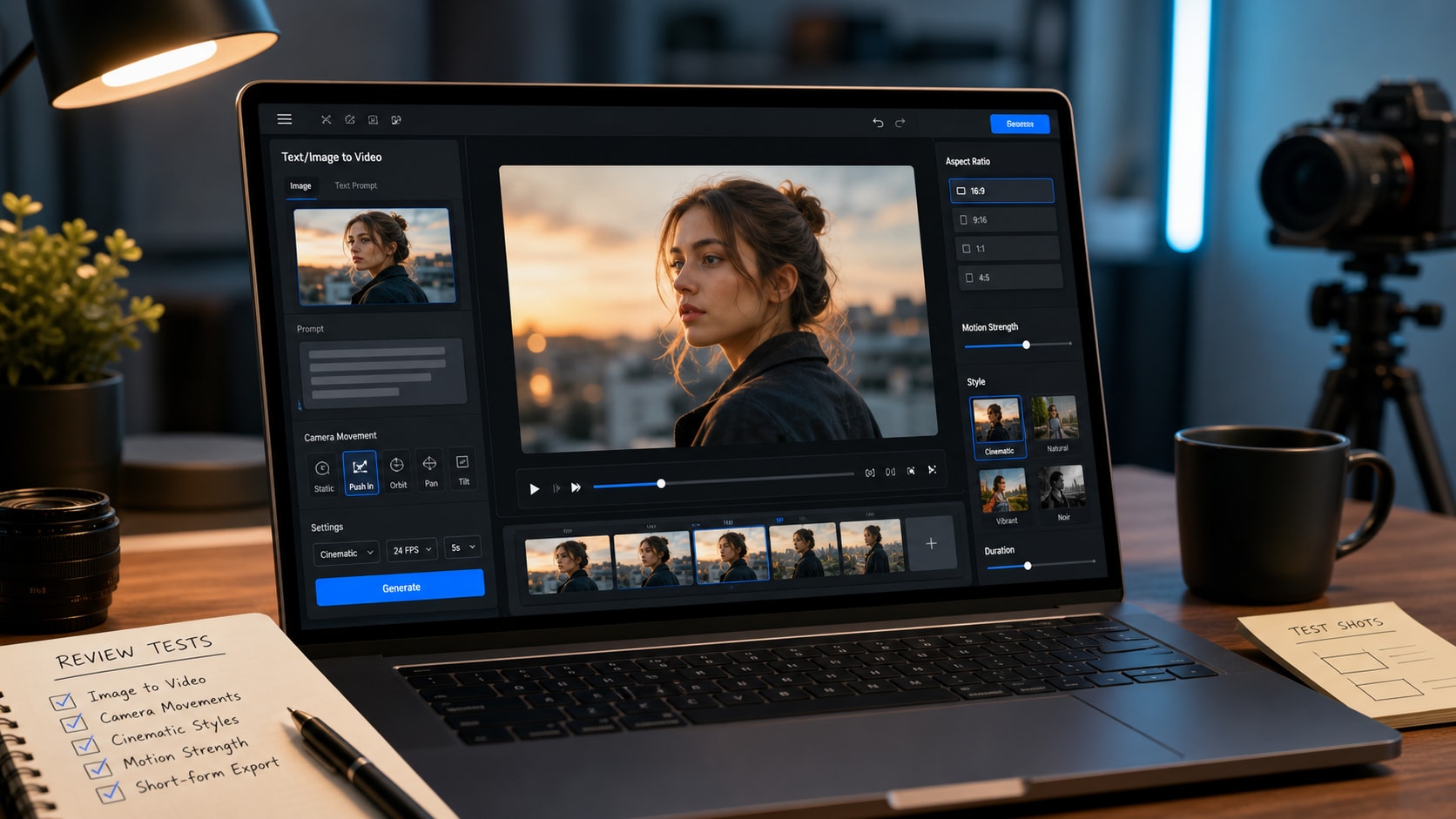
| Still image to motion | Canva is strongest when the still image is already part of a broader campaign or template workflow. | AI Image to Video can animate a selected source image into a short social or creative video. |
| Background cleanup | Canva is useful when the edited image still needs to remain part of a larger layout or campaign asset. | Background Remover provides a focused workflow for cleaning a portrait, product image, or social visual. |
Part 10: Final Verdict: Is Canva AI Generator Worth It?
Part 11: Canva AI Generator Review FAQs
-
Is Canva AI Generator worth it in 2026?
Canva AI Generator is worth considering in 2026 if you want AI-generated visuals to move directly into templates, social graphics, campaign variants, product visuals, and other finished Canva designs. Its biggest advantage is the surrounding design workflow rather than AI image generation alone. -
Is Canva AI Generator free?
Canva AI availability and generation limits can depend on the current account, feature, region, and plan. Check the live Canva account to see which Magic Media or AI generation tools are available before assuming a particular workflow is fully free. -
How much does Canva AI Generator cost?
Canva AI Generator does not need to be evaluated as a standalone AI subscription alone because its value is tied to the broader Canva plan and design workflow. Use the current Canva pricing or account screen to confirm AI allowances, premium features, brand tools, exports, renewal conditions, and current plan pricing. -
How do Canva AI Generator credits or usage limits work?
Canva AI limits can depend on the current feature and plan. For a useful comparison, track how many AI attempts are required to produce an accepted image and how easily that image can be turned into the finished campaign formats you need. -
What is Canva AI Generator best for?
Canva AI Generator is best for marketers, creators, ecommerce teams, and small businesses that want to combine AI image generation with Magic Media, templates, social graphics, campaign variants, product visuals, and reusable design assets. -
What are the main limitations of Canva AI Generator?
Canva AI Generator's main limitations are the need to review exact text, product details, logos, identity consistency, brand layouts, current plan limits, and commercial-use requirements before an AI-generated concept becomes a publishable asset. -
Is Canva AI Generator safe and legit?
Canva AI Generator is part of Canva's public design platform. Safe use still depends on current privacy policies, account terms, and the material you upload. Avoid confidential client assets, another person's likeness, or protected brand material unless you have the required permissions. -
Can Canva AI Generator be used commercially?
Commercial use should be reviewed against current Canva terms and the rights attached to uploaded images, trademarks, product assets, likenesses, copyrighted references, and other material used in the final design. Generating or downloading an image does not automatically clear third-party rights. -
Does Canva AI Generator add a watermark?
The public material reviewed for this article did not establish one universal watermark rule for every Canva AI workflow. Check the exact tool, account, plan, and export screen if watermark-free output is required for your project. -
What is the best alternative to Canva AI Generator?
The best Canva AI Generator alternative depends on what part of the workflow matters most. Compare dedicated AI generators when image creation is the priority, or Media.io when a finished Canva visual needs image-to-video animation, background removal, enhancement, or another focused media-processing step.
Part 12: Sources
- Official source: Canva privacy policy (official, checked 2026-08-05)
- Official source: Canva AI image generator and product overview (official, checked 2026-08-05)
- Official source: Canva AI Generator pricing and plan information (official, checked 2026-08-05)