
If you already have the words and need AI to handle the production, the best AI script-to-video generators can turn a screenplay, YouTube script, training lesson, marketing brief, or narrated story into a much more complete video than a basic prompt-to-clip tool. The important difference is what happens after you paste the script: some platforms create original multi-scene visuals, some assemble stock footage, and others put an AI presenter in front of the camera.
This guide compares nine online AI script-to-video generators by the job each one handles best. Instead of declaring one universal winner, it separates story generation, faceless narration, stock-assisted marketing, avatar videos, and cinematic planning so you can choose a workflow that matches the script you actually have.
In this article
Quick Answer: Which AI Script-to-Video Generator Is Best?
The best tool depends less on the logo and more on the type of finished video you expect. A narrative script with recurring characters needs scene planning and visual continuity. A corporate training script needs reliable presenters and localization. A faceless YouTube script needs voice, captions, visual matching, and efficient editing. Those are different production problems.
| Tool | Best for | What happens to your script | Visual approach | Voice / captions | Main trade-off |
|---|---|---|---|---|---|
| Media.io | Multi-scene stories and script-driven AI videos | Agent Mode automates the flow; Structured Mode exposes story, characters, and storyboard before generation | Original AI-generated visuals | Voiceover; optional background music and subtitles | Current end-to-end export is designed for videos up to 2 minutes |
| Fliki | Faceless narration and multilingual creator videos | Splits the script into scenes and assembles a finished video | Stock plus AI-generated visuals | 2,000+ voices, 80+ languages, captions and music | Best fit is narration-led content rather than deeply controlled recurring-character filmmaking |
| InVideo AI | Marketing, explainers, and stock-assisted production | Analyzes script sections, selects media, builds voiceover, music, and timeline | Strong stock-media workflow with AI options | Voiceover, music, subtitles | Outputs can feel stock-led if you need highly original scenes |
| Synthesia | Enterprise training, onboarding, and localization | Turns a script into a structured presenter-led video draft | AI avatars, templates, and generated assets | AI voices and translation across 160+ languages | Optimized for presenters and business communication, not cinematic story videos |
| HeyGen | Lifelike AI presenters and multilingual spokesperson videos | Transforms a script into scenes with narration, captions, graphics, and matched footage | Avatar-first with stock and supporting visuals | AI voices, captions, translation tools | Presenter-led format is not the right fit for every story or faceless channel |
| Pictory | Script and article repurposing | Builds a video around selected script or article text | Automatically matched visuals | AI voices and music | More useful for repurposing and stock-style explainers than original narrative filmmaking |
| VEED | Browser editing around an AI-generated draft | Generates videos for training, walkthroughs, promos, tutorials, and related formats | AI/stock-assisted draft inside an editor | Strong captioning and editing workflow | Best when you want to keep editing rather than fully automate every creative decision |
| Revid AI | Faceless TikTok, Reels, and Shorts | Uses the exact script to generate a voiced, captioned short with matched visuals | AI visuals, stock, or supplied media | Voiceover and captions on by default | Workflow is strongly oriented toward short-form vertical content |
| LTX Studio | Filmmaking, story development, and shot planning | Starts from an uploaded script and develops it inside a wider AI production workspace | Generative scenes with storyboard and shot-oriented controls | Audio can be added within the wider production workflow | More creative control also means a deeper setup than one-click social video tools |
How We Compared the Best Script-to-Video AI Tools
A finished script creates different problems from a one-line text prompt, so visual quality alone is a weak way to judge this category. This comparison uses the current documented workflows and product information available in September 2026. It does not pretend that every platform was tested under identical paid plans.
- Full-script intake: Can you paste an existing script without rewriting it into dozens of prompts?
- Scene understanding: Does the system break the script into usable scenes, or does it mostly read the text over generic footage?
- Visual creation: Are scenes generated from scratch, selected from stock, built around an avatar, or mixed?
- Narration and audio: Can the workflow add voiceover, background music, and captions without another application?
- Editability: Can you fix a weak scene, change narration, replace media, or review a storyboard before export?
- Continuity: For story scripts, can the workflow keep characters and visual logic coherent across multiple scenes?
- Online workflow: Because Media.io and most tools in this list are cloud-based, we also considered whether the work can move from script to output in a browser without installing a desktop production stack.
- Use-case fit: A tool earns a recommendation for the job it performs well, not for having the longest feature list.
9 Best AI Script-to-Video Generators Online in 2026
1. Media.io — Best for Multi-Scene AI Stories from a Script
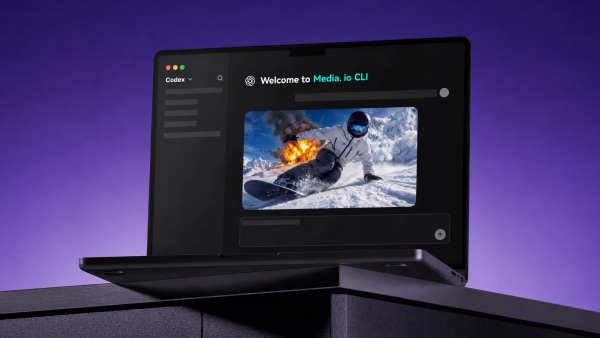
Media.io's current workflow is especially useful as an AI multi-scene video generator for prompts, screenplays, YouTube scripts, short dramas, stories, and brand ideas. The most useful distinction is its two workflows. Agent Mode is designed for a fast end-to-end path, while Structured Mode lets you review story structure, characters, and a storyboard before the final generation. That makes the tool particularly relevant when a script contains recurring people, multiple locations, or a sequence that should feel like one story rather than unrelated clips.
The workflow can generate AI visuals and voiceover, with optional background music and subtitles. Media.io currently documents exports up to two minutes and up to 4K for this product. That ceiling makes it a stronger fit for short stories, short dramas, branded narratives, social storytelling, and concise YouTube segments than for a 30-minute training course.
Why it stands out: its product logic is centered on translating a script into a story plan before generation. Many competitors in this category solve a different problem: they read the script with an avatar or attach stock footage to narration. Media.io is more useful when the visuals themselves need to be generated as scenes.
Watch for: multi-scene AI video still needs review. Character appearance, object continuity, body motion, and complicated interactions can vary between generations. Structured Mode helps you catch story-level problems earlier, but it does not eliminate normal generative-video limitations.
Best for: AI story videos, short dramas, narrative social content, brand stories, faceless story channels, and creators who want an online script-to-video workflow with generated visuals.
2. Fliki — Best for Faceless Narration and Multilingual Videos
Fliki's script-to-video workflow splits pasted text into scenes, pairs each section with stock or AI-generated visuals, generates narration, adds animated captions, and mixes in music. Its official product page currently highlights more than 2,000 neural voices across 80+ languages, making language and voice selection a major advantage for channels that publish across markets.
Unlike a pure stock assembler, Fliki can mix stock footage with AI B-roll and image-to-video content. That flexibility makes it useful for explainers, educational videos, listicles, social media scripts, and faceless YouTube production where the words remain the center of the experience.
Watch for: a narration-first workflow is not the same thing as a character-driven story engine. If the script requires the same protagonist to appear consistently across many generated shots, test continuity before committing to a large batch.
Best for: faceless YouTube videos, explainers, multilingual narration, TikTok, Reels, and creators producing many voice-led videos.
3. InVideo AI — Best for Stock-Assisted Marketing and Explainers
InVideo's current workflow lets users select a script-to-video route or instruct the system to use an exact script. Its documentation describes the AI analyzing scenes, matching media, adding background music, generating voiceover, and assembling the timeline. This is useful for marketers who care more about getting from approved copy to a coherent video quickly than about generating every shot from scratch.
The stock-assisted approach can be an advantage for business topics because footage already looks realistic and does not need repeated generative attempts. It is especially efficient for explainer scripts, product roundups, company updates, listicles, and informational YouTube videos.
Watch for: stock-based automation can look generic when the script depends on a unique character, fictional world, or branded visual language. In that situation, an original-scene generator is the better category.
Best for: marketing videos, explainers, informational YouTube content, product messaging, and teams that want automatic media selection.
4. Synthesia — Best for Training, Onboarding, and Enterprise Localization
Synthesia's Script to Video Maker can turn a script, prompt, file, or URL into a video draft, then add AI avatars, voices, templates, and generated assets. Its official documentation emphasizes localization across 160+ languages and lets teams change the script and regenerate the video without reshooting a human presenter.
That workflow is well matched to internal communication, onboarding, compliance, training, product education, and repeatable business content. A team can update one section of a script and regenerate the presenter-led video instead of organizing another shoot.
Watch for: avatar quality can be excellent while still solving a different problem from narrative AI filmmaking. A screenplay with chase scenes, fantasy settings, and recurring dramatic characters should not be judged by the same criteria as a five-minute onboarding lesson.
Best for: L&D, corporate training, onboarding, internal communications, multilingual business videos, and presenter-led explainers.
5. HeyGen — Best for Lifelike AI Presenters and Spokesperson Videos
HeyGen's script-to-video tool accepts a pasted script or brief and builds a share-ready video with narration, captions, transition graphics, and matched stock footage. Its strongest identity is the avatar workflow: users choose a presenter and voice, then let the AI perform the script without filming a real spokesperson.
This makes HeyGen especially useful for product explainers, sales outreach, learning content, multilingual spokesperson videos, and company announcements where the audience benefits from a visible presenter.
Watch for: a presenter-first video can become visually repetitive for long stories or faceless entertainment channels. If the script needs a changing sequence of AI-generated scenes rather than an avatar speaking to camera, compare a story-oriented tool instead.
Best for: spokesperson videos, explainers, training, sales content, personalized business communication, and multilingual avatar videos.
6. Pictory — Best for Repurposing Scripts and Articles into Video
Pictory's current Script to Video feature lets users start from an article URL or a script, then builds a video with realistic AI voices, automatically matched visuals, and music. Its wider product also supports text- and URL-to-video workflows, so it fits content teams that routinely convert written material into visual summaries.
This is a good match for blog repurposing, educational explainers, thought-leadership clips, listicles, and social cutdowns. The workflow is less about inventing a fictional world and more about packaging existing information into a watchable video.
Watch for: if the core value of the script depends on original cinematic visuals, recurring fictional characters, or detailed scene direction, a stock-oriented workflow may not deliver enough visual specificity.
Best for: article repurposing, narrated explainers, educational content, summaries, and marketing teams with existing written content.
7. VEED — Best for Script-to-Video Plus Browser Editing
VEED's current Script to Video tool is positioned for training videos, walkthroughs, product launches, tutorials, testimonials, company news, onboarding, and related business formats. The advantage is less about one fully autonomous generation button and more about having the draft inside an editing environment with captions, media, timing, layout, and other finishing tools close at hand.
For teams that expect to correct AI choices, adjust pacing, and polish branded assets before publishing, that editing layer can matter more than maximum automation.
Watch for: creators who want AI to invent a consistent cast and cinematic world from a screenplay should compare tools with deeper story and scene generation rather than choosing primarily for editing convenience.
Best for: browser-based editing, training, walkthroughs, marketing videos, tutorials, and teams that want to refine the AI-generated draft manually.
8. Revid AI — Best for Short-Form Faceless Scripts
Revid documents a dedicated script-to-video workflow that accepts exact source text and generates a video with moving visuals, voiceover, and captions. The default workflow is oriented toward 9:16 content, and users can choose AI visuals, stock footage, or supplied media depending on the project.
That makes the product easy to understand: bring the words, let the system handle the voice and visual layer, then publish into short-form channels. It is especially relevant for creators who already have a repeatable script production pipeline.
Watch for: a workflow optimized around TikTok, Reels, and Shorts is not automatically the best option for a horizontal multi-scene short film or a long internal training program.
Best for: TikTok, Instagram Reels, YouTube Shorts, narrated facts, short explainers, and faceless content at volume.
9. LTX Studio — Best for Filmmaking and Storyboard-Led Script Development
LTX Studio positions Script to Video as part of a wider AI video production environment alongside storyboarding, shot editing, character creation, image generation, animation, and audio tools. Its value is the connected creative workspace: the script becomes the starting point for visual development rather than merely a block of narration to illustrate.
This makes it more relevant to directors, creative teams, concept development, short films, music videos, and projects that benefit from planning individual shots.
Watch for: deeper creative control introduces more decisions. If the goal is simply to paste a 45-second narration script and publish a vertical video quickly, a faceless automation tool will usually be more direct.
Best for: filmmaking, storyboards, pre-production, visual world-building, shot planning, and creative teams.
How to Choose the Best AI Script-to-Video Generator for Your Use Case
Start with the output format, not the feature count. The same script can produce a completely different kind of video depending on whether the platform is story-first, stock-first, or avatar-first.
Choose a story-first generator for multi-scene narratives
If your script contains characters, locations, actions, emotional beats, or dialogue that should unfold visually, prioritize story structure, storyboard review, character planning, and original scene generation. Media.io's multi-scene video workflow and LTX Studio are the most relevant options in this list for that decision.
Choose a faceless generator for narration-led channels
If the script is the product — facts, explainers, listicles, educational narration, or commentary — prioritize automatic scene splitting, voice quality, captions, stock/AI B-roll, aspect ratios, and editing speed. Fliki and Revid are built around this workflow, while InVideo AI and Pictory also fit many narration-led formats.
Choose an avatar tool for training and spokesperson content
If the audience should see a presenter delivering the script, focus on avatar realism, voice quality, languages, localization, brand control, and revision workflow. Synthesia and HeyGen are the clearest choices here.
Choose an editor-first platform if human refinement is expected
If AI only needs to produce the first draft and your team will still adjust scenes, captions, branding, and timing, the quality of the browser editor matters. VEED is especially relevant when editing remains part of the normal production process.
AI Script-to-Video vs Text-to-Video: They Are Not the Same Tool
This distinction matters for both search and product selection. A text-to-video generator usually interprets a short prompt such as “a woman walking through a rainy neon street” and creates one clip or a small number of shots. A script-to-video generator has to work with much more structure: narration, scene changes, characters, pacing, captions, audio, and sometimes a storyboard across a complete sequence.
| Question | Text-to-video | Script-to-video |
|---|---|---|
| Typical input | Short prompt | Finished script, screenplay, story, lesson, or narration |
| Typical output | One clip or a few generated shots | Multi-scene or presenter/narration-led video |
| Needs scene planning? | Usually limited | Often essential |
| Voiceover/captions | May be separate | Commonly part of the workflow |
| Best for | Visual concepts and individual shots | YouTube scripts, stories, training, explainers, ads, and repeatable content production |
If you only need a cinematic shot, compare text-to-video AI generators. If you already have a full narrative or voiceover script, stay in the script-to-video category.
A 15-Minute Test Before Choosing an Online Script-to-Video AI
You can learn more from one controlled script than from twenty marketing demos. Use the same 120- to 180-word script in two or three tools and record what the AI changes.
- Paste the exact same script. Do not rewrite it to make one platform look better.
- Check scene boundaries. Does the tool understand where the topic, location, speaker, or action changes?
- Count generic visuals. Flag scenes that could fit almost any script. This quickly reveals stock-heavy automation.
- Check continuity. For stories, compare faces, clothing, props, locations, and the logical order of actions.
- Listen without watching. Voice pacing, emphasis, pronunciation, and music levels can decide whether a video feels publishable.
- Make one correction. Replace a weak visual or change one line. The best workflow is not only the one that generates; it is the one that lets you fix mistakes efficiently.
- Export and inspect the file. Check current resolution, watermark rules, aspect ratio, usage limits, and commercial terms on the day you publish.
For a story-focused test, start with Media.io's AI story video generator and compare Agent Mode with Structured Mode. The difference will show whether you prefer maximum automation or more visibility into story planning before generation.
Final Verdict: Pick the Workflow, Not Just the Brand
There is no single best AI script-to-video generator for every type of script. The strongest choice depends on what the written material is supposed to become.
- Choose Media.io for short multi-scene stories and scripts where generated visuals, characters, and storyboard structure matter.
- Choose Fliki for narration-led faceless videos and multilingual voice production.
- Choose InVideo AI for stock-assisted marketing and explainers.
- Choose Synthesia for enterprise training and localization.
- Choose HeyGen for avatar-led presenter videos.
- Choose Pictory for written-content repurposing.
- Choose VEED when browser editing after generation is part of the plan.
- Choose Revid for short-form vertical faceless scripts.
- Choose LTX Studio for deeper filmmaking and storyboard-led development.
Frequently Asked Questions About AI Script-to-Video Generators
-
What is the best AI script-to-video generator in 2026?
The best choice depends on the video you are making. Media.io is a strong fit for turning scripts and stories into multi-scene AI videos, Synthesia and HeyGen are better suited to presenter-led training or business videos, while Fliki, Revid, InVideo AI, and Pictory are useful for narration-led or stock-assisted production. Compare the workflow, not just the final demo reel. -
Can AI turn a full script into a video automatically?
Yes. Modern script-to-video tools can accept a finished script and automate several production steps, such as scene planning, visual selection or generation, voiceover, captions, music, and assembly. The amount of automation varies widely: some tools create original AI scenes, while others mainly pair script sections with stock footage or an AI presenter. -
What is the difference between script-to-video and text-to-video AI?
Text-to-video usually generates one or a few visual clips from a prompt. Script-to-video is designed for longer written material and typically has to interpret multiple scenes, narration, pacing, characters, captions, and audio across a more complete video. If you already have a screenplay, story, YouTube script, or training script, script-to-video is usually the more relevant category. -
Are online AI script-to-video generators good for YouTube?
They can be, especially for faceless narration, explainers, story channels, tutorials, and short-form content. For YouTube, compare how well each tool handles longer scripts, scene changes, aspect ratios, voice quality, captions, and the amount of manual editing needed before publishing. -
Which AI script-to-video generator is best for consistent characters?
Character consistency matters most for story-driven videos with recurring people across scenes. Choose a workflow that explicitly plans characters and scenes rather than simply matching each sentence with unrelated stock clips. Media.io's Structured Mode is designed around story structure, characters, and storyboard review before generation, which makes it a relevant option for this use case. -
Is there a free AI script-to-video generator online?
Several platforms provide free access, trials, or limited monthly credits, but the conditions change frequently. Check current limits for video length, resolution, watermarking, premium voices or models, and commercial use before committing to a production workflow.