
 ChatGPT
 Perplexity
 Gemini
 Claude
 Grok
Grok
Vidnoz AI makes avatar-led videos fast and relatively affordable, but the best choice depends on whether you need a virtual presenter, cinematic visual generation, product advertising, or deeper editing control. This review separates the marketing numbers from the decisions that actually affect your workflow and budget.
In this review
Quick verdict
About this review: We evaluated Vidnoz using its current product pages, pricing and policy information, recent independent reviews, and public customer feedback.
Vidnoz AI at a Glance
| Category | Our assessment |
| Primary workflow | Script or prompt → avatar and voice → scenes → browser-based edit → export |
| Best use cases | Training, onboarding, explainers, internal communications, multilingual presenter videos, basic faceless content |
| Less suitable for | Cinematic storytelling, precise motion direction, complex editing, premium human-led personal branding |
| Official library claims | The pricing page displayed roughly 1,800–1,900 avatars, 3,200+ templates, and up to 2,660+ voices when checked; other Vidnoz pages displayed slightly different counts. [1] |
| Free plan | Daily credits, 720p export, a maximum of three minutes per video, and fewer voices and advanced features |
| Paid plans | Starter, Business, and custom Enterprise plans |
| Standard credit rate | 0.5 credit per second, or about 30 credits for one minute of standard generation |
| Expressive/Product Avatar rate | 2 credits per second, or about 120 credits for one minute |
| Editorial score | 4.1/5 — strong value and usability, with meaningful creative and credit-model trade-offs |
What Is Vidnoz AI?
Vidnoz AI is primarily a browser-based avatar video production platform. Its core experience is built around selecting an AI presenter, entering a script, choosing a voice, arranging scenes, and generating a finished video. It is closer to a rapid virtual-presenter studio than to a traditional editor such as Premiere Pro or a cinematic generative-video system built around detailed camera and motion prompts.
The platform also includes or connects to a wider set of tools, including text-to-video, photo avatars, video translation, image generation, image-to-video, face swap, video enhancement, and other AI utilities. This breadth is useful, but it can make the product structure feel more complicated than the simple "all-in-one" label suggests. Features can use different credit rates, appear under different product areas, or require a higher plan or add-on.

Who Is Vidnoz AI Best For?
Vidnoz works best when the video can be structured around a presenter reading or performing a script. The platform reduces the need for a camera, actor, studio, and manual voiceover, which can shorten production for repeatable business content.
| User or team | Fit | Why |
| Learning and development teams | Strong fit | Avatar presenters, templates, multilingual voices, PPT/PDF import, SCORM export, and repeatable scene structures align well with training production. |
| Small businesses | Strong fit | Useful for explainers, service introductions, onboarding, FAQs, and internal updates without filming. |
| Faceless YouTube creators | Good with editing | Can create narration and presenter segments quickly, but stronger videos usually need supporting visuals, pacing, captions, and additional editing. |
| Social media teams | Situational | Efficient for presenter clips and simple short-form content, but template-led output can become repetitive. |
| Ecommerce advertisers | Situational | Product Avatar can help with spokesperson-style ads, but product-led creative often needs richer product footage, URL extraction, variants, and visual proof. |
| Filmmakers and visual storytellers | Weak fit | The platform is not primarily designed for detailed cinematography, complex character continuity, or frame-level creative direction. |
| Personal brands built on authenticity | Use carefully | A digital presenter can scale output, but it may not create the same trust as a real on-camera founder, expert, or creator. |
Vidnoz AI Features That Actually Matter
A useful review should not repeat every menu item. The following capabilities have the greatest effect on output quality, production speed, and total cost.
1. AI Avatars and Lip-Sync
Vidnoz offers a large stock-avatar library and several ways to create a personalized presenter. The selection is a genuine strength because it makes it easier to match age, appearance, clothing, and presentation style to a training or marketing context. Paid plans also expand access to photo avatars and custom-avatar options.
A large avatar library demonstrates choice, but it does not prove that every avatar delivers equally natural lip-sync, facial expression, or speech. Quality can vary by model, script, language, framing, and voice. A polished homepage demo does not guarantee that every presenter will handle long sentences, unusual names, emotional delivery, or rapid speech equally well. For an important project, generate a short sample with the exact avatar, language, and tone you intend to use before committing to a full production.
Best practice: test the hardest 15–20 seconds of the script first—brand names, numbers, emotional lines, and fast transitions—rather than generating the easy introduction.
2. Expressive Avatar and Product Avatar
Expressive avatars are designed to add more natural tone, gestures, and performance. Product Avatar focuses on a presenter showcasing a product from a source image. These features broaden Vidnoz beyond static corporate narration, but they also change the economics: both are listed at 2 credits per second, compared with 0.5 credit per second for standard generation. [1]
That means a one-minute expressive-avatar segment uses about 120 credits before accounting for any additional feature charges. The same duration in standard generation uses about 30 credits. For teams producing many versions, languages, or revisions, this difference is more important than the monthly subscription price.
3. AI Voices and Voice Cloning
Vidnoz lists hundreds of voices on the free plan and more than 2,600 on paid plans. The larger library can help match language, accent, gender, age, and tone to a project. Paid plans also include voices with emotions, while Business adds voice cloning according to the current comparison table. [1]
Voice quantity should not be confused with voice quality. The practical questions are whether the voice pronounces the script correctly, maintains a stable pace, sounds appropriate for the audience, and aligns naturally with the avatar. Any content involving technical vocabulary, personal names, regional accents, or regulated claims still needs human review.
4. Templates and Scene Workflow
Vidnoz templates lower the blank-page barrier. They are especially useful for common formats such as onboarding, educational lessons, sales introductions, news-style updates, and explainers. A non-editor can start from a complete scene structure instead of building every layout manually.
The trade-off is visual sameness. Templates save time because they standardize decisions; the same standardization can make different brands look alike. Teams that care about a distinctive visual identity should evaluate how far they can customize typography, spacing, transitions, brand colors, supporting media, and scene rhythm before choosing a template as the foundation for a content series.
5. Translation and Localization
Multilingual production is one of the strongest reasons to consider Vidnoz. Business features include video translation, and the pricing comparison lists one-click translation into 135 languages. For training and international communication, the ability to reuse one presenter-led structure across markets can create substantial production savings. [1]
Localization still needs review. Translation accuracy, speech speed, on-screen text length, pronunciation, cultural appropriateness, and lip-sync can all change by language. Treat the automated version as a production draft, not as a substitute for a native-language quality check.
6. Supporting AI Tools
Vidnoz also promotes text-to-video, image-to-video, face swap, talking photos, image generation, video enhancement, music-video tools, and other utilities. These features can be useful for filling gaps around the core avatar workflow, but the experience is less unified than a single feature list suggests. Different tools may use credits per second, per scene, or per generation, and some advanced functions sit behind separate plans or add-ons.
How Vidnoz AI Performs in Real-World Workflows
The same tool can be excellent for one job and mediocre for another. This use-case view is more useful than asking whether Vidnoz is simply "good" or "bad."
Training and Onboarding: Strong
Vidnoz is well aligned with repeatable learning content. A team can convert a script or presentation into scenes, assign a presenter and voice, localize versions, and update individual sections when a policy changes. The current paid plan comparison also lists PPT/PDF import, SCORM export, brand tools, collaboration, and analytics across different tiers.
Watch-out: long training videos still need instructional design. An avatar reading dense slides is not automatically engaging. Use short scenes, examples, knowledge checks, varied visuals, and concise narration.
Product Explainers and Service Introductions: Strong
A virtual presenter is effective when the goal is to explain a product, process, or service in a structured way. Vidnoz can reduce the cost of filming repeated versions and is especially useful when scripts change often.
Watch-out: for physical products, viewers often need close-ups, demonstrations, before-and-after evidence, or real usage footage. The avatar should support the proof rather than replace it.
Faceless YouTube Videos: Medium to Strong
Vidnoz can handle presenter segments, voiceover, and templated scenes, making it practical for list videos, explainers, educational channels, and news summaries. It is less effective as a complete YouTube production system when the video requires research visuals, animated diagrams, cinematic B-roll, fast pattern interruption, and detailed timeline editing.
A stronger workflow is often hybrid: use Vidnoz for the presenter or narration, then add supporting media, captions, sound design, and pacing in a broader editing environment.
Short-Form Social Content: Medium
Vidnoz can produce vertical presenter clips quickly, but speed alone does not make content scroll-stopping. TikTok, Reels, and Shorts often depend on an immediate hook, rapid visual change, native-feeling captions, product proof, and a creator-led tone. Template-led avatar videos can work for educational or news-style content but may feel too formal for trend-driven formats.
Ecommerce Ads: Medium
Product Avatar gives Vidnoz a direct ecommerce use case, particularly for spokesperson-style explanations. However, advertising workflows also need product-page context, multiple hooks, product close-ups, offer variations, platform ratios, captions, and rapid creative testing.
Multilingual Business Content: Strong
Vidnoz is particularly compelling for organizations that need the same presenter-led message in multiple languages. Translation, voice selection, reusable scenes, and business distribution features can make localization more manageable than filming each market separately.
Vidnoz AI Output Quality: What to Expect
Vidnoz output is generally best judged as efficient business video rather than cinema-quality synthetic performance. The platform can create polished, usable presenter videos quickly, but the result depends heavily on the selected avatar, voice, script, and scene design.
| Quality dimension | Assessment | What affects the result |
| Avatar realism | Good, variable | Avatar type, framing, gestures, lighting, script rhythm, and whether a standard or expressive model is used |
| Lip-sync | Good for clear speech | Language, speaking speed, names, numbers, pronunciation, and voice-avatar pairing |
| Voice naturalness | Broad choice, uneven quality | Voice model, language, emotional setting, punctuation, and pronunciation controls |
| Template polish | Strong for speed | How much the user customizes the default layout and supporting assets |
| Creative uniqueness | Moderate | Brand customization, original media, scene structure, and avoidance of overused templates |
| Editing flexibility | Useful but not deep | Whether the job needs scene-level changes or detailed timeline, motion, masking, and compositing |
| Export readiness | Good for business content | Plan resolution, watermark status, caption review, and brand requirements |
Product Hunt's current summary reflects this balance: reviewers often praise speed, ease of use, avatars, and professional-looking output, while the main criticism is limited customization and advanced editing for highly tailored projects. [5]
Vidnoz AI Pricing and Credit Math
Vidnoz pricing looks affordable at the plan level, but the correct comparison is cost per usable finished minute . The official pricing page displayed the following public plan structure when checked in August, 2026. [1]
| Plan | Displayed price | Main allowance | Practical role |
| Free | $0 | 30 credits/day, about 60 seconds of standard generation; 720p; max 3 minutes/video | Testing avatars, voices, workflow, and basic output |
| Starter | $26.99 monthly or $19.99/mo billed yearly | 450 credits/month; 1080p; no watermark; expanded voices; faster processing | Individuals and small teams producing regular standard avatar videos |
| Business | $74.99 monthly or $56.99/mo billed yearly | 900 credits/month; voice clone; translation; brand kit; collaboration; analytics | Teams, brands, localization, and recurring business production |
| Enterprise | Custom | Custom credits, duration, support, infrastructure, and services | Large-scale or compliance-sensitive deployments |
How many minutes do the credits actually buy?
The official credit table lists standard video generation at 0.5 credit per second and Expressive Avatar or Product Avatar at 2 credits per second. That creates very different theoretical outputs:
| Plan allowance | Standard video at 30 credits/min | Expressive/Product Avatar at 120 credits/min |
| 30 daily free credits | About 1 minute | About 15 seconds |
| 450 monthly credits | About 15 minutes | About 3.75 minutes |
| 900 monthly credits | About 30 minutes | About 7.5 minutes |
The main Vidnoz AI pricing FAQ also says unused subscription credits do not roll over and deleting a project does not restore the credits already used. Add-on credit rules and Vidnoz Gen rules may differ, so confirm the policy for the exact product and purchase type. [1]
Which Vidnoz plan offers the best value?
- Use Free to test the exact avatar, language, voice, and export style. It is an evaluation plan, not the most predictable option for client delivery.
- Choose Starter when most output uses standard avatars and you need 1080p, no watermark, and a modest monthly volume.
- Choose Business when translation, voice cloning, brand controls, collaboration, or analytics matter—not simply because it has more credits.
- Ask for Enterprise when the project requires procurement, dedicated support, custom infrastructure, or substantial production volume.
Vidnoz AI Free Plan: What Can You Actually Make?
The Vidnoz free plan is useful for evaluation, but the daily credit allowance matters more than the three-minute maximum video length. At the standard 0.5-credit-per-second rate, 30 daily credits cover about 60 seconds of standard generation. More expensive avatar modes will reduce that duration.
The current pricing table lists 720p export, standard processing, fewer voices, limited photo-avatar use, and access to text-to-video. Paid plans add 1080p, faster processing, watermark removal, more voices, emotional voices, and higher limits. [1]
Vidnoz AI Pros and Cons
What Real Vidnoz Users Say
User feedback is useful, but ratings from different platforms should not be combined as if they measure the same thing. Product communities often emphasize usability and creative output, while general consumer-review sites capture more billing, support, and expectation complaints.
| Platform | Snapshot checked | What the feedback emphasizes |
| G2 | 4.9/5 from 16 reviews | Ease of use, fast creation, variety of tools, voices, and accessibility for non-experts. [4] |
| Product Hunt | 4.8/5 from 55 reviews | Speed, intuitive workflow, avatars and voices, and usable business or social output; customization and advanced editing are recurring limitations. [5] |
| Trustpilot | 80 published reviews shown | A broader mix of product, subscription, support, and expectation-related experiences. Review the newest comments rather than relying only on an overall score. [6] |
Our interpretation: Vidnoz can be easy and productive while still creating friction for some buyers around limits, credits, subscriptions, or support. Product usability and the wider customer experience are separate evaluation dimensions. Before paying annually, test the exact workflow and read the current cancellation and refund terms.
Where Vidnoz AI Falls Short
1. Creative control is secondary to speed
Vidnoz makes many production decisions easier, but users who need exact camera movement, complex compositing, custom animation, detailed masks, or frame-level edits will reach the boundaries faster than users producing standard presenter content.
2. More avatars do not guarantee the right avatar
A large library improves selection, yet the best-looking character in a catalog may not deliver your language, tone, or script naturally. The useful metric is not the total number of avatars; it is how many work convincingly for your specific audience.
3. Credit costs can be difficult to forecast
The rate changes by feature. Standard video, expressive avatars, product avatars, generated scenes, images, and backgrounds do not consume credits in the same way. A team that experiments heavily may spend much more than a simple minutes-per-month estimate suggests.
4. AI presenters can reduce authenticity
For routine training or informational content, a synthetic presenter can be efficient. For founder messages, testimonials, sensitive communication, expert thought leadership, or community building, a real person may produce more trust.
5. Policies require careful reading
Vidnoz publishes terms, privacy, ethics, and refund documentation. The AI privacy page states that it does not collect face data and uses face photos to provide talking functions. Its terms prohibit copyright infringement, privacy violations, and unauthorized use of protected content. [3] These statements are useful, but organizations should still apply their own consent, data-handling, brand, and legal review before uploading sensitive media.
Vidnoz AI vs Media.io: Which Workflow Fits Better?
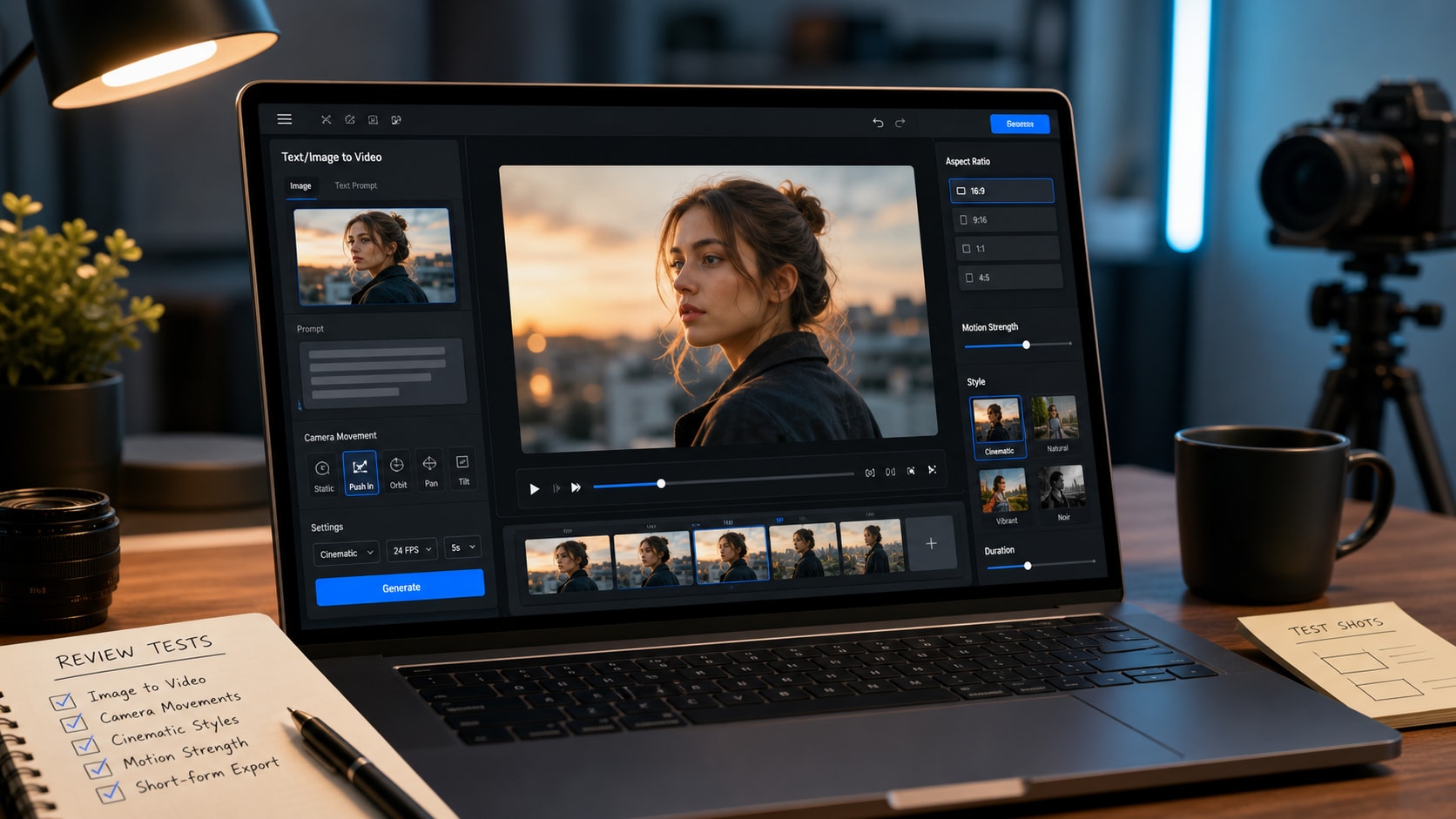
Vidnoz and Media.io overlap in AI video creation, but they start from different production assumptions. Vidnoz is strongest when a virtual presenter delivers the message. Media.io is broader when the user needs to generate visual scenes from images or prompts, turn a product URL into an ad, or improve existing media with specialized AI tools.
| Need | Vidnoz AI | Media.io |
| Avatar-led training and onboarding | Better fit for presenter, voice, templates, SCORM, and repeatable business scenes | Useful for supporting visuals, captions, translation, enhancement, and cleanup |
| Talking presenter explainers | Core strength | Available tools, but not the platform's only or primary workflow |
| Image-to-video generation | Available within the wider tool suite | Broader model-led workflow for animating portraits, products, art, and campaign images |
| Product URL to video ad | Not the central product workflow | Dedicated AI Ad Generator that extracts product information and drafts the ad |
| Cinematic visual experimentation | Secondary to avatar production | Better aligned with text/image-to-video models, styles, and visual effects |
| Enhance or clean up existing video | Supporting tools available | Dedicated video enhancer, background remover, object remover, subtitles, translation, and other utilities |
| One subscription decision | Evaluate avatar credit rates and business features | Evaluate model credits and which generation/editing tools the project uses |
Best Vidnoz AI Alternatives by Use Case
There is no universal "best Vidnoz alternative." The right option depends on whether the primary need is avatars, enterprise training, creative generation, product ads, or editing.
| Alternative | Best for | Why compare it with Vidnoz |
| Media.io | Product ads, image-to-video, visual generation, and post-production | Broader starting inputs and creative workflows when a talking avatar is not the center of the project |
| HeyGen | Creator-friendly avatar marketing and translation | Relevant comparison for polished avatars, custom presenters, and multilingual video |
| Synthesia | Enterprise learning and development | Often considered for governance, business templates, collaboration, and established enterprise deployment |
| Colossyan | Scenario-based training and workplace learning | Strong comparison when instructional workflows matter more than general creative tools |
| VEED or CapCut | Editing existing footage and social video | Better when the main task is timeline editing rather than generating a virtual presenter |
| Pollo AI | Experimenting with multiple generative video models | Relevant when model variety and visual generation matter more than business avatar production |
Final Verdict: Is Vidnoz AI Worth It?
Vidnoz AI Review FAQ
-
Is Vidnoz AI worth it in 2026?
Vidnoz AI is worth considering for fast avatar-led training, explainers, onboarding, multilingual business content, and simple faceless videos. It is less suitable for cinematic storytelling or projects that require precise timeline editing and deep visual control. -
Is Vidnoz AI really free?
Yes. The official pricing page lists a free plan with daily credits, 720p export, a three-minute maximum video duration, and access to core avatars, templates, voices, and text-to-video. The daily credit allowance is the practical limit: 30 credits equal about 60 seconds of standard generation. -
How much does Vidnoz AI cost?
When checked on August 3, 2026, the official pricing page displayed Starter at $26.99 monthly or $19.99 per month billed yearly, Business at $74.99 monthly or $56.99 per month billed yearly, and custom Enterprise pricing. Prices, promotions, taxes, and allowances can change. -
How do Vidnoz credits work?
Standard Vidnoz AI video generation uses 0.5 credit per second. Expressive Avatar and Product Avatar generation use 2 credits per second. Other features can charge per generation, scene, image, or second, so total use depends on the workflow. -
Does Vidnoz AI add a watermark?
The free plan may include a Vidnoz watermark. The official paid-plan comparison lists watermark removal for Starter and Business. -
Is Vidnoz AI safe?
Vidnoz publishes privacy, terms, ethics, and refund policies. Its AI privacy policy says it does not collect face data and uses uploaded face photos to provide talking-photo functions. Users should still avoid uploading confidential media or third-party faces, voices, logos, and copyrighted content without appropriate permission. -
Can Vidnoz AI videos be used commercially?
Commercial use depends on the plan, source assets, generated content, and applicable rights. Vidnoz terms prohibit infringement of copyright, privacy, and other third-party rights. Businesses should verify ownership, consent, likeness rights, music licensing, and local rules before publishing. -
Can I cancel Vidnoz AI and get a refund?
Vidnoz says subscriptions can be canceled at any time, with cancellation taking effect at the end of the current billing period. Its policy provides a seven-day money-back guarantee for one-year subscription plans and states that monthly subscription refund requests are generally not accepted. [7] -
What is Vidnoz AI best used for?
Vidnoz is best used for presenter-led training, onboarding, explainers, internal communication, multilingual business videos, and simple social or YouTube content that benefits from a talking avatar. -
What is the best Vidnoz alternative?
The best alternative depends on the workflow. HeyGen and Synthesia are relevant for avatar video, Colossyan for training, and VEED or CapCut for editing. Media.io is a better fit when the workflow begins with a product URL, images, prompts, or existing footage and requires broader generation and post-production.
Sources and Fact-Check Notes
Product features, prices, ratings, and policies change. The following pages were checked for this review on or near August 3, 2026. Readers should confirm time-sensitive information on the live product and checkout pages.
- Vidnoz AI Pricing — current plan structure, feature comparison, credit rates, rollover, cancellation, and plan FAQ.
- Vidnoz Gen Pricing — current Gen credit usage and relationship to the wider Vidnoz credit system.
- Vidnoz AI Privacy Policy and Vidnoz AI Terms of Service — data statements, user responsibilities, prohibited use, and intellectual-property restrictions.
- G2 Vidnoz AI Reviews — rating and public review summary snapshot.
- Product Hunt Vidnoz AI Reviews — rating, review count, strengths, and recurring customization concerns.
- Trustpilot Vidnoz Reviews — broader customer-experience feedback and current review-count snapshot.
- Vidnoz Refund Policy — cancellation timing, annual-plan guarantee, refund handling, and support contact.
- Media.io AI Ad Generator , Media.io Image to Video , and Media.io AI Video Tools — product-URL ads, image animation, and supporting generation/editing workflows.
Editorial disclosure: This article is designed to help readers compare workflows and may mention Media.io products where they fit a specific need. Product information can change; verify current terms and prices before purchase.