
 ChatGPT
 Perplexity
 Gemini
 Claude
 Grok
Grok
SeaArt AI combines a huge community model library with text-to-image, image-to-image, LoRA training, AI video, editing tools, characters, and advanced workflows. That breadth is its biggest advantage—and the reason new users can find it harder to navigate than a simpler prompt-and-generate tool.
In this article
Quick Verdict
How this review was prepared: We compared SeaArt's official website, pricing information, app listings, terms, recent third-party hands-on reviews, and current user feedback. Performance comments from external tests are labeled as such; they are not presented as our own laboratory results. Product details were last checked on August 3, 2026.
What Is SeaArt AI?
SeaArt AI is a cloud-based creative platform and community for generating images, videos, characters, and other AI media. Its home page positions the product as an all-in-one creation environment where users can create, remix, and share work. The current platform also promotes access to multiple image and video model families rather than forcing every task through one proprietary model.
That makes SeaArt feel closer to a creative marketplace and experimentation hub than a minimal AI generator. You can begin with a prompt, but you can also start from a community image, reuse its model and settings, add a LoRA, guide composition with a reference, edit part of an image, upscale the result, or animate it into a short video.
The platform is therefore most attractive to people who like exploring how different checkpoints, LoRAs, prompts, reference controls, and generation parameters affect an output. Someone who simply wants one clean prompt box and a predictable result may find the same breadth distracting.
SeaArt AI Features That Matter Most
SeaArt has many individual tools, but six capabilities explain most of its appeal.
1. Text-to-image and image-to-image
Create from a prompt or use an existing image as a visual reference. Model choice, style, negative prompts, reference strength, and other controls can make SeaArt more flexible than one-model generators.
2. Models, LoRAs, and remixable creations
Users can browse community work, inspect reusable generation information, and build from existing styles. This shortens discovery, although the quality and licensing of community assets still need to be checked.
LoRA training and guided workflows
SeaArt supports training custom LoRAs and using more technical workflows for recurring characters, visual identities, subjects, or styles. Training consumes Credits and requires a suitable image dataset.
3. AI video generation
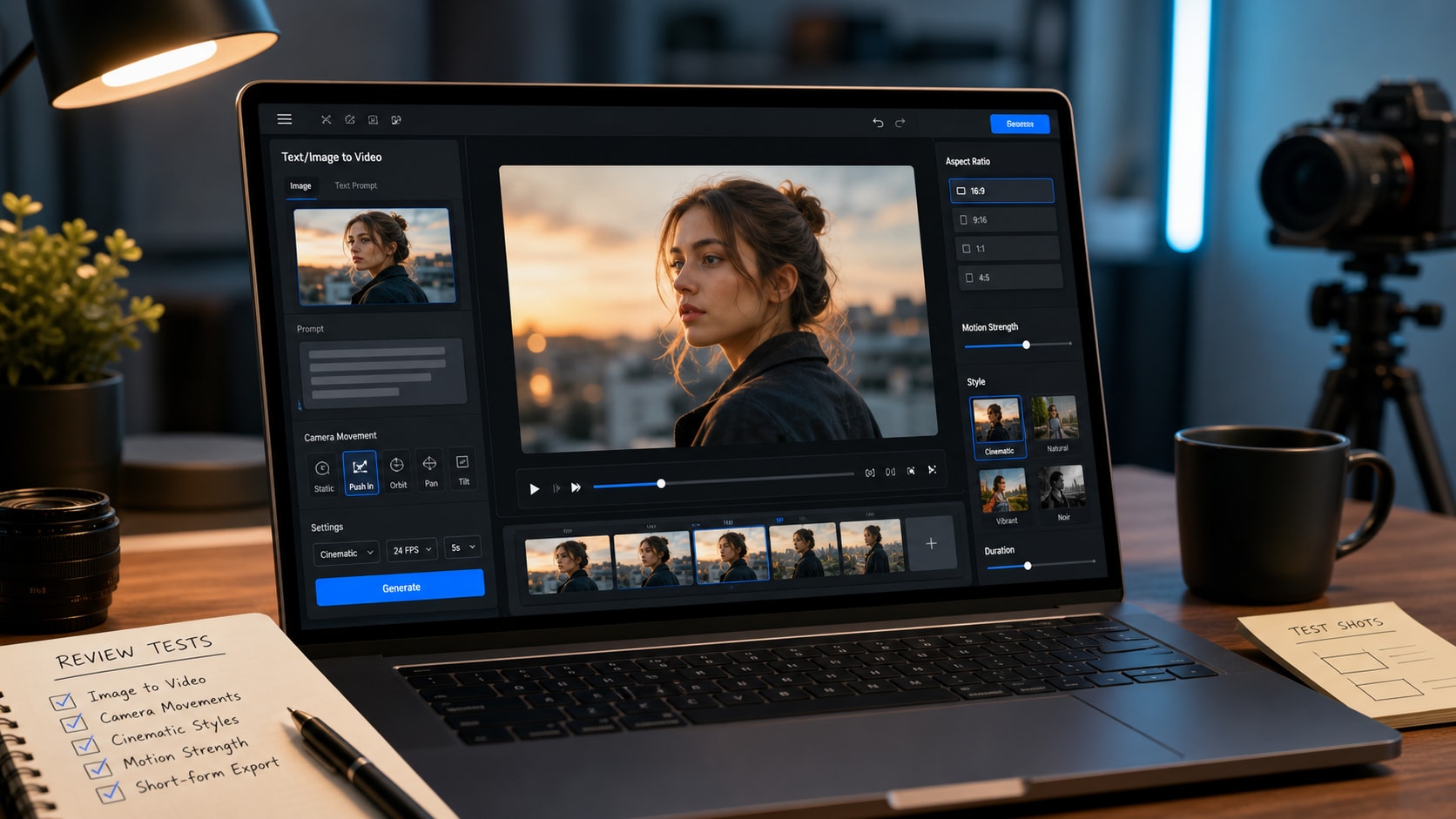
SeaArt now includes text-to-video and image-to-video options with multiple models and motion presets. The experience is convenient for short creative clips, but cost and quality vary noticeably by model.
4. Editing, inpainting, and upscaling
Built-in tools help repair local details, change parts of an image, remove or replace elements, and enlarge promising generations without immediately switching to another platform.
5. AI characters and creative apps
Users can create or interact with AI characters and access community-made apps and workflows. These features broaden SeaArt beyond conventional image generation, but they may be irrelevant to users focused only on marketing assets.
How SeaArt AI Performs by Creative Task
The following ratings synthesize SeaArt's documented capabilities, recent hands-on reviews, and recurring user observations. They are best read as a decision guide rather than a universal benchmark, because results change with the model, prompt, settings, and reference image.
| Task | Editorial rating | What SeaArt does well | What to verify |
| Anime and stylized characters | 4.7/5 | Large community model and LoRA ecosystem, easy style discovery, strong character-focused inspiration. | Hands, accessories, small anatomy details, and consistency across many scenes. |
| Fantasy and concept art | 4.5/5 | Wide aesthetic range and deep control for creators who enjoy prompt and model experimentation. | Time spent choosing models and refining settings before a repeatable look is established. |
| Photoreal portraits | 4.1/5 | Multiple realism-oriented models, reference options, local repair, and upscaling. | Skin texture, eyes, fingers, jewelry, background faces, and identity drift. |
| Product and advertising images | 3.8/5 | Useful for concepting, backgrounds, mood boards, and visually rich product scenes. | Exact labels, logos, package geometry, brand consistency, and commercial rights. |
| Text inside images | 3.5/5 | Newer image models can produce better typography than older diffusion workflows. | Spelling, repeated text, layout accuracy, and whether post-editing is still required. |
| Short AI video clips | 3.9/5 | Many model choices and a convenient path from a still image to motion. | Motion consistency, face stability, clip duration, generation cost, and model-specific limits. |
| Beginner usability | 3.2/5 | Community presets and remixing can help users start without mastering every parameter. | Dashboard density, unfamiliar model terminology, and unclear tradeoffs between settings. |
What the SeaArt Workflow Feels Like
SeaArt's workflow can be quick or highly technical depending on how deeply you go. At the simplest level, you select a tool, enter a prompt, choose a model, and generate. At the advanced level, you may combine checkpoints, LoRAs, references, negative prompts, dimensions, sampling controls, local edits, upscaling, and video animation.
Where the experience works well
- Inspiration is built into the product. Community galleries make it easier to understand what a model can produce before spending Credits.
- Remixing reduces blank-page friction. Reusing a public setup can be faster than building a prompt and model stack from zero.
- Advanced creators are not boxed in. LoRA training, reference controls, workflow apps, and multiple model families leave room to experiment.
- Image and video tools live in one account. A generated image can become the starting point for motion without a manual download-and-upload loop across several services.
Where the experience becomes frustrating
- Too many choices can slow decisions. Model discovery is valuable, but it can be difficult to know which option is best for a specific commercial brief.
- Costs are not always intuitive before experimentation. Different models and tasks consume different amounts of Stamina or Credits.
- Community-first design may feel noisy. Users who want a private, task-focused production interface may prefer a cleaner workspace.
- Quality is model-dependent. A strong result in one style does not guarantee equal performance for typography, products, realism, or video motion.
SeaArt AI Pricing: Stamina, Credits, and Plans Explained
SeaArt's pricing is one of the most searched—and most confusing—parts of the product. The official pricing FAQ explains that SeaArt uses two forms of generation currency: Stamina and Credits. Stamina works like Credits but is tied to a daily validity period, while Credits are purchased or otherwise retained for later use.
The number of tokens used depends on the selected model and task. SeaArt's official pricing page gives a standard image as an example that commonly costs around six Credits, while advanced image models, video generation, upscaling, and LoRA training may cost more.
| Pricing element | How it works | Why it matters |
| Free access | SeaArt provides free use, but daily allowances, available models, queues, and promotions may change. | Good for exploring the interface, but not a stable production budget. |
| Stamina | A daily generation allowance that does not function like a permanent balance. | Use it before it expires; it is useful for routine experimentation. |
| Credits | A separate balance used for models and tasks, including generation and training. | Heavy users should track cost by workflow, not just by subscription price. |
| Membership | Paid plans can increase daily allowances, queue capacity, concurrency, and access to private creation or other benefits. | The best plan depends on how many images, videos, and training jobs you run. |
| Additional purchases | Users may need extra Credits even after subscribing, depending on the model and volume. | A subscription is not necessarily an unlimited pass for every model. |
How much is SeaArt AI? A recent third-party pricing snapshot listed Beginner at $4.79 per month, Standard at $15, Professional at $30, and Master at $75. Treat those figures as a reference rather than a guaranteed checkout price: plan names, discounts, regional pricing, free trials, billing periods, and included Stamina can change.
SeaArt AI Pros and Cons
What SeaArt AI Users Like—and What They Complain About
Public feedback is polarized rather than uniformly positive or negative. Trustpilot displayed more than 900 reviews when checked, with a majority of five-star ratings but a meaningful one-star share. That pattern suggests the creative experience can be highly satisfying while account, moderation, or billing issues create strong dissatisfaction for some users.

Is SeaArt AI Safe, Private, and Legal to Use?
SeaArt AI is a legitimate creative platform with official web and mobile distribution, but "safe" depends on how you use it. The practical risks are less about whether the service exists and more about uploads, community visibility, identity misuse, subscription terms, and the license attached to a model or LoRA.
- Do not upload confidential images by default. Treat face photos, client products, unreleased campaigns, personal documents, and proprietary design references as sensitive unless you have confirmed the relevant privacy and visibility controls.
- Use private creation for private work. Community-driven platforms may make public sharing easy. Verify whether the selected workflow is public or private before generating client assets.
- Get consent for face-based content. Face swap and identity tools should not be used to impersonate, sexualize, defame, or mislead people without permission.
- Check the model license. A platform-level commercial-use statement does not automatically resolve rights for every community model, LoRA, reference image, celebrity likeness, logo, or copyrighted character.
- Review regional AI disclosure rules. Realistic synthetic content, advertising, and deepfakes may require labels or other disclosures depending on where the content is published.
SeaArt's terms also describe subscription services as automatically renewable and generally non-refundable once the membership service is active, except where law or other stated exceptions apply. That is why cancellation and refund questions are better handled as part of the purchase decision rather than after a charge appears.
SeaArt AI vs Media.io: Which Workflow Is More Practical?
SeaArt and Media.io overlap in AI image and video creation, but they are optimized for different creator behaviors. SeaArt is strongest when the user wants to explore community models, LoRAs, detailed controls, and creative experimentation. Media.io is a more direct choice when the goal is to turn an idea or existing asset into publishable image, video, or audio content with fewer model-management decisions.
| Decision factor | SeaArt AI | Media.io |
| Best fit | Artists, model explorers, anime creators, LoRA users, and technical hobbyists. | Creators, marketers, sellers, and teams that want a simpler generate-edit-export workflow. |
| Image creation | Large community model ecosystem with deep parameter and LoRA control. | Text-to-image and image-to-image tools with task-focused models and simpler controls. |
| Video creation | Multiple video models inside a community-oriented creative platform. | Image-to-video and text-to-video workflows with model choices, effects, and social-content use cases. |
| Post-generation work | Inpainting, workflow apps, upscaling, and selected creative tools. | Video editing, video-to-video restyling, enhancement, background removal, subtitles, translation, and export tools. |
| Learning curve | Higher, especially when choosing checkpoints, LoRAs, and advanced settings. | Lower for users who prefer task-based tools and guided workflows. |
| Community discovery | A major part of the product experience. | More focused on creating and finishing content than browsing community model setups. |
Where Media.io becomes the more practical choice
Best SeaArt AI Alternatives
No single SeaArt alternative replaces every feature. The best option depends on whether you care most about anime, model control, polished design, typography, video production, or ease of use.
| Alternative | Best for | Choose it over SeaArt when... |
| Media.io | End-to-end image, video, audio, and editing workflows | You want to create, animate, edit, enhance, caption, translate, and export content in a more task-focused environment. |
| Midjourney | Polished artistic images and visual ideation | You prefer strong default aesthetics and do not need SeaArt's community LoRA marketplace or broader utility-tool stack. |
| PixAI | Anime-focused creation and communities | Your work is primarily anime and you want a platform more narrowly optimized around that audience. |
| Leonardo AI | Game assets, concept art, and structured creator workflows | You want a more productized interface with image generation, canvas tools, and asset-oriented workflows. |
| Adobe Firefly | Design teams and Adobe workflows | Integration with Photoshop, Illustrator, and enterprise design processes matters more than community model variety. |
| Ideogram | Images containing readable text | Posters, social graphics, logos, and typography-heavy concepts are a central requirement. |
| OpenArt | Model variety, character tools, and visual experimentation | You want a comparable all-in-one art platform but prefer its workflow, character, or editing approach. |
Final Verdict: Is SeaArt AI Worth It in 2026?
SeaArt AI Review FAQ
-
Is SeaArt AI worth it in 2026?
SeaArt AI is worth considering for anime art, stylized images, custom LoRA work, community remixing, and creators who want detailed generation controls. It is less suitable for people who want a minimal interface, predictable per-project costs, or a simple business-content workflow. -
Is SeaArt AI free?
SeaArt AI provides free access, but generation allowances, daily Stamina, available models, queue priority, and promotional offers can change. Advanced models, video generation, private creation, and heavier usage may require a subscription or additional Credits. -
How much does SeaArt AI cost?
SeaArt uses paid memberships plus a Stamina and Credits system. Recent public review snapshots have listed Beginner, Standard, Professional, and Master memberships, but prices and allowances vary by region, promotion, and billing term. Verify the final amount and auto-renewal terms at checkout. -
What is the difference between SeaArt Stamina and Credits?
Both can pay for generation tasks, but Stamina is generally a daily allowance that expires, while purchased Credits remain available. The cost of an image, video, upscale, or model-training task depends on the selected model and settings. -
Is SeaArt AI safe?
SeaArt AI is a legitimate platform available on the web and major mobile app stores. Users should still avoid uploading confidential or non-consensual identity images, review content visibility settings, and check subscription and privacy terms before using it for sensitive or commercial work. -
Can SeaArt AI images be used commercially?
Commercial use depends on SeaArt's current terms, the membership tier, the source model or LoRA, and any third-party rights in the prompt or reference material. Check the license of every model and asset used rather than assuming all community content has identical rights. -
Does SeaArt AI generate videos?
Yes. SeaArt supports AI video generation and gives users access to multiple video models and motion workflows. Video cost, duration, resolution, and output quality depend on the selected model and plan. -
Is SeaArt AI good for anime?
Anime is one of SeaArt's strongest use cases because the platform has a large community of anime-oriented models, LoRAs, prompts, and remixable examples. Results still need inspection for hands, accessories, background characters, and consistency across multiple scenes. -
Can I cancel SeaArt AI and get a refund?
SeaArt's terms describe automatic renewal and generally non-refundable membership service once active, except where law or stated exceptions apply. Cancellation usually stops a future renewal rather than reversing an existing charge. Check the exact checkout and app-store terms for your purchase channel. -
What is the best SeaArt AI alternative?
The best alternative depends on the job. Media.io is a practical option for creators who want a more direct path from text or image generation to image-to-video, video restyling, editing, enhancement, and export. Midjourney suits polished artistic images, PixAI focuses on anime communities, and Adobe Firefly is often considered for design workflows.
Sources and Verification Notes
AI products change quickly. The sources below were checked to verify current platform positioning, app availability, pricing mechanics, plan snapshots, terms, and recurring user-feedback themes.
- SeaArt AI official website — current platform scope, image/video positioning, community, and model categories.
- SeaArt pricing and membership page — Stamina, Credits, concurrent tasks, LoRA training, and plan mechanics.
- SeaArt official app download page — mobile availability and app positioning.
- SeaArt on Apple's App Store and Google Play — developer, age rating, app features, and mobile distribution.
- SeaArt terms of service — membership, renewal, and refund language.
- Cybernews SeaArt AI review — hands-on feature coverage and a public pricing snapshot.
- PicLumen SeaArt AI review and PixAI SeaArt review — recent third-party workflow and output observations.
- SeaArt user reviews on Trustpilot — recurring praise and complaint themes; individual reviews are not treated as universal outcomes.