
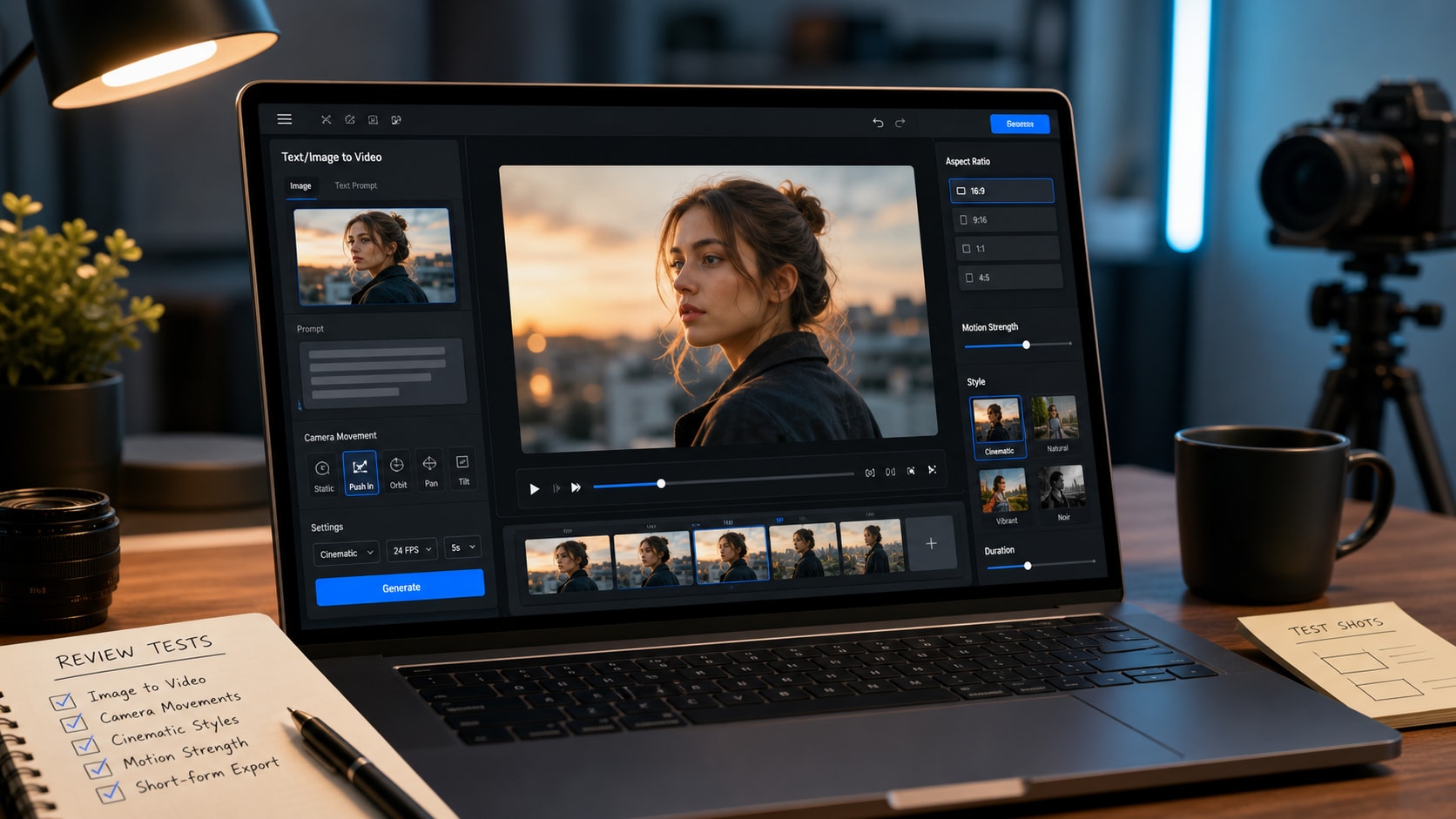
Pollo AI is useful because it brings many AI video, image, effect, and model choices into one creator workspace. That breadth is also the reason comparing Pollo AI competitors can get messy: one user may want a stronger video model, another may want fewer credit surprises, and another may need ads or final editing rather than more generation options.
This guide compares the best Pollo AI alternatives by the reason you might switch. The goal is not to crown one universal winner. It is to help you choose the platform that best fits your actual workflow: cinematic video, image-to-video animation, social effects, reference consistency, product ads, or practical finishing.
In this article
Part 1: Quick Verdict: What is the Best Pollo AI Alternative?
Part 2: Pollo AI alternatives at a Glance
The table below compares Pollo AI alternatives by decision criteria instead of raw feature volume. The most useful fields are Best For, Main Advantage Over Pollo AI, and Main Tradeoff. A narrower specialist can be the better replacement if it solves the exact workflow problem that pushed you to search for an alternative.
| Alternative | Best For | Main Advantage Over Pollo AI | Main Tradeoff | Generation + Editing | Free Access |
| Runway Best Professional Control |
Creators, studios, and teams that need advanced AI video generation, editing, camera guidance, and production workflow control. | Deeper production environment around generated footage rather than only selecting a model and exporting a short clip. | More complex to learn, and premium generation can become credit-intensive when testing multiple takes. | Strong | Free access or trial credits may be available; verify current limits. |
| Kling AI Best Motion Realism |
Creators who care most about motion realism, prompt following, image-to-video quality, and reference-driven subject consistency. | Stronger model-level focus on motion quality and reference fidelity for image and video generation. | Less complete as a practical editing, ad, and publishing workflow after the clip is generated. | Moderate | Free or trial access may be available; limits vary by model and region. |
| Luma Dream Machine Best Cinematic Ideation |
Creators who want cinematic scenes, visual ideation, image-to-video tests, and model-led creative exploration. | Stronger fit for cinematic iteration and visually expressive prompt development. | Less of a broad post-production, ad creation, or multi-tool publishing suite. | Moderate | Free access may be available; advanced models and higher use require plan review. |
| Pika Best Social Effects |
Creators who want short, playful, visual transformations and trend-friendly video effects from prompts, images, or existing clips. | Lower-friction social effect workflow for creators who prioritize quick, obvious transformations. | Less suitable for long videos, complex production control, or business finishing workflows. | Moderate | Free access may be available; check credit, watermark, and queue rules. |
| PixVerse Best Templates and Effects |
Creators who want prompt-to-video, image-to-video, video extension, effects, templates, and short-form content variation. | More focused effect and template workflows for short AI videos, with an emphasis on quick generation modes. | May be less appropriate for professional editing depth or complex campaign production after export. | Moderate | Free access or credits may be available; verify current plan details. |
| Vidu AI Best Reference Consistency |
Creators who need reference-based video generation, consistent subjects, character-led shots, and source-image control. | Stronger fit for projects where source references and recognizable subjects drive the output. | Less useful as a general ad, editing, and publishing platform once the video is generated. | Moderate | Free credits or off-peak access may be available; verify current restrictions. |
| Media.io Best Publish-ready Workflow |
Creators and marketers who need AI video generation to continue into product ads, enhancement, resizing, captions, and export-ready assets. | More practical post-generation workflow for turning AI outputs into publishable campaign assets. | Less ideal if your only priority is direct access to the newest model-specific controls. | Strong | Free or introductory access may be available; limits vary by tool. |
| Hailuo AI Best Expressive Short Clips |
Creators who want short AI clips with expressive movement, prompt-based camera direction, and image-to-video animation. | Focused model workflow for quick motion tests and cinematic short clips. | Less complete for editing, campaign assembly, and practical post-production after generation. | Moderate | Trial or free access may be available; check the current official plan. |
Part 3: What Does Pollo AI Do Well?
Pollo AI does well as a broad AI creation hub. Its official product pages position it around AI video generation, image generation, image-to-video, text-to-video, video effects, AI avatars, and product or ad-oriented video workflows. For a creator who wants to try several popular generation models without rebuilding a workflow from scratch, that aggregation is convenient.
Pollo AI is therefore a good fit for users who want to experiment quickly across styles, prompts, source images, and visual effects. It is especially appealing when the project is short-form content, a quick product visual, a social idea, or an exploratory AI video test where trying multiple models matters more than building a deep production pipeline.
Part 4: Why look for a Pollo AI Alternative?
1. You want deeper control over the generated shot
A broad model hub can be convenient, but professional creators may need more control over shot structure, camera motion, timing, character performance, and editing after the first output. Tools such as Runway or Luma Dream Machine can be a better fit when the generated clip must support a larger production process.
2. Motion realism matters more than model variety
If your main complaint is unnatural movement, weak physics, unstable hands, or inconsistent subject behavior, a motion-focused generator may be more useful than another all-in-one platform. Kling AI, Hailuo AI, and similar tools are worth testing with the same reference image and movement prompt.
3. You need a simpler route from idea to published asset
Some creators do not want to compare models every time. They want to write a script, create an ad, enhance the output, resize it, add captions, and export. In that case, an outcome-led workflow such as Media.io can reduce the number of tools needed after the AI clip is generated.
4. You need better reference or character consistency
Pollo AI can work well for fast generation, but character-led projects often need stronger controls around source images, repeated subjects, pose, face, costume, and scene continuity. Vidu AI, Kling AI, and Runway are more relevant when reference consistency is the main buying criterion.
5. You want to compare free access and credit risk
Free trials, daily credits, model restrictions, watermark rules, and queues change often across AI video platforms. The practical question is not which tool looks cheapest, but which one produces enough usable clips for your workflow without forcing too many retries or manual repairs.
Part 5: How We Compared These Pollo AI Alternatives?
We compared Pollo AI alternatives using official product pages, pricing or plan pages where available, help documentation, and the visible workflow each platform is designed to support. Product features and access models were reviewed in July 2026.
Each alternative was evaluated against the reason a user might leave Pollo AI rather than against a generic checklist. That means a tool could rank well even if it has fewer total features, as long as it solves a specific search intent more clearly.
- Generation capabilities: text-to-video, image-to-video, reference inputs, model options, native audio, and output formats.
- Creative control: camera guidance, motion control, prompt following, character or subject consistency, and video editing options.
- Workflow completeness: whether the tool helps after generation with enhancement, resizing, subtitles, ads, post-production, or export.
- Use-case fit: suitability for cinematic clips, social effects, product videos, AI ads, avatars, reference-based animation, and professional production.
- Cost and accessibility: free access, trial credits, paid-plan dependency, queue limits, watermark restrictions, and likely retry cost.
Because AI model access, pricing, and credit policies change frequently, readers should verify the latest official plan details before purchasing or moving production work.
Part 6: Best Pollo AI Alternatives by Use Case
The right alternative to Pollo AI depends on what part of the AI creation workflow you want to improve. These recommendations connect common switching reasons to platforms that solve them most directly.
1. Runway: Best Pollo AI Alternative for Professional Video Control
Runway is the best Pollo AI alternative for creators who want AI video generation to behave more like part of a professional production system. It is especially relevant when the project requires text-to-video, image-to-video, references, motion control, editing, and repeated shot refinement.
Compared with Pollo AI, Runway is less about browsing many third-party models in one hub and more about building a controlled video workflow. That makes it stronger for filmmakers, agencies, and advanced creators who need to iterate on a shot, keep production context, and edit around generated material.
Where Runway is stronger
- Professional generation workflow: better suited to creators who need AI video to sit inside a production process rather than a quick one-off generation.
- Camera and motion control: more useful when shot progression, camera behavior, and prompt structure matter to the final result.
- Generative editing: supports refining, changing, and building around footage after the first generation.
- Team and studio fit: more appropriate for creators who need a repeatable workflow across multiple assets or clients.
Where Pollo AI may still be better
Pollo AI may still be easier when you want a broad menu of popular models, quick effects, and fast experimentation without learning a more advanced creative system.
Pros and Cons:
Choose Runway if: you need professional creative control, video editing around AI outputs, and a more structured production environment.
Skip it if: you mainly want quick effects, casual model comparison, or the simplest path to a short generated clip.
Explore Runway image-to-video alternatives
2. Kling AI: Best Pollo AI Alternative for Realistic Motion and References
Kling AI is one of the strongest Pollo AI alternatives when the switching reason is motion quality. It is commonly compared by creators who want image-to-video outputs with more natural movement, stronger reference preservation, and better handling of complex prompts.
Where Pollo AI is broad, Kling AI feels more model-focused. It is a good test candidate when a single reference image needs to become a believable moving shot, or when a creator wants to compare how different video models handle people, products, camera moves, and scene dynamics.
Where Kling AI is stronger
- Motion-first generation: better suited to evaluating how people, products, animals, environments, and camera movement behave in the generated clip.
- Reference-driven workflow: useful when source images, subject identity, and visual consistency matter more than a large toolkit.
- Image-to-video testing: strong candidate for creators who repeatedly animate still images and compare usable take rates.
- Model quality focus: prioritizes generation behavior rather than turning into a complete marketing suite.
Where Pollo AI may still be better
Pollo AI may still be better if you want one place to access multiple model families, image tools, effects, and product-oriented workflows without leaving the same interface.
Pros and Cons:
Choose Kling AI if: motion realism and source-image fidelity are more important than an all-in-one creation hub.
Skip it if: you need ads, captions, resizing, enhancement, compression, and export steps in the same workflow.
3. Luma Dream Machine: Best Pollo AI Alternative for Cinematic Visual Exploration
Luma Dream Machine is a strong Pollo AI alternative when you want cinematic visual development rather than a long menu of creation utilities. It is most relevant for atmosphere, environments, camera-like movement, and image-to-video experimentation.
Compared with Pollo AI, Luma Dream Machine is a better fit when the creative problem is discovering the right look and movement for a shot. It is less useful if your main task is turning the generated clip into ads, subtitles, multiple social formats, or a finished campaign package.
Where Luma Dream Machine is stronger
- Cinematic prompt exploration: useful for quickly comparing visual worlds, movement, and scene mood.
- Image-to-video ideation: a good candidate when still images need atmospheric motion or cinematic presence.
- Model-led iteration: helps creators refine a look before committing to final edit or campaign delivery.
- Creative simplicity: focused enough for concept work without requiring a complex production setup.
Where Pollo AI may still be better
Pollo AI may still be more convenient if you want model aggregation, video effects, AI images, ad tools, and several content modes in one broader workspace.
Pros and Cons:
Choose Luma Dream Machine if: your Pollo AI bottleneck is cinematic look development, visual ideation, or image-to-video atmosphere.
Skip it if: you need a practical workflow for ads, captions, resizing, enhancement, and final delivery.
4. Pika: Best Pollo AI Alternative for Fast Social Video Effects
Pika is the Pollo AI alternative to test when the output needs to feel quick, playful, and social-ready. It is designed around short-form transformations, visual effects, and fast iterations rather than a heavy production interface.
This makes Pika useful for creators who are less concerned with model aggregation and more interested in repeatable social effects. It is not the best fit for every video project, but it can be more direct than Pollo AI when the goal is a punchy visual result that viewers understand instantly.
Where Pika is stronger
- Fast visual effects: well matched to short-form transformations and trend-friendly creative experiments.
- Low-friction interface: easier for casual creators who want an idea-to-effect flow without many technical decisions.
- Image and video remixing: useful when the source asset already exists and needs a playful animated change.
- Short iteration loops: lets creators compare several effect ideas before choosing one to polish elsewhere.
Where Pollo AI may still be better
Pollo AI may be better when you want a broader set of model choices, image tools, ad generators, and more content modes beyond effect-led video experiments.
Pros and Cons:
Choose Pika if: your main Pollo AI use case is quick social clips, visual effects, memes, or playful asset transformations.
Skip it if: you need professional shot control, ad workflow management, or predictable multi-scene continuity.
See the Pika Art and Media.io comparison
5. PixVerse: Best Pollo AI Alternative for Template-led AI Video
PixVerse is a practical Pollo AI alternative for creators who want a focused AI video environment with prompt generation, image-to-video, effects, templates, and short-form variations. It is especially relevant when the goal is to produce several clips quickly rather than manage a full edit.
Compared with Pollo AI, PixVerse can feel more direct for users who rely on templates and effect-led generation. It is a better fit for fast exploration and social output, while Pollo AI may remain stronger for users who value broad model aggregation across many creative categories.
Where PixVerse is stronger
- Template-led creation: useful for quickly turning common social formats into AI video outputs.
- Prompt and image workflows: supports both description-led and source-image-led creation paths.
- Short video variation: well suited to trying multiple hooks, effects, and versions for social channels.
- Focused AI video scope: less scattered than broad suites when the task is simply producing short AI clips.
Where Pollo AI may still be better
Pollo AI may still be more attractive if you want a single hub for many model providers, AI images, video effects, AI ads, product video tools, and broader creative experimentation.
Pros and Cons:
Choose PixVerse if: you want a faster, more template-led way to create short AI videos and effect variations.
Skip it if: you need advanced editing, complex continuity, or a complete publishing workflow after generation.
6. Vidu AI: Best Pollo AI Alternative for Reference-led Character Videos
Vidu AI is a useful Pollo AI alternative when the project depends on reference images and recognizable characters. Instead of treating every clip as a fresh prompt, Vidu is more relevant when the source subject needs to remain stable across motion and style changes.
This makes Vidu AI a good option for creators working with character concepts, product references, anime-style visuals, or recurring subjects. It is not a full replacement for every Pollo AI workflow, but it is worth testing when reference consistency is the reason you are comparing platforms.
Where Vidu AI is stronger
- Reference-based generation: better aligned with workflows that start from one or more source images.
- Character-led output: useful when a person, creature, product, or designed character must remain recognizable.
- Image-to-video use cases: relevant for animating static concepts rather than starting every output from text alone.
- Creative style range: appeals to creators working across character, anime, product, and social video formats.
Where Pollo AI may still be better
Pollo AI may be the stronger choice if you want a wider menu of models, video effects, AI image generation, and general-purpose creative tools in one place.
Pros and Cons:
Choose Vidu AI if: your main Pollo AI limitation is keeping a reference subject recognizable in generated video.
Skip it if: you want a broad hub for model comparison, AI ads, video enhancement, and social delivery.
7. Media.io: Best Pollo AI Alternative for Ads, Enhancement, and Final Delivery
Media.io is a good Pollo AI alternative when the problem is not only making a clip, but finishing the asset. It connects AI video and image generation with practical tools such as AI ads, enhancement, resizing, subtitles, and format conversion.
The workflow difference is important. Pollo AI is useful when you want many models and creative modes in one hub. Media.io is stronger when you already know the outcome: create a product ad, turn a script into a video, improve the generated clip, repurpose it for social channels, or export a cleaner final asset.
Where Media.io is stronger
- Ad and product workflow: more relevant when AI generation must become product videos, UGC-style ads, or paid social assets.
- Post-generation cleanup: video enhancement, resizing, conversion, compression, and other finishing tools reduce tool switching.
- Outcome-led creation: starts from practical tasks such as script-to-video, text-to-video, image-to-video, and AI ad creation.
- Accessible browser workflow: better suited to marketers and creators who do not want a complex model or editing interface.
Where Pollo AI may still be better
Pollo AI may still be better if your main priority is comparing many AI video models, exploring model-specific effects, and generating experimental outputs from one aggregated creative hub.
Pros and Cons:
Choose Media.io if: you want to generate, polish, resize, and publish AI videos or ads without moving between many separate tools.
Skip it if: you mainly want access to specific frontier video models and detailed model-level controls.
8. Hailuo AI: Best Pollo AI Alternative for Expressive Short-form Motion
Hailuo AI is a Pollo AI alternative to test when your priority is expressive short-form motion. It is often used for text-to-video and image-to-video prompts where character movement, camera direction, and short cinematic results matter.
Compared with Pollo AI, Hailuo AI is narrower. That can be an advantage if you do not need a full suite of image tools, ad generators, and model choices. It is best evaluated with the same source image and motion prompt you would use in Pollo AI.
Where Hailuo AI is stronger
- Short-form motion: good for creators who need a quick moving clip rather than a full editing workspace.
- Prompt and image workflows: relevant for both text-to-video and image-to-video generation tests.
- Camera direction: useful when the prompt needs to describe movement, shot behavior, and visual energy.
- Focused comparison: easy to benchmark against Pollo AI with identical prompts and reference images.
Where Pollo AI may still be better
Pollo AI may still be better when you want broader creative coverage, multiple model choices, image tools, AI effects, and ad workflows in the same account.
Pros and Cons:
Choose Hailuo AI if: you want to compare Pollo AI against a focused short-form video model for motion and cinematic prompt behavior.
Skip it if: you need all-in-one ads, editing, resizing, enhancement, and social publishing support.
Part 7: Which Pollo AI Alternative Should you Choose?
Start with the bottleneck in your current Pollo AI workflow. The best alternative is the tool that removes that bottleneck with the least extra complexity.
Decision rule: Choose the alternative that improves your highest-cost step. If the expensive part is failed motion, test Kling AI or Hailuo AI. If it is editing and campaign delivery, test Media.io. If it is advanced control, test Runway.
Part 8: What Are the Best Free Pollo AI Alternatives?
Several Pollo AI alternatives offer free access, trial credits, or limited creation modes, but free plans are not interchangeable. A free generation is only useful if it lets you evaluate the exact workflow you need.
- Whether free credits renew or are one-time only
- Which video models are included in the free tier
- Maximum video duration, resolution, and export format
- Watermark and commercial-use restrictions
- Queue speed and whether priority generation requires a paid plan
- Whether failed or unusable generations consume credits
- Whether the workflow includes editing, subtitles, resizing, or enhancement after generation
Part 9: How to Switch from Pollo AI without Disrupting Your Workflow
- Define the reason for switching. Write down whether Pollo AI is falling short on motion realism, cost, reference consistency, model access, ad workflow, editing, or final delivery.
- Shortlist two tools first. Choose one direct video model alternative and one workflow alternative. For example, compare Kling AI with Media.io, or Runway with Pika, instead of testing eight tools at once.
- Use identical prompts and assets. Run the same text prompt, reference image, product image, and desired aspect ratio across the alternatives so the comparison is fair.
- Measure usable output, not first output. Track retries, queue time, credit use, motion stability, prompt adherence, and whether the output can be published with minimal repair.
- Test the post-generation path. Resize, enhance, add captions, compress, or turn the clip into an ad. The best alternative may be the one that saves time after generation.
- Review rights and data rules. Check commercial-use terms, face and likeness policies, brand asset rules, uploaded media handling, watermark restrictions, and model-specific limits before using outputs in paid work.
Part 10: Pollo AI Alternatives FAQs
-
What is the best alternative to Pollo AI?
The best Pollo AI alternative depends on the workflow. Runway is the strongest fit for professional video control, Kling AI is a strong option for realistic motion, Luma Dream Machine is useful for cinematic ideation, Pika and PixVerse are better for fast social effects, Vidu AI is relevant for reference-led characters, and Media.io is strongest when the video needs to become an ad or polished final asset. -
Is there a free Pollo AI alternative?
Yes. Several alternatives offer some form of free access, trial credits, or limited generation, including Media.io, Runway, Kling AI, Luma Dream Machine, Pika, PixVerse, Vidu AI, and Hailuo AI. The important details are model access, queue speed, watermark restrictions, resolution, duration, and whether credits renew. Always check the current official plan before relying on a free tier. -
Is Media.io a good Pollo AI alternative?
Media.io is a good alternative when your workflow continues after generation. It is useful for AI ads, text-to-video, image-to-video, video enhancement, resizing, conversion, and other finishing steps. Pollo AI may remain better if your priority is browsing many models and effects in one place, while Media.io is better when you need a practical path to publishable assets. -
Is Runway better than Pollo AI?
Runway is better for creators who need advanced generative video control, editing around AI footage, camera guidance, and professional workflow depth. Pollo AI can be better for creators who want a broad multi-model hub with fast access to many generation modes. Neither is universally better because they solve different production problems. -
Is Kling AI better than Pollo AI for image-to-video?
Kling AI is often worth testing when image-to-video quality, motion realism, and reference fidelity are the main priorities. Pollo AI may still be more convenient if you want to compare several models and effects from one dashboard. Use the same source image and motion prompt in both tools before deciding which produces more usable clips. -
Which Pollo AI alternative is best for social video effects?
Pika and PixVerse are the clearest choices for social video effects because they are more focused on quick transformations, short clips, templates, and visual hooks. Pollo AI also supports effects, so the decision should come down to speed, ease of use, output style, and whether you need a broader creative suite around the effect. -
Which Pollo AI alternative is best for AI video ads?
Media.io is the strongest choice in this list when the goal is to turn AI generation into product videos, UGC-style ads, enhanced clips, and export-ready social assets. Creators who only need raw generation may prefer Runway, Kling AI, or Luma Dream Machine, but marketers usually need editing and finishing tools after the clip is made. -
Which Pollo AI alternative is best for character consistency?
Vidu AI and Kling AI are strong candidates when reference images and recognizable subjects matter. Runway is also worth testing for advanced creators who need control around a generated shot. The best choice depends on whether you need one character in a short clip, repeated shots across a sequence, or a broader workflow for editing and delivery. -
Should I replace Pollo AI with one tool or several?
Most creators should test two tools rather than trying to replace Pollo AI with one platform immediately. Pair a direct generation alternative with a workflow tool. For example, use Kling AI or Runway to compare motion and control, then use Media.io if the output needs enhancement, resizing, captions, ads, or final delivery. -
What should I check before switching from Pollo AI?
Check model access, output quality, retry rate, credits, queue speed, watermark rules, commercial-use terms, image-to-video control, reference consistency, editing tools, and export options. Also test the complete path from prompt to final asset. A tool with impressive generation may still be slower if it cannot help you polish or publish the result.