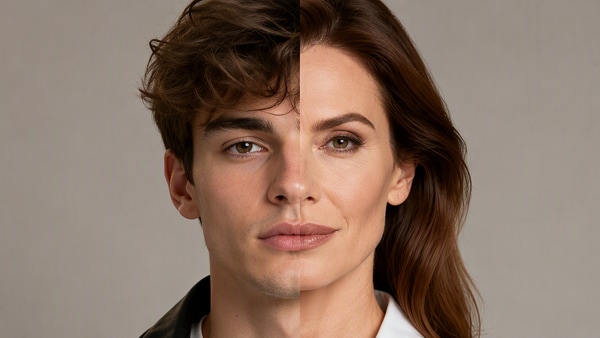
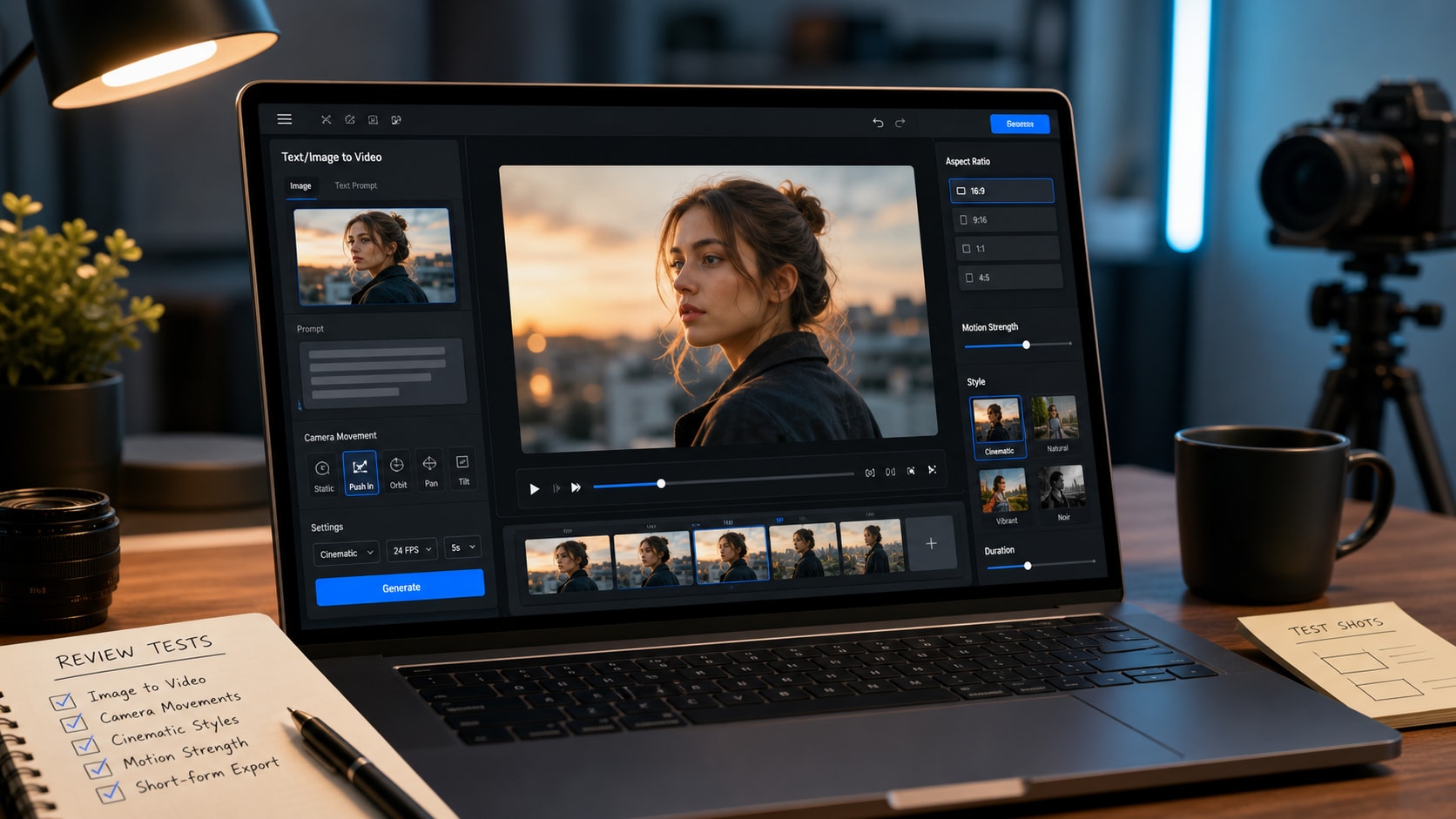
GoEnhance AI combines video generation, video-to-video stylization, image tools, creator effects, face swap, lip sync, enhancement, and access to multiple AI models in one browser workspace. Its biggest advantage is creative range. Its biggest weakness is that output quality, token cost, and production readiness can vary sharply by model and task.
In this article
Quick Verdict
How this review was prepared: This review does not present every result as first-hand testing. It combines GoEnhance's current public pages and policies with recent independent test reports, then separates official claims from third-party observations. Pricing and model access were checked on August 3, 2026 and may change.
| Review area | Editorial score |
| Video-to-video | 4.5/5 |
| Generation range | 4.4/5 |
| Ease of use | 4.2/5 |
| Cost predictability | 3.4/5 |
| Production workflow | 3.6/5 |
What Is GoEnhance AI?
GoEnhance AI is a web-based AI video and image creation platform. It can generate videos from text or images, transform existing clips into new visual styles, produce and edit images, animate characters, swap faces, sync lips, apply social effects, and enhance low-resolution media.
The platform now also acts as a model aggregator. Its public site lists video options from GoEnhance alongside models such as Kling, Runway, Veo, Hailuo, PixVerse, Wan, Pika, Vidu, Seedance, Grok Imagine, and others. Its image area lists models such as Flux, Recraft, Ideogram, Qwen Image, Nano Banana, Seedream, and related tools. The value proposition is convenience: users can compare several model families without opening a separate native subscription for every provider.
How GoEnhance AI Works
- Choose a workflow or model. Select video-to-video, text-to-video, image-to-video, reference-to-video, an effect, an enhancer, or a specific model.
- Add a prompt or source asset. Upload a video or image when the workflow requires one, then describe the intended motion, style, camera behavior, subject, and output format.
- Set generation options. Available controls may include model, duration, aspect ratio, resolution, audio, reference inputs, style, and Fast or Relax processing.
- Generate and review. Inspect face stability, hands, object interaction, text, background continuity, motion, and prompt adherence before spending more tokens on a higher-quality pass.
- Export or continue editing. Download the result or move it into a finishing workflow for captions, resizing, cleanup, sound, branding, and platform-specific delivery.
GoEnhance AI Feature Review
1. Video-to-Video: GoEnhance's Clearest Strength
GoEnhance first became recognizable for converting existing footage into animated or highly stylized video. This workflow is more grounded than pure text-to-video because the source clip already supplies timing, composition, body movement, and camera structure. That can make it easier to create anime, cartoon, clay, pixel, watercolor, or other visual treatments while preserving the core performance.
Recent independent reviews generally agree that video-to-video is the platform's strongest area. The main quality test is temporal stability: outlines, faces, clothing, and backgrounds should not visibly jump between frames. Results still depend on source clarity, subject movement, occlusion, camera speed, and the chosen style.
2. Image-to-Video and Reference-Based Video
Image-to-video is useful for animating portraits, product images, illustrations, and campaign keyframes. Reference-based workflows can provide more guidance for character identity, visual style, objects, or scene composition. GoEnhance's advantage is choice: users can switch among different model families to compare motion, realism, speed, and prompt adherence.
The limitation is that more model choices do not automatically create a more predictable workflow. A still image may animate beautifully in one model but distort in another. Users should compare eye movement, facial structure, limb stability, background behavior, and whether the camera motion serves the intended story instead of merely adding activity.
3. Text-to-Video
GoEnhance supports prompt-led video generation for users who want to start without a source image or clip. It is useful for concept exploration, scene prototypes, visual hooks, and short social ideas. However, published tests are less consistent here than for video-to-video. Complex object interaction, realistic hands, fast action, and multi-subject scenes can produce shaky motion or visual drift.
For that reason, text-to-video is best treated as an ideation and draft tool unless the selected model has already proven reliable for the exact content type. Production teams should plan for multiple attempts and review the result at full size before approving it.
4. Multi-Model Access
The multi-model interface is one of GoEnhance's most practical differentiators. It lets creators compare several video or image engines from one account. That is useful when the task is exploratory: one model may be better for realism, another for fast drafts, another for character consistency, and another for stylized motion.
The trade-off is cost visibility. Premium models can consume tokens quickly, and settings such as resolution, audio, length, and reference inputs may change the price. Model availability can also move faster than static review articles. Always use the live token estimate shown in the generation interface as the source of truth.
5. Face Swap, Lip Sync, Character Animation, and Effects
GoEnhance includes face-led tools and one-click effects designed for creator content. These are useful for memes, fictional avatars, localized presenter experiments, short promotional hooks, and trend-based social videos. Character animation can also transfer movement from a source performance to an illustrated or generated subject.
These features require extra scrutiny. Profile angles, fast movement, low light, hair crossing the face, occlusion, and mismatched proportions may reduce realism. Users also need permission to use a person's face or voice and must avoid copyrighted characters or brand assets they do not control.
6. Image Generation, Editing, and Enhancement
GoEnhance extends beyond video with text-to-image, image-to-image, editing tools, image enhancement, and upscaling. This makes the platform useful for preparing a clean reference image before animation or improving a generated asset after creation.
Independent observations suggest the enhancer can improve clarity and reduce noise, but aggressive settings may oversharpen textures or invent detail. Enhancement should be evaluated against the intended use: a social thumbnail can tolerate stronger reconstruction than a product image, identity photo, or archival restoration.
7. API Access
GoEnhance publishes API documentation for workflows including video-to-video, image-to-video, text-to-image, face swap, and effects. This can support automated creator tools, content pipelines, and product integrations. API pricing is token-based, and not every feature available in the web app is necessarily exposed through the API.
How Good Is GoEnhance AI's Output Quality?
There is no single GoEnhance quality score because the platform combines its own models with third-party generators. Output quality should be judged by task. Based on current product information and recent published tests, the platform appears strongest for stylized transformation and short-form visual experimentation, while pure prompt-to-video and complex character continuity remain more variable.
| Quality area | Assessment |
| Stylized video-to-video | Strongest overall fit, especially when the source clip is clean and the selected style matches the movement. |
| Image-to-video | Often effective for portraits, art, and simple product motion, but output depends heavily on the source image and model. |
| Text-to-video | Useful for ideation, though complex movement and object interaction can be inconsistent. |
| Character consistency | Promising for short experiments, but multi-shot identity, clothing, and facial continuity still need close review. |
| Enhancement and upscaling | Can improve perceived clarity, with a risk of oversharpening or reconstructed detail at aggressive settings. |
| Production readiness | Results may need external trimming, captions, audio work, cleanup, brand checks, and export preparation. |
GoEnhance AI Pricing and Token Costs
GoEnhance uses a subscription-and-token model. The public pricing interface is dynamic, so exact offers can change by account, promotion, billing period, or product update. Current third-party pricing reports list the following monthly levels; confirm the live checkout before paying.
| Plan | Reported monthly price | Reported allowance / access | Best for |
| Free | $0 | Limited trial tokens; restrictions may apply to resolution, watermark, storage, or commercial use | Testing the interface and one or two core workflows |
| Basic | About $9.99 | Reported around 600 tokens; personal-use positioning | Light experimentation and occasional personal projects |
| Standard | About $24.99 | Reported around 1,600 tokens; commercial use and eligible Relax Mode access | Regular social creation and small commercial workflows |
| Pro | About $49.99 | Reported around 3,500 tokens; higher output access and eligible Relax Mode | Frequent creators comparing multiple models |
| Mega | About $99.99 | Reported around 8,000 tokens; highest reported monthly allowance | High-volume creators and teams |
Fast Mode uses tokens and prioritizes processing. Relax Mode, available for eligible features on Standard, Pro, and Mega plans, does not consume tokens but may enter a slower shared queue. This can improve value for non-urgent iteration, but it does not make every model or workflow unlimited.
Who Should Use GoEnhance AI?
| Audience | Why GoEnhance may fit |
| Short-form creators | Creators making Reels, Shorts, TikTok experiments, anime transformations, and visual hooks can benefit from its fast effect-driven workflow. |
| Artists and animators | Illustrators can animate character art, compare style treatments, and turn reference images into short motion studies. |
| Model explorers | Users who want to compare multiple AI video and image models from one dashboard may find the aggregator approach convenient. |
| Small marketing teams | Teams can prototype campaign visuals, product motion, social variations, and creator concepts before committing to a full production. |
| Enhancement users | Creators can clean up or upscale source images and clips as part of the same browser workflow. |
| API builders | Developers can explore token-based APIs for selected transformation, generation, and effects workflows. |
GoEnhance is less suitable for users who expect one-click, client-ready output every time; editors who need a mature timeline; teams requiring tightly governed brand templates; or long-form storytellers who need stable characters and scenes across many shots.
GoEnhance AI Pros and Cons
When Media.io Is the More Practical GoEnhance AI Alternative
GoEnhance and Media.io overlap in AI video generation, image-to-video, video-to-video, effects, face tools, and enhancement. The more useful comparison is not which platform has the longest feature list, but which one better matches the production job. If you are still comparing platforms, explore our guide to the best GoEnhance AI alternatives for more options across video generation, editing, avatars, effects, and enhancement.
| Workflow need | GoEnhance AI | Media.io |
| Restyle existing footage | One of its strongest use cases, with animation-focused video-to-video workflows. | Offers video-to-video style presets for anime, clay, watercolor, pixel art, pop art, and other looks. |
| Compare AI video models | Broad model aggregation with token-based access. | Provides multiple current video models inside image-to-video and text-to-video workflows. |
| Create product or campaign videos | Useful for style tests and generated shots; finishing may require another step. | Stronger connection to product scenes, batch variations, AI ads, captions, enhancement, and export tools. |
| Turn a script into a structured story | Better suited to individual clips and transformations than a full long-form story pipeline. | Includes script-to-video and character-oriented workflows for story development. |
| Polish generated output | Includes selected enhancement and creative tools. | Connects generation with object removal, background tools, subtitles, translation, noise cleanup, resizing, conversion, and export. |
| Best overall fit | Stylized transformation, effects, model comparison, and short creator experiments. | Scenario-led creation that must continue into editing, audio, localization, and delivery. |
Is GoEnhance AI Safe and Legit?
GoEnhance AI is a legitimate and operating web-based AI creation platform with public product pages, support channels, billing controls, terms, privacy documentation, and API documentation. However, the existence of these resources does not mean every workflow is automatically risk-free.
Before using GoEnhance for professional, commercial, or identity-based content, users should review subscription renewal, refund rules, upload privacy, commercial-use eligibility, source-asset rights, and consent requirements.
| Area | What to check |
| Billing and renewal | Subscriptions renew automatically until cancelled. Confirm the next renewal date and cancel through the billing settings or subscription-management portal before the next cycle. |
| Refunds | GoEnhance's official FAQ describes purchases as generally non-refundable because AI generation consumes paid GPU resources. Test the free tier and review the checkout terms before subscribing. |
| Commercial use | GoEnhance states that commercial use is available on Standard, Pro, and Mega plans, while Free and Basic accounts are positioned for personal use. Confirm the plan attached to an output before using it for client work, advertising, monetized content, or resale. |
| Source-media rights | A commercial subscription does not give users ownership of third-party inputs. You must own or license the footage, images, music, voices, logos, trademarks, copyrighted characters, and other assets used in a project. |
| Privacy and public content | Check whether uploaded or generated content is private or publicly visible, how long files may be retained, and what rights may apply to publicly shared creations. Avoid uploading confidential client assets, unreleased campaigns, personal documents, or proprietary materials until the relevant settings and terms are clear. |
| Faces, voices, and consent | Obtain permission before using an identifiable person's face, voice, or performance in face swap, lip sync, avatar, or character-animation workflows. Do not use these tools to impersonate, mislead, defame, or create non-consensual content. |
| AI disclosure and brand safety | Realistic synthetic media, advertising, endorsements, and manipulated identities may require disclosure depending on the platform, campaign, and jurisdiction. Review the final output for copyright, trademark, likeness, disclosure, and reputational risks. |
For professional work, keep copies of the original asset licenses, record which subscription plan and model were used, save the applicable terms, and conduct a human review before publishing. Pay particular attention to likeness accuracy, copyrighted material, trademarks, confidential information, and any content that could be mistaken for authentic footage.
What Do Users and Reviewers Say About GoEnhance AI?
The public user-review footprint is still relatively small compared with mature editing software. A small AI-tool directory sample reports highly positive ratings, particularly for animation quality and ease of use, but that sample is not large enough to establish broad market consensus.
Recent editorial reviews are more mixed. Positive coverage highlights the platform's breadth, video-to-video styling, and convenience of accessing multiple models. Critical reviews point to shaky text-to-video results, inconsistent object interaction, token consumption, and the need for additional finishing tools. The most credible conclusion is not that GoEnhance is uniformly excellent or poor, but that performance is strongly workflow-dependent.

Final Verdict: Is GoEnhance AI Worth It?
GoEnhance AI Review FAQ
-
Is GoEnhance AI worth it in 2026?
It is worth trying for creators who frequently restyle existing videos, explore anime or cartoon looks, compare AI models, animate images, or create short social content. It is less suitable when you need a predictable long-form pipeline or a full timeline editor. -
Is GoEnhance AI free?
Yes. GoEnhance offers limited free tokens for trying its tools. Free resolution, watermark behavior, storage, model access, and commercial rights may be restricted or change over time. -
How much does GoEnhance AI cost?
Current third-party reports list Basic at about $9.99 per month, Standard at $24.99, Pro at $49.99, and Mega at $99.99. The effective price depends on token use, chosen model, duration, resolution, audio, and generation mode. Confirm the current checkout price. -
What is GoEnhance AI best at?
Its clearest strength is video-to-video transformation, particularly stylized anime, cartoon, and creator-focused output built from an existing clip. Multi-model access is another meaningful advantage. -
Does GoEnhance AI support text-to-video and image-to-video?
Yes. It supports text-to-video, image-to-video, reference-guided video, and related model workflows. The available controls, output quality, and token cost vary by model. -
Can I use GoEnhance AI commercially?
GoEnhance states that commercial use is available on Standard, Pro, and Mega plans. Free and Basic users are positioned for personal use. You must still own or license all source media and obtain permission for faces, voices, trademarks, and copyrighted material. -
Does GoEnhance AI give refunds?
The official FAQ describes purchases as generally non-refundable because AI processing incurs GPU costs. Test the free version and check the live billing terms before subscribing. -
How do I cancel GoEnhance AI?
GoEnhance directs users to the billing settings page and its Stripe subscription-management portal. Cancel before the next renewal date and keep the confirmation. -
Is GoEnhance AI safe to use?
It is a functioning online AI platform, but safe use still depends on billing awareness, privacy settings, source-media rights, consent for likeness and voice, and review of generated outputs. Avoid uploading confidential assets until you understand the applicable retention and sharing settings. -
What is a good GoEnhance AI alternative?
Media.io is a practical alternative when video generation must connect with image-to-video, video-to-video styles, AI effects, character assets, enhancement, object removal, subtitles, translation, audio cleanup, resizing, and browser-based export.
Sources and Review Method
We checked current official product pages, policies, API documentation, and recent independent reviews. Official sources are used for product availability and policies; third-party testing is used only for reported performance observations. Dynamic prices, token allowances, model availability, and terms should be rechecked before publication.
- GoEnhance AI official homepage — current product categories, tools, models, and effects.
- GoEnhance AI FAQ — free access, Fast and Relax modes, billing, cancellation, commercial use, and refund information.
- GoEnhance AI Terms of Service — renewal, cancellation, user obligations, and public-content provisions.
- GoEnhance AI Privacy Policy — privacy and personal-information practices.
- GoEnhance AI API documentation — supported API workflows and token-based access.
- VideoProc GoEnhance AI review — recent published tests of video generation, image generation, upscaling, and token use.
- Pollo AI GoEnhance review — third-party observations about interface and video-output stability.
- Max Productive GoEnhance review — reported plan levels, model access, features, and workflow observations.
- AItools.xyz user review page — small third-party user-review sample; treated as directional rather than representative.
- Media.io AI Video to Video and related Media.io tools — comparison of workflow coverage.