
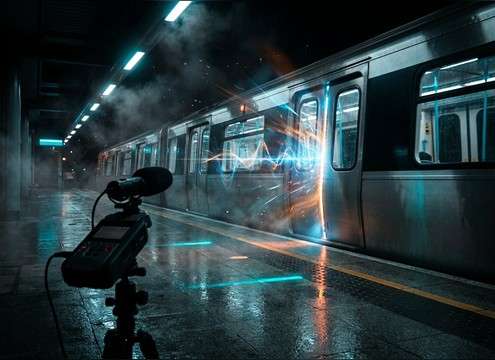

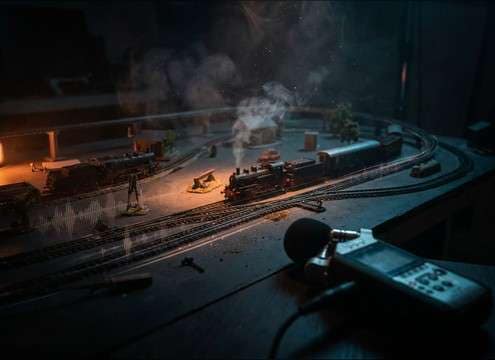


Train audio is all about perspective and motion. A close passby needs clear doppler movement and wheel clack detail, while a wide exterior often reads better with low-end rumble and a softer high end. Use the tips below to choose the right library clip or write a prompt that produces a usable horn, approach, stop, or station moment without fighting your dialogue and music.
Start with train type and action
Name what the train is doing and what kind it is. Diesel freight, commuter EMU, subway, and steam engines imply very different textures, pitches, and mechanical detail. Action words help the generator shape the envelope and movement.
- Use action verbs: approach, passby, idle, depart, brake, couple
- Specify engine or era: diesel freight, electric commuter, steam locomotive
- Call out key elements: horn, wheel clacks, brake squeal, door chime
Lock the perspective and distance
Distance changes everything: transient clarity, stereo width, and how long the tail feels. If your picture cuts between angles, generate two perspectives with matching tone so the sequence stays believable.
- Close: stronger transients, wider stereo, more mechanical detail
- Medium: balanced rumble with controlled reflections and less hiss
- Distant: softer attack, longer low-end bed, minimal bright highs
Match timing: speed, rhythm, and tail
Train sounds are rhythmic. Wheel clacks form a tempo, passbys have a rise and fall, and station arrivals often need a longer deceleration. Choose durations that cover the picture beat, then trim or crossfade in your editor.
- For quick inserts, use short horn hits or a tight clack pattern
- For motion, ask for a clear doppler sweep and steady speed
- For stops, include braking plus a natural tail that does not end abruptly
Avoid common prompt pitfalls
Most unusable results come from asking for too much at once. Keep the prompt focused on one moment, then generate another clip for the next beat. Also avoid forcing extreme loudness, which can flatten dynamics.
- Do not combine horn, crowd, announcements, and music in one prompt
- Avoid vague words like epic or cinematic without concrete sound details
- If the bed is noisy, prompt for minimal wind and clean background