

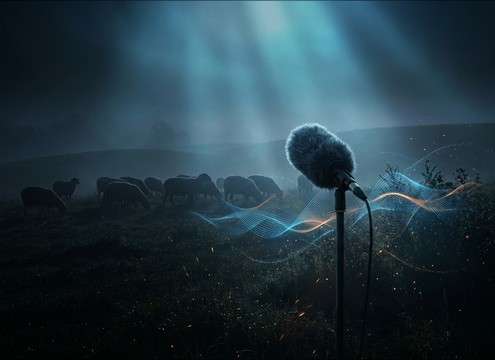







Sheep audio gets believable when the perspective matches the camera: a close "baa" should feel dry and present, while a pasture call needs air and distance. Use the tips below to pick a downloadable clip quickly—or write a prompt that targets the right animal, spacing, and environment so your generated results land on the first try.
Pick perspective first (close vs distant)
Most mismatched sheep SFX are simply the wrong distance. Close-mic bleats have a clear transient and little ambience; distant calls lose brightness, gain air, and feel less "in your face." Decide where the listener stands before you choose or generate.
- Close: faster attack, less room tone, higher detail in the throat texture
- Distant: softer transient, reduced highs, longer perceived decay from the environment
- Prompt tip: include "close-mic," "20 meters away," or "across a windy pasture"
Choose solo, lamb, or flock behavior
A single sheep vocal reads clearly on screen, but flock scenes need variation and density control so the midrange doesn't turn into a wall of noise. Lamb calls are naturally higher and thinner, which helps when you need a cute or vulnerable tone.
- Solo: one defined baa, easy to sync to a head turn or mouth movement
- Lamb: higher pitch with slight wobble; keep tails short for snappy timing
- Flock: overlapping calls at lower level; regenerate takes to avoid obvious repetition
Match the space: barn reflections vs open field
Barn recordings carry short reflections and a subtle room tail, while open fields feel drier but wider, with wind and air movement. Picking the right space makes the sheep sound "placed" without adding heavy processing later.
- Barn: audible early reflections; keep it tight so it doesn't smear dialogue
- Field: light wind bed and wider stereo; avoid boomy low-end that feels indoors
- Prompt tip: add "wooden barn," "stone pen," or "open hillside pasture"
Avoid common 'fake sheep' cues
If your clip sounds toy-like or meme-y, it's often too clean, too pitched, or too repetitive. Aim for natural timing and a believable tail rather than over-bright, over-compressed vocals.
- Avoid overly perfect repeats; vary timing, pitch, and intensity across takes
- Avoid harsh upper mids; a smoother transient reads more natural
- Avoid huge reverb; sheep rarely need long cinematic tails unless it's a stylized gag