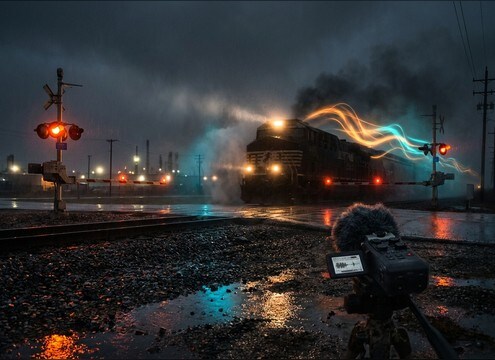


Train horns are all about readability and perspective. A close crossing blast needs a firm transient and controlled decay, while a distant call should lose detail and carry a longer tail. When generating with AI, specify the horn pattern, movement, and environment so the reflections and stereo width match the shot.
Pick a horn pattern that matches the action
Editors often need a recognizable sequence for crossings, or a single punctuation blast for an arrival cut. If the timing feels off, your ear will notice even if the picture is busy.
- Use words like single blast, double blast, or crossing sequence
- Call out spacing: tight gaps, clear pauses, or steady rhythm
- Ask for controlled sustain so the note does not smear into the next cue
Set perspective: close, mid, distant, or moving
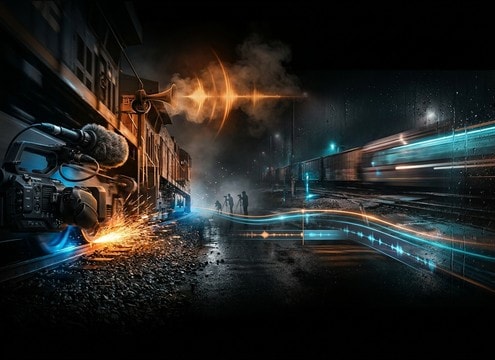
Distance changes the attack and the amount of high-end detail. Movement adds doppler pitch shift and a changing stereo image, which is crucial for pass-by shots.
- Close: sharp transient, minimal room tone, shorter tail
- Distant: softened attack, reduced clarity, longer airy decay
- Pass-by: request doppler, approach then recede, and widening then narrowing stereo
Match the space so the tail feels real
A tunnel or station creates obvious reflections. If the tail is too long or too bright, it will feel pasted on top of the ambience instead of living inside it.
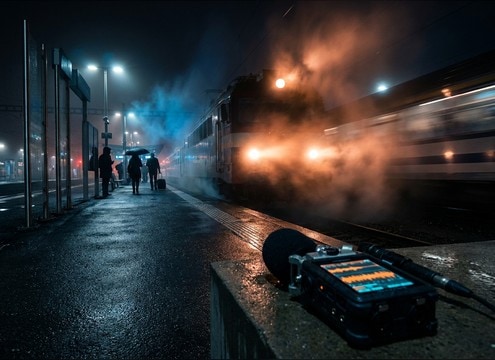
- Station: add platform reflections and subtle crowd bed if needed
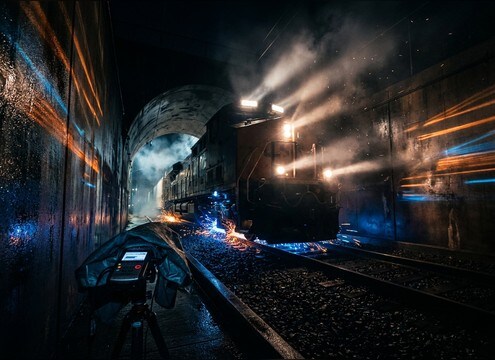
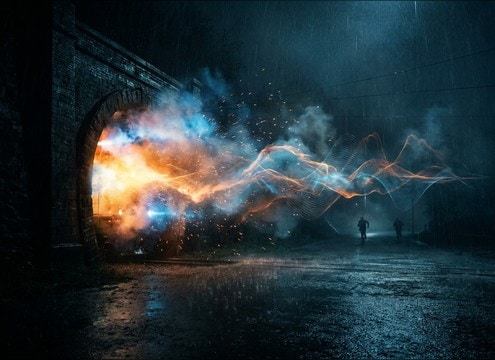
- Tunnel: dense reverb tail with hard early reflections
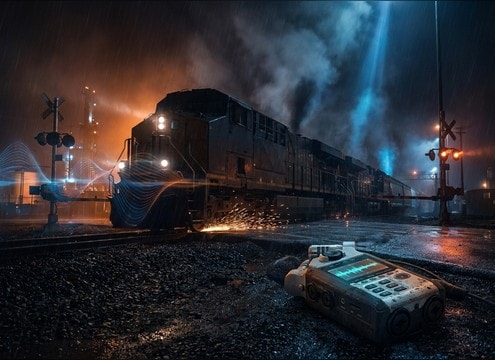
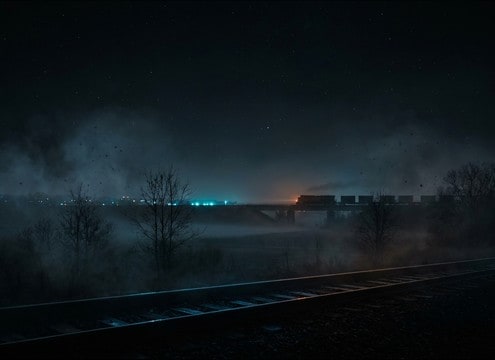
- Open air: minimal reflections, natural fade, light wind room tone only
Avoid common train-horn mistakes
A few prompt tweaks can prevent the most frequent realism issues. Focus on keeping the horn believable relative to your background noise and scene scale.
- Avoid overly synthetic buzzy harmonics unless the scene is stylized
- Do not overdo bass; it can mask engine rumble and dialogue
- Prevent clipped ends by asking for a natural decay or a clean fade-out