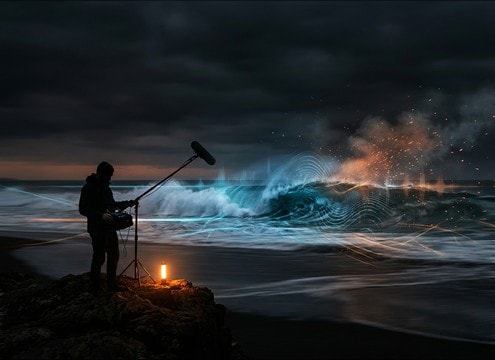

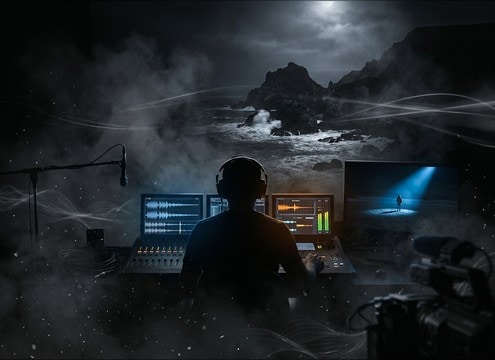
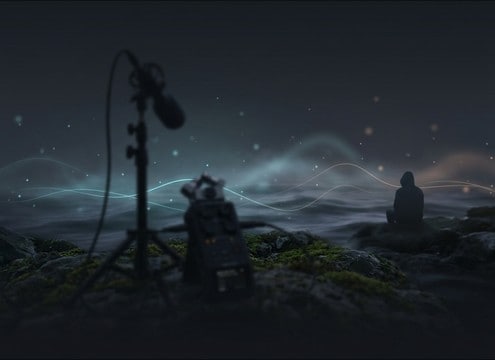

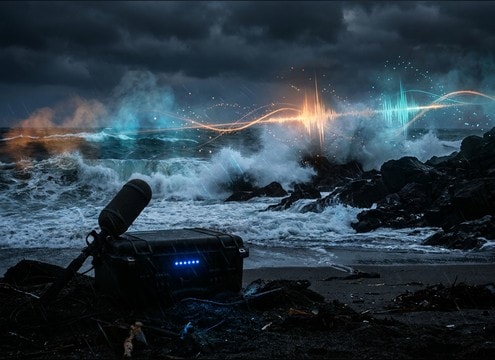
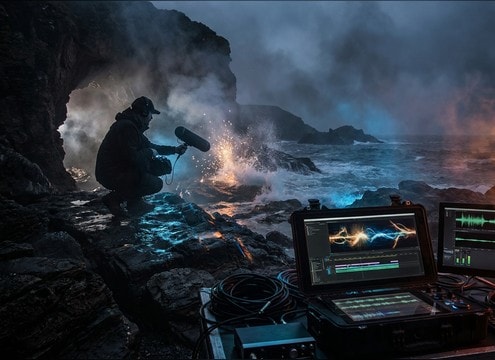
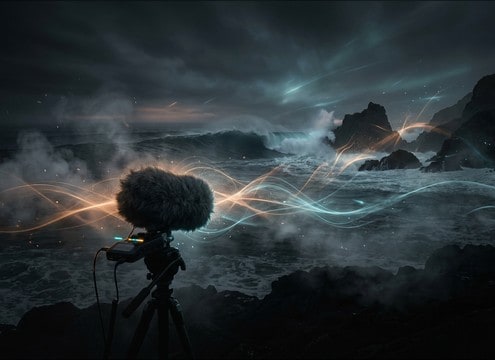


Wave audio feels wrong most often because the distance, loop behavior, or shoreline texture does not match the picture. Use prompts to state where the listener is (waterline, dunes, cliff, boat), how aggressive the transient should be (soft lap vs hard crash), and whether you need a loopable bed or a single hit with a clean tail.
Start with the shoreline and scale
Tell the generator what is being hit: sand, rocks, pebbles, seawall, or cave. This changes the transient snap, grit, and low-end weight. If your visuals show foam, ask for more fizz and a longer wet tail. If the scene is calm, keep peaks controlled and reduce boom.
- Sand beach: smoother wash, less grit, softer attack
- Rocky coast: sharper impacts, more midrange texture
- Seawall or pier: tighter hits with harder reflections
Match perspective with distance and stereo
Close waves should have clearer transients and more detail, while distant swells should feel softer with slower movement. Stereo width matters: wide for open coast, narrower for sheltered harbor or cave. If the sound masks narration, request lower midrange density and a calmer noise floor.
- Close: punchy transient, audible foam detail
- Distant: softer attack, smoother decay, less fizz
- Boat POV: gentle movement with controlled low-end
Decide: loopable bed or single hit
For long scenes, ask for a stable ambience bed with clean loop points and consistent level. For cuts and transitions, ask for a single crash with a tail that fades naturally without lingering rumble. If you hear obvious pumping or repeated patterns, regenerate with less rhythmic movement.
- Loop: stable noise floor, smooth decay, no sharp spikes
- Single hit: defined attack, controlled tail, minimal artifacts
- Continuity: keep similar texture across adjacent shots
Avoid common wave SFX mistakes
Overly bright fizz can sound like spray noise, and too much low-end can overwhelm dialogue. Cave or cliff reflections are powerful but can feel wrong outdoors. If the wave feels synthetic, request more natural randomness, softer repetition, and fewer tonal resonances.
- Avoid excessive rumble if there is dialogue or music
- Do not use cave reflections for open beaches
- Reduce hiss if the scene is quiet or intimate