

Steam locomotives read as a mix of tonal whistle, rhythmic chuffs, and noisy steam releases. To get a clip that cuts cleanly, start by deciding whether you need a single hero element (like a whistle stab) or a composite moment (like an arrival). Then specify distance, environment, and how present the low-end rumble should be, so the tail and room tone do not fight your dialogue.
Choose the hero element first
Editors often need one sound to sell the moment: a whistle to announce, a chuff rhythm to suggest movement, or a steam hiss to punctuate a stop. Picking the lead element helps you avoid muddy mixes where everything competes at once.
- Whistle: describe pitch feel (bright, mellow) and tail length (short, long)
- Chuffs: specify cadence (slow idle, steady run) and transient punch
- Steam release: call out texture (airy, gritty) and how dry the recording should be
Set distance and space for believable tails
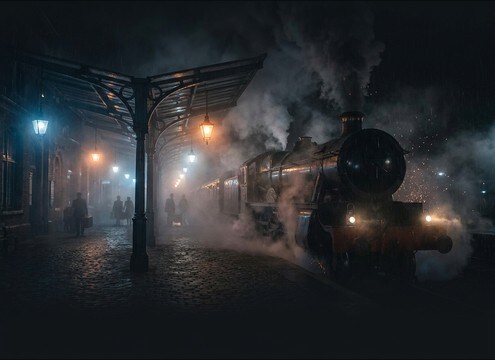
A station canopy or roundhouse adds reflections, while open countryside feels drier and more direct. Distance changes attack clarity and how much haze sits around the sound. Prompt these details so the tail matches the camera perspective.
- Close: sharper attack, more mechanical detail, less ambience bed
- Medium: balanced chuff and rail clatter with a natural trailing air
- Distant: softened transients, longer decay, lighter stereo width
Control low-end and masking in the mix
Steam trains can carry heavy rumble that quickly masks music and speech. If you plan to layer multiple elements, keep each clip focused: one for rhythm, one for tone, one for noise. A cleaner source is easier to shape later.
- Ask for controlled low-end rumble when dialogue is present
- Request minimal background noise for easier EQ and ducking
- Avoid overly wide stereo if the scene needs a centered perspective
Common prompt mistakes to avoid
Steam-train audio can sound synthetic if the prompt is too vague or tries to pack in every possible detail. Keep it specific to the moment on screen and the duration you actually need, then regenerate variations rather than overloading a single request.
- Do not combine arrival, pass-by, and departure in one short clip
- Avoid asking for extreme loudness or distortion unless it is truly required
- Skip contradictory notes like distant but ultra-detailed close mechanics