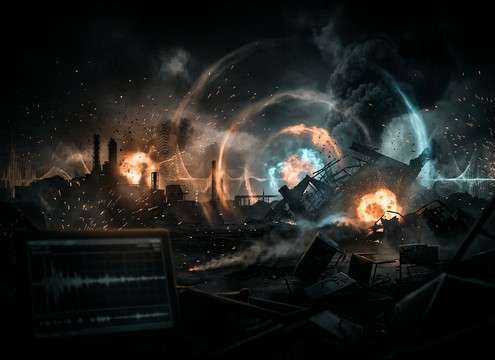
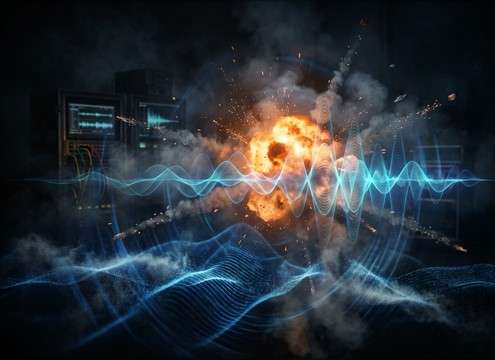


Explosions need a source, a scale and a tail. A grenade hit, trailer impact and demolition rumble should differ in transient, low-end weight, debris and decay.
Name the source and size
The source tells the listener how large the event should feel.
- Small: grenade, firecracker or pressure pop
- Medium: car blast, fuel tank or RPG hit
- Large: demolition, airstrike or building collapse
Control low-end and impact
Bigger blasts usually need a clean crack plus low-end pressure.
- Ask for sub-bass only when the mix needs weight
- Keep short hits dry for transitions
- Use longer rumbles for disaster or demolition scenes
Add debris and environment
Debris sells the aftermath and the room or landscape sells the scale.
- Metal scatter for vehicles
- Concrete grit for buildings
- Outdoor air decay for distant booms
Avoid noisy clutter
A clean blast is easier to edit than a busy sound full of extra drama.
- No music or voices
- Avoid clipping and harsh distortion
- Specify controlled tail length