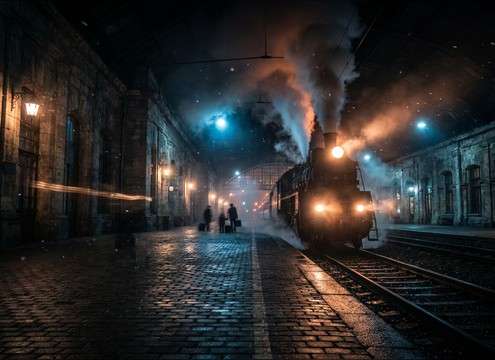
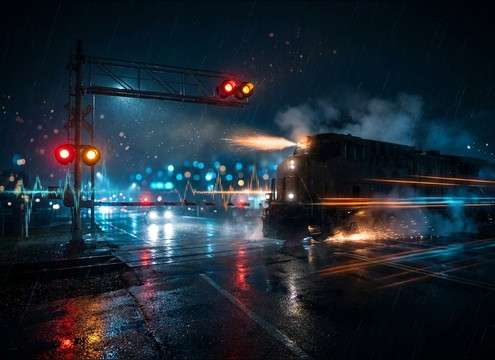
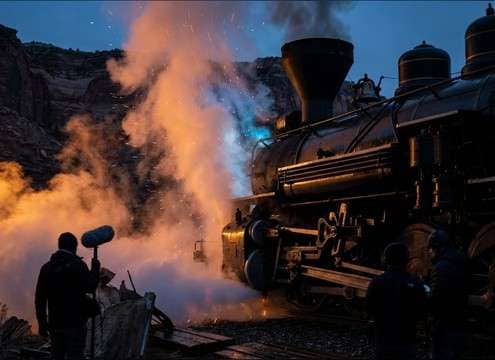
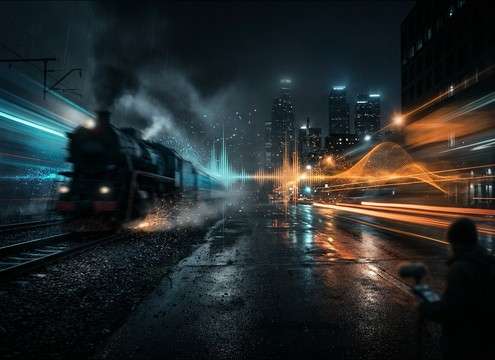


Train whistles read differently depending on distance, environment, and how the pitch bends over time. Use the prompts below to specify whether you need a crisp close blast, a muffled far call, or a moving doppler pass that tracks a shot. When downloading ready clips, listen for attack sharpness, tail length, and how much room tone is baked in so the whistle matches your scene bed.
Choose the whistle character
Start by describing what kind of whistle the audience expects. Steam whistles often feel brighter and more tonal, while modern horn-whistles can be harsher and more compressed. Calling pattern matters too: a single blast reads like a cue, while a two-tone phrase feels like a classic rail signal.
- Prompt for single blast, double blast, or two-tone call
- Specify bright and tonal vs gritty and brassy texture
- Ask for minimal hiss if it must sit under dialogue
Match distance and space
Perspective is the difference between a believable station shot and an obviously pasted SFX. Distant whistles should lose low-mid detail and feel more airy, while platform or tunnel-adjacent whistles pick up reflections. If your camera moves with the train, request motion so the pitch shift feels natural.
- Use words like close-mic, mid-distance, or far across fields
- Add environment cues like station canopy echo or open air
- For movement, request a left-to-right doppler pass
Dial in timing for the edit
Whistles often need to hit a cut or clear a dialogue beat. Keep short clips tight for cues, and use longer calls when you need a transition with a natural fade. If the scene has other loud elements, choose a whistle with a cleaner transient and controlled tail to avoid washing the mix.
- Pick 5 seconds for cues, 10 seconds for sustained calls, 20 seconds for approach-and-pass
- Ask for a smooth fade-out tail if it must blend into ambience
- Request a tighter tail if you need a clean stop on picture
Common prompt pitfalls to avoid
Train whistles can become cartoonish if the pitch bend is too extreme or if the sound is over-widened in stereo. Keep your prompt grounded with realistic descriptors, and avoid stacking too many contradictory cues like close-mic plus heavy distant haze. If you need space, describe the space, not just more reverb.
- Avoid extreme pitch swoops unless you want a stylized effect
- Do not overuse wide stereo for a single point source
- Do not combine close-mic detail with heavy far-distance wash