
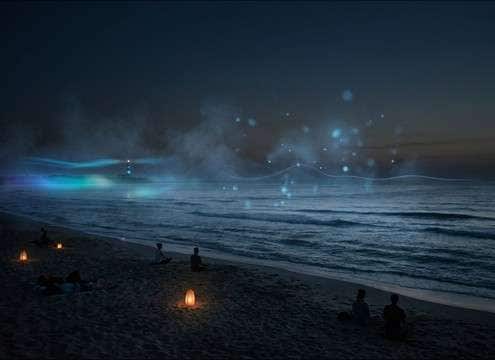
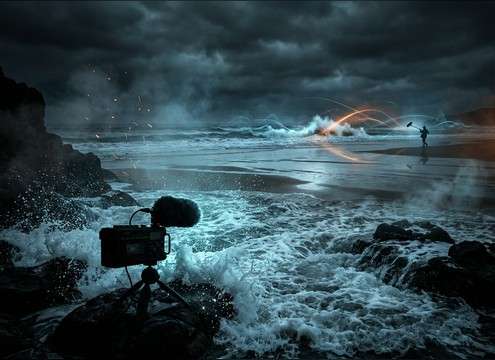
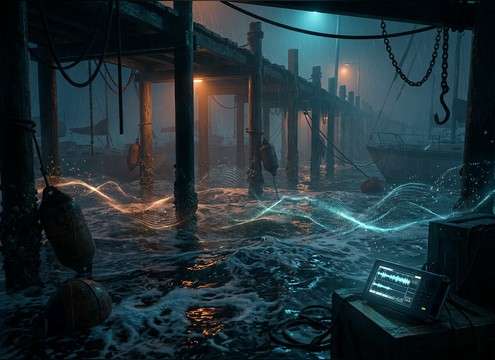
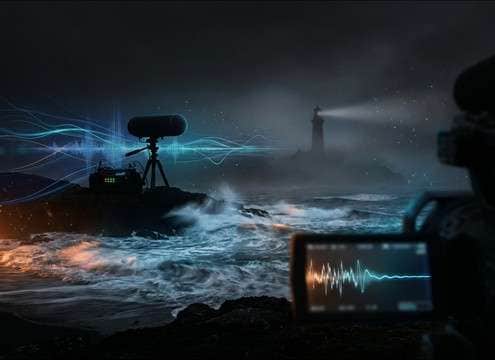
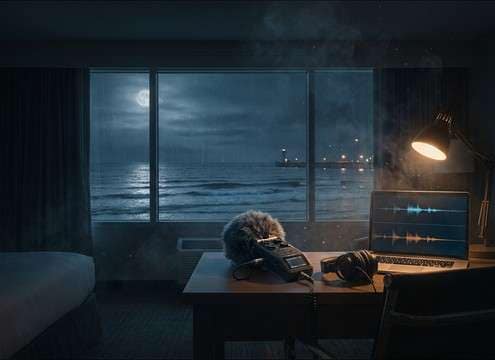
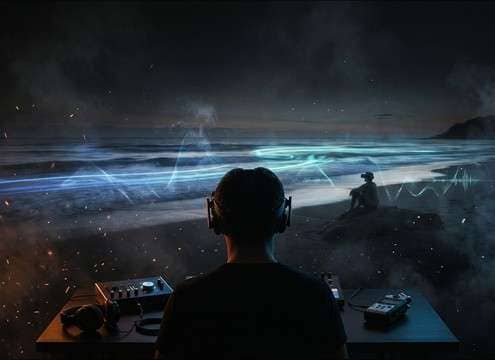



Sea waves are often used as a continuous bed, so the "right" clip is usually the one with the best consistency and perspective. When browsing or prompting, decide whether you need a loopable ambience, a few larger washes for emphasis, or a textured shoreline (rocks, sand, pebbles). Use distance and intensity words to control transient sharpness and tail/decay, and explicitly exclude extras like birds or boats when you want clean surf.
Start with the shoreline type
Different coastlines change the texture more than people expect. Sand reads as smooth hiss, pebbles add gritty crunch, and rocks create punchy impacts with longer decay. Naming the shoreline helps the generator avoid "generic ocean" results.
- Use material words: sand, pebbles, rocks, sea cave, under a pier
- Ask for "foam hiss" if you want airy detail instead of splashy transients
- If you need impacts, request "occasional larger breaker" rather than constant hits
Control distance, width, and intensity
Wave beds can either fill the whole mix or sit quietly behind narration. Distance language usually softens the attack and reduces low-end. Stereo width can make a scene feel open, but too wide can distract when summed or when dialogue is centered.
- Close/near: more detail, sharper attack; distant: softer transients, steadier bed
- Request "wide stereo wash" for open beaches, or "medium stereo" for tighter scenes
- Use intensity terms: gentle, calm, choppy, stormy swell (and exclude wind if needed)
Make it loop-ready on purpose
If the surf is for an ambience loop, you want consistent level and a smooth envelope. Too much variation makes loop points obvious. Prompt for stability and avoid one-off spikes unless they're planned accents.
- Include "loopable" and "consistent level" to reduce sudden peaks
- Ask for "smooth attack and decay" to help crossfades disappear
- Choose longer durations when you need more natural movement before looping
Avoid common wave-bed problems
The fastest way to ruin a sea bed is letting unrelated sounds slip in, or generating waves that feel like random splashes rather than a shoreline. Tell the prompt what not to include, and keep the scene description focused.
- Exclude distractions: "no seagulls, no people, no boat engines"
- Avoid overly specific camera actions unless you really need them (it can cause unnatural shifts)
- If the noise floor feels "grainy," regenerate with "clean ambience, low noise floor"