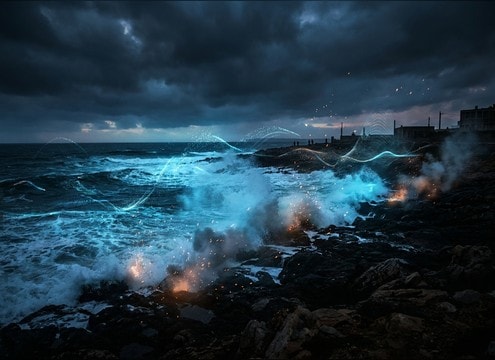


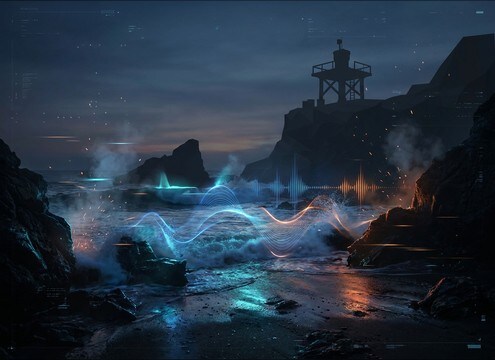
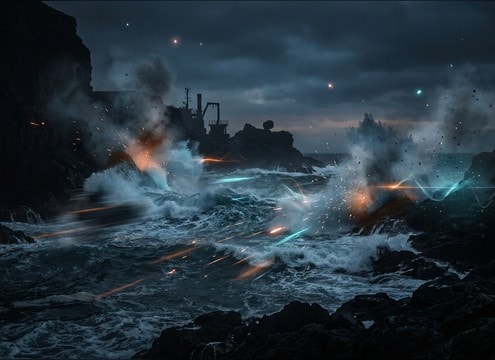
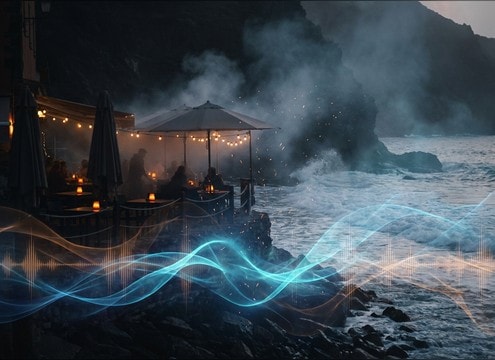



Waves are easy to recognize and hard to fake: the wrong shoreline texture, distance, or loop behavior can break a scene instantly. Use prompts that specify the beach type (sand, pebbles, rocks), the energy (gentle break vs shorebreak slam), and how the camera hears it (close and wide vs distant and narrow). Then generate a few variations and keep the take whose transient and foam tail match your picture.
Pick shoreline and intensity first
Start by naming what the water hits, because it changes the midrange and grit. Then set intensity so the transient matches the visual size of the wave and the tail matches how long foam stays audible.
- Sand: smoother hiss, less rattle, softer attack
- Pebbles: gritty chatter texture, faster micro-transients
- Rocks: harder slam, brighter spray, stronger low-end thump
Control perspective and stereo image
Distance determines how sharp the impact feels and how much wash you get afterward. Stereo width helps sell wide coastal vistas, while narrower images sit better under dialogue or tight shots.
- Close: punchier transient and more detailed foam texture
- Distant: softened attack with longer, airier wash tail
- Wide stereo for vistas, narrower for character scenes
Make loops that do not call attention
For repeating ambience, aim for consistent energy and a tail that can crossfade cleanly. Generate longer beds when possible, then edit with short crossfades to hide seams.
- Ask for consistent surf texture and stable noise floor
- Avoid single huge spikes that repeat every loop
- Use gentle fades at start and end when cutting
Common wave SFX mistakes to avoid
A wave that sounds perfect alone can fail in context. Avoid cues that suggest the wrong location, and watch out for overly bright hiss that masks speech or fatigue listeners.
- Do not mix rocky slams under a calm sandy beach visual
- Avoid harsh, sizzling highs that overpower dialogue
- Skip clips with obvious repeating patterns for ambience