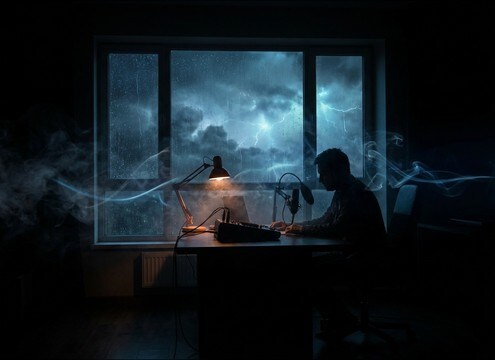
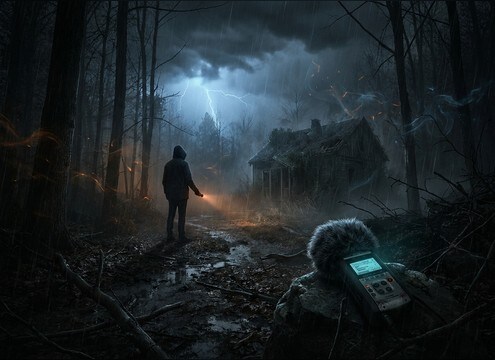



Light thunder is about restraint: softer transients, controlled low-end, and a tail that reads as distance rather than impact. When browsing clips, listen for how quickly the rumble blooms and how long it hangs. When generating, specify distance, environment, and whether you want a tiny crack or pure roll so the sound supports the scene instead of stealing focus.
Pick distance and perspective first
Most light thunder reads as distant. If it sounds too close, the crack becomes a sharp transient and the low-end jumps forward. Decide whether the storm is outside a window, across a valley, or barely audible on the horizon, then choose or prompt accordingly.
- Use words like distant, far-off, or horizon roll
- Ask for reduced crack and softened transient
- Request a gentle fade-out tail for distance
Control rumble and tail for the cut
The rumble is the body, but the tail is what makes thunder feel real. For dialog scenes, keep the low-end controlled and the tail shorter. For establishing shots, a longer smooth decay sells space without sounding like a hard hit.
- Prompt for controlled low-end rumble, not heavy boom
- Specify short tail for tight edits or long tail for atmosphere
- Avoid sudden peaks that will trigger limiters
Match the environment layer
Thunder changes character depending on what sits around it. Behind rain it becomes muffled and rounded; in open air it can feel wider and clearer. If your scene already has rain or wind, keep the thunder simpler so textures do not fight each other.
- Ask for muffled thunder behind steady rain when needed
- Request subtle stereo width, not exaggerated wide effects
- Keep noise floor clean if you will add your own ambience
What to avoid with light thunder
Light thunder should not read as an explosion. Harsh cracks, overhyped sub, or synthetic wobble can break realism fast. If a clip feels too aggressive, regenerate with gentler language and tighter dynamics.
- Avoid sharp lightning cracks if you only need rumble
- Avoid heavy sub drops that mask music and dialog
- Avoid metallic or distorted textures unless stylized