

Tea green sits in that sweet spot between fresh and muted—calm enough for minimalist branding, but still lively enough to feel modern on screens and in print.
Below are 20+ tea green color palette ideas with HEX codes, plus practical pairing tips for UI, packaging, and interiors.
In this article
- Why Tea Green Palettes Work So Well
-
- matcha mist
- bamboo latte
- sage porcelain
- green tea garden
- citrus zest leaf
- minted linen
- forest teacup
- pistachio foam
- dewy fern
- herbal clay
- celadon ink
- tea house ui
- morning meadow
- avocado wash
- jade paper
- spring kintsugi
- zen terrace
- vintage apothecary
- soft eucalyptus
- honeyed sencha
- stonewash green
- lemon verbena notes
- What Colors Go Well with Tea Green?
- How to Use a Tea Green Color Palette in Real Designs
- Create Tea Green Palette Visuals with AI
Why Tea Green Palettes Work So Well
Tea green tones feel restorative because they mimic nature’s softer greens—think steamed leaves, herbs, and garden shade. That natural reference makes designs instantly calmer and more trustworthy.
They also balance warmth and coolness well. Many tea green color combinations include creamy off-whites or clay neutrals, which prevents the green from reading too clinical, while deeper forest shades add structure and legibility.
From a practical standpoint, tea green palettes often provide usable contrast steps (tints to shades). That makes them easy to scale across UI states, packaging systems, and interior accents without constantly “hunting” for supporting colors.
20+ Tea Green Color Palette Ideas (with HEX Codes)
1) Matcha Mist
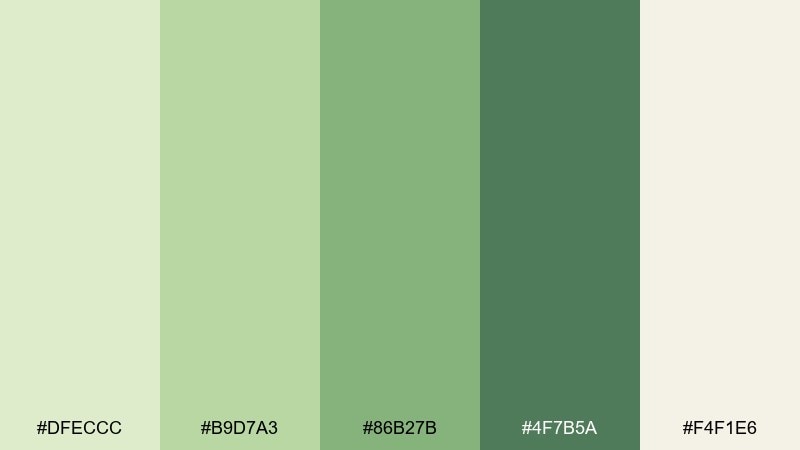
HEX: #dfeccc #b9d7a3 #86b27b #4f7b5a #f4f1e6
Mood: airy, clean, restorative
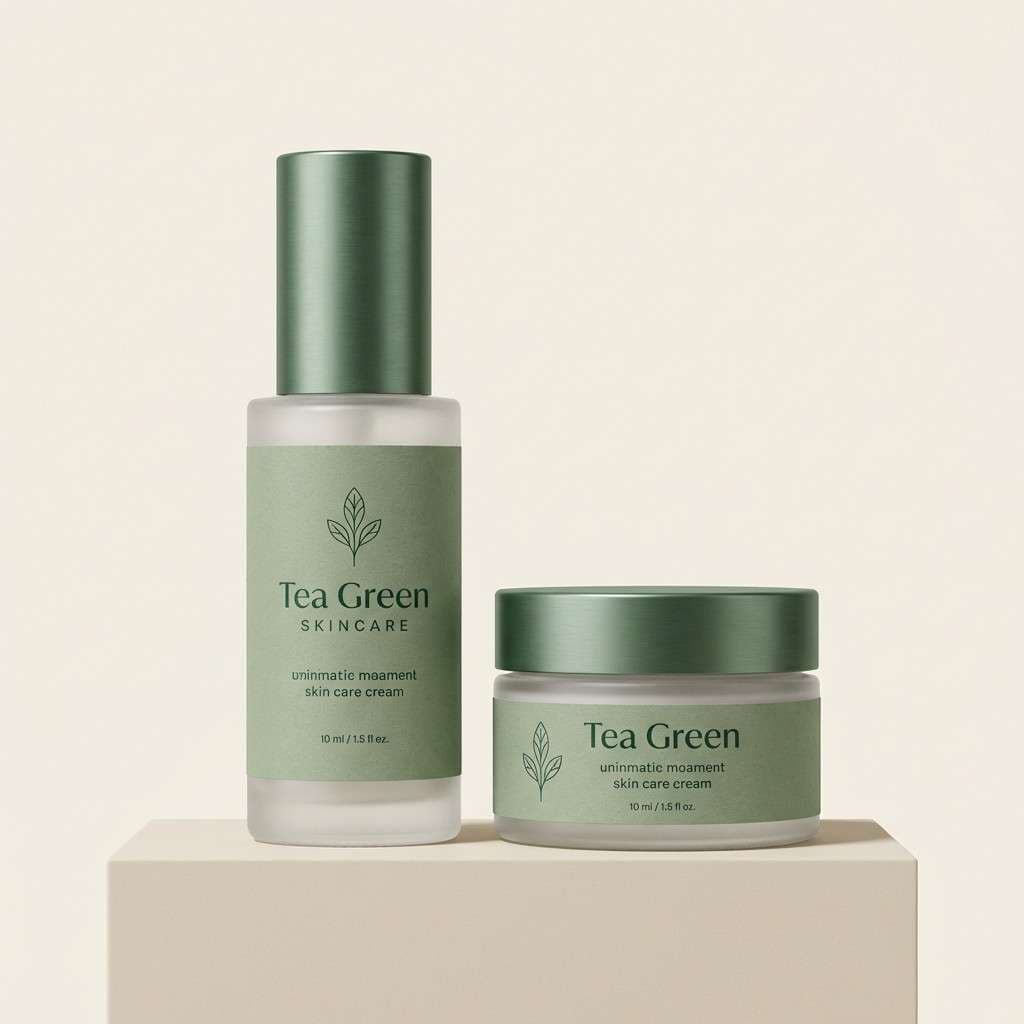
Best for: wellness branding and skincare packaging
Airy and restorative, it feels like morning steam rising from a warm cup. The pale greens keep layouts light while the deeper leaf tone anchors headlines and logos. Use the cream shade for breathing room and the mid greens for labels and icons. Tip: reserve the darkest green for small text and key CTAs to maintain a calm, premium look.
Image example of matcha mist generated using media.io
Media.io is an online AI studio for creating and editing video, image, and audio in your browser.


2) Bamboo Latte
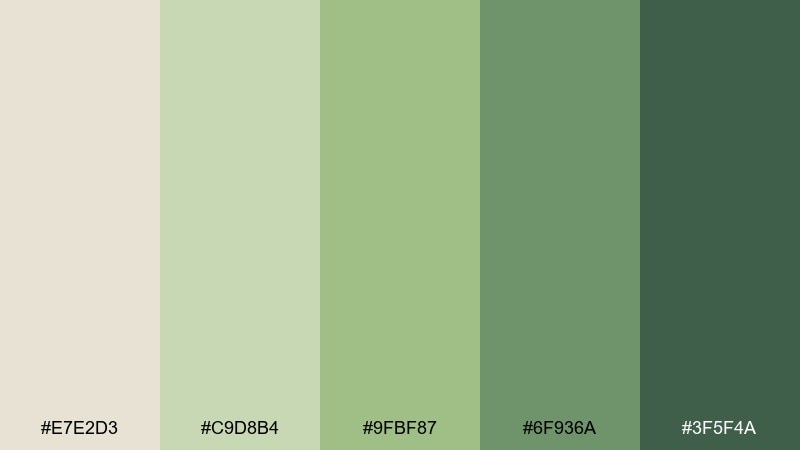
HEX: #e7e2d3 #c9d8b4 #9fbf87 #6f936a #3f5f4a
Mood: cozy, natural, grounded
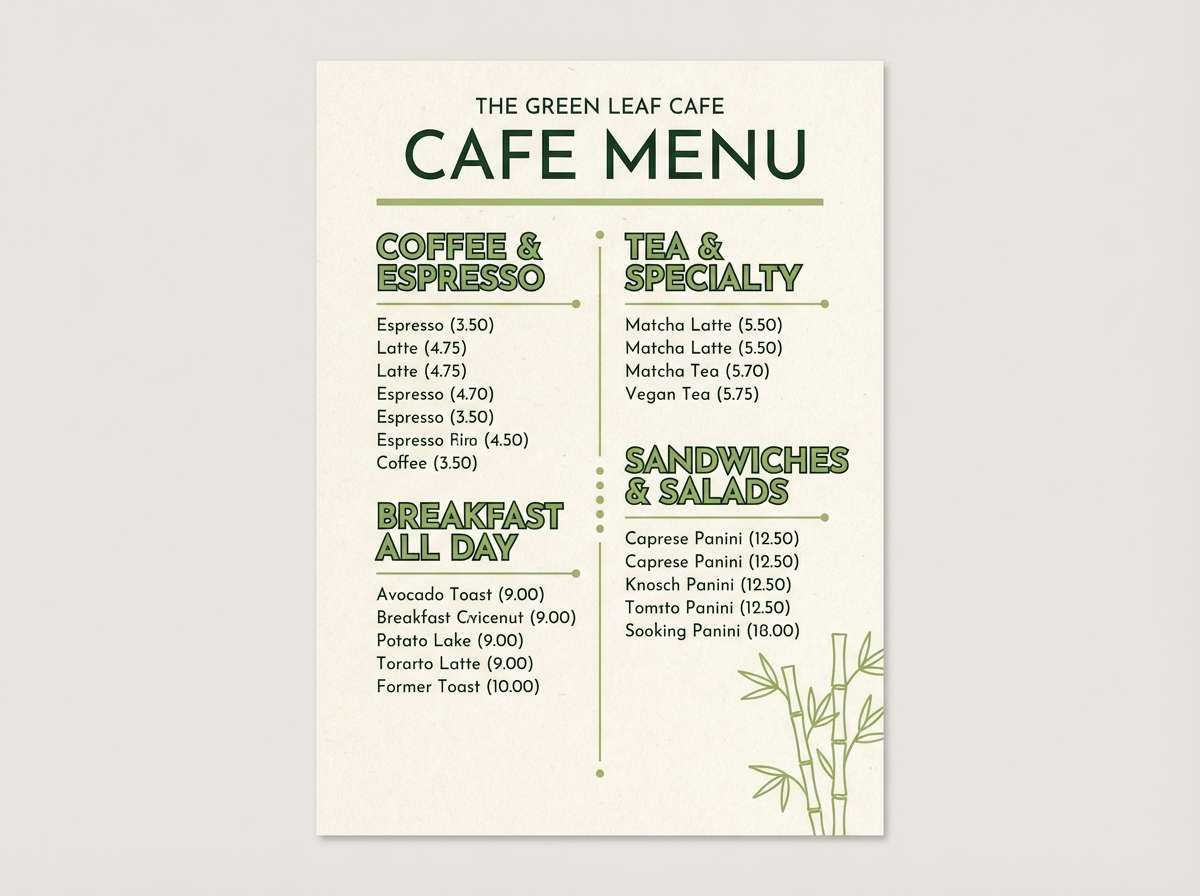
Best for: cafe interiors and menu design
Cozy and grounded, it reads like bamboo shadows across warm linen. The beige-cream base keeps menus approachable while the mossy greens add organic structure for sections and pricing. Try the darkest tone for navigation bars and small typographic accents. Tip: keep photos slightly warm so the greens stay inviting rather than clinical.
Image example of bamboo latte generated using media.io
3) Sage Porcelain
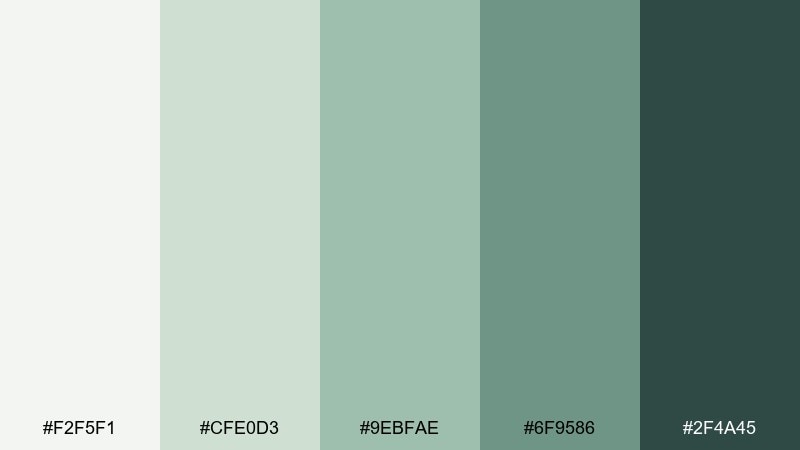
HEX: #f2f5f1 #cfe0d3 #9ebfae #6f9586 #2f4a45
Mood: quiet, refined, spa-like
Best for: editorial layouts and lifestyle blogs
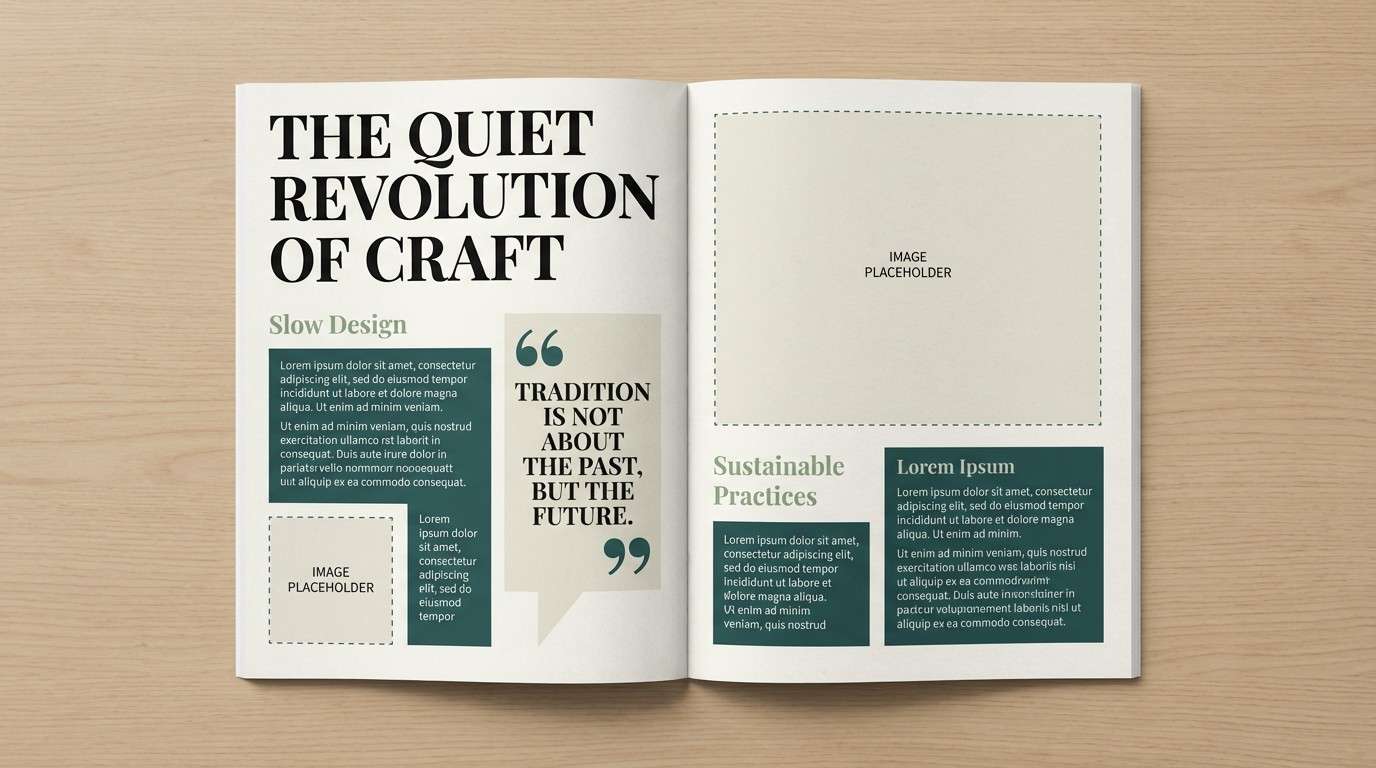
Quiet and refined, it evokes glazed porcelain and steamed herbs. The near-white and soft sage set an elegant page tone, while the deep teal-green adds authority for pull quotes and section headers. Pair it with clean serif typography and lots of negative space for a magazine feel. Tip: use the mid sage as a subtle column background to guide reading without heavy rules.
Image example of sage porcelain generated using media.io
4) Green Tea Garden
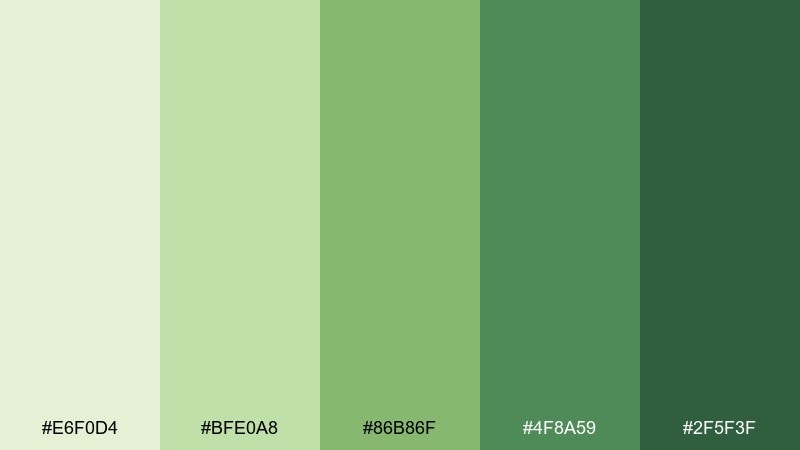
HEX: #e6f0d4 #bfe0a8 #86b86f #4f8a59 #2f5f3f
Mood: fresh, lively, sunlit
Best for: botanical illustrations and spring posters
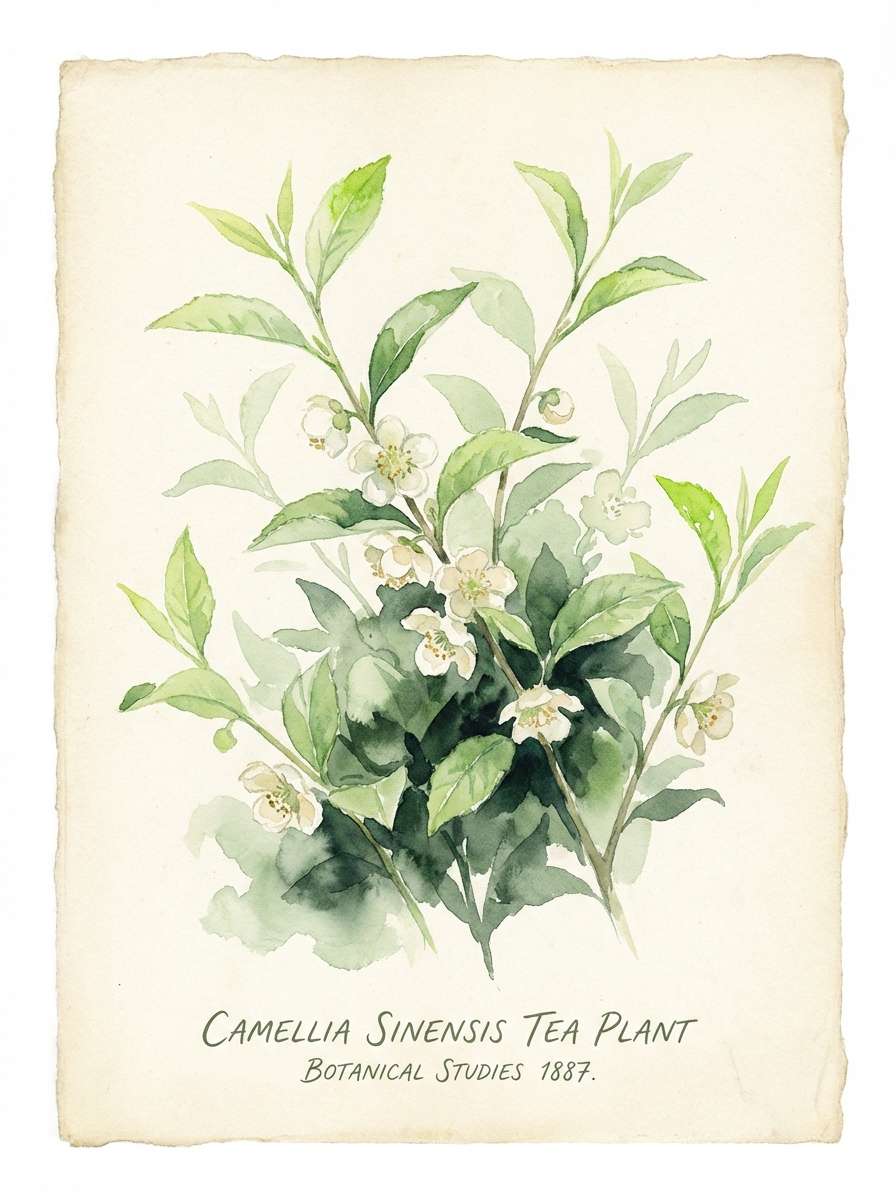
Fresh and sunlit, it feels like new leaves after a light rain. These tea green color combinations work beautifully in botanical artwork where you need clear value steps from tint to shade. Let the brightest green highlight stems and leaf edges, and keep the darkest for outlines or small shadows. Tip: add fine grain or watercolor texture so the palette stays organic rather than flat.
Image example of green tea garden generated using media.io
5) Citrus Zest Leaf
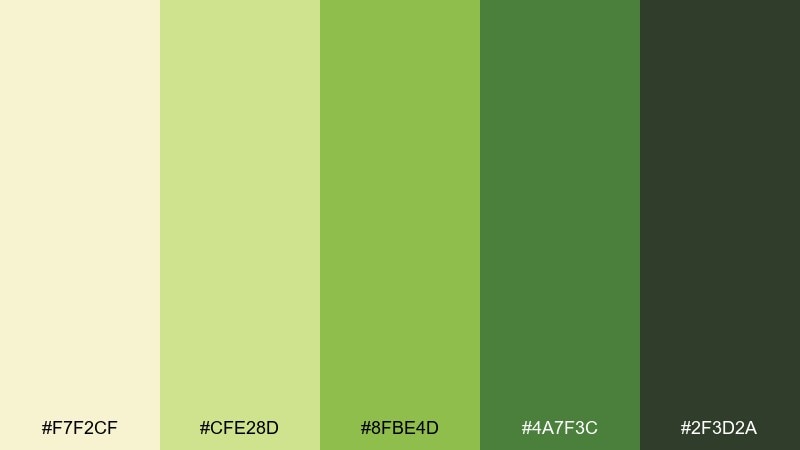
HEX: #f7f2cf #cfe28d #8fbe4d #4a7f3c #2f3d2a
Mood: bright, zesty, energetic
Best for: summer product ads and social graphics
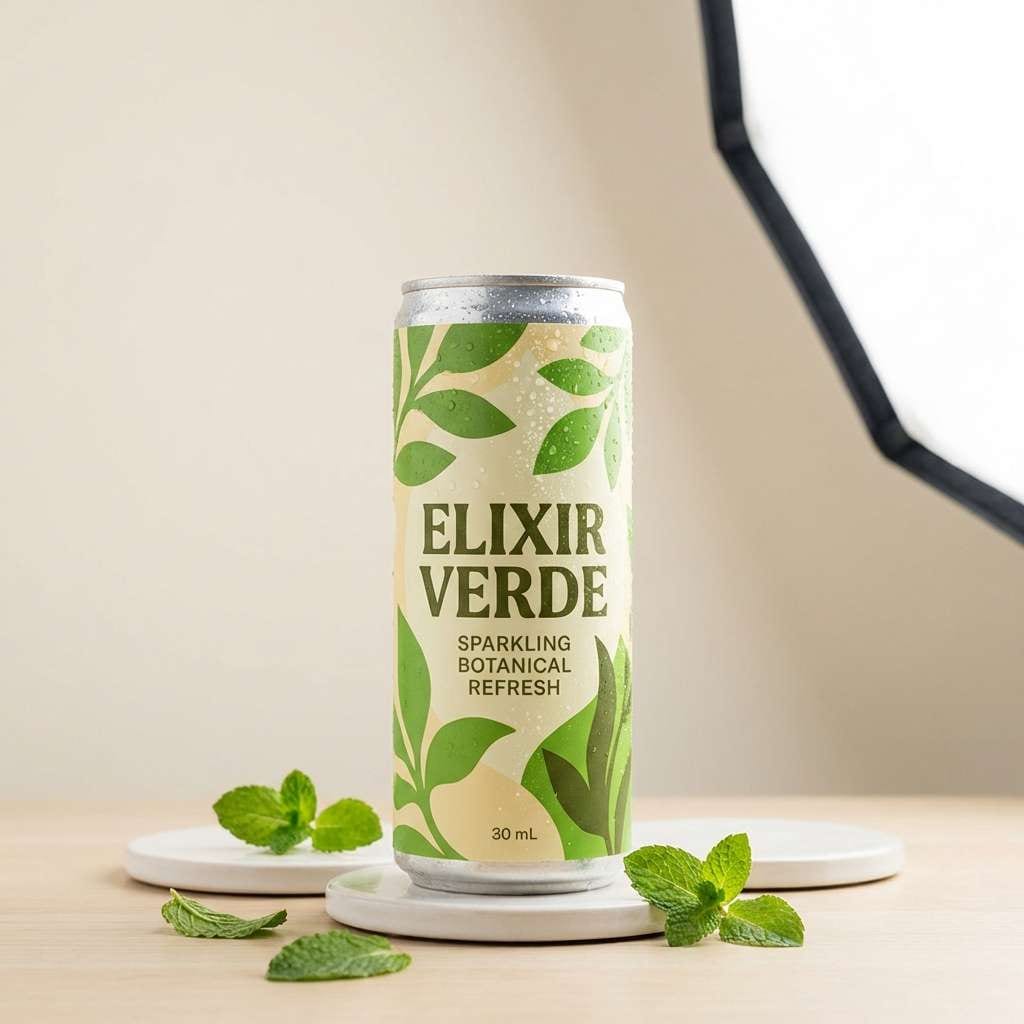
Bright and zesty, it suggests a squeeze of citrus over crisp greens. The yellow-cream lifts the composition, while the vivid leaf green brings instant energy to badges and promo prices. Keep the darkest olive for legibility on small text or ingredient callouts. Tip: limit the brightest green to 10 to 15 percent of the layout so it pops without overwhelming the message.
Image example of citrus zest leaf generated using media.io
6) Minted Linen
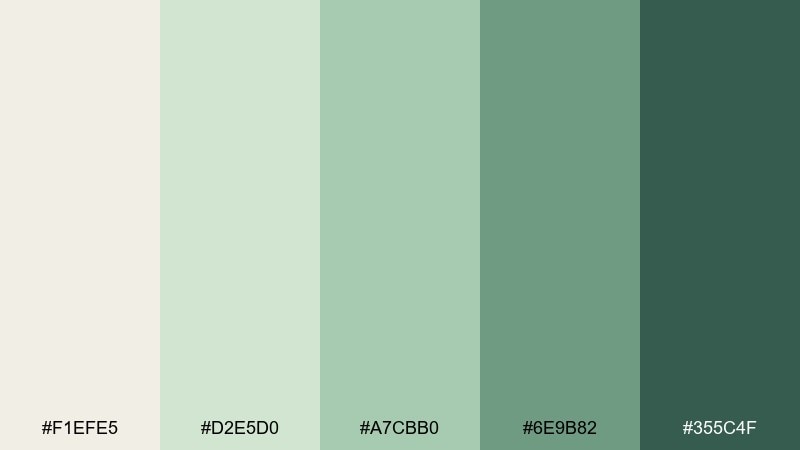
HEX: #f1efe5 #d2e5d0 #a7cbb0 #6e9b82 #355c4f
Mood: soft, airy, approachable
Best for: landing pages and newsletter templates
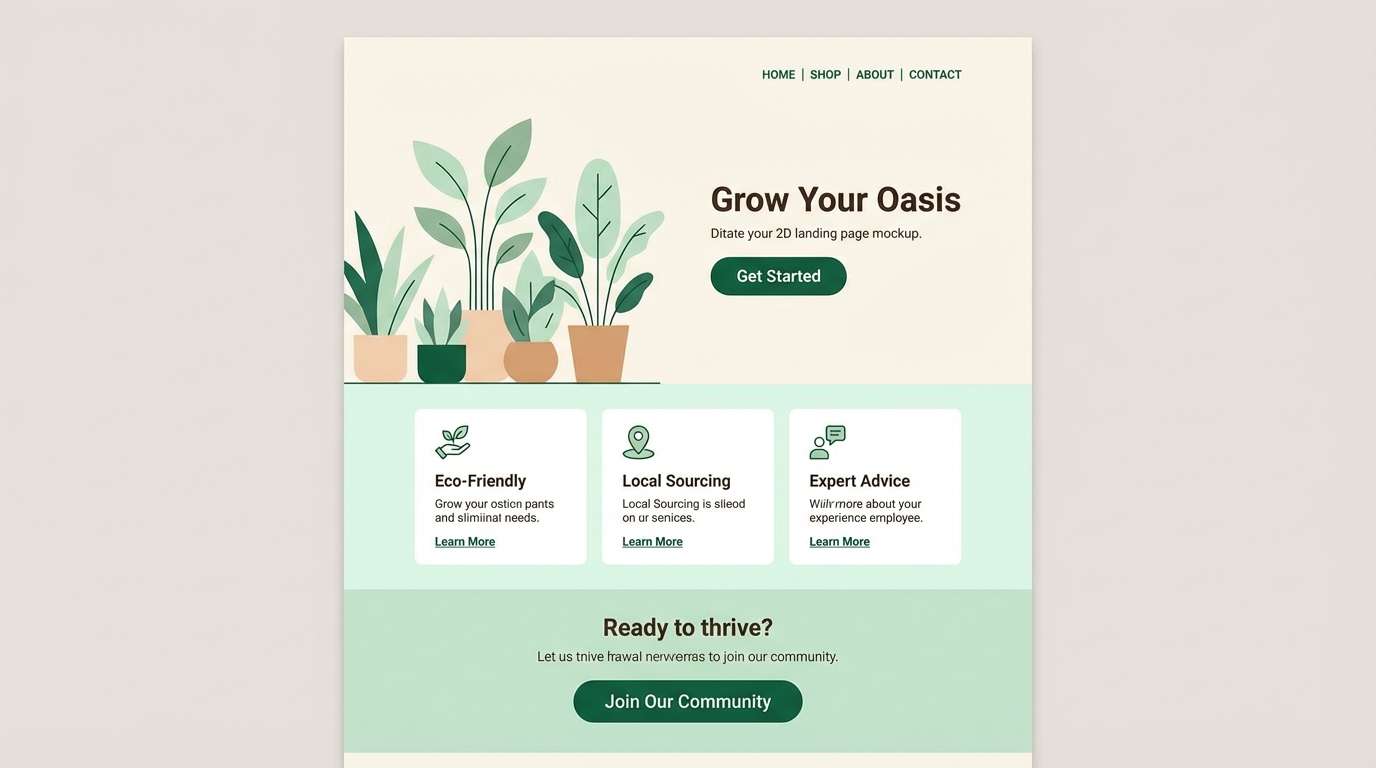
Soft and airy, it feels like linen curtains with a hint of mint. Use the warm off-white for content blocks and the pale green for gentle section separation. The deeper greens are strong enough for buttons, links, and hover states without looking harsh. Tip: add rounded corners and light shadows to match the palette's relaxed texture.
Image example of minted linen generated using media.io
7) Forest Teacup
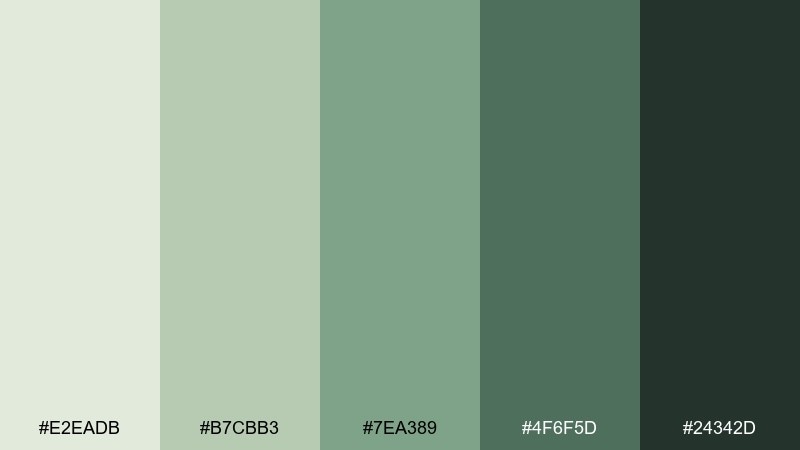
HEX: #e2eadb #b7cbb3 #7ea389 #4f6f5d #24342d
Mood: moody, earthy, comforting
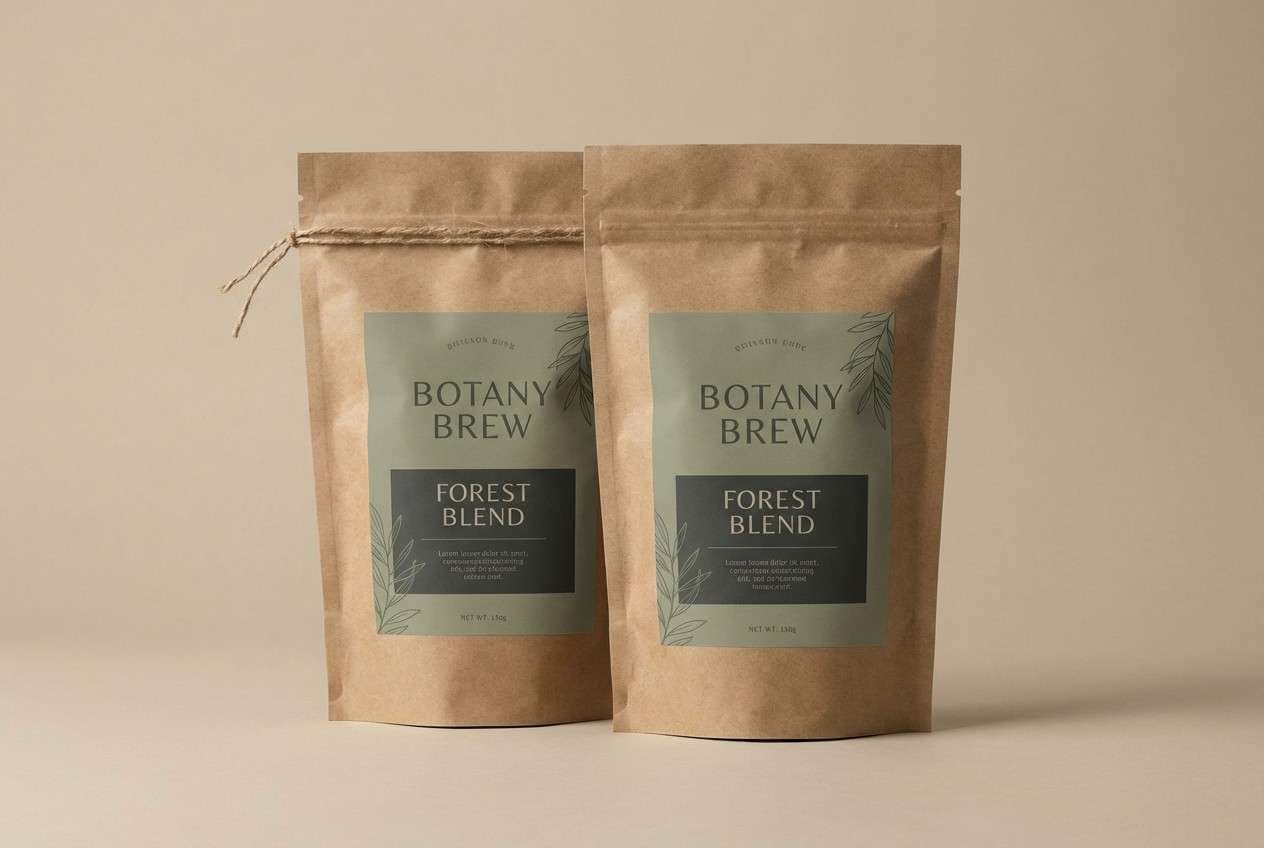
Best for: craft coffee packaging and label systems
Moody and comforting, it recalls a ceramic teacup beside dark evergreens. The dusty mid green makes a strong base for labels, while the near-black green adds a premium, ink-like finish for type. It is a reliable tea green color combination for brands that want calm without looking pastel. Tip: use uncoated paper texture so the darker tones feel rich rather than glossy.
Image example of forest teacup generated using media.io
8) Pistachio Foam
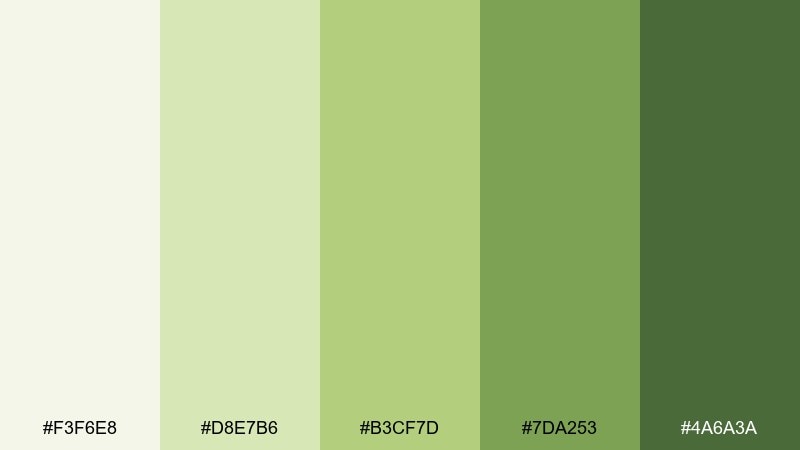
HEX: #f3f6e8 #d8e7b6 #b3cf7d #7da253 #4a6a3a
Mood: playful, light, modern
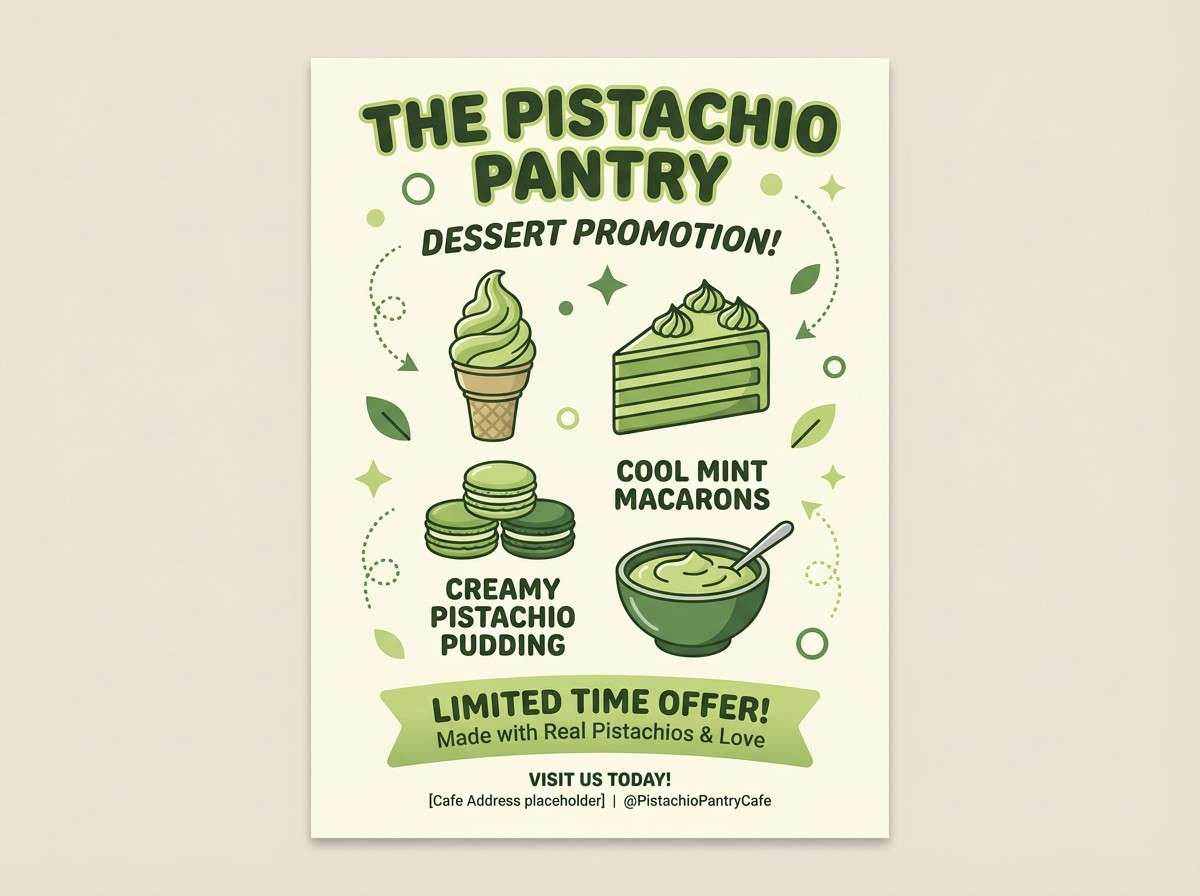
Best for: dessert branding and cafe flyers
Playful and light, it looks like pistachio foam and sweet cream. The bright mid tones work well for illustrated icons, flavor badges, and friendly headlines. Use the darkest green sparingly as a stabilizer for text and fine lines. Tip: keep the background creamy so the greens feel edible and soft.
Image example of pistachio foam generated using media.io
9) Dewy Fern
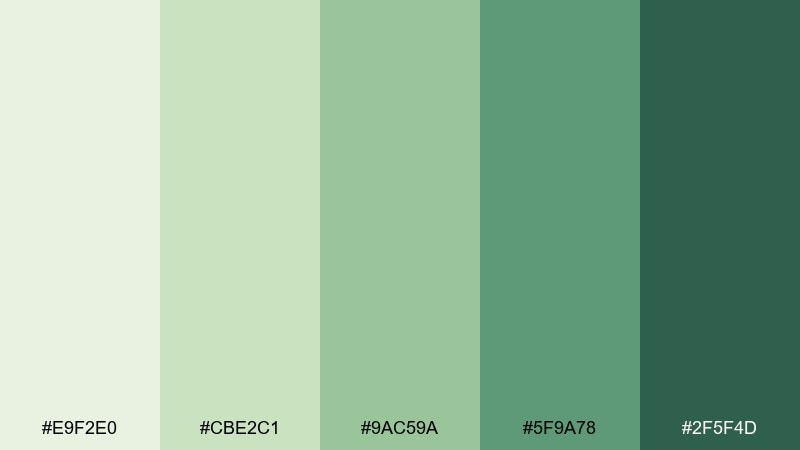
HEX: #e9f2e0 #cbe2c1 #9ac59a #5f9a78 #2f5f4d
Mood: dewy, calming, outdoorsy
Best for: eco apps and habit trackers
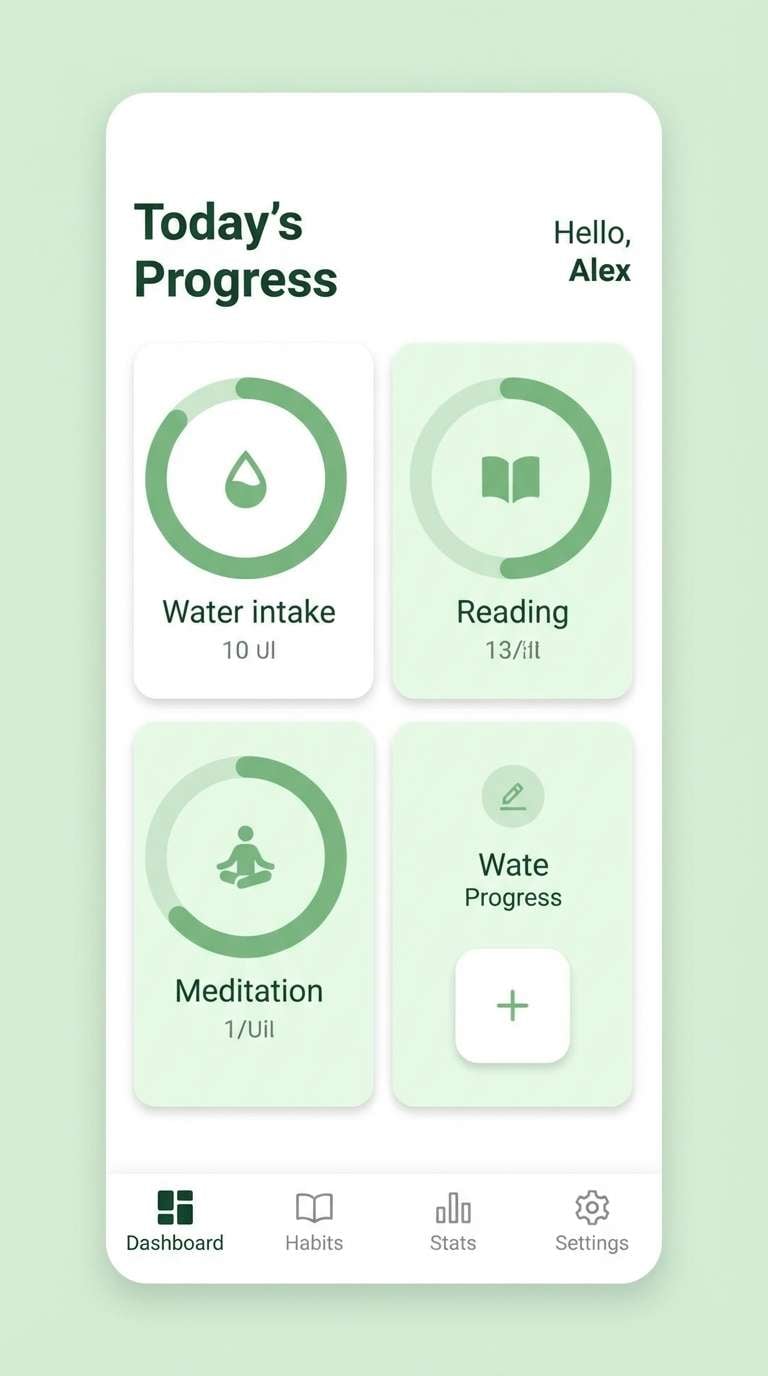
Dewy and calming, it brings to mind fern fronds after a misty hike. As a tea green color scheme, it keeps screens soothing while still providing contrast for states and progress indicators. Use the mid green for active tabs and the deeper green for charts or streak badges. Tip: pair with a neutral UI background and thin icon strokes for a clean, breathable interface.
Image example of dewy fern generated using media.io
10) Herbal Clay
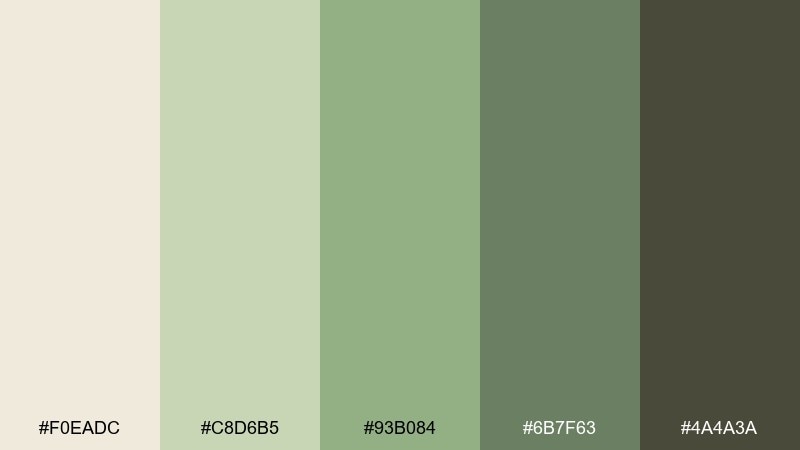
HEX: #f0eadc #c8d6b5 #93b084 #6b7f63 #4a4a3a
Mood: earthy, artisanal, warm
Best for: ceramics shops and handmade product sites
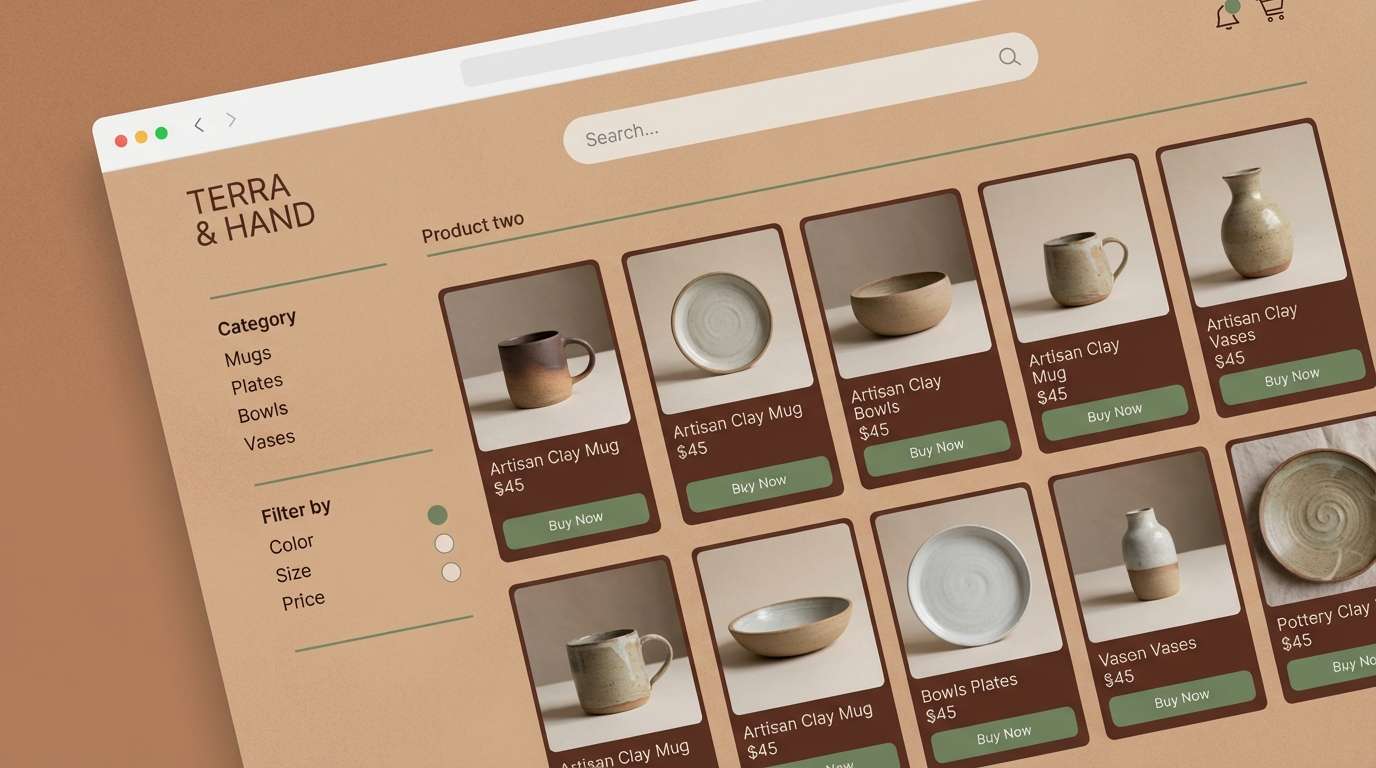
Earthy and artisanal, it feels like dried herbs on sun-warmed clay. The muted greens sit beautifully against the tan base for product grids, price tags, and category chips. Add the soft gray-green as a background panel to keep pages structured but gentle. Tip: combine with natural photography and simple icons to emphasize the handmade story.
Image example of herbal clay generated using media.io
11) Celadon Ink
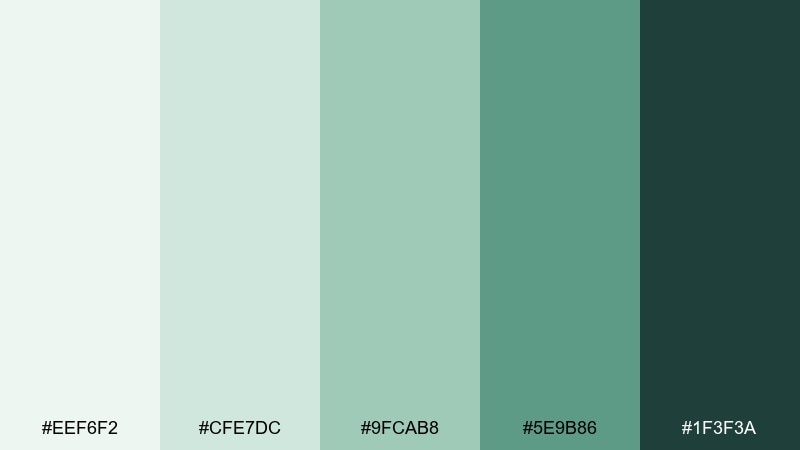
HEX: #eef6f2 #cfe7dc #9fcab8 #5e9b86 #1f3f3a
Mood: polished, modern, serene
Best for: brand guidelines and corporate presentations
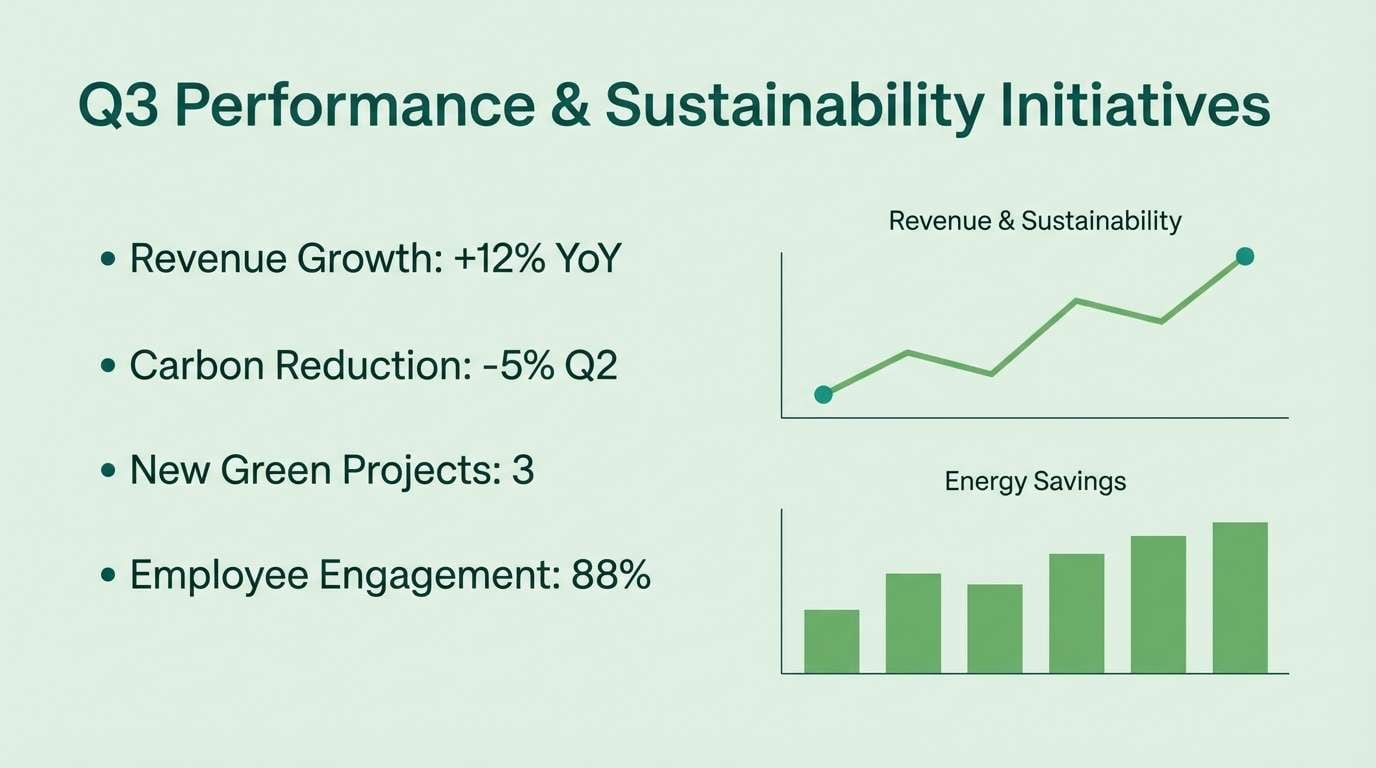
Polished and serene, it suggests celadon glaze with a dark ink edge. The cool tints keep slides crisp, while the deep teal-green is strong enough for titles and key metrics. Use the mid tone for charts and callouts so data looks calm and credible. Tip: keep gradients subtle, or none at all, to preserve the clean ceramic feel.
Image example of celadon ink generated using media.io
12) Tea House UI
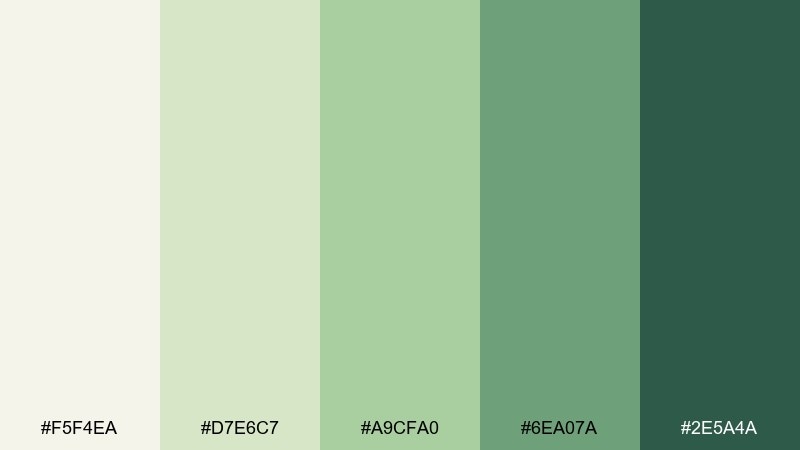
HEX: #f5f4ea #d7e6c7 #a9cfa0 #6ea07a #2e5a4a
Mood: welcoming, tidy, contemporary
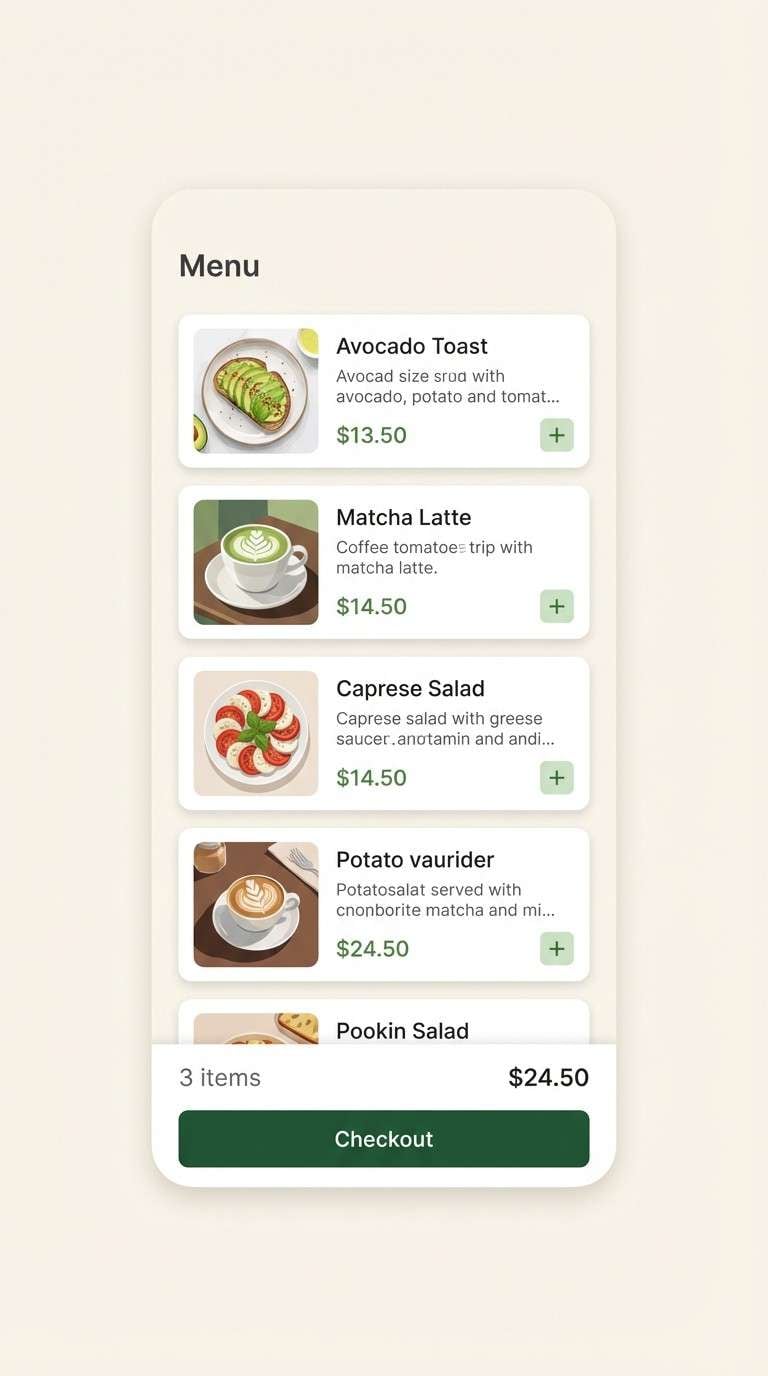
Best for: restaurant ordering UI and reservation pages
Welcoming and tidy, it brings the calm of a tea house counter and handwritten menus. The soft background keeps forms friendly, while the darker greens deliver clear hierarchy for buttons and tabs. It is especially effective for checkout states where clarity matters more than decoration. Tip: use the deepest green only for primary actions, and keep secondary actions in the mid green.
Image example of tea house ui generated using media.io
13) Morning Meadow
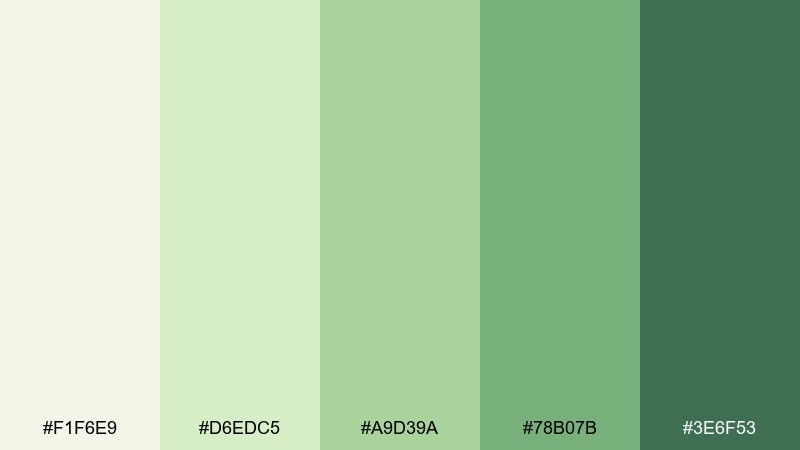
HEX: #f1f6e9 #d6edc5 #a9d39a #78b07b #3e6f53
Mood: optimistic, breezy, natural
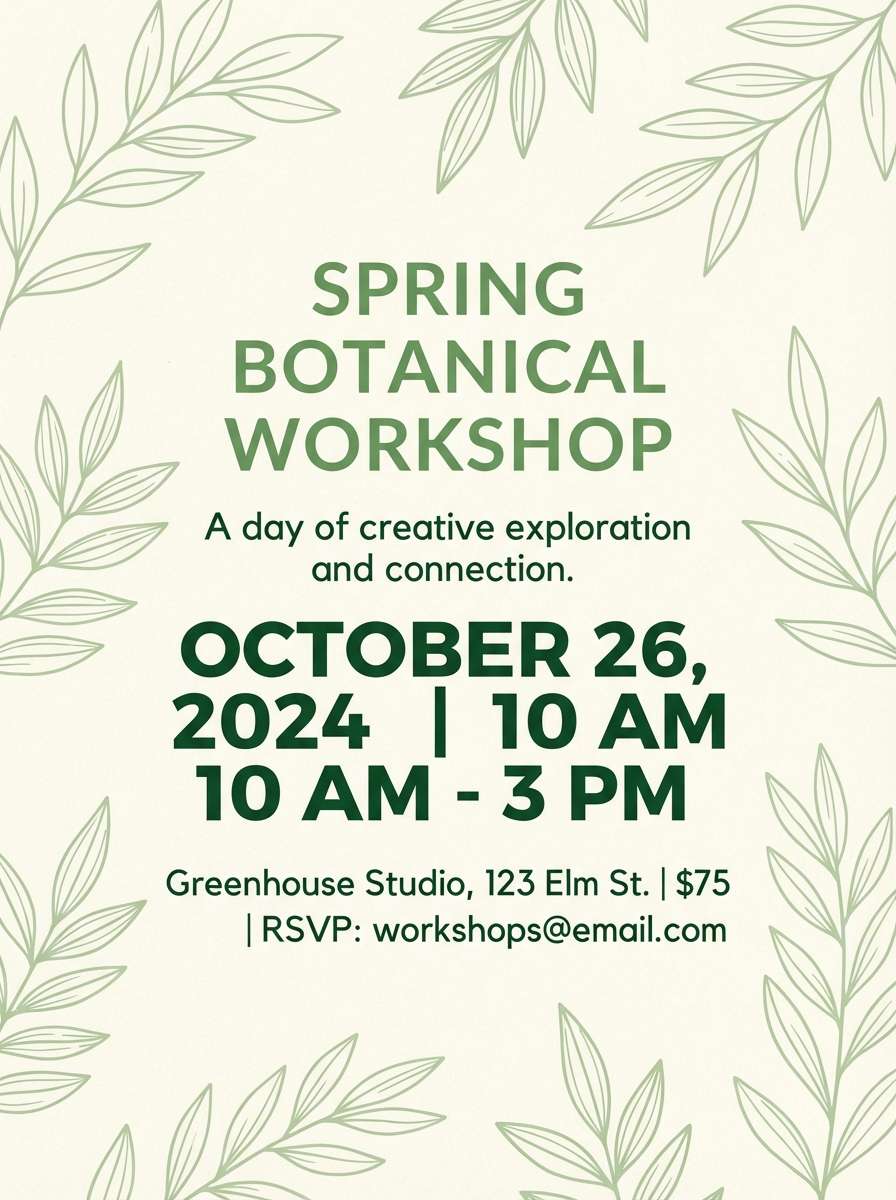
Best for: event invitations and outdoor workshops
Optimistic and breezy, it looks like sunlight sliding across a meadow. Use the palest tint for the background and the mid greens for headings, borders, and icons. The deeper green adds contrast for dates and RSVP details without turning the design heavy. Tip: keep typography airy and increase line spacing to match the open, outdoor vibe.
Image example of morning meadow generated using media.io
14) Avocado Wash
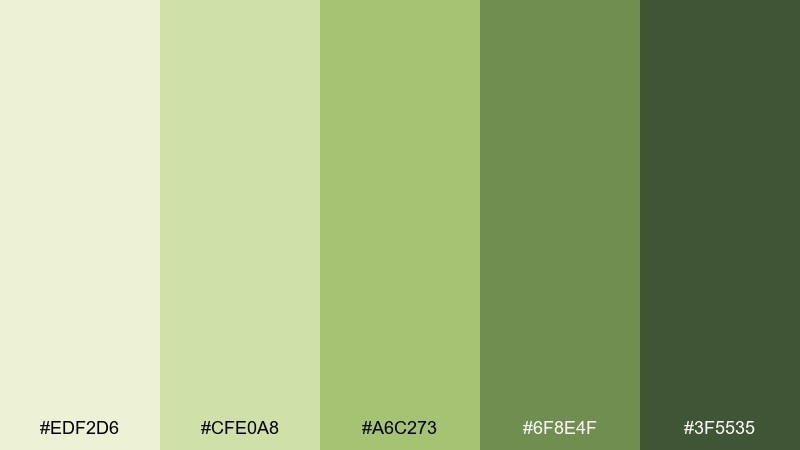
HEX: #edf2d6 #cfe0a8 #a6c273 #6f8e4f #3f5535
Mood: bold, earthy, friendly
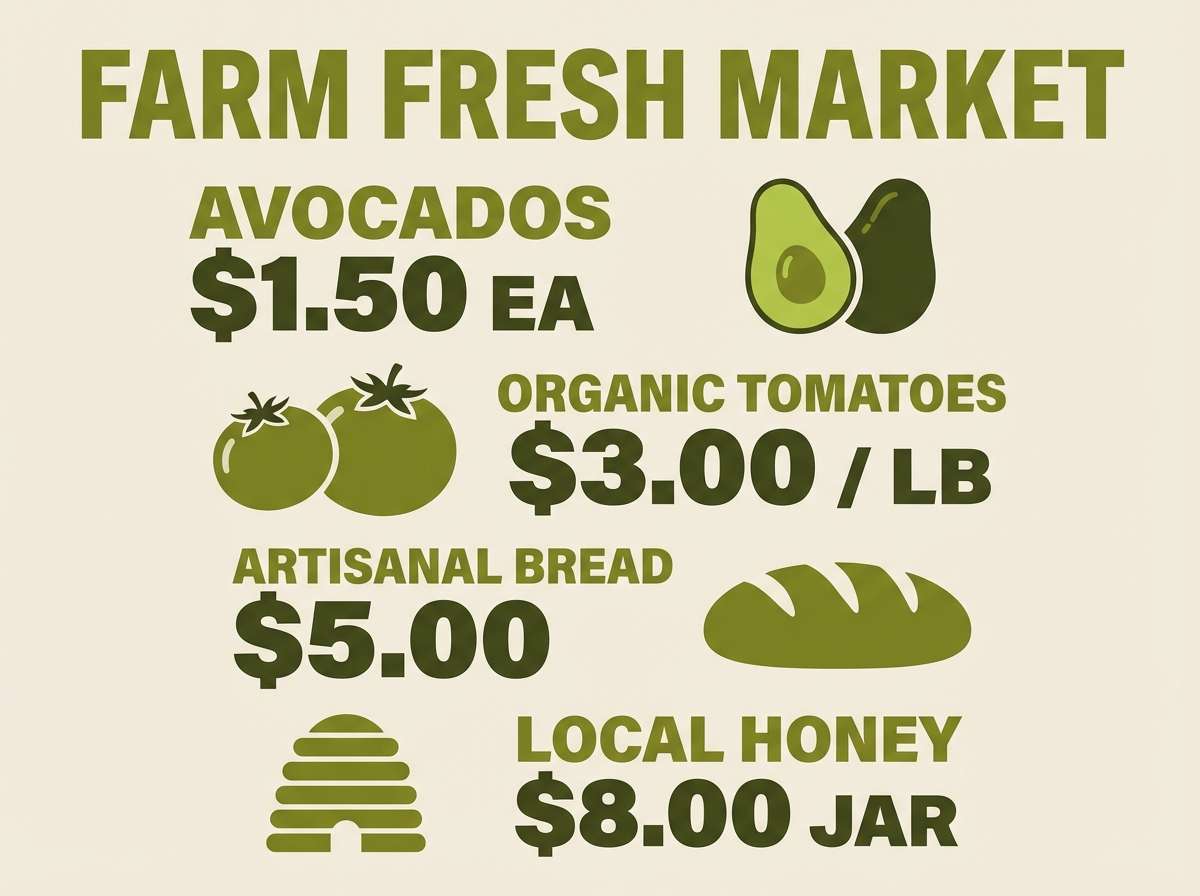
Best for: food packaging and farmers market signage
Bold and earthy, it feels like ripe avocado and fresh-cut herbs. The brighter yellow-green drives attention for pricing and labels, while the darker olive supports legibility for ingredient lists. Use the lightest shade as breathing room so signage stays readable from a distance. Tip: add simple, chunky icons to match the palette's confident, wholesome tone.
Image example of avocado wash generated using media.io
15) Jade Paper
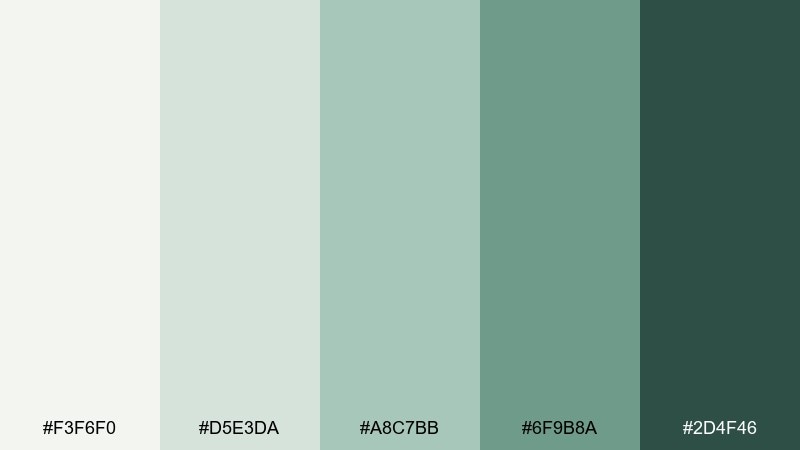
HEX: #f3f6f0 #d5e3da #a8c7bb #6f9b8a #2d4f46
Mood: minimal, crisp, balanced
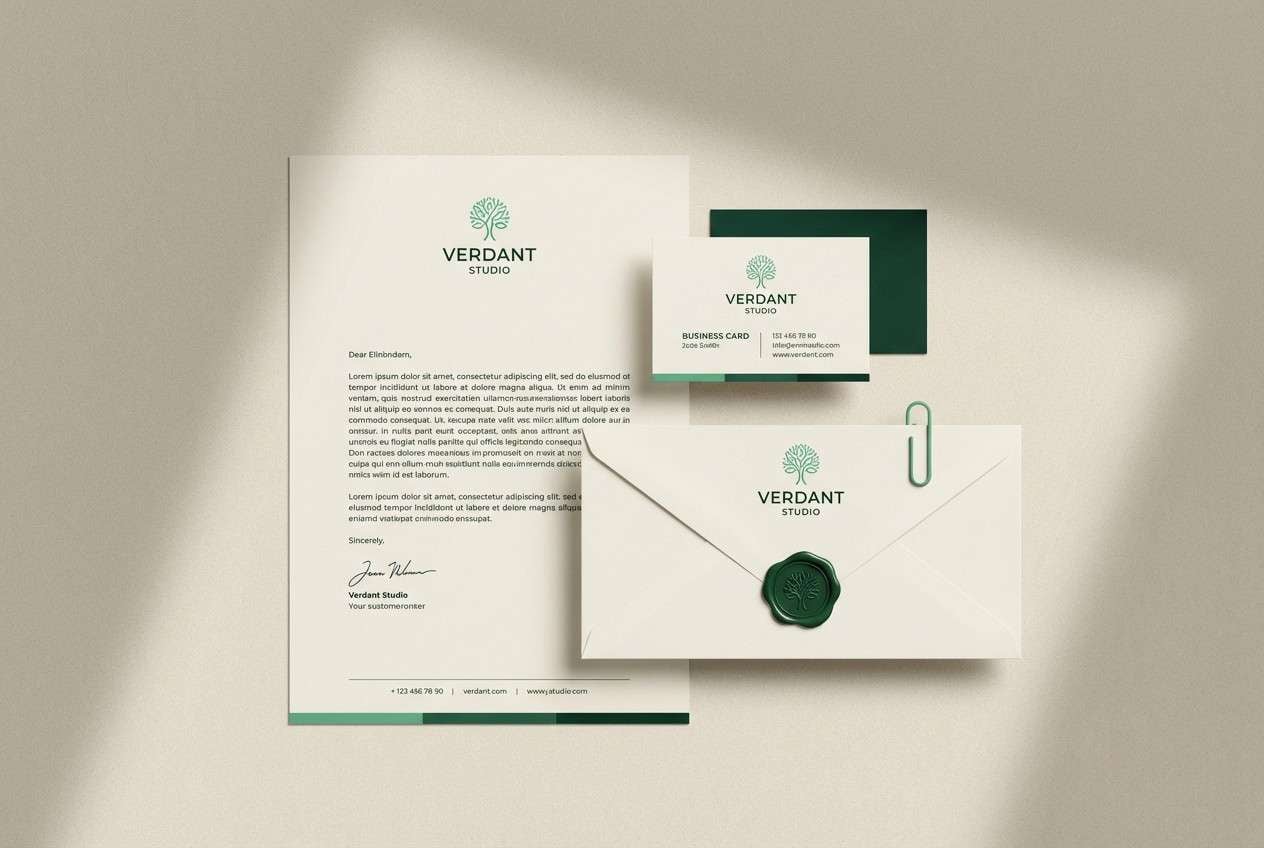
Best for: stationery sets and brand collateral
Minimal and crisp, it resembles jade-tinted paper with a clean print finish. The pale neutrals keep letterheads modern, and the mid tones are ideal for subtle patterns or watermark-style shapes. Use the darkest green for monograms, stamps, and contact lines. Tip: consider a single-color print approach using the deep tone for an elegant, cost-friendly set.
Image example of jade paper generated using media.io
16) Spring Kintsugi
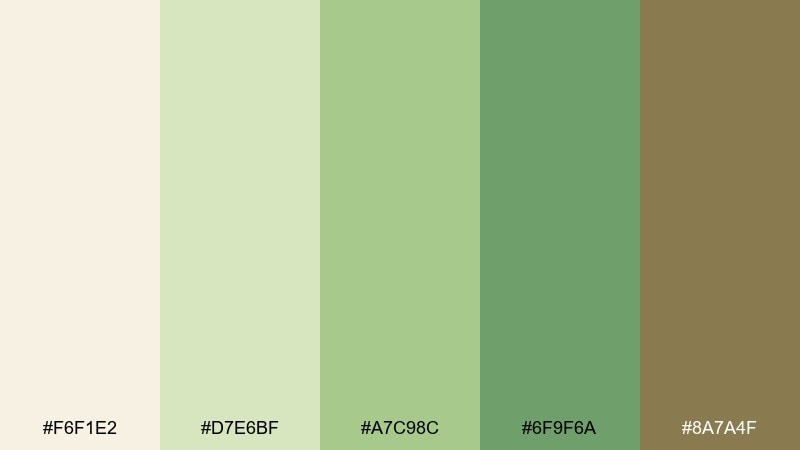
HEX: #f6f1e2 #d7e6bf #a7c98c #6f9f6a #8a7a4f
Mood: hopeful, handmade, sunny
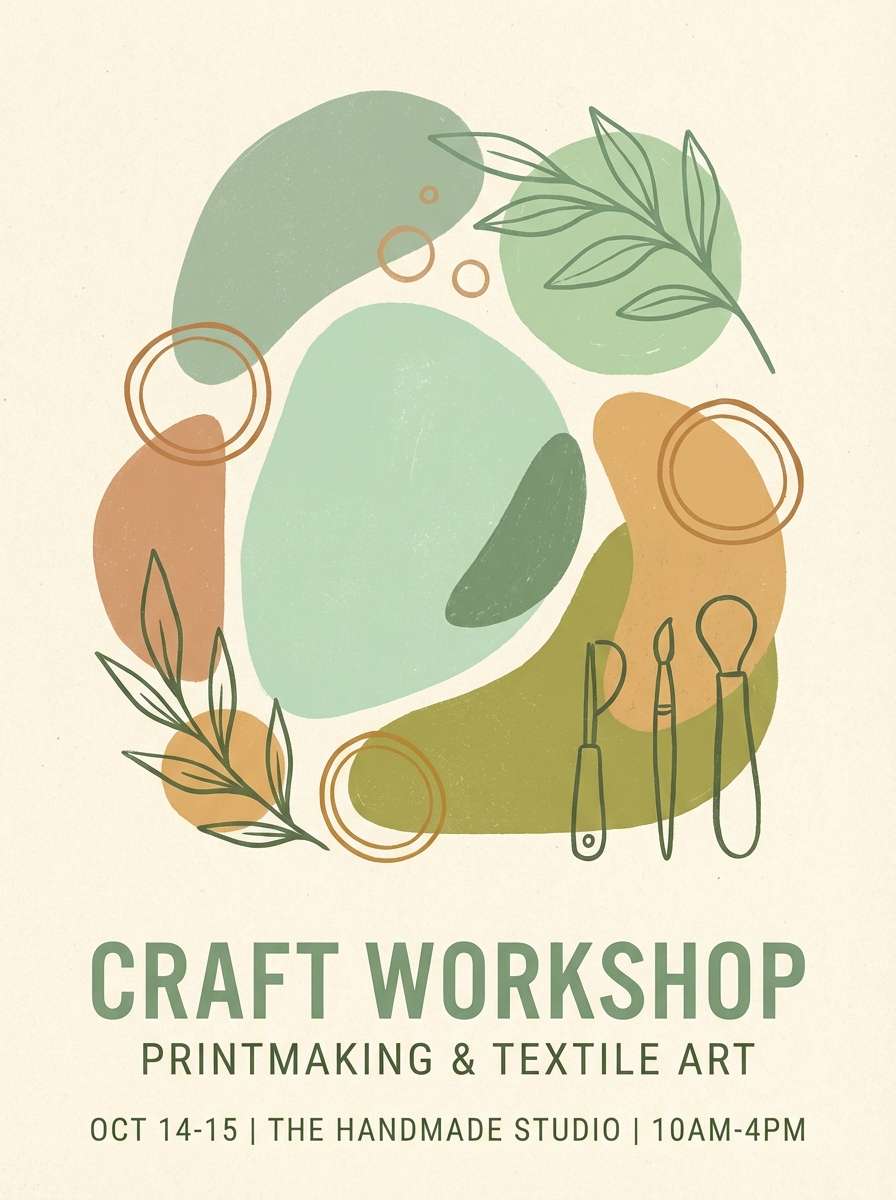
Best for: craft workshop branding and posters
Hopeful and handmade, it brings together spring greens and a warm repaired-gold feeling. The tan accent adds a friendly, human touch that stops the greens from feeling too cool. Use the mid green for main blocks and the warm accent for highlights like ticket tiers or workshop levels. Tip: mix in subtle paper grain and imperfect shapes to reinforce the handcrafted story.
Image example of spring kintsugi generated using media.io
17) Zen Terrace
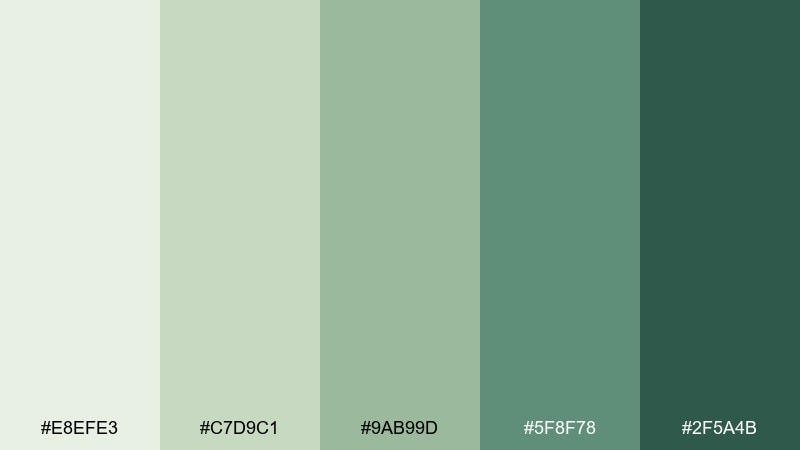
HEX: #e8efe3 #c7d9c1 #9ab99d #5f8f78 #2f5a4b
Mood: meditative, structured, calm
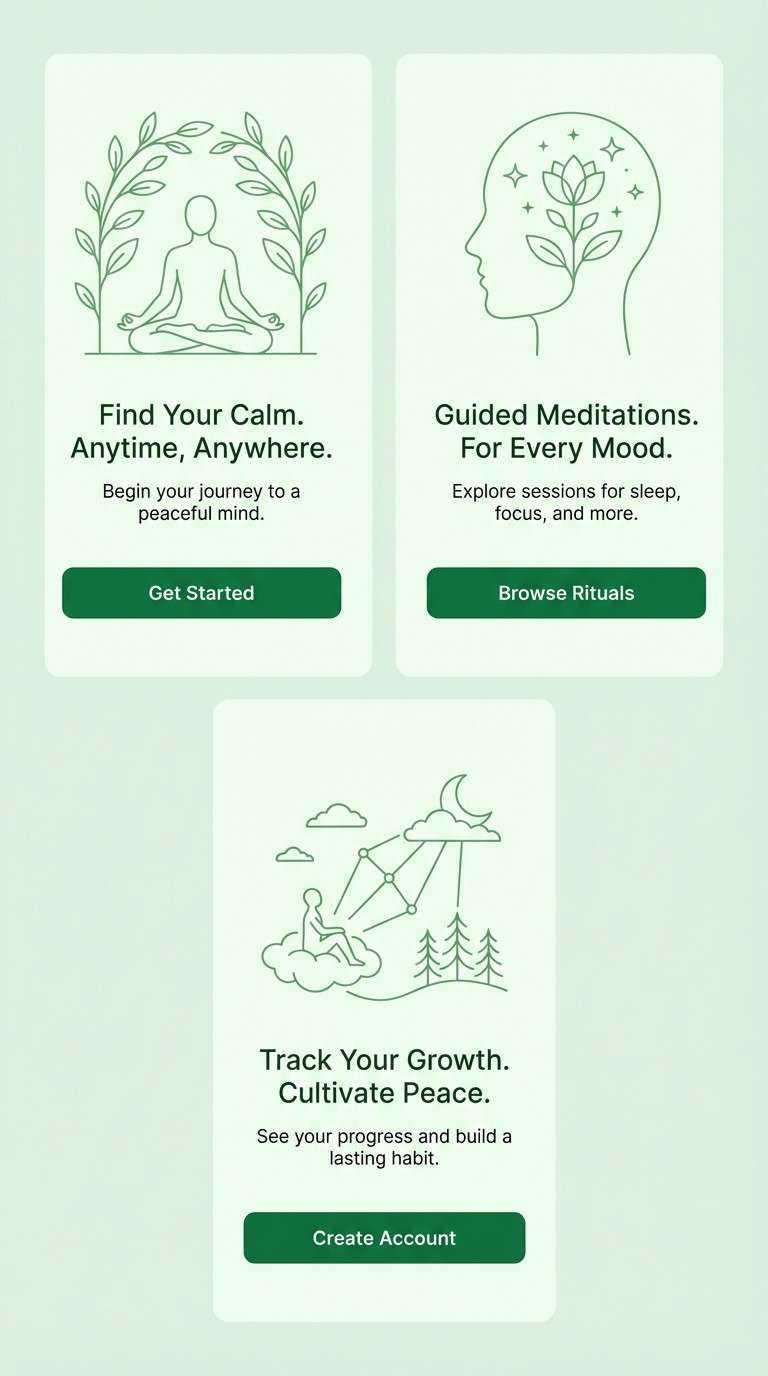
Best for: meditation apps and onboarding screens
Meditative and structured, it feels like a quiet terrace with clipped greenery. These tea green color combinations make onboarding screens look peaceful while still guiding the eye through steps. Use the lightest tones for backgrounds and the darker tones for progress markers and primary buttons. Tip: keep illustrations monochrome within the palette so the experience stays focused.
Image example of zen terrace generated using media.io
18) Vintage Apothecary
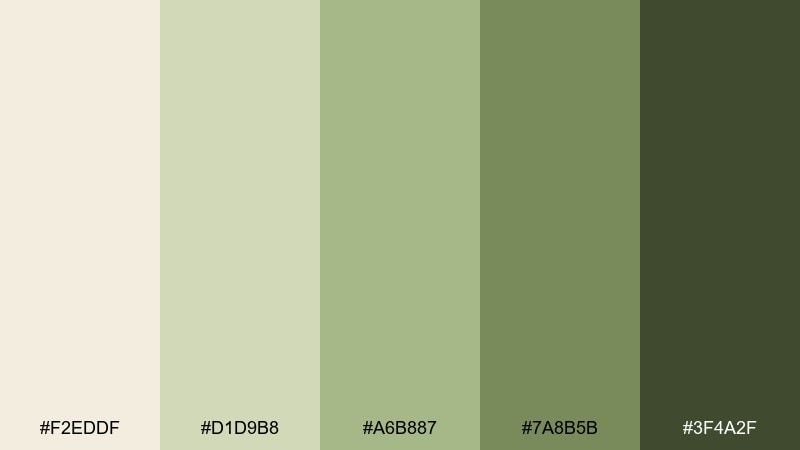
HEX: #f2eddf #d1d9b8 #a6b887 #7a8b5b #3f4a2f
Mood: vintage, botanical, trustworthy
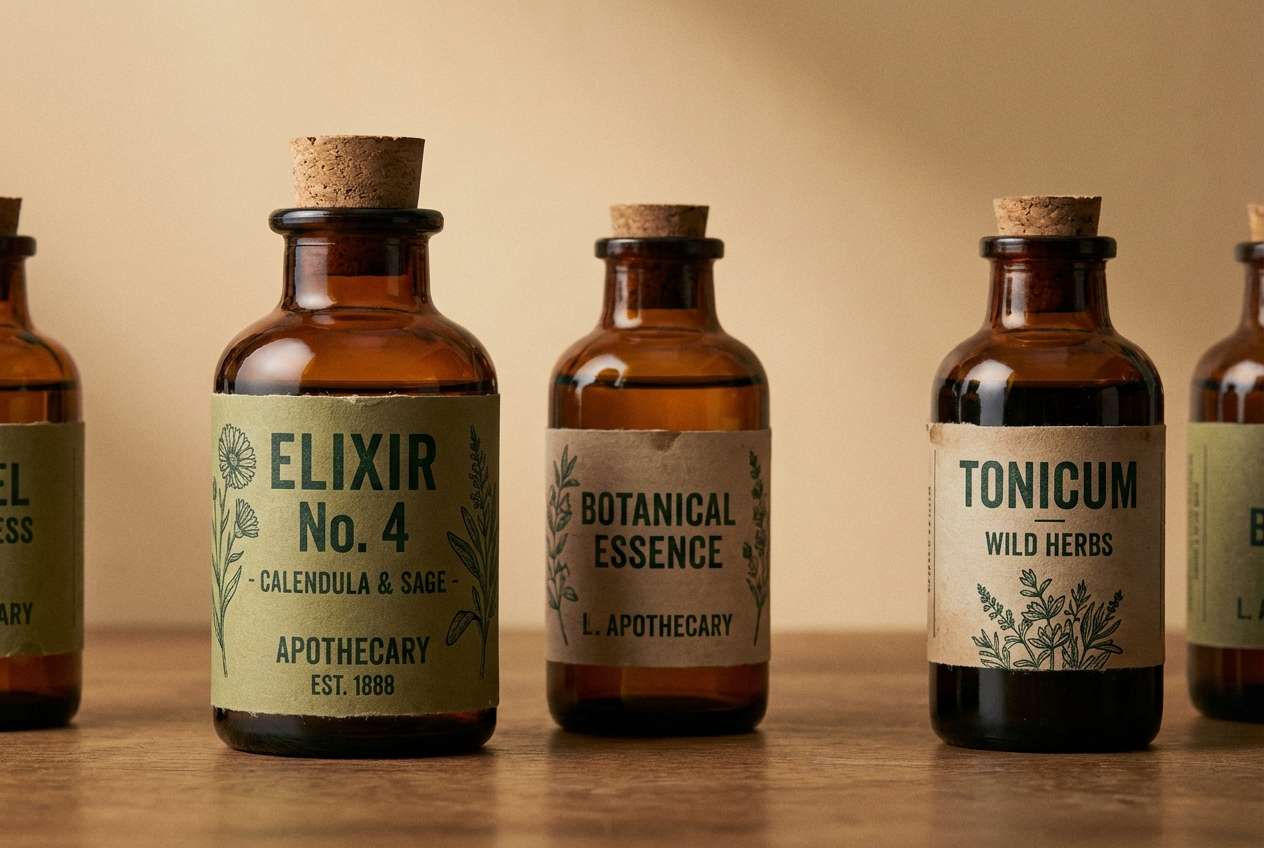
Best for: herbal remedy labels and bottle packaging
Vintage and botanical, it recalls apothecary drawers and dried leaves. The muted olive steps read well on paper labels, especially with classic serif type. For a tea green color combination that feels old-world, keep the background warm and let the darkest shade carry ingredient names. Tip: add fine line borders and small emblems to emphasize heritage without clutter.
Image example of vintage apothecary generated using media.io
19) Soft Eucalyptus
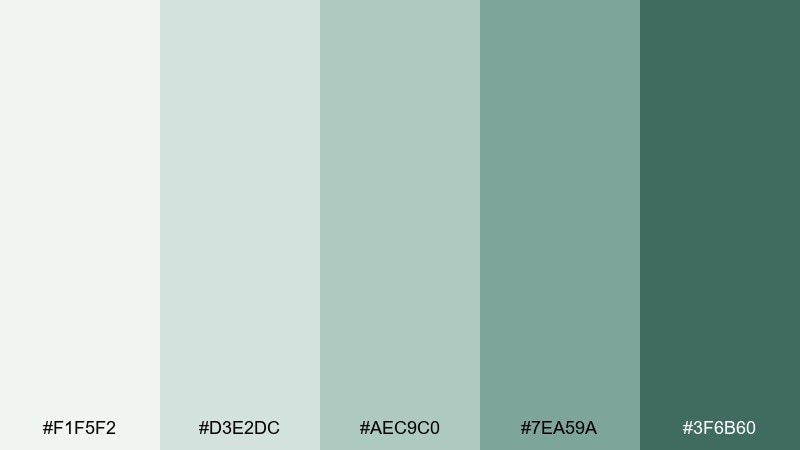
HEX: #f1f5f2 #d3e2dc #aec9c0 #7ea59a #3f6b60
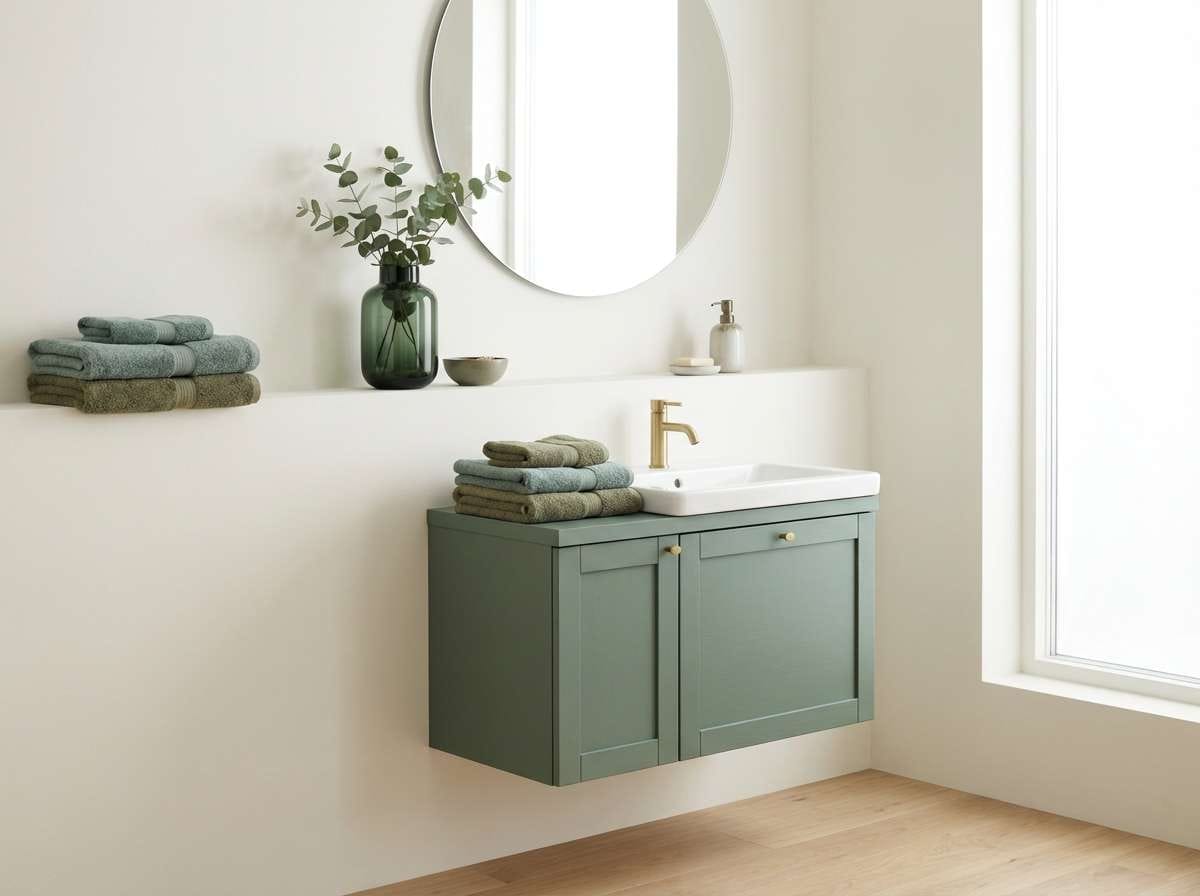
Mood: cool, gentle, spa-clean
Best for: bathroom interiors and paint planning
Cool and gentle, it looks like eucalyptus leaves against pale tile. Use the lightest shades for walls and large surfaces, then bring in the mid tones through towels, cabinetry, or accent paint. The deeper green adds a confident finishing touch for hardware, frames, or small decor. Tip: choose matte finishes so the palette stays soft and calming under bright light.
Image example of soft eucalyptus generated using media.io
20) Honeyed Sencha
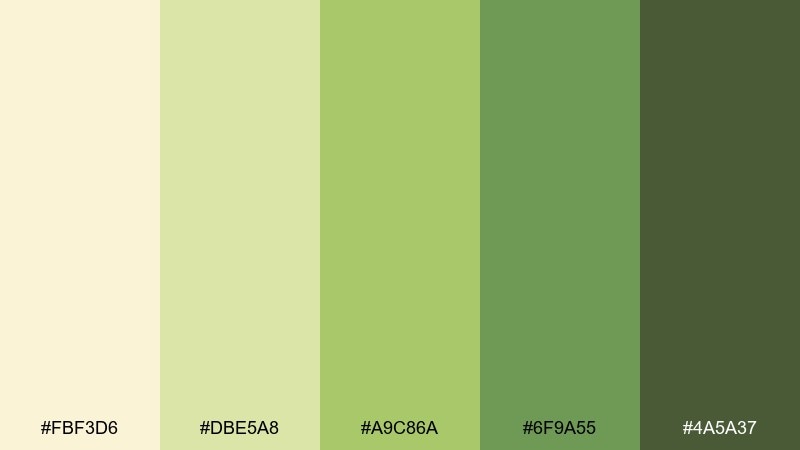
HEX: #fbf3d6 #dbe5a8 #a9c86a #6f9a55 #4a5a37
Mood: sunny, inviting, flavorful
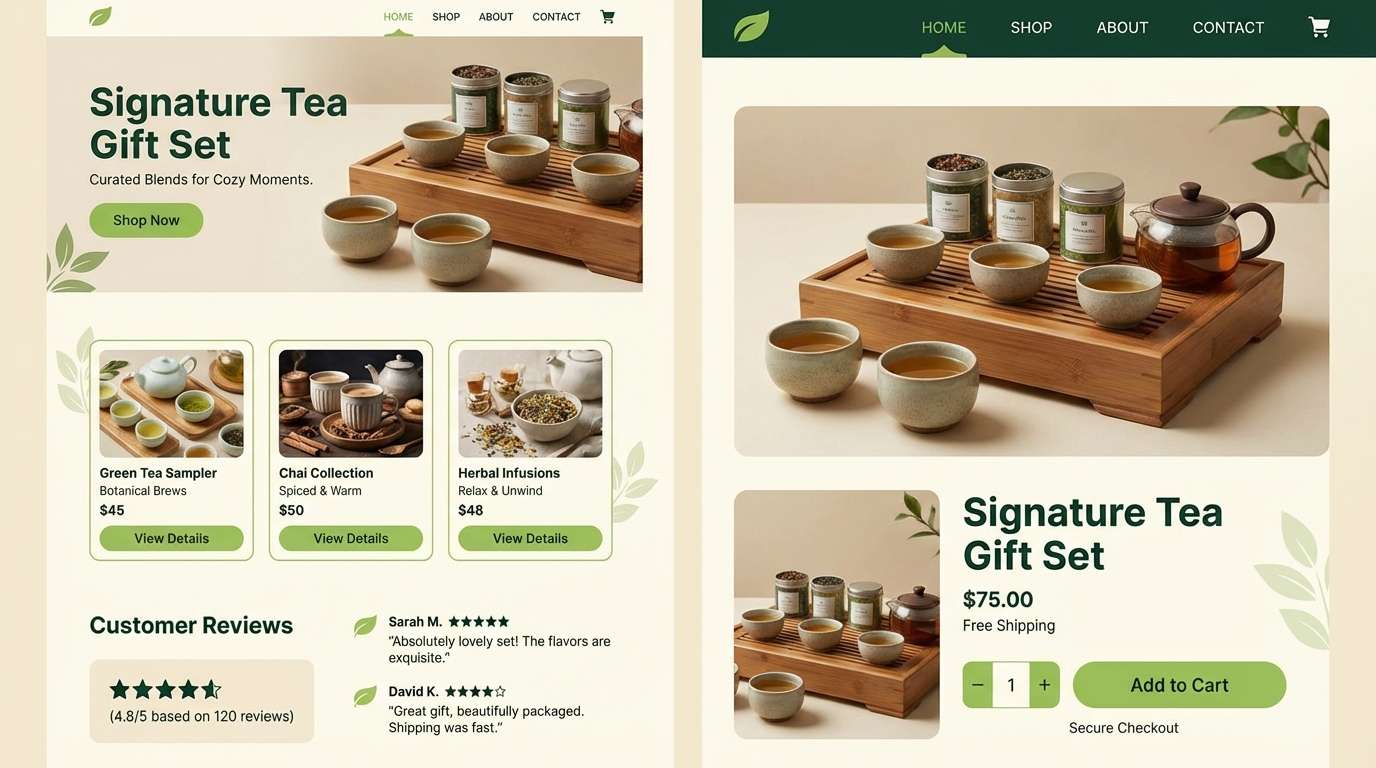
Best for: tea product pages and gift sets
Sunny and inviting, it evokes honeyed sencha with a warm glow. The golden cream lifts hero sections, while the leaf greens help product cards and badges feel fresh. For a tea green color palette that sells flavor, let the warm tint lead and use the deeper greens for trust-building details like reviews and ingredients. Tip: keep shadows soft and warm so the greens stay appetizing, not cold.
Image example of honeyed sencha generated using media.io
21) Stonewash Green
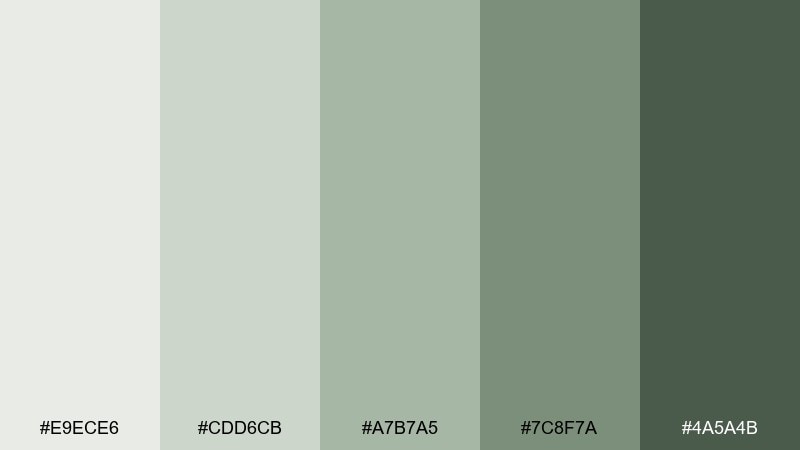
HEX: #e9ece6 #cdd6cb #a7b7a5 #7c8f7a #4a5a4b
Mood: muted, modern, understated
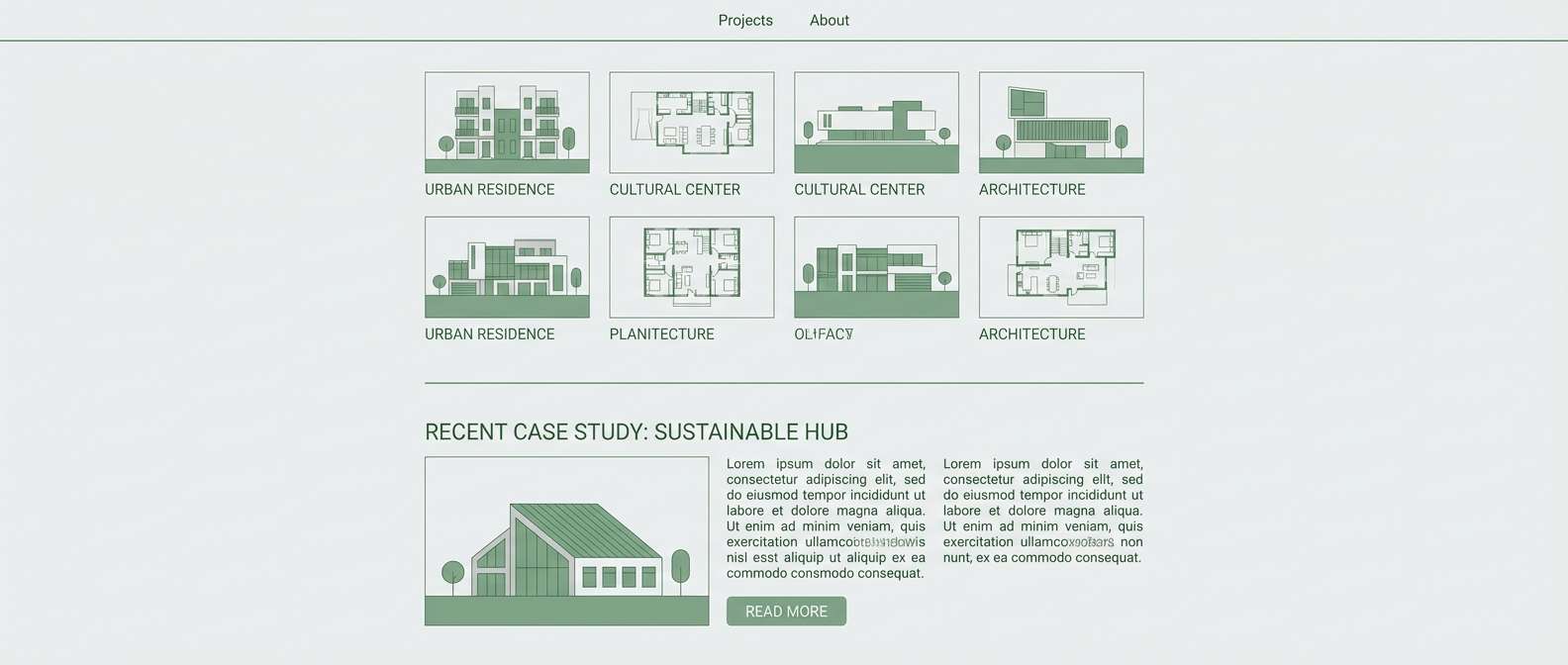
Best for: architectural portfolios and case studies
Muted and modern, it feels like stonewashed fabric and shaded concrete. These tones keep portfolio pages understated, letting photography and diagrams do the talking. Use the mid gray-green for captions and dividers, and the darkest for navigation and project titles. Tip: stick to one accent shade per page to maintain a calm, architectural rhythm.
Image example of stonewash green generated using media.io
22) Lemon Verbena Notes
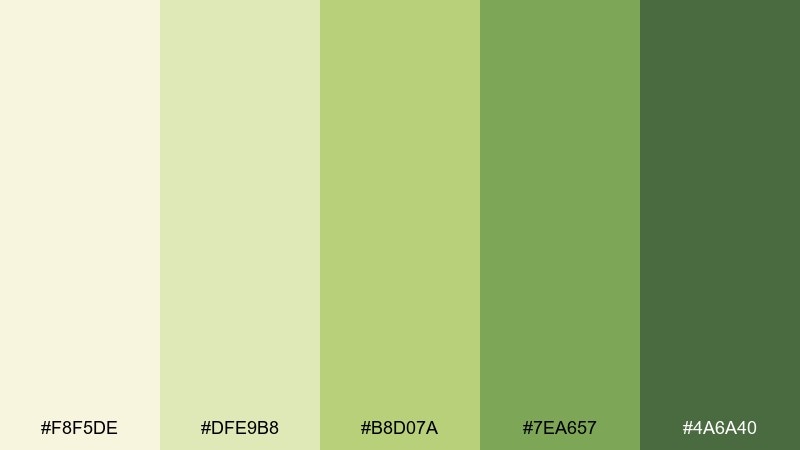
HEX: #f8f5de #dfe9b8 #b8d07a #7ea657 #4a6a40
Mood: cheerful, light, organized
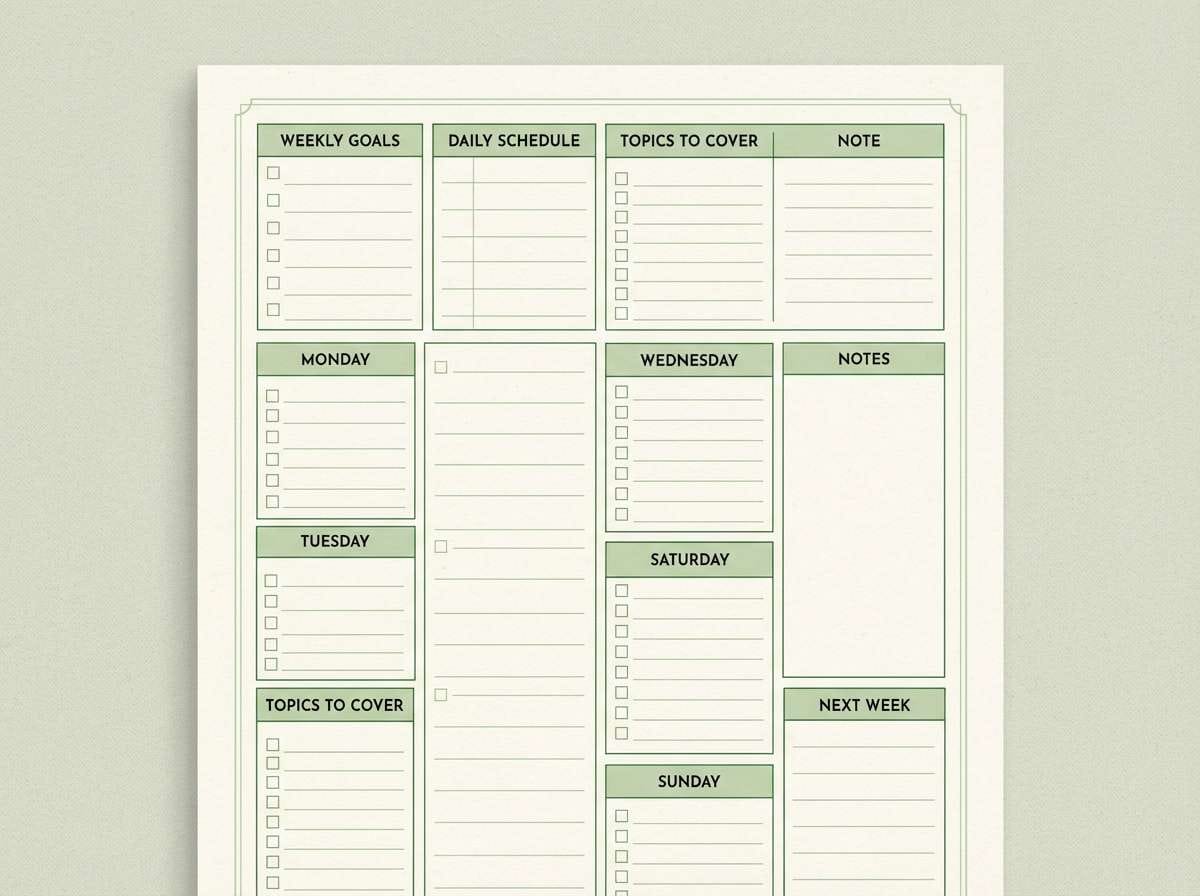
Best for: study planners and printable worksheets
Cheerful and organized, it resembles lemon verbena leaves over creamy paper. The high-key background makes it perfect for printables where legibility is everything. Use the medium greens for headers and checkboxes, and keep the darkest for small text and page numbers. Tip: avoid heavy fills and rely on lines and highlights so printers handle it cleanly.
Image example of lemon verbena notes generated using media.io
What Colors Go Well with Tea Green?
Tea green pairs naturally with warm neutrals like cream, oat, sand, and clay. These soften the palette and keep it feeling cozy—ideal for packaging, hospitality, and interiors.
For sharper contrast, use deep inky greens, charcoal, or near-black for typography and navigation. If you want a brighter accent, try citrus yellow, muted gold, or a dusty terracotta to bring energy without breaking the calm.
In digital design, consider pairing tea green with cool off-whites and subtle gray-greens for backgrounds, then reserve one deeper shade for buttons and key states to maintain clarity.
How to Use a Tea Green Color Palette in Real Designs
In branding, let a light tea green act as the “air” color (backgrounds, packaging base), then use a mid green for patterns, icons, or secondary labels. Anchor the system with a deep green for logos and small text to signal quality.
In UI, treat tea green as a comfort tone: backgrounds, cards, and gentle section blocks. For accessibility, keep your primary text in a deep green/charcoal and test contrast on buttons and form fields.
In interiors, use the palest tones on large surfaces (walls, tile, linen) and bring darker greens in through cabinetry, frames, hardware, or plants. Matte finishes usually make these muted greens look more premium and calm.
Create Tea Green Palette Visuals with AI
If you have HEX codes but need real-looking mockups, AI can help you preview how tea green tones behave on packaging, UI screens, posters, and room scenes before you commit to a final design.
Start with one palette name and a clear subject (e.g., “skincare bottle label,” “habit tracker dashboard,” or “bathroom vignette”), then describe lighting and materials so the greens stay consistent and believable.
When you like the direction, generate a few variations using the same prompt and swap only one element (background warmth, accent color, or contrast level) to quickly refine the look.
Tea Green Color Palette FAQs
-
What is a tea green color palette?
A tea green color palette is a set of soft, nature-inspired greens (often matcha, sage, celadon, and leafy tones) usually paired with warm creams or muted neutrals for a calm, restorative look. -
Is tea green the same as sage or matcha green?
They’re related but not identical. “Tea green” is a broad family; matcha skews brighter and more yellow-green, while sage is grayer and more muted. Many tea green palettes blend both to create balanced contrast. -
What colors pair best with tea green for branding?
Cream, warm beige, clay/tan, charcoal, and deep forest green are reliable pairings. For a modern accent, add muted gold or a citrus-tinted yellow sparingly. -
How do I keep tea green from looking too pastel?
Add one grounding shade (deep green, near-black green, or charcoal) and use it for logos, headings, or UI buttons. Texture (paper grain, matte finishes) also helps the palette feel richer. -
Are tea green palettes good for UI design?
Yes—tea green tones are soothing for dashboards and onboarding flows. Use light tints for backgrounds, mid greens for active states, and a deep tone for primary actions and readable text. -
How can I generate tea green palette mockups quickly?
Use an AI text-to-image tool and describe the subject (packaging/UI/interior), lighting, and the tea green mood you want. Keep the prompt consistent and iterate with small changes to dial in contrast and warmth. -
What’s a safe way to use bright yellow-green accents with tea green?
Limit bright accents to small UI elements (badges, highlights, icons) or a single packaging callout. Keeping it around 10–15% of the layout helps it pop without overpowering the calm base greens.
Next: Underwater Color Palette


