

Coral red sits right in the sweet spot between red and orange, so it reads energetic without feeling overly aggressive. That makes a coral red color palette easy to use across branding, UI, and print when you want warmth with a modern edge.
Below are curated coral red color combinations with HEX codes, mood notes, and practical usage tips—plus AI prompts you can reuse to generate matching visuals.
In this article
- Why Coral Red Palettes Work So Well
-
- sunlit reef
- desert coral
- retro soda pop
- blush and brick
- coral noir
- seaside aperitif
- peachy bloom
- tropical market
- modern editorial
- minimal ui warmth
- wedding rosewater
- artisan clay
- sunset neon
- soft scandinavian
- botanical terracotta
- luxe spa
- kids playroom
- film poster heat
- cozy cabin
- streetwear punch
- gallery opening
- What Colors Go Well with Coral Red?
- How to Use a Coral Red Color Palette in Real Designs
- Create Coral Red Palette Visuals with AI
Why Coral Red Palettes Work So Well
Coral red feels human and optimistic—warm like red, but lighter and more inviting thanks to its orange-pink undertone. That makes it great for designs that need energy without looking harsh or “alarm-like.”
It also pairs easily with both cool and warm accents. Teals and blues create crisp contrast for UI and hero sections, while creams, sands, and charcoals help coral look premium in print and packaging.
Finally, coral red scales well from bold headlines to tiny highlights. Used sparingly, it becomes a reliable attention cue for buttons, prices, tags, and key states.
20+ Coral Red Color Palette Ideas (with HEX Codes)
1) Sunlit Reef
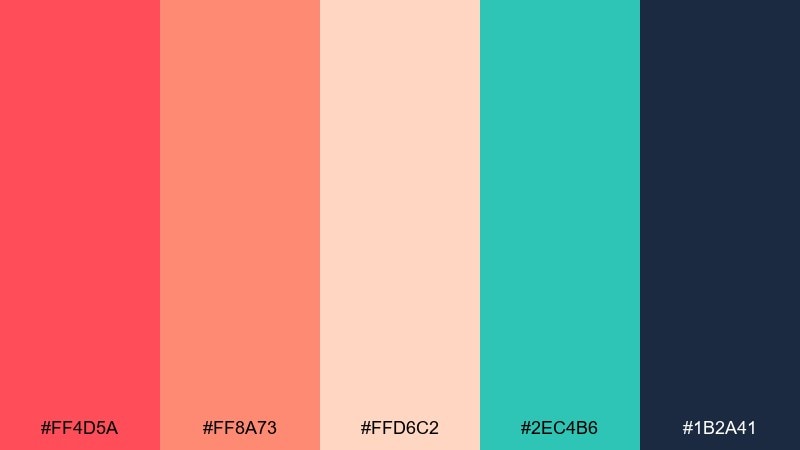
HEX: #ff4d5a #ff8a73 #ffd6c2 #2ec4b6 #1b2a41
Mood: bright, coastal, lively
Best for: brand hero banners and summer campaigns
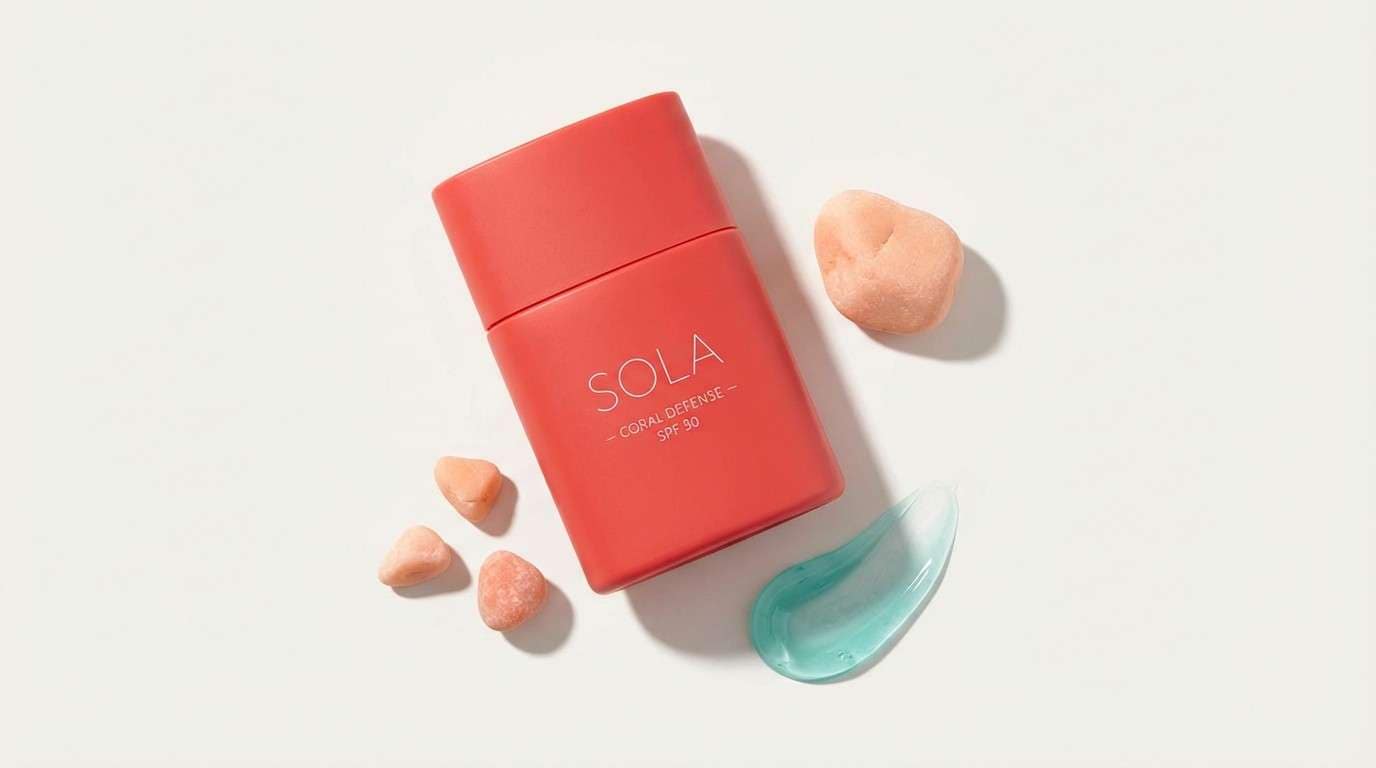
Bright and coastal, this mix feels like sun on water and coral reefs at midday. Use the coral and peach as primary blocks, then lean on teal for fresh contrast. Navy keeps headlines crisp and prevents the warm tones from feeling too sugary. Tip: reserve the darkest shade for type and icons to keep accessibility strong.
Image example of sunlit reef generated using media.io
Media.io is an online AI studio for creating and editing video, image, and audio in your browser.


2) Desert Coral
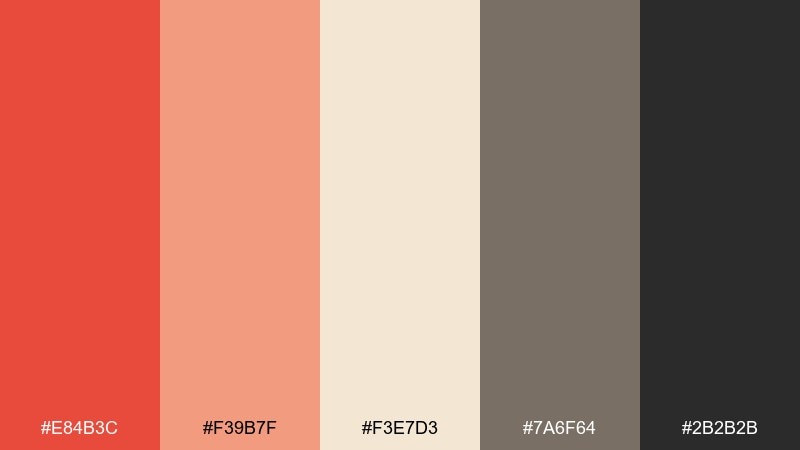
HEX: #e84b3c #f39b7f #f3e7d3 #7a6f64 #2b2b2b
Mood: earthy, warm, grounded
Best for: packaging for artisan goods and coffee
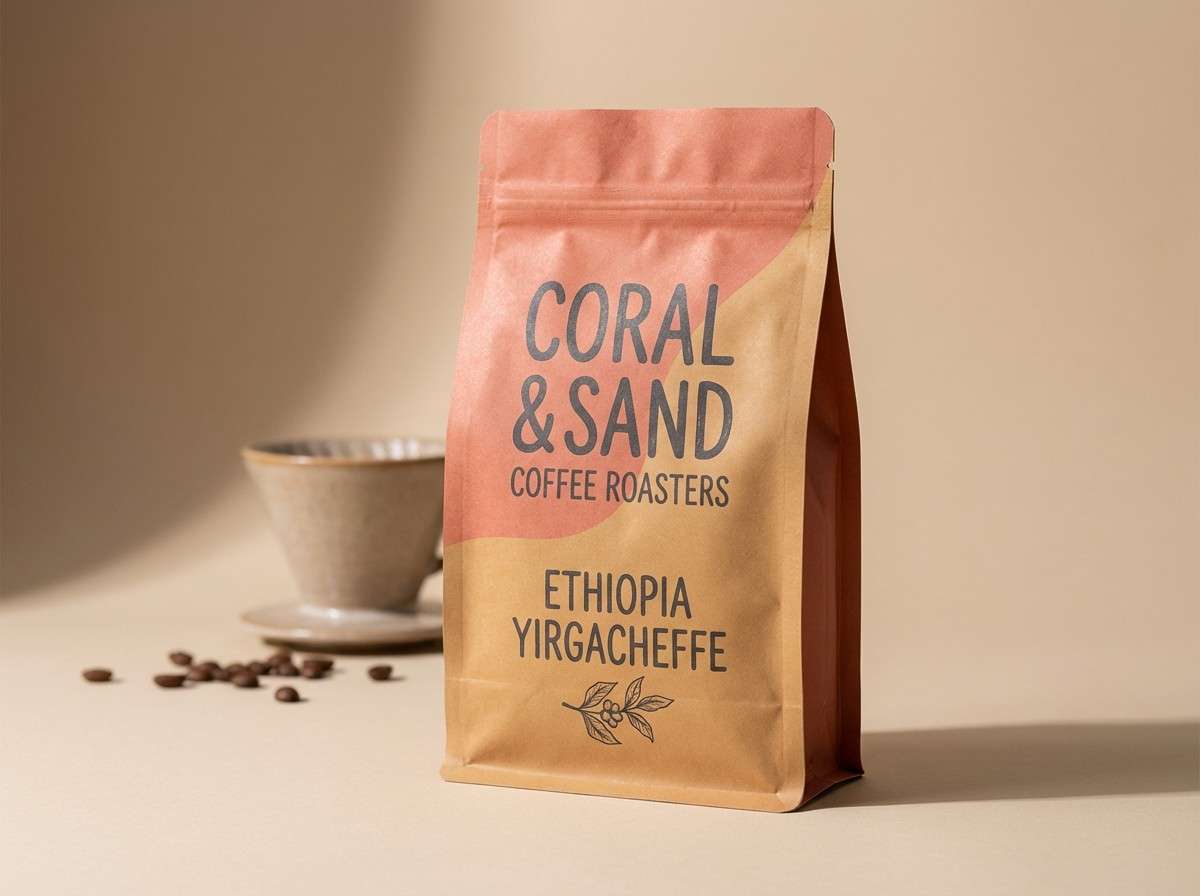
Earthy and sunbaked, it evokes canyon walls, clay pottery, and warm dusk light. The coral red color scheme works best when paired with sandy neutrals and a deep charcoal for labels. Keep the coral as a focal band or stamp rather than flooding the whole surface. Tip: add subtle paper texture in print to make the tones feel even richer.
Image example of desert coral generated using media.io
3) Retro Soda Pop
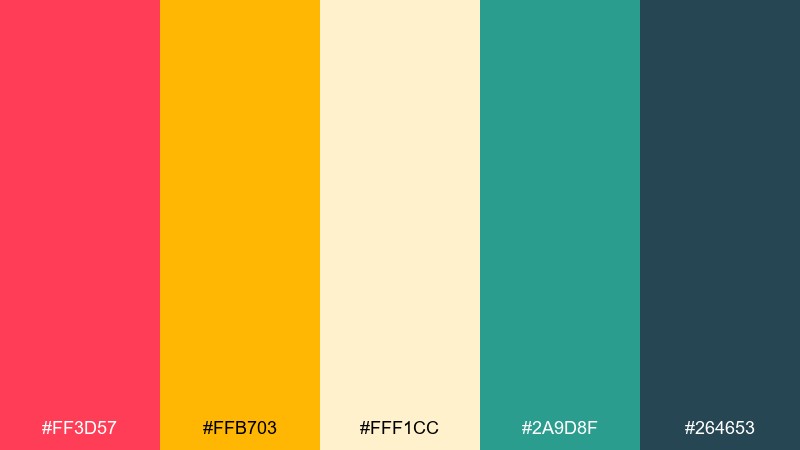
HEX: #ff3d57 #ffb703 #fff1cc #2a9d8f #264653
Mood: playful, retro, energetic
Best for: poster graphics and social ads
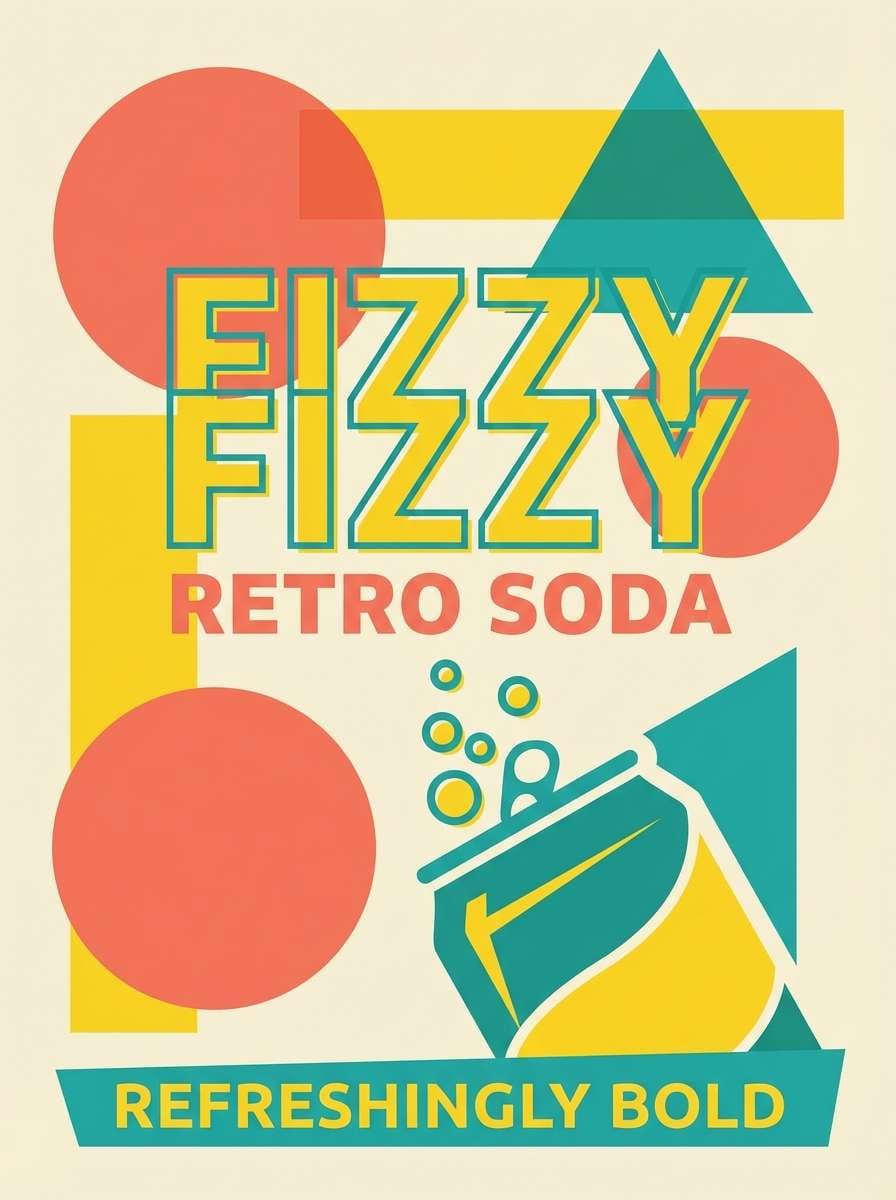
Playful and retro, it brings to mind vintage diner signs and fizzy summer drinks. Pair the punchy coral with sunny yellow for big shapes, then balance with teal for a classic mid-century twist. The deep blue-green anchors layouts so the brights feel intentional, not loud. Tip: limit outlines to the darkest tone for a clean, screen-print vibe.
Image example of retro soda pop generated using media.io
4) Blush and Brick
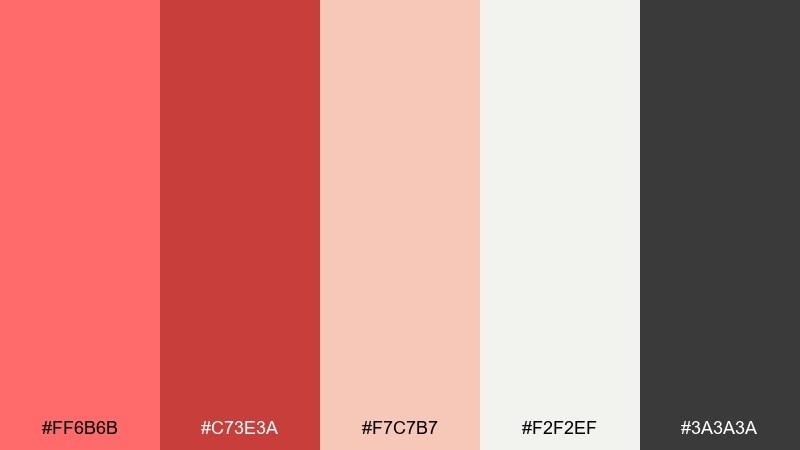
HEX: #ff6b6b #c73e3a #f7c7b7 #f2f2ef #3a3a3a
Mood: romantic, modern, cozy
Best for: wedding invitations and RSVP cards
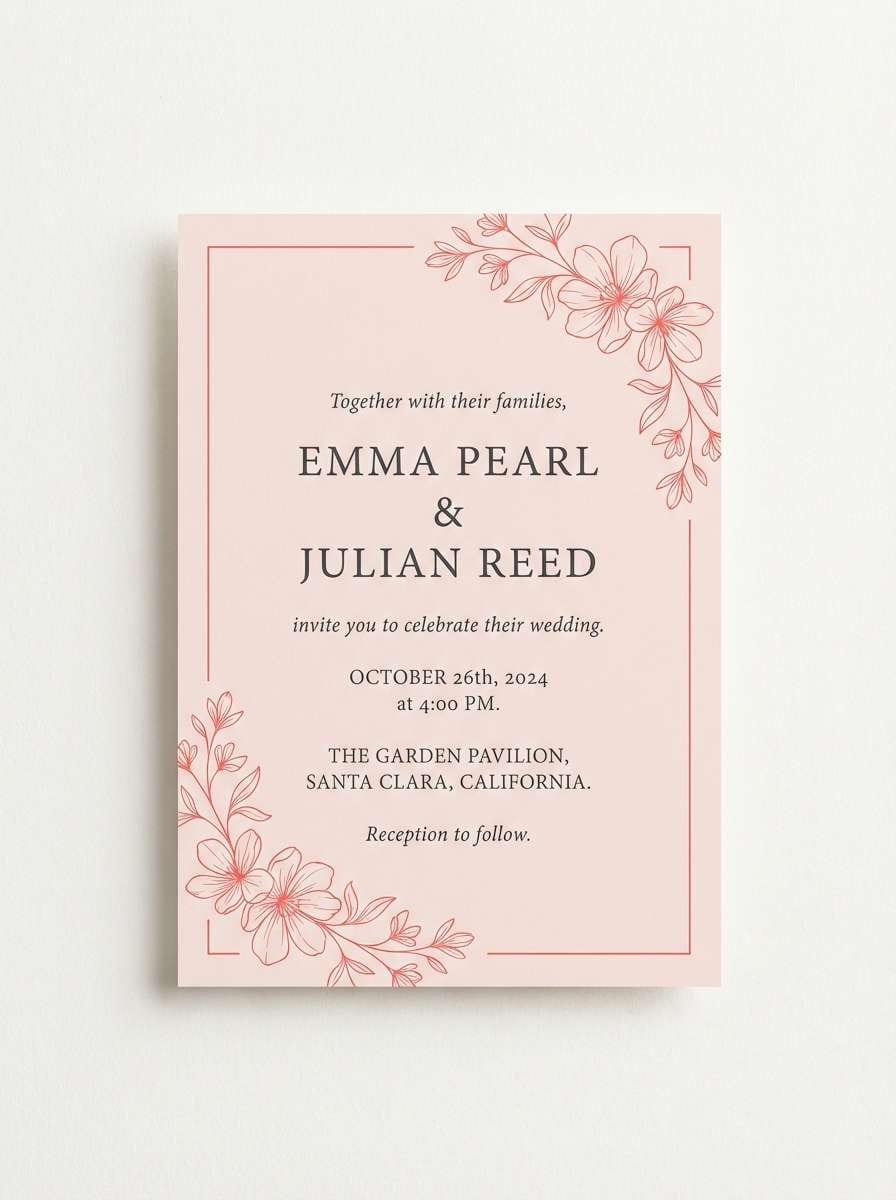
Romantic and modern, it feels like pressed roses against warm brick. Let blush set the base, then use brick and charcoal for typography and details. The off-white keeps plenty of breathing room and helps the reds stay soft rather than harsh. Tip: foil or emboss small brick elements to add premium contrast without extra colors.
Image example of blush and brick generated using media.io
5) Coral Noir
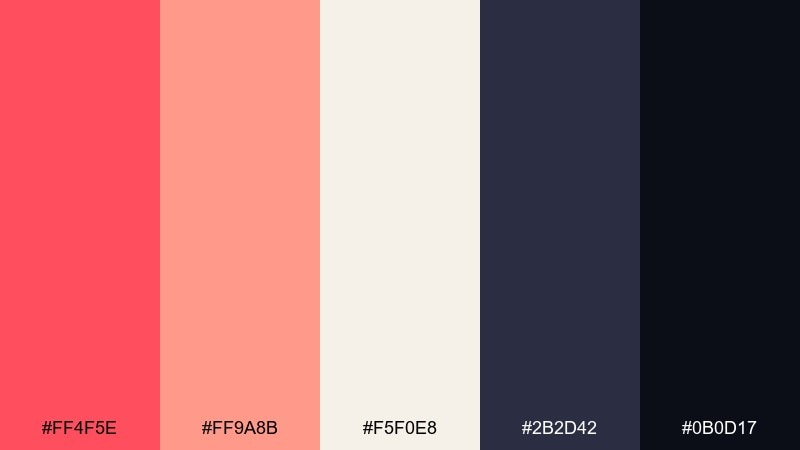
HEX: #ff4f5e #ff9a8b #f5f0e8 #2b2d42 #0b0d17
Mood: dramatic, sleek, editorial
Best for: beauty branding and luxury landing pages
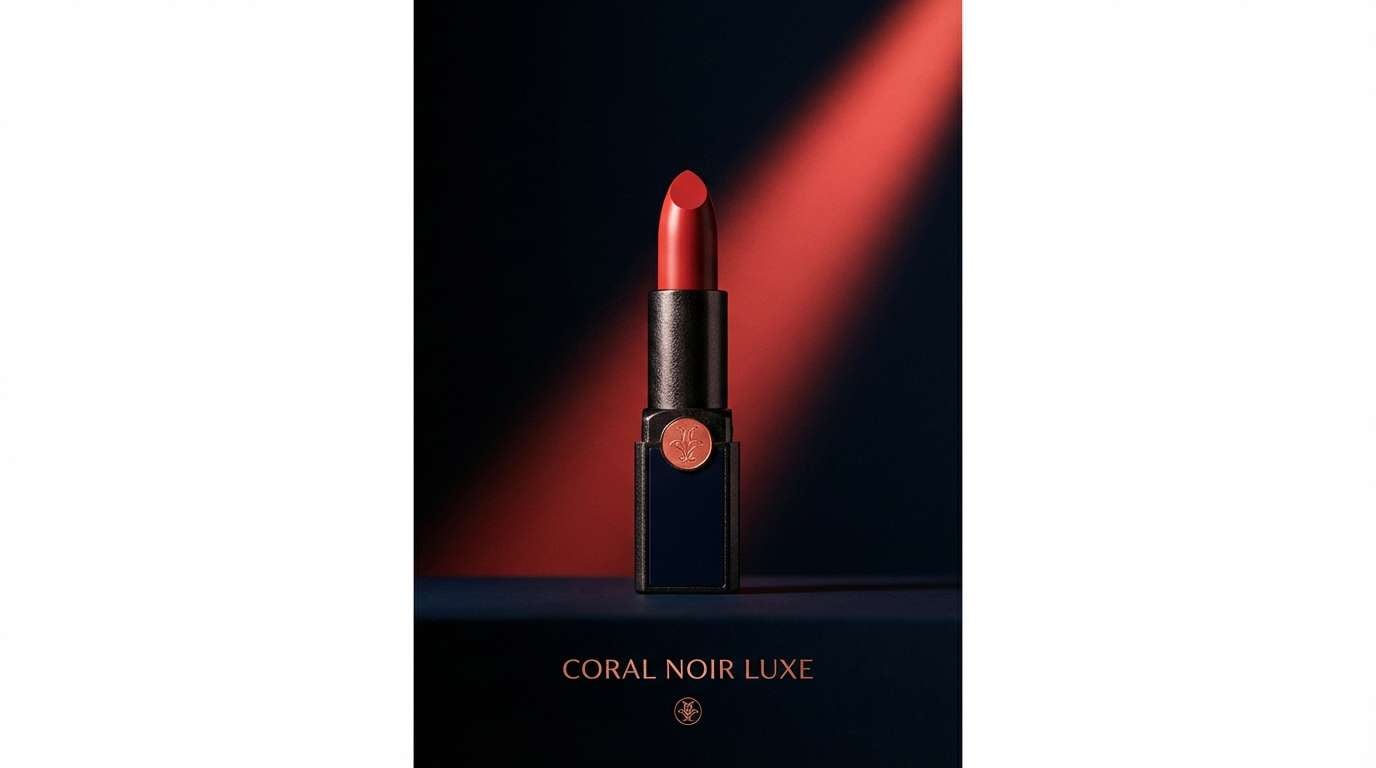
Dramatic and sleek, it recalls velvet evenings with a bright lipstick accent. Use near-black and deep navy for the canvas, then drop coral in as buttons, badges, or key imagery highlights. The warm light neutral prevents the darks from feeling heavy. Tip: keep gradients subtle and let the coral be the only saturated pop.
Image example of coral noir generated using media.io
6) Seaside Aperitif
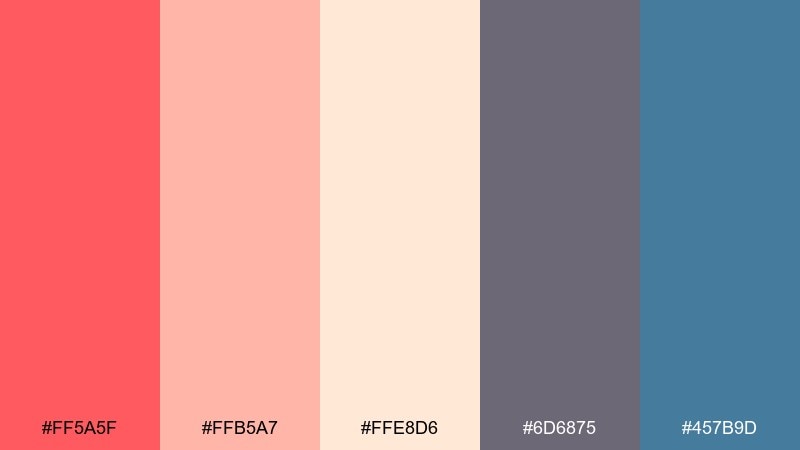
HEX: #ff5a5f #ffb5a7 #ffe8d6 #6d6875 #457b9d
Mood: light, sociable, breezy
Best for: restaurant menus and beverage promos
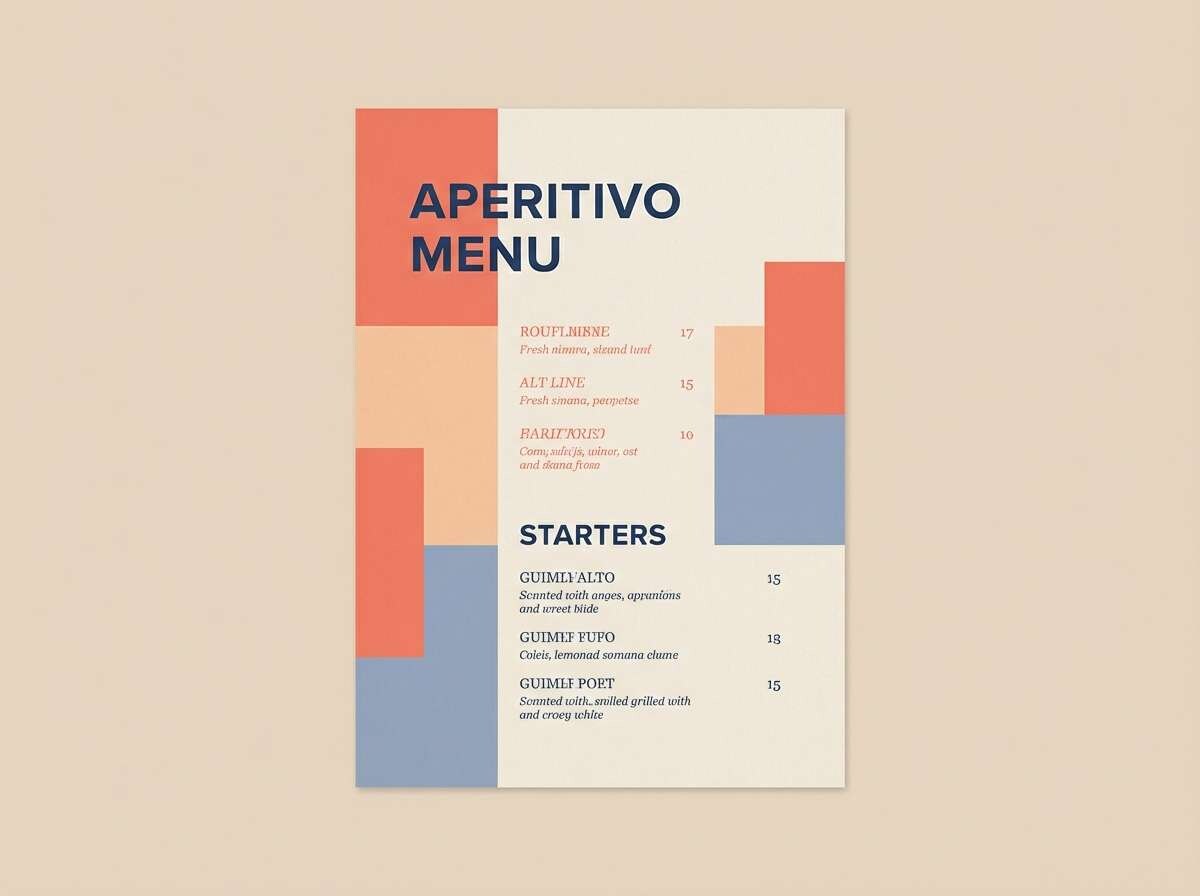
Breezy and sociable, it suggests clinking glasses on a seaside patio at golden hour. This coral red color palette shines when you use coral for callouts, peach for sections, and a cool blue for contrast in icons or headings. The muted violet-gray keeps spacing and rules refined. Tip: try coral as a small highlight behind prices to guide scanning.
Image example of seaside aperitif generated using media.io
7) Peachy Bloom
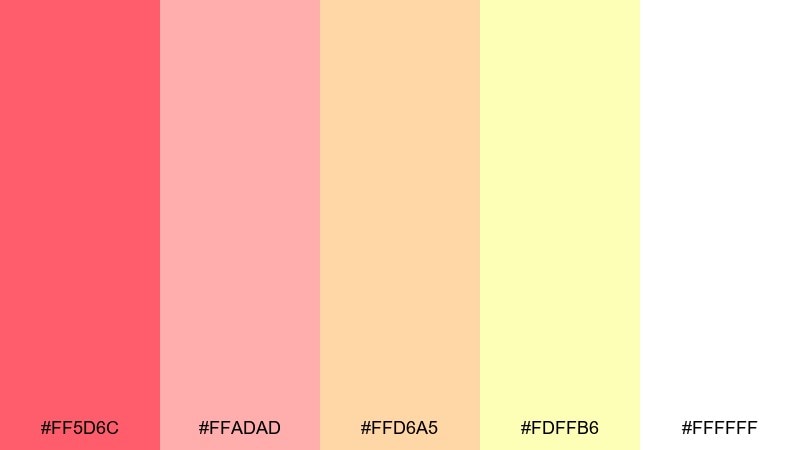
HEX: #ff5d6c #ffadad #ffd6a5 #fdffb6 #ffffff
Mood: sweet, airy, optimistic
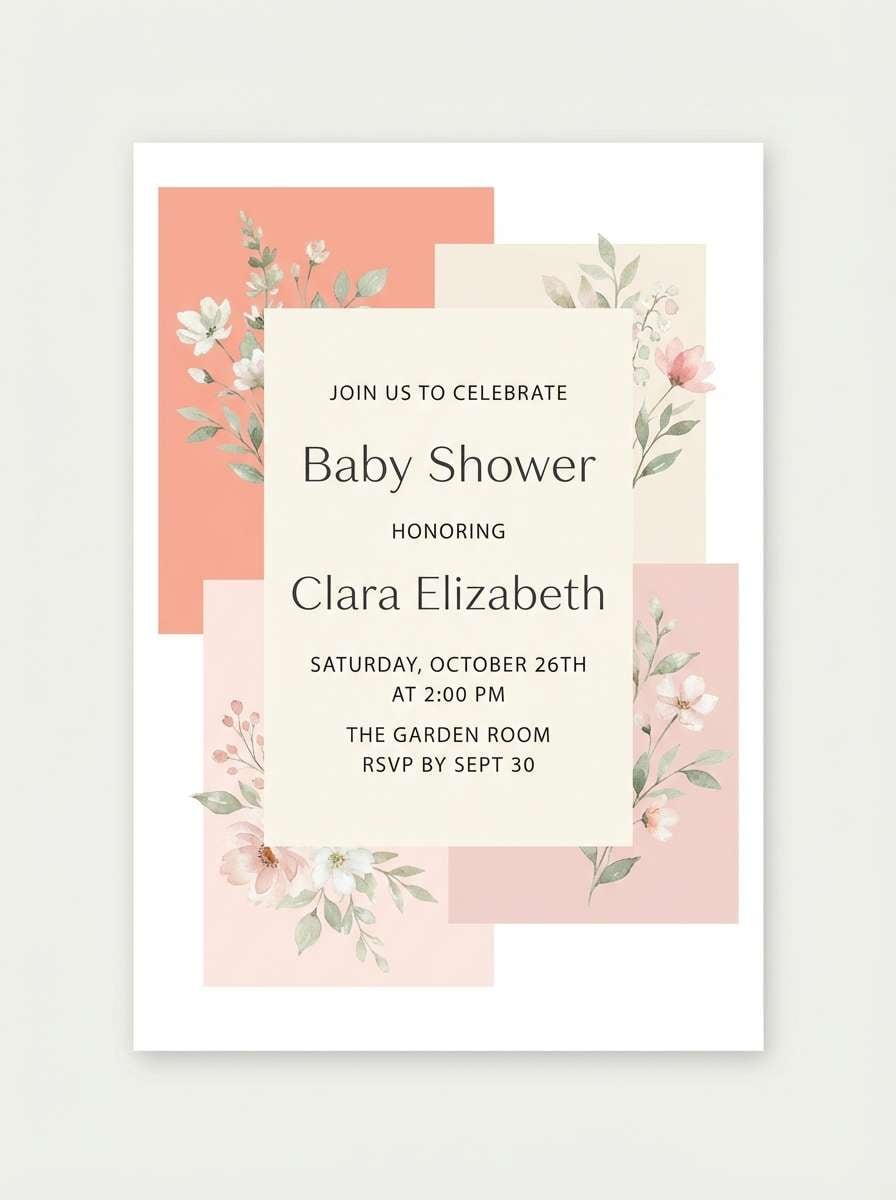
Best for: baby shower invites and gentle social posts
Sweet and airy, it feels like pastel petals and soft morning light. Keep coral and pink as the main duo, then layer warm buttery tones for a cheerful gradient effect. Plenty of white space prevents the pastels from blending into each other. Tip: use coral for the event name and keep the rest in lighter tints for clarity.
Image example of peachy bloom generated using media.io
8) Tropical Market
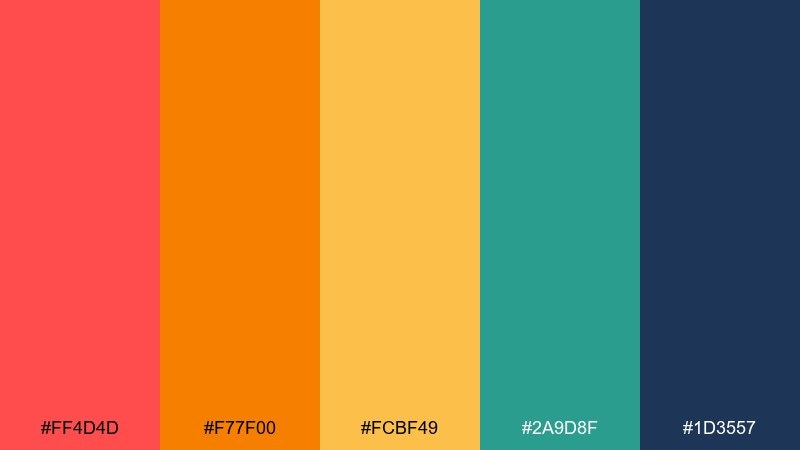
HEX: #ff4d4d #f77f00 #fcbf49 #2a9d8f #1d3557
Mood: vibrant, sunny, adventurous
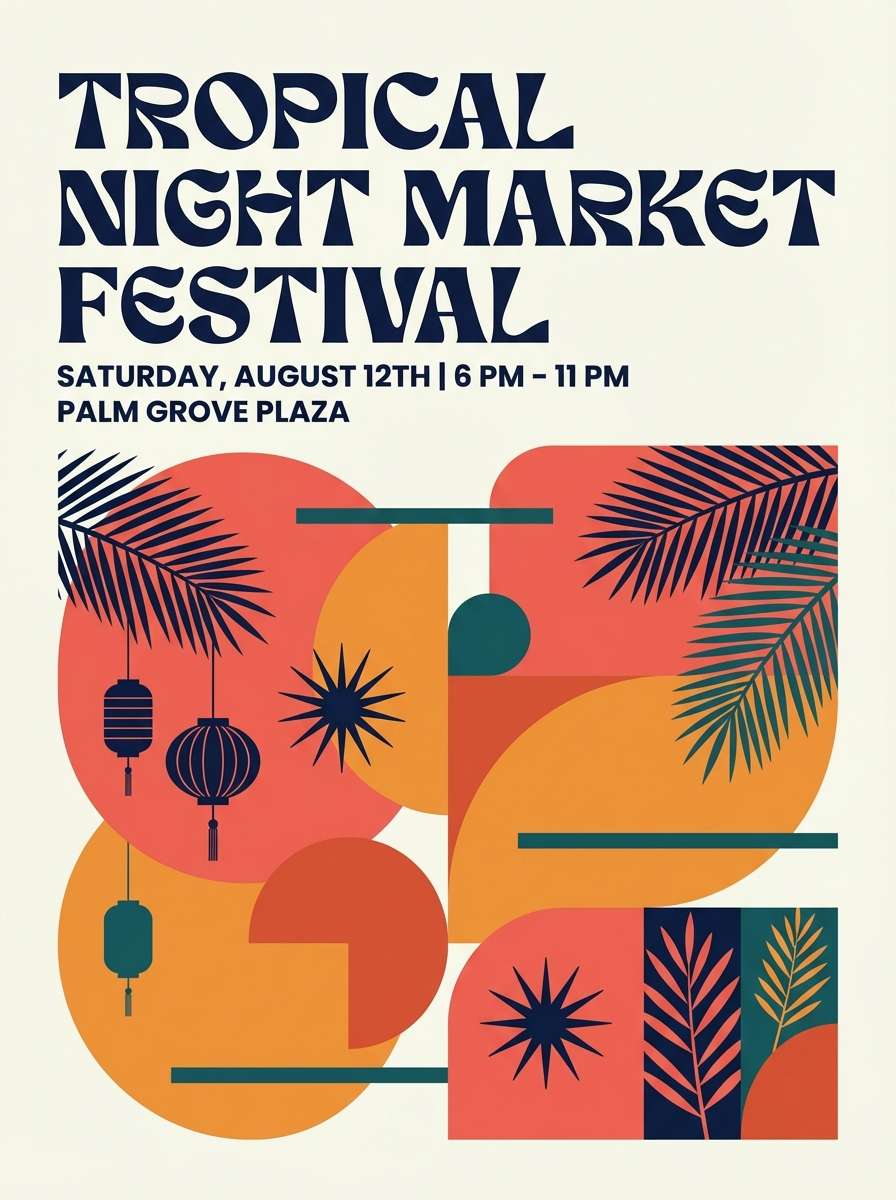
Best for: travel promo banners and event posters
Vibrant and sunny, it brings up street fruit stalls, woven baskets, and bright signage. Use coral and orange for the main energy, then add teal for a cool counterpoint that keeps layouts balanced. The deep navy works well for titles and QR codes. Tip: keep photos warm and slightly desaturated so the palette still leads the mood.
Image example of tropical market generated using media.io
9) Modern Editorial
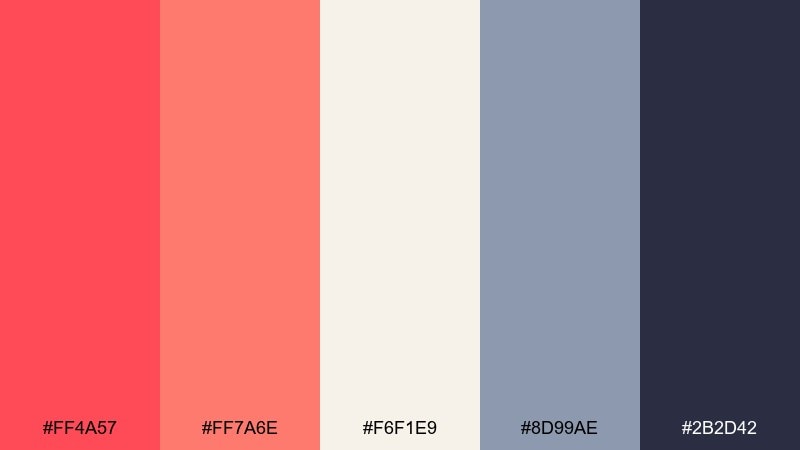
HEX: #ff4a57 #ff7a6e #f6f1e9 #8d99ae #2b2d42
Mood: clean, contemporary, confident
Best for: magazine spreads and lookbooks
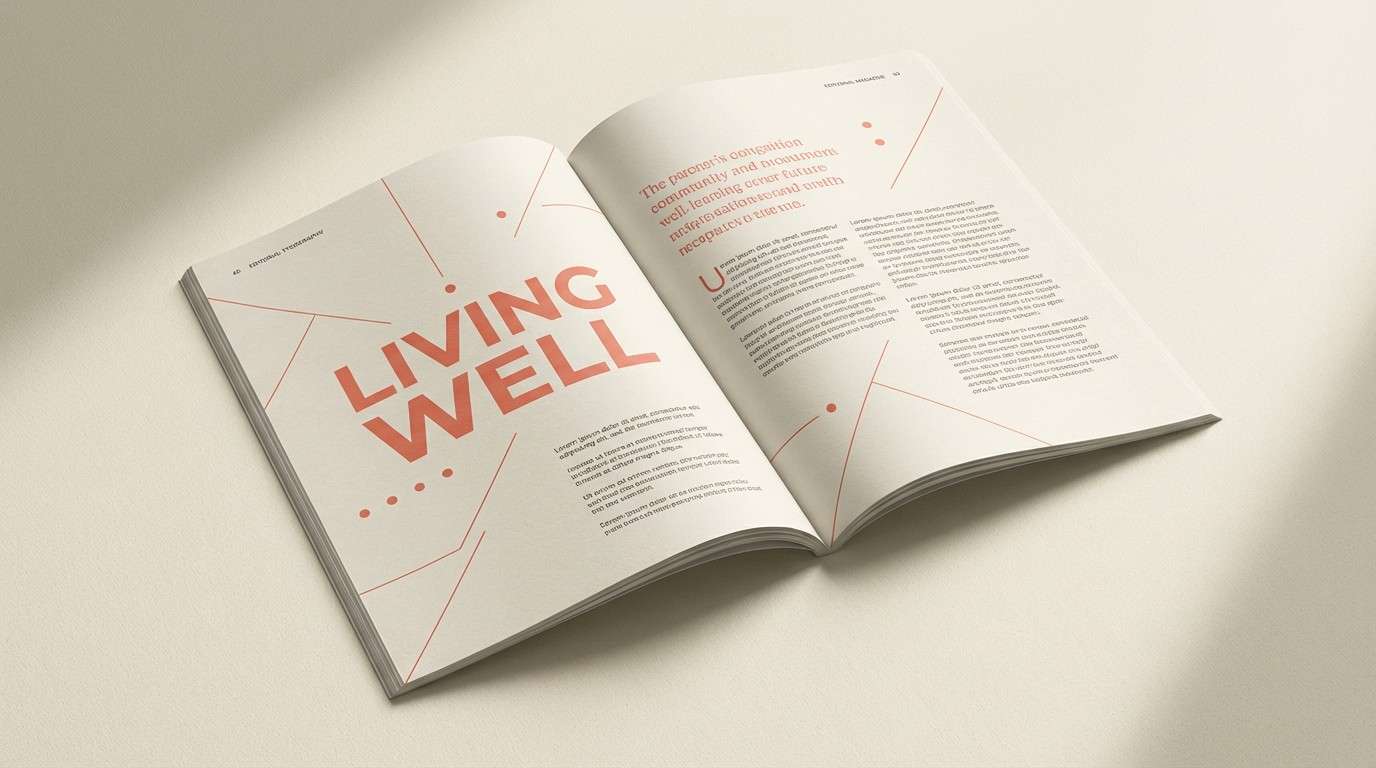
Clean and confident, it feels like a contemporary print spread with warm highlights. These coral red color combinations work especially well with cool gray-blue for captions and deep ink tones for headlines. Keep the cream background dominant to preserve an editorial rhythm. Tip: use coral for pull quotes or section tabs to create a clear reading path.
Image example of modern editorial generated using media.io
10) Minimal UI Warmth
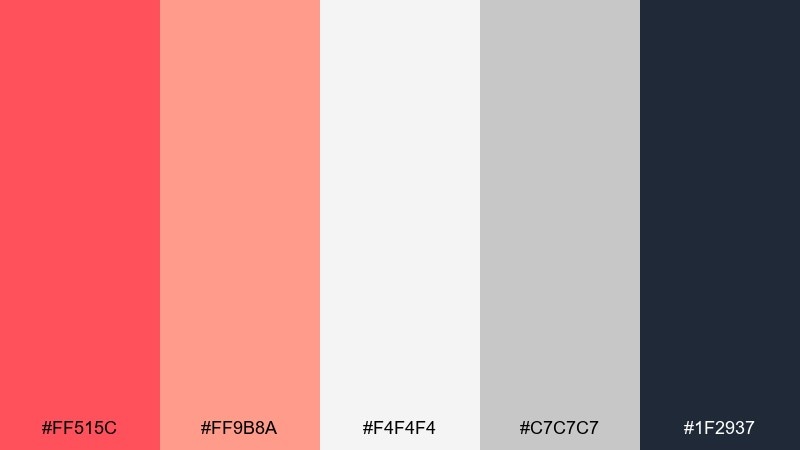
HEX: #ff515c #ff9b8a #f4f4f4 #c7c7c7 #1f2937
Mood: minimal, friendly, functional
Best for: dashboard UI and SaaS onboarding screens
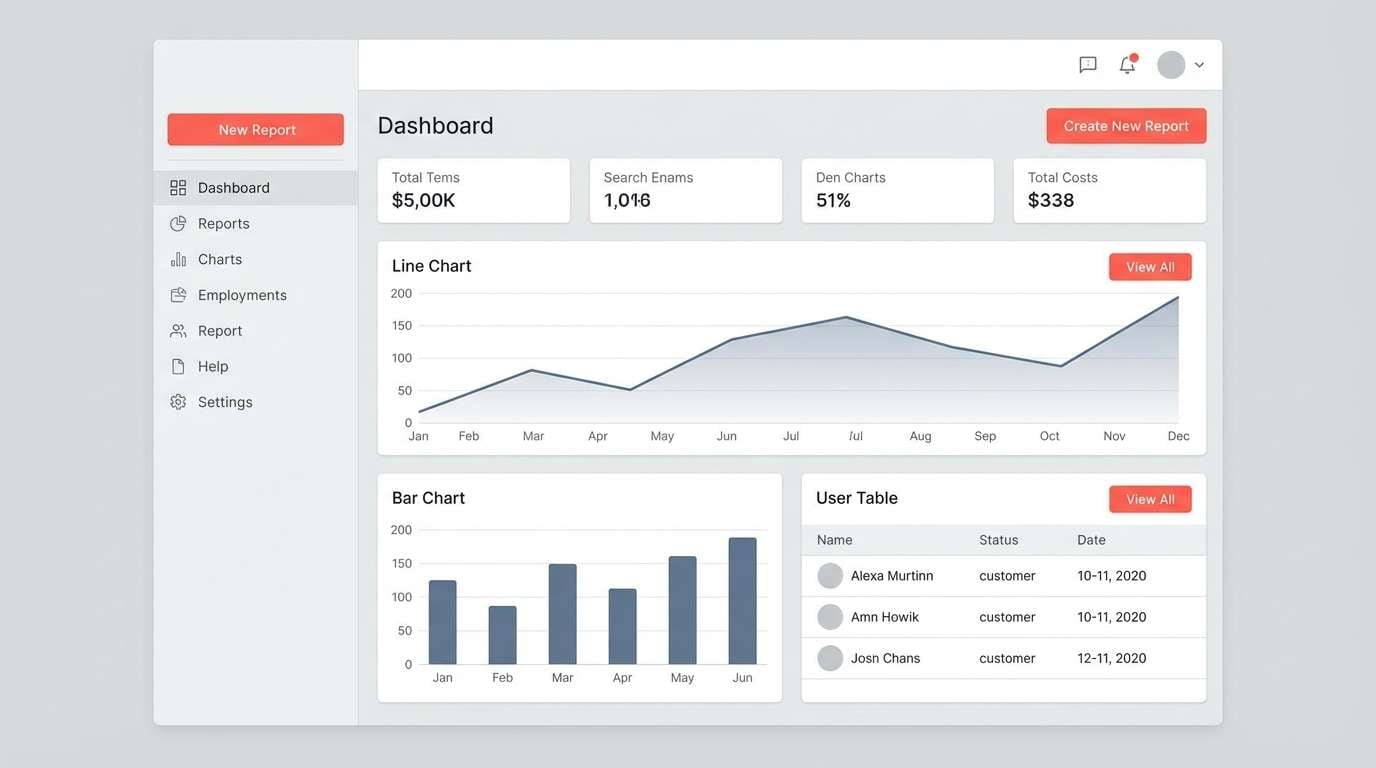
Minimal and friendly, it reads like a clean interface warmed by a confident accent. Use coral for primary buttons and key states, while soft gray handles surfaces and dividers. The dark slate provides strong contrast for body text and data labels. Tip: keep accent usage under 10 percent of the UI to avoid alert fatigue.
Image example of minimal ui warmth generated using media.io
11) Wedding Rosewater
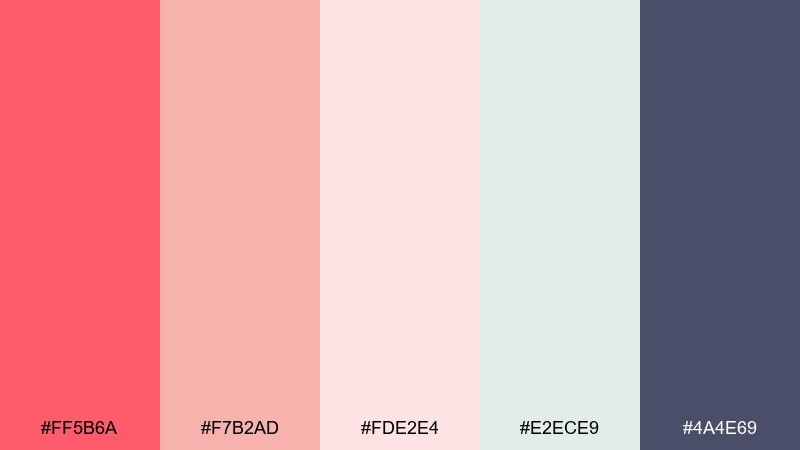
HEX: #ff5b6a #f7b2ad #fde2e4 #e2ece9 #4a4e69
Mood: soft, elegant, sentimental
Best for: wedding stationery suites
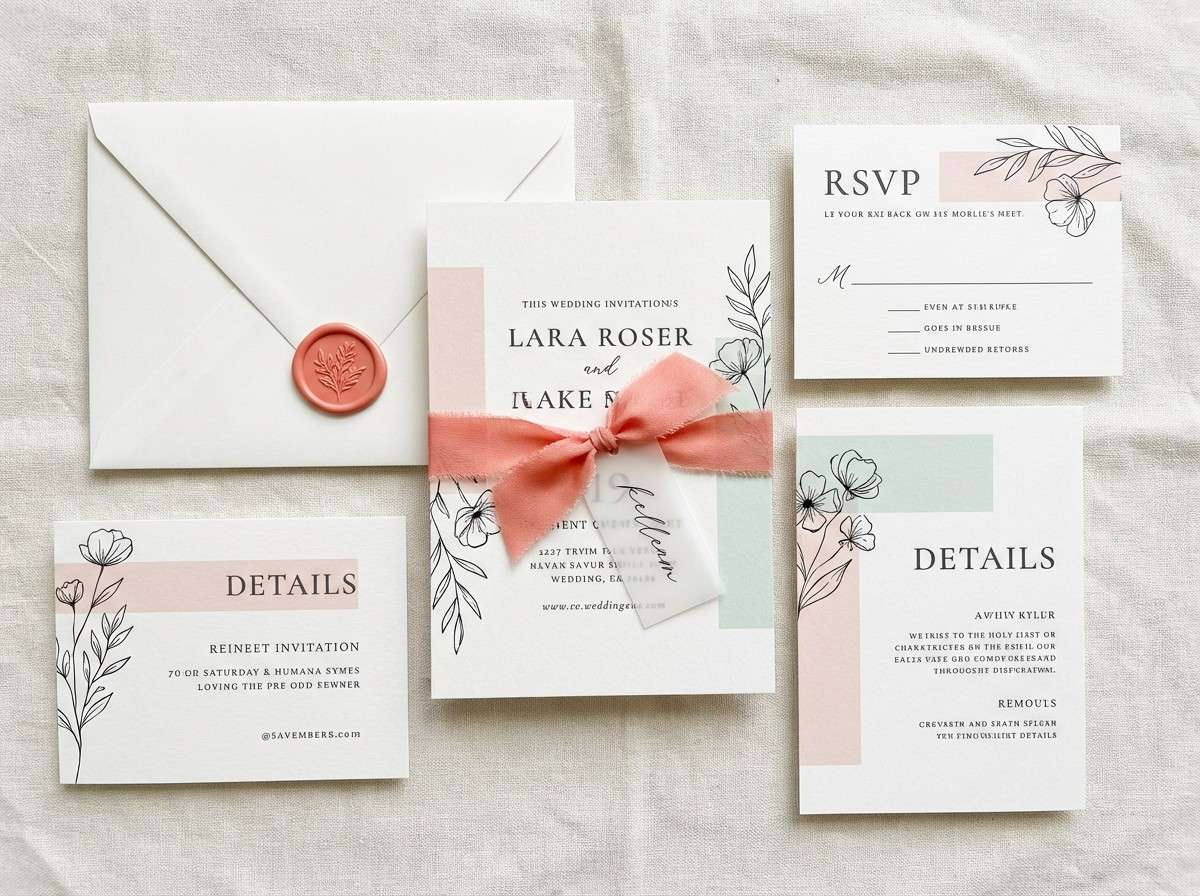
Soft and sentimental, it feels like rosewater, linen, and handwritten vows. Use coral as a small but memorable highlight for monograms, wax seal graphics, or RSVP accents. The cool minty neutral helps the pinks stay airy rather than overly sweet. Tip: pair with fine-line florals and keep contrast high on the main text for readability.
Image example of wedding rosewater generated using media.io
12) Artisan Clay
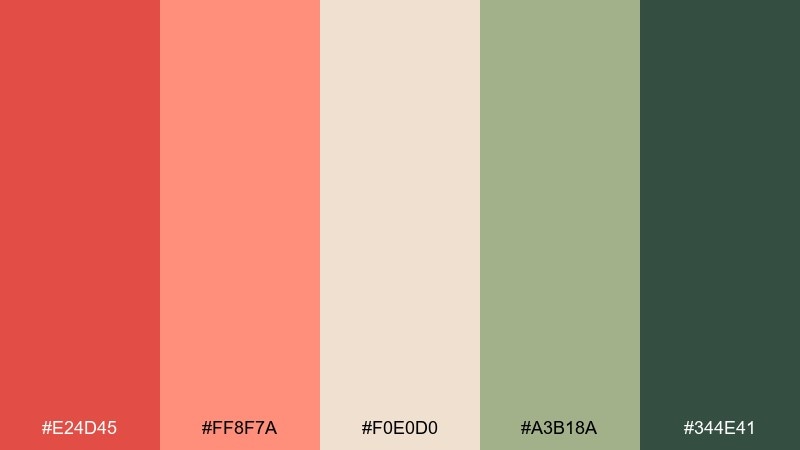
HEX: #e24d45 #ff8f7a #f0e0d0 #a3b18a #344e41
Mood: organic, handcrafted, calm
Best for: skincare packaging and natural brands
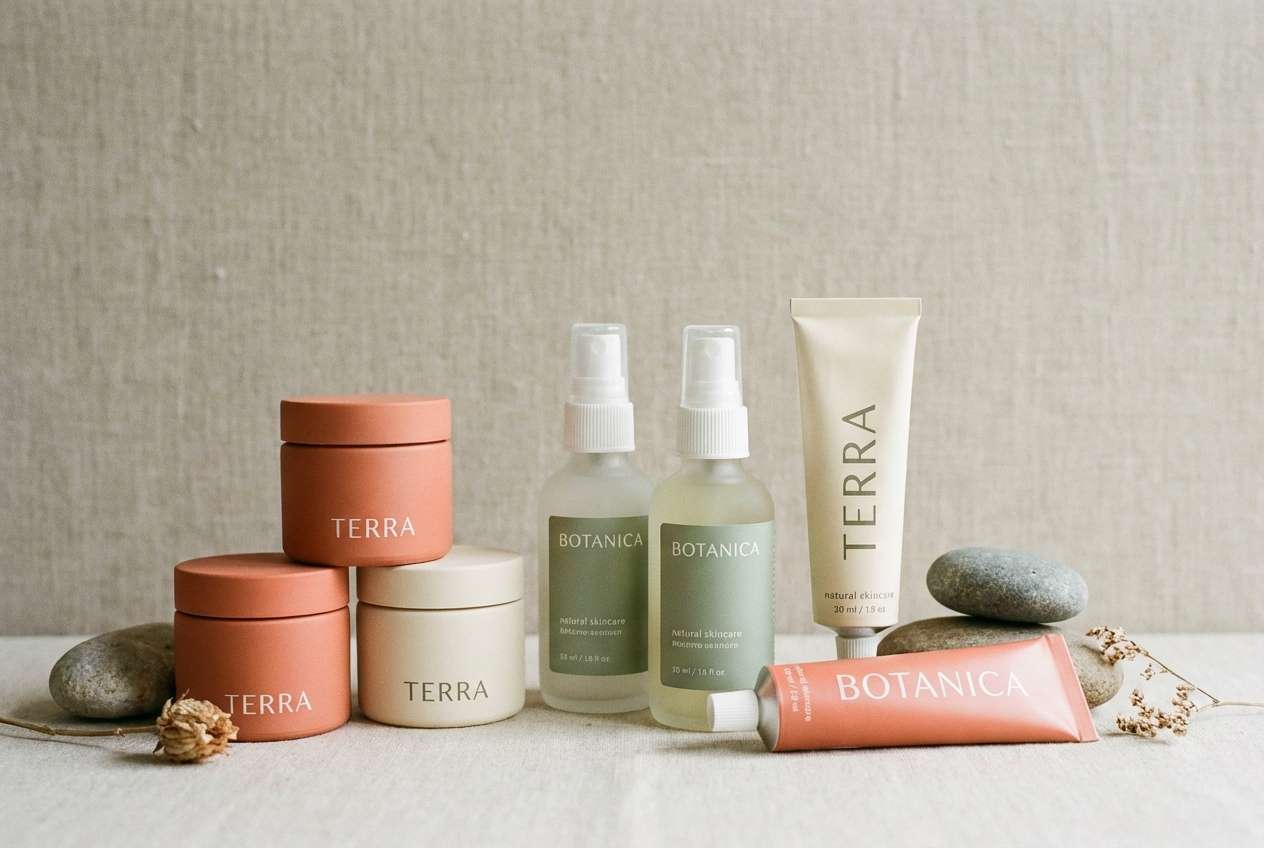
Organic and handcrafted, it evokes clay masks, herb bundles, and sunlit studio shelves. The warm coral pairs beautifully with sage greens for a natural, trustworthy feel. Use cream as the base and keep the dark forest tone for ingredient lists and barcodes. Tip: choose matte finishes so the earthy tones stay soft and premium.
Image example of artisan clay generated using media.io
13) Sunset Neon
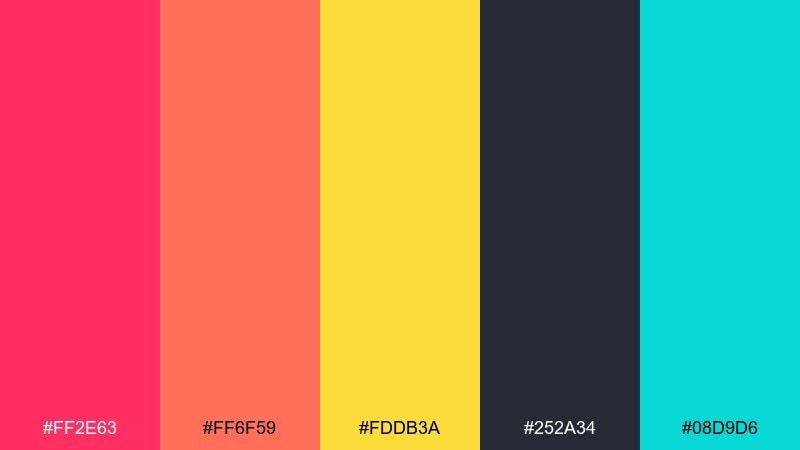
HEX: #ff2e63 #ff6f59 #fddb3a #252a34 #08d9d6
Mood: bold, nightlife, high energy
Best for: music flyers and streaming thumbnails
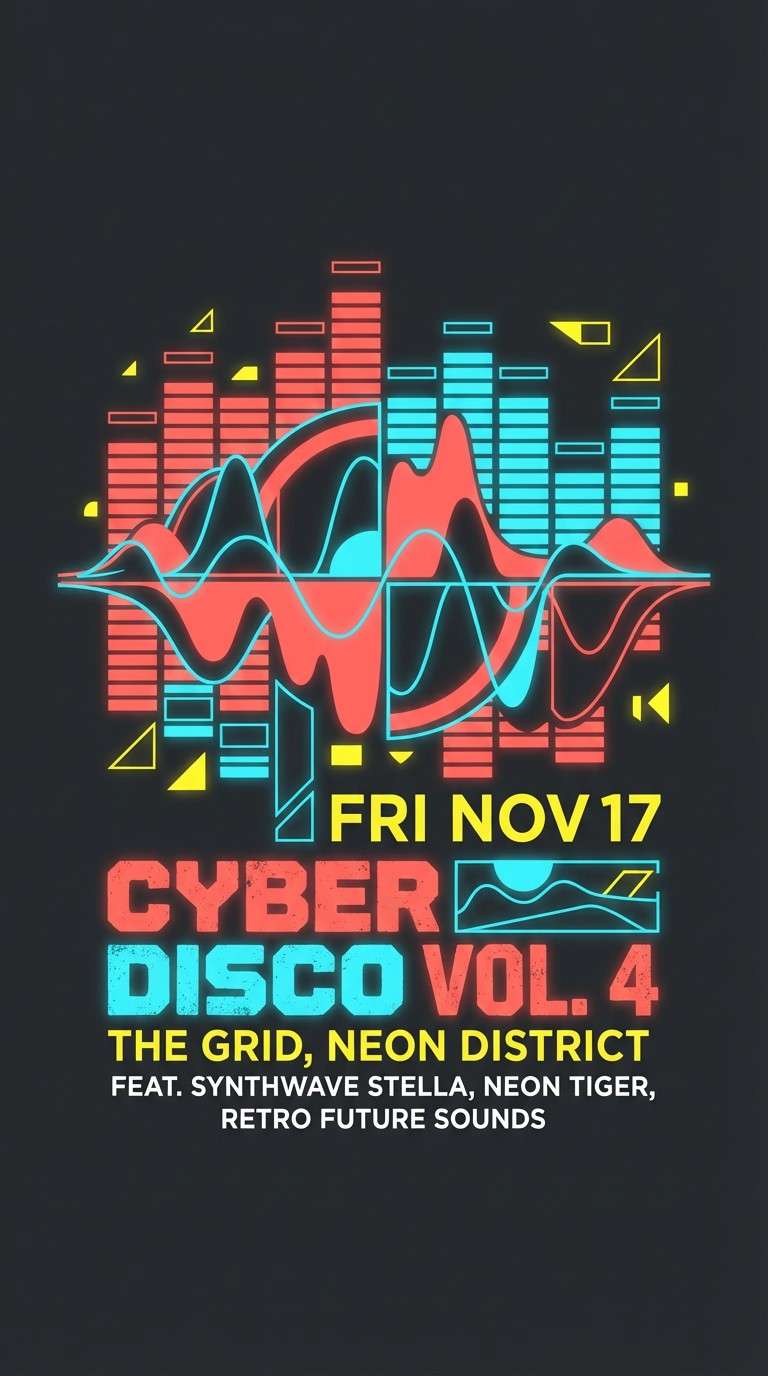
Bold and electric, it feels like neon signs flickering at sunset. Use the hot coral and cyan as alternating accents on a dark base to create instant depth. Yellow works best in small bursts for highlights, icons, or sticker-style labels. Tip: keep text primarily in light neutrals to maintain contrast against the dark background.
Image example of sunset neon generated using media.io
14) Soft Scandinavian
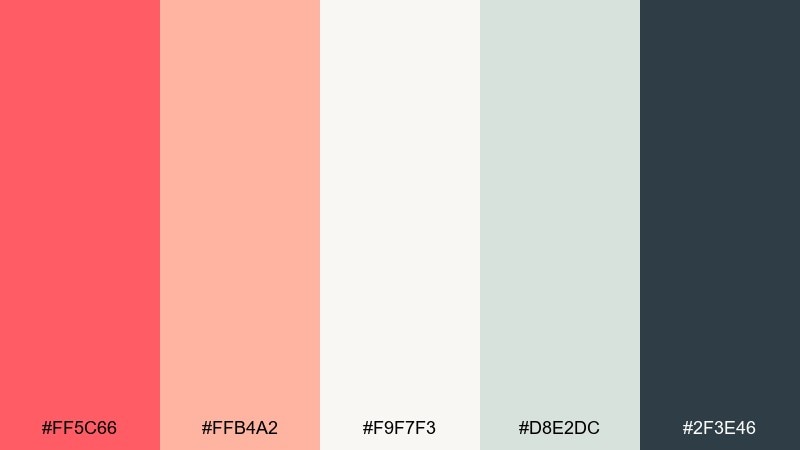
HEX: #ff5c66 #ffb4a2 #f9f7f3 #d8e2dc #2f3e46
Mood: soft, airy, modern
Best for: home decor branding and ecommerce UI
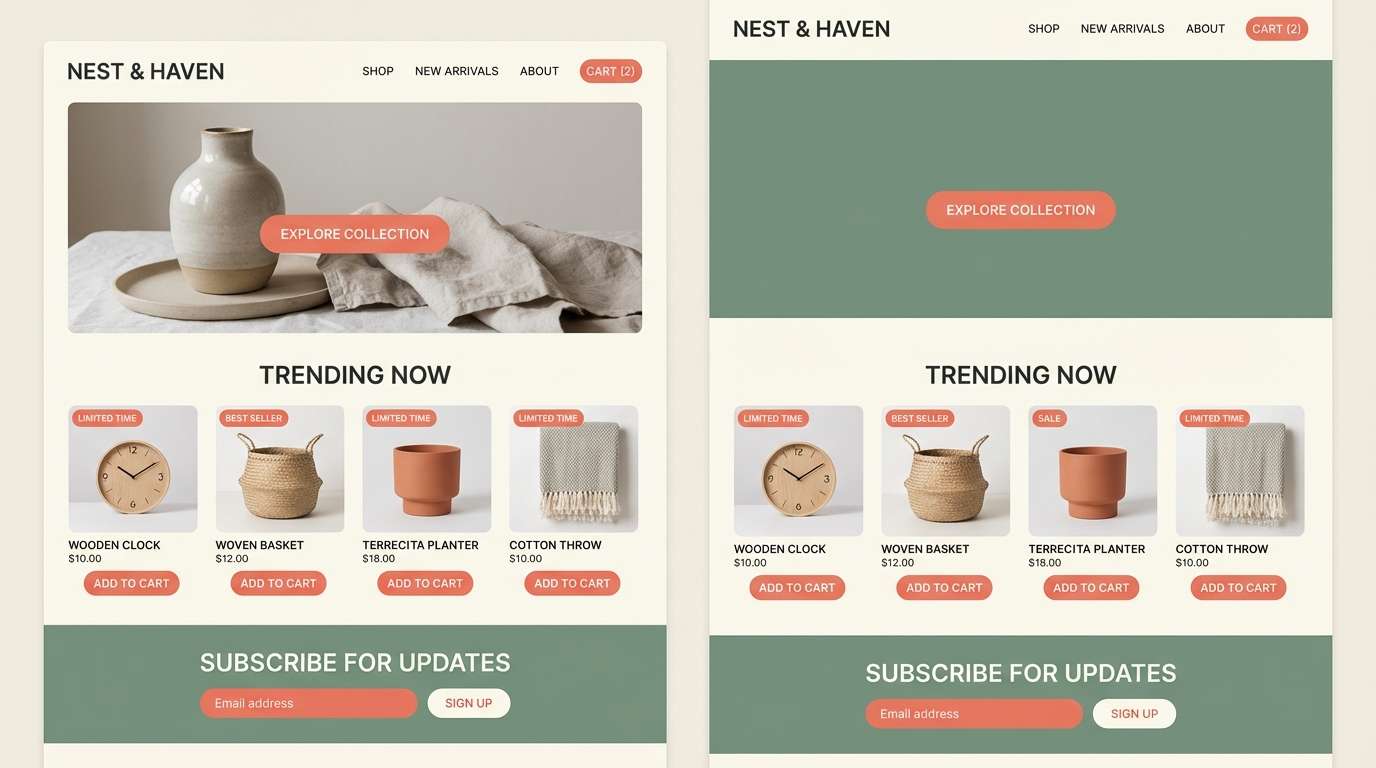
Soft and airy, it suggests bright interiors, pale wood, and warm textiles. Coral works best as a gentle accent against creamy whites and cool, dusty greens. Keep the deep gray-green for navigation and product names to avoid a washed-out look. Tip: use coral sparingly on CTAs and sale tags so it feels special, not constant.
Image example of soft scandinavian generated using media.io
15) Botanical Terracotta
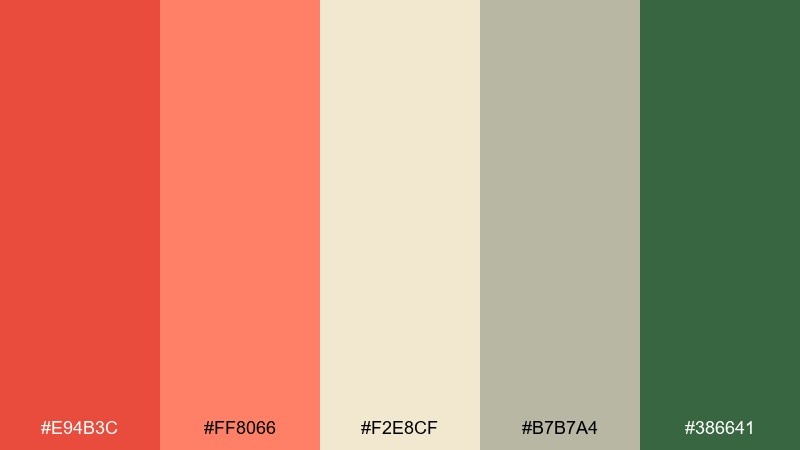
HEX: #e94b3c #ff8066 #f2e8cf #b7b7a4 #386641
Mood: natural, sun-warmed, soothing
Best for: botanical illustrations and eco posters
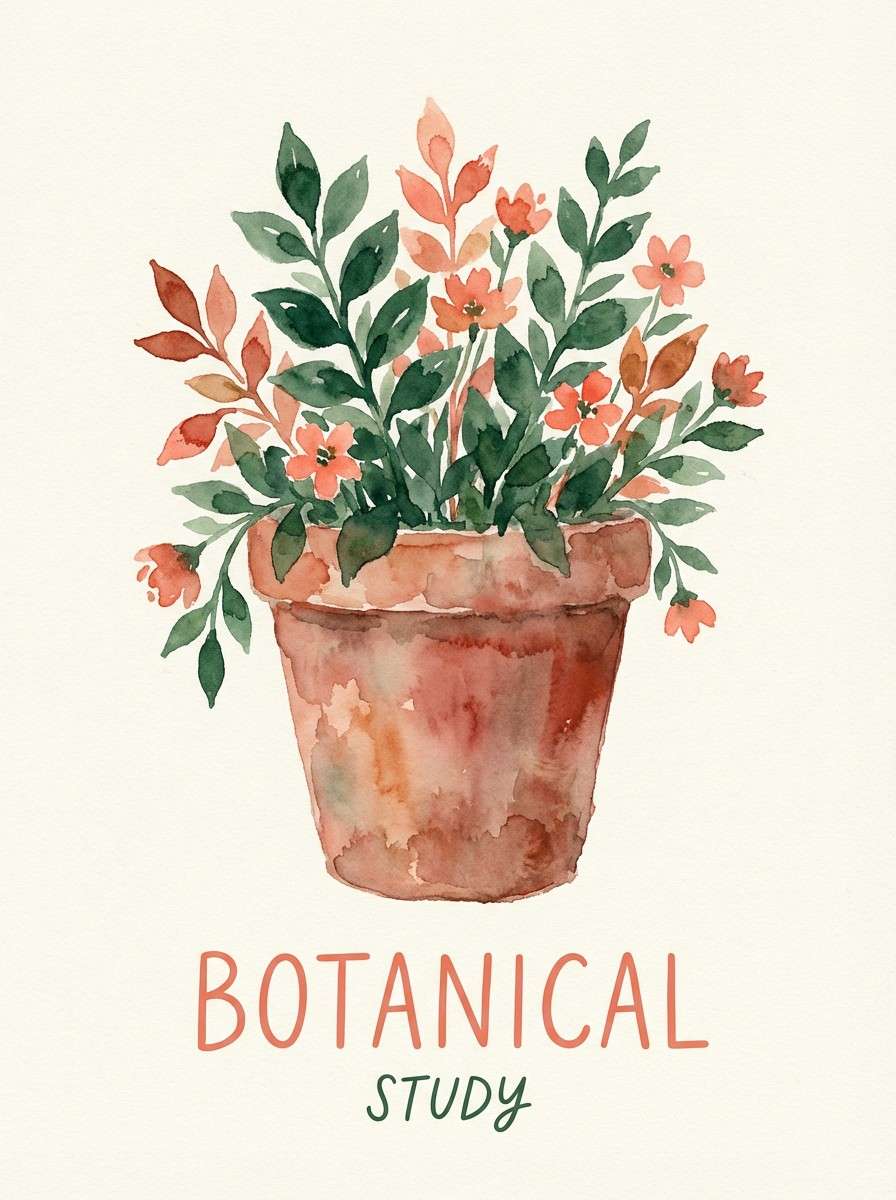
Natural and sun-warmed, it calls up terracotta pots, leafy shadows, and quiet garden paths. Let the greens carry the botanical details while coral and terracotta provide warmth in petals or fruit. Cream keeps the composition light and gives space for fine linework. Tip: try watercolor textures so the palette feels hand-painted and organic.
Image example of botanical terracotta generated using media.io
16) Luxe Spa
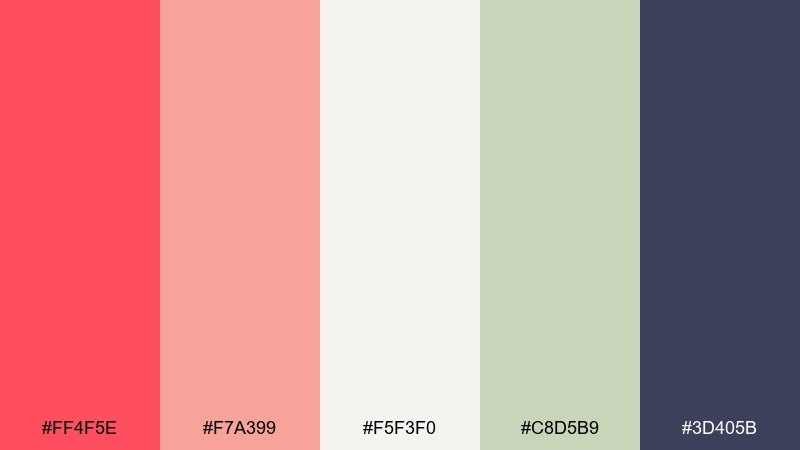
HEX: #ff4f5e #f7a399 #f5f3f0 #c8d5b9 #3d405b
Mood: calm, polished, restorative
Best for: spa brochures and wellness ads
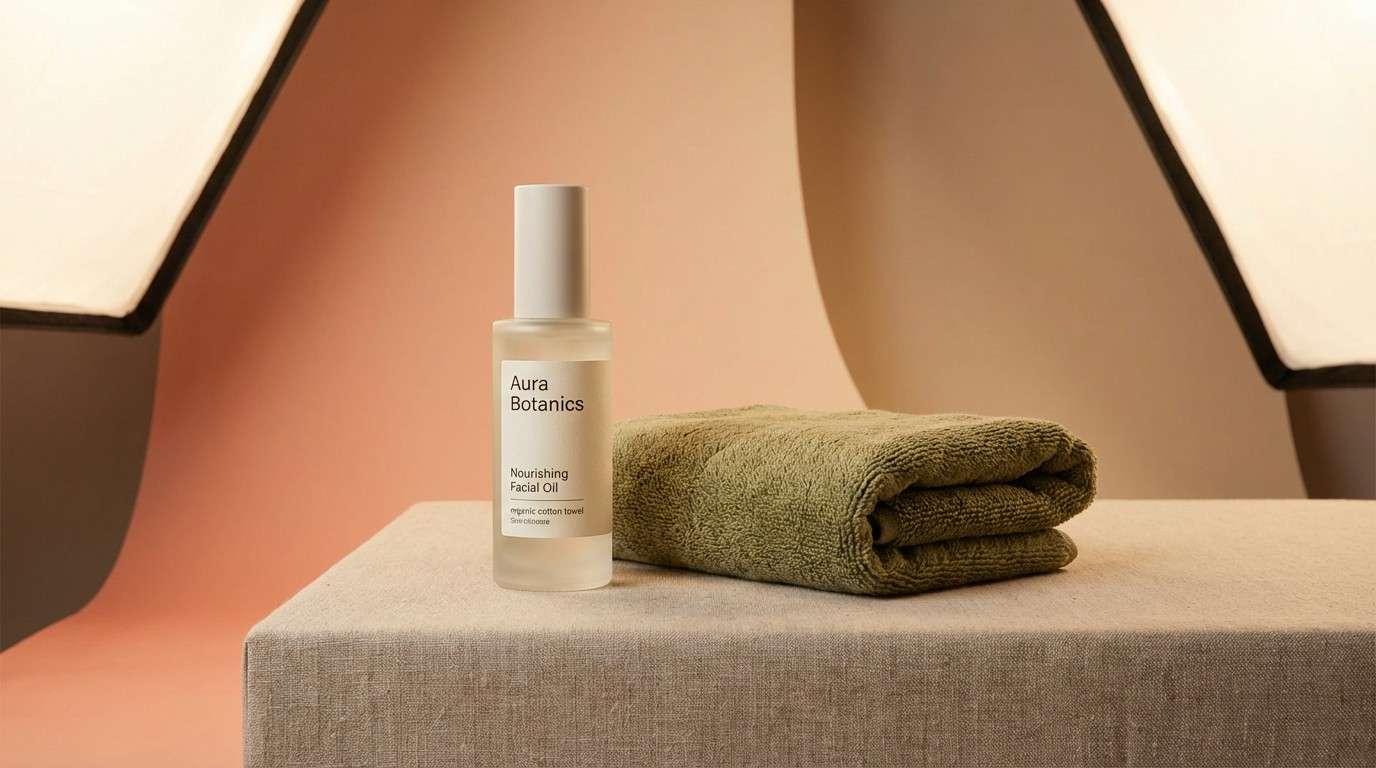
Calm and polished, it feels like warm towels, soft scents, and a quiet lounge. Use coral as a small wellness cue on buttons, icons, or highlighted services, then lean on neutrals for serenity. The muted green supports natural positioning without turning the design overly earthy. Tip: keep photography bright and low-contrast to match the restorative tone.
Image example of luxe spa generated using media.io
17) Kids Playroom
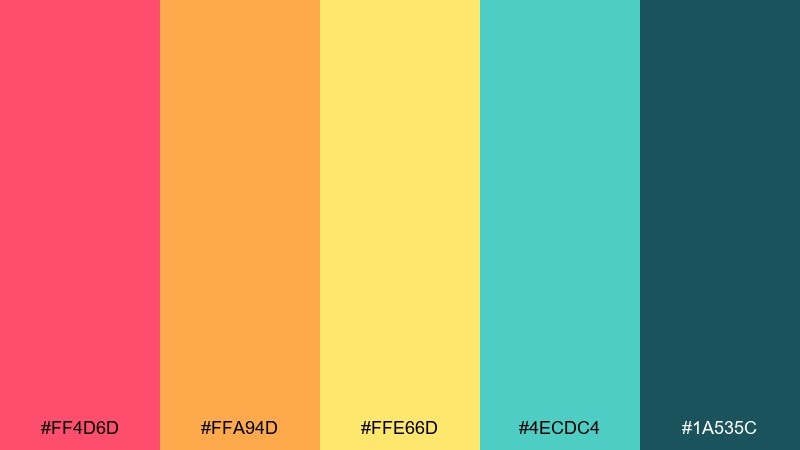
HEX: #ff4d6d #ffa94d #ffe66d #4ecdc4 #1a535c
Mood: cheerful, playful, bold
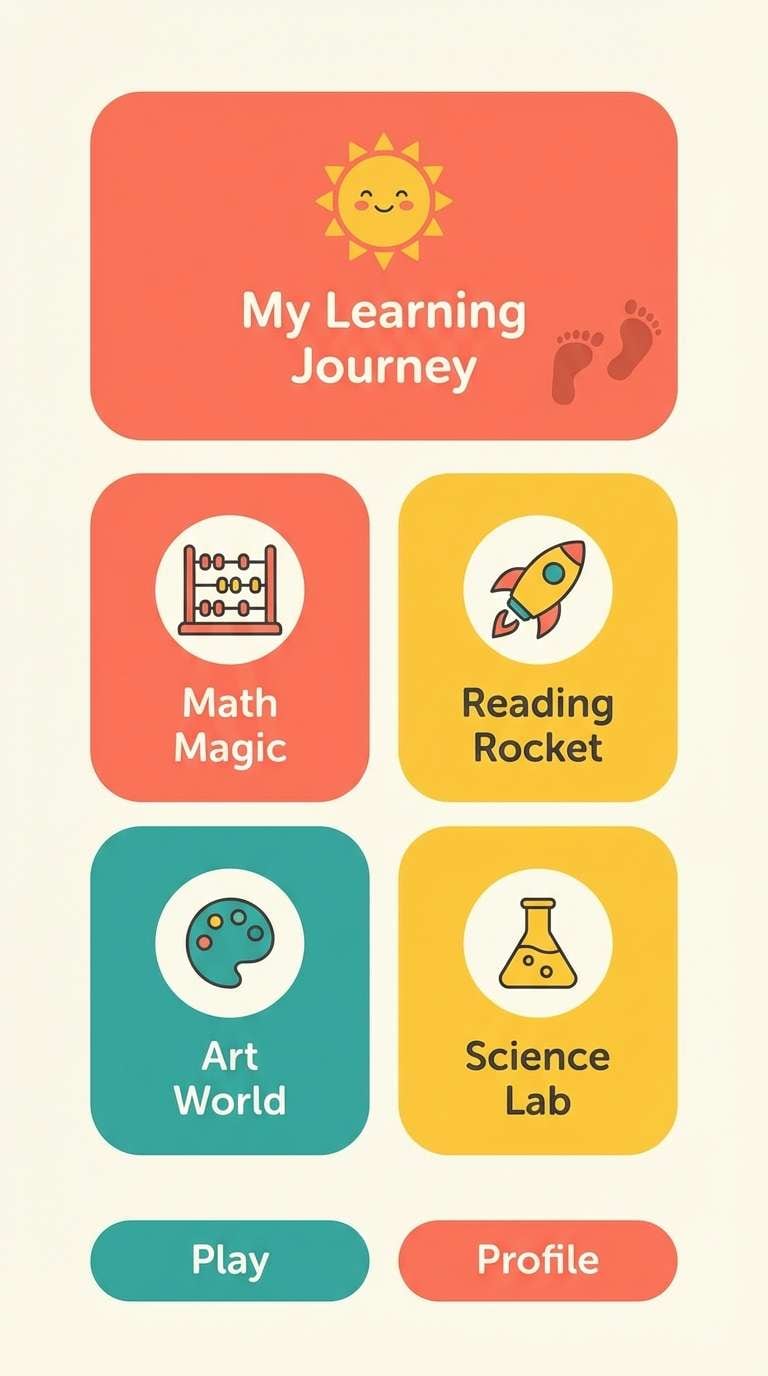
Best for: kids app UI and learning flashcards
Cheerful and bouncy, it feels like building blocks and crayon doodles. Keep coral and yellow as the main attention-grabbers, while teal supports friendly navigation and badges. Use the deep teal for text to stay readable on bright surfaces. Tip: assign each learning category a single dominant color to reduce visual noise.
Image example of kids playroom generated using media.io
18) Film Poster Heat
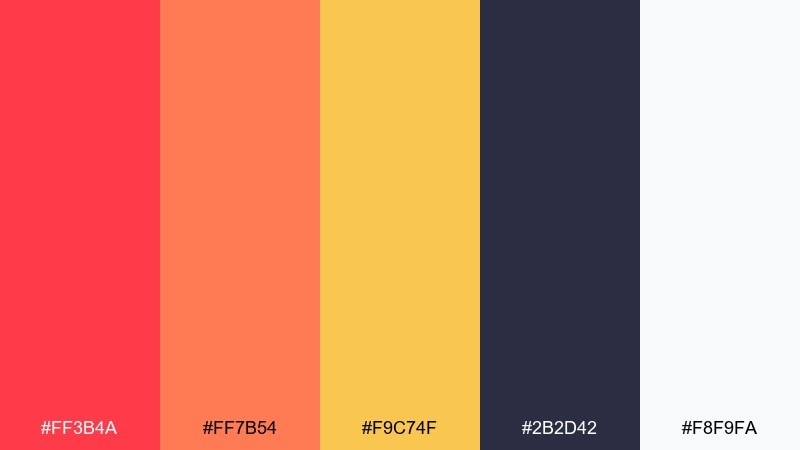
HEX: #ff3b4a #ff7b54 #f9c74f #2b2d42 #f8f9fa
Mood: cinematic, intense, punchy
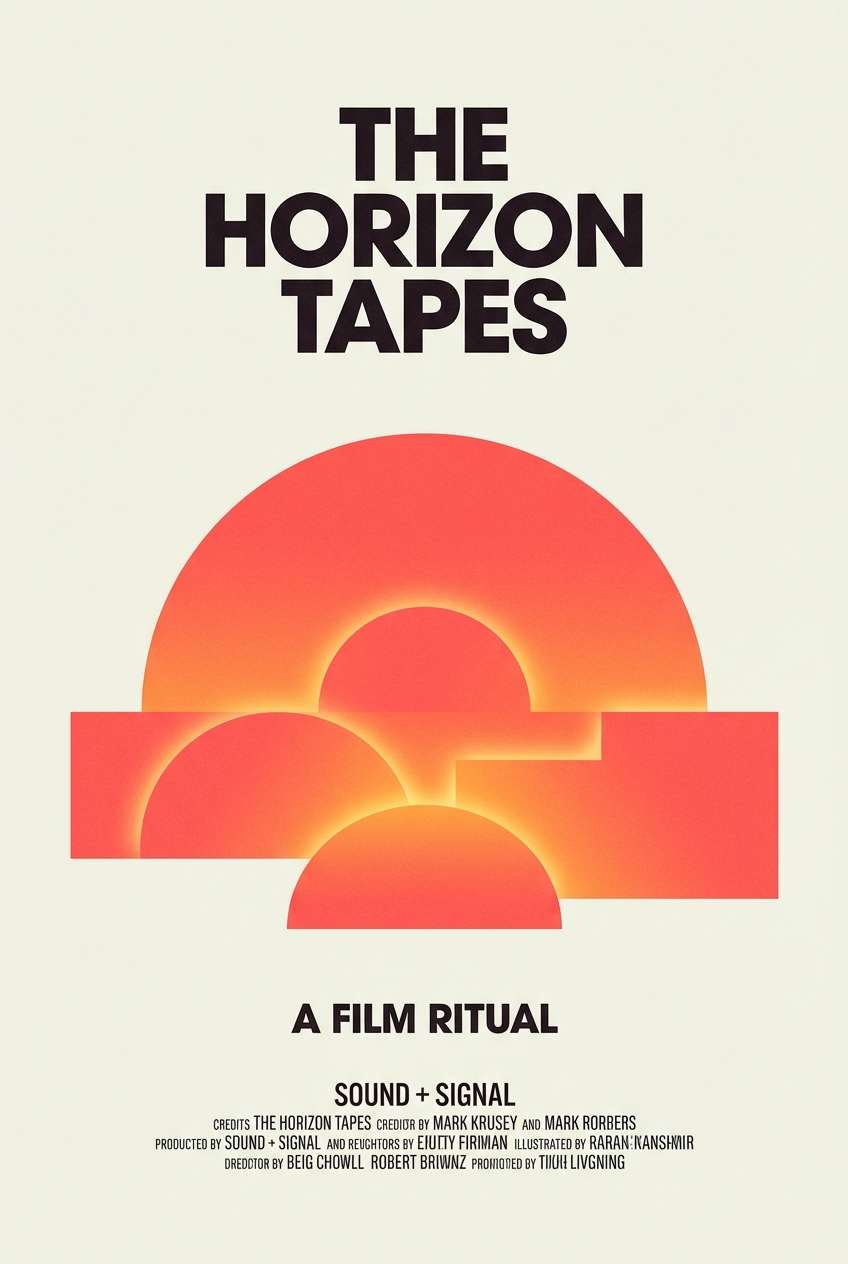
Best for: movie posters and bold announcements
Cinematic and intense, it suggests heat haze, dramatic spotlights, and big title cards. This coral red color palette works best with strong typography in near-black and small fields of warm yellow for impact. Keep white for credits and fine print so details stay legible. Tip: use coral as a gradient behind the title to create depth without adding extra colors.
Image example of film poster heat generated using media.io
19) Cozy Cabin
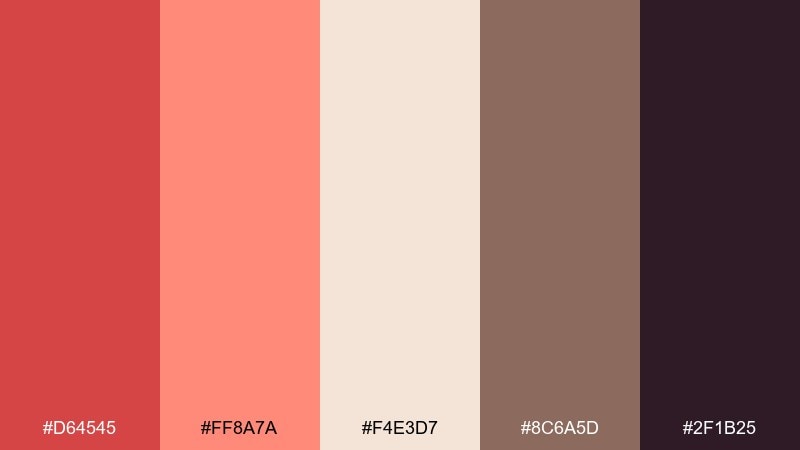
HEX: #d64545 #ff8a7a #f4e3d7 #8c6a5d #2f1b25
Mood: cozy, rustic, intimate
Best for: seasonal promos and handmade crafts branding
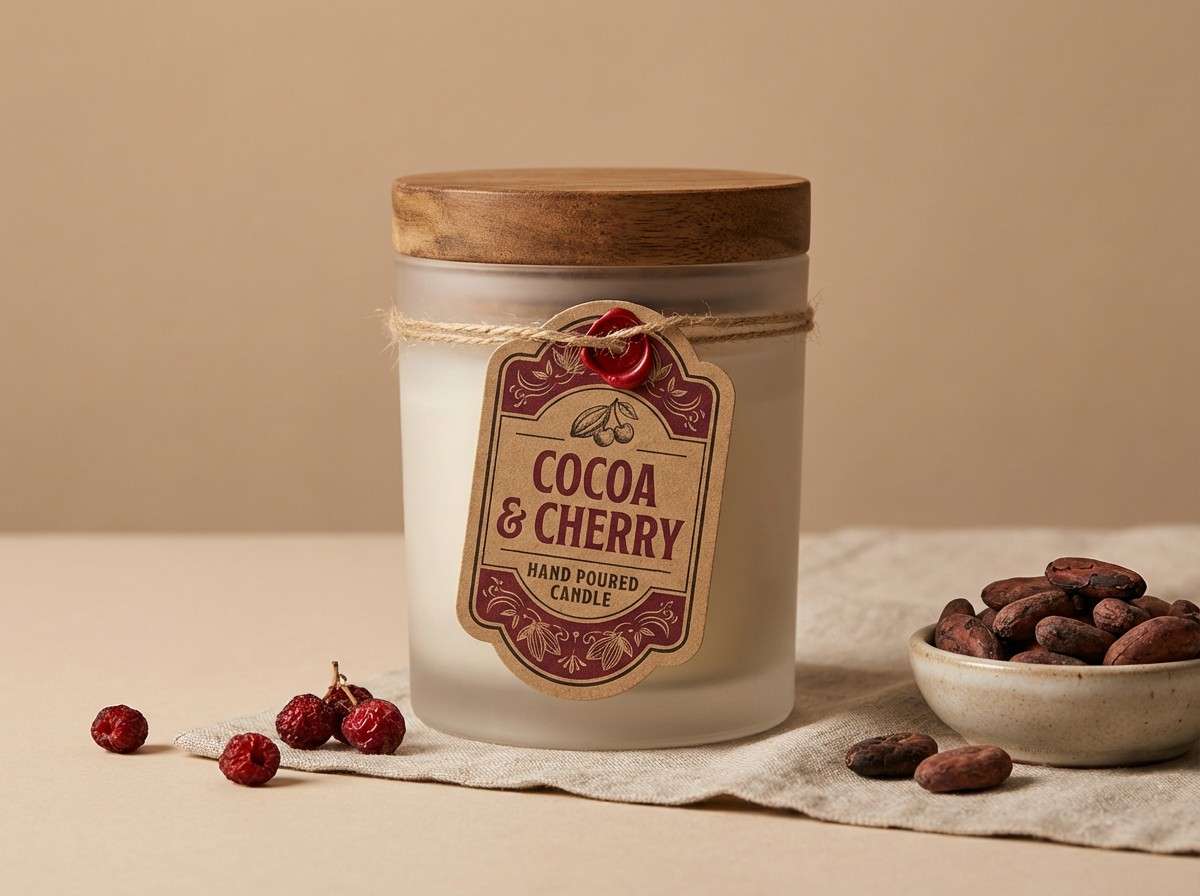
Cozy and rustic, it evokes knit blankets, warm cider, and woodgrain textures. Use the deeper red-brown for headings and frames, with coral as a friendly accent on stickers or badges. Cream and tan keep the palette approachable and craft-ready. Tip: add subtle grain or stamp effects to reinforce the handmade mood.
Image example of cozy cabin generated using media.io
20) Streetwear Punch
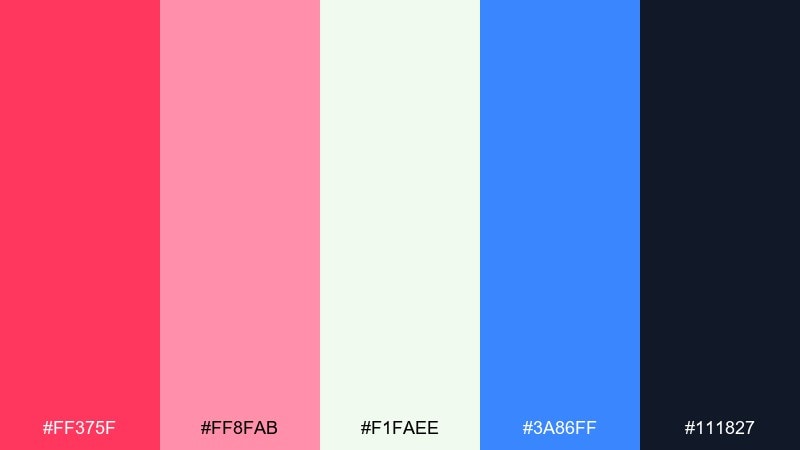
HEX: #ff375f #ff8fab #f1faee #3a86ff #111827
Mood: urban, confident, trend-forward
Best for: streetwear lookbooks and brand drops
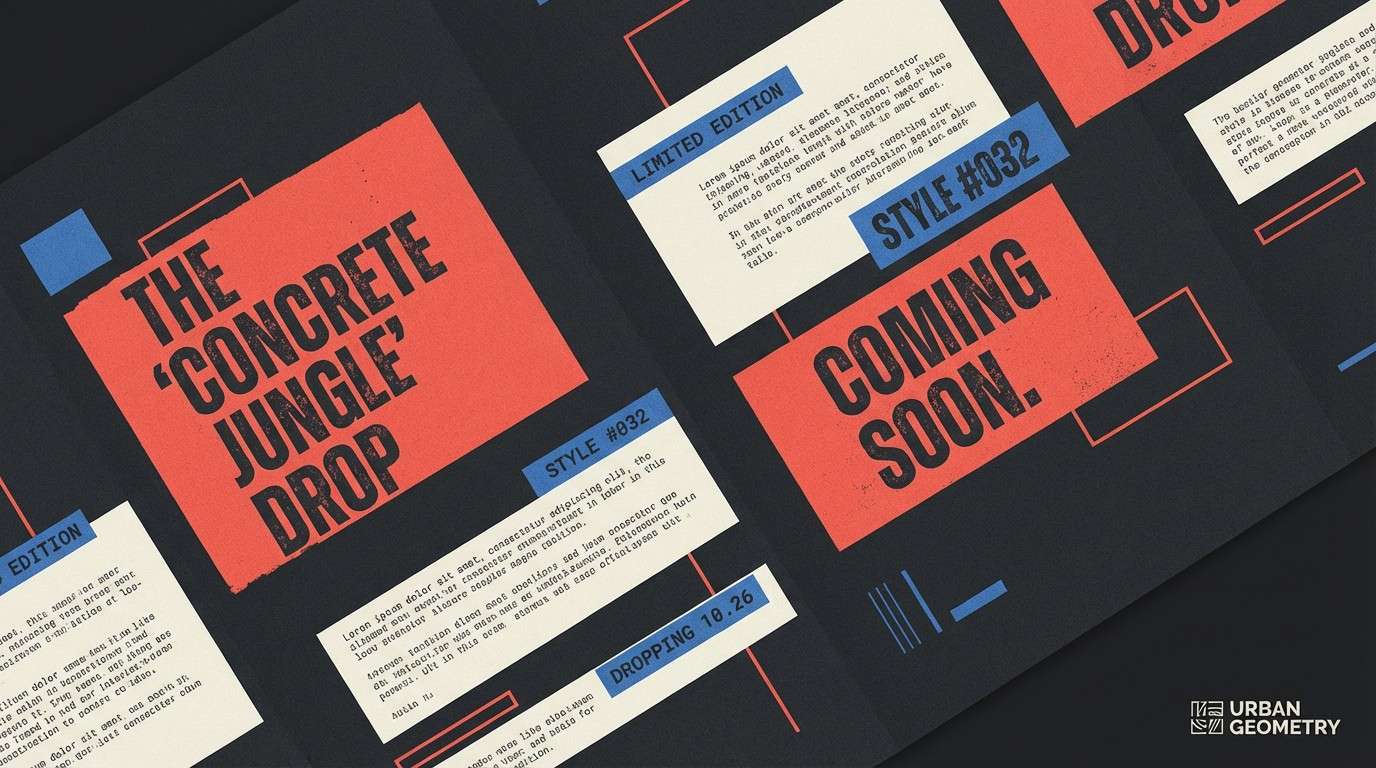
Urban and confident, it feels like bold tags, glossy prints, and late-night city lights. These coral red color combinations pop hard against near-black, while a clean off-white keeps layouts sharp. Use the blue as a secondary accent for links, price points, or limited-drop labels. Tip: keep the coral on one or two hero elements per page to maintain hype without chaos.
Image example of streetwear punch generated using media.io
21) Gallery Opening
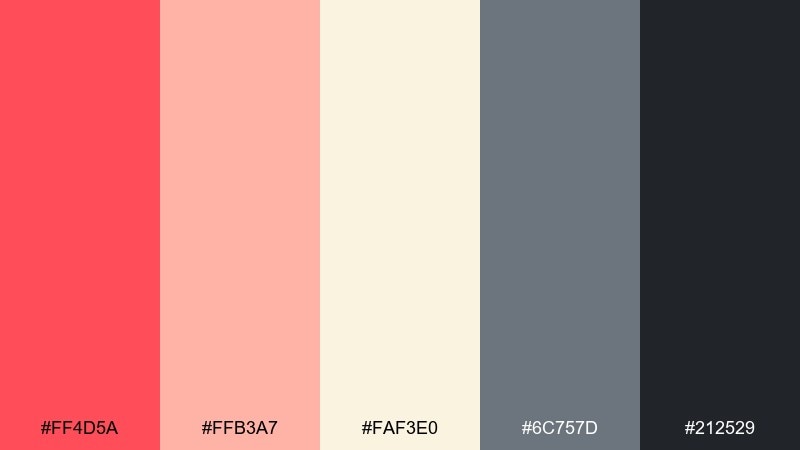
HEX: #ff4d5a #ffb3a7 #faf3e0 #6c757d #212529
Mood: cultured, refined, modern
Best for: event invitations and gallery posters
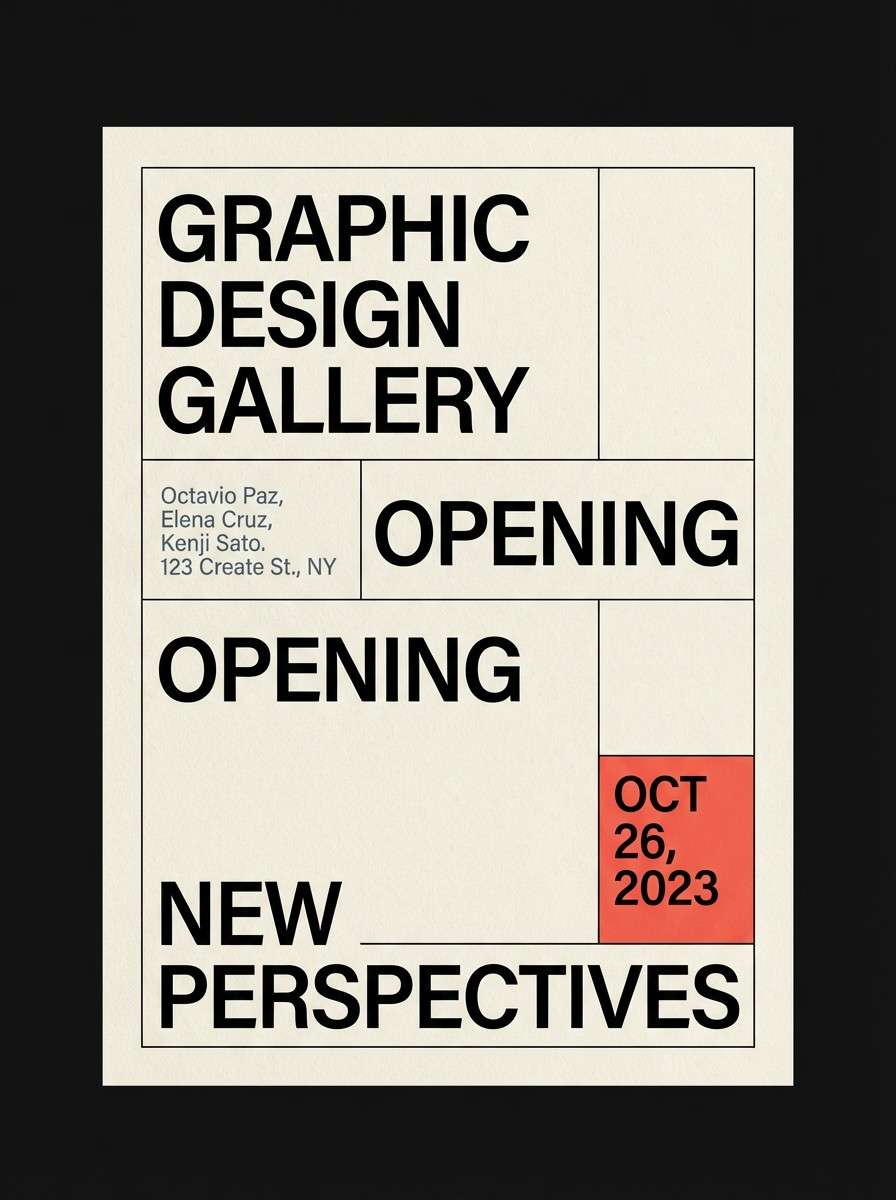
Cultured and refined, it brings to mind minimalist gallery walls with a warm accent note. Use black and slate for the typographic system, then add coral as a small highlight for dates or venue details. Cream keeps it airy and print-friendly. Tip: keep alignment strict and let the accent color do the emotional work.
Image example of gallery opening generated using media.io
What Colors Go Well with Coral Red?
Cool complements like teal, turquoise, and muted blues make coral red feel fresher and more contemporary, especially in UI components and hero sections. Deep navy or near-black is a reliable anchor when you need strong readability.
For softer looks, pair coral with warm neutrals like cream, sand, and blush. These reduce visual tension and are ideal for stationery, wellness, and packaging where you want warmth without high contrast everywhere.
For bolder palettes, add sunny yellow in small doses. Yellow acts like a spotlight—great for highlights and icons—but it’s best used sparingly so coral stays the main character.
How to Use a Coral Red Color Palette in Real Designs
Start with a role-based system: assign coral red to “attention” (primary buttons, key tags, important numbers), then use neutrals for background surfaces and a dark tone for text. This keeps the design clean and accessible.
In print and packaging, treat coral as a focal band, stamp, or label accent rather than full-coverage color. A little coral goes a long way, and textured stocks or matte finishes often make coral tones feel more premium.
When mixing with photography, keep images slightly warm and not overly saturated. That way, your coral red color scheme reads consistent across banners, posts, and landing pages.
Create Coral Red Palette Visuals with AI
If you’re building a brand board, a landing page mockup, or social creatives, generating palette-matched visuals can help you test direction fast. With consistent prompts, you can create a set that looks cohesive across sizes and layouts.
Reuse the prompts above and swap subjects (product, flyer, UI) while keeping the same coral + supporting colors. This makes it easier to compare concepts without changing the overall mood.
Media.io lets you turn text prompts into on-brand images in your browser—then iterate quickly until the coral balance feels right.
Coral Red Color Palette FAQs
-
What HEX code is considered “coral red”?
Coral red can vary by shade, but a common coral-red direction is around #FF4D5A to #FF5A5F. In this article, many palettes use these values as the primary coral for consistent warmth and punch. -
What colors complement coral red best?
Teal and turquoise are classic complements that make coral feel crisp and modern. Deep navy or near-black adds structure, while cream and sand soften the overall look for print and lifestyle branding. -
Can coral red work in professional UI design?
Yes—use coral as an accent (primary CTA, active states, badges) and keep surfaces neutral (light grays/cream) with dark text for contrast. Limiting coral to a small percentage of the interface helps avoid visual fatigue. -
How do I keep coral red from looking too “sweet” or childish?
Pair it with darker anchors like charcoal, deep navy, or ink tones, and use plenty of whitespace. Choosing muted supporting neutrals (stone, slate, warm gray) makes coral read more editorial and premium. -
Is coral red suitable for print and packaging?
Coral prints well, especially when balanced with warm neutrals and a dark label color for text. For packaging, matte stocks and subtle texture often make coral feel richer and less neon. -
What’s a good secondary accent to use with coral red besides teal?
Muted blues (steel/denim) are great for a calmer contrast, and small touches of warm yellow can add “highlight energy.” Keep the secondary accent consistent so the palette stays coherent across assets. -
How can I generate images that match my coral red palette?
Use a text-to-image tool and include your palette mood plus clear color directions in the prompt (e.g., “dominant coral red and peach with teal accents”). Then iterate on lighting, background, and contrast until it matches your brand style.


