Blue and violet sit right between calm blue and expressive purple, so it can feel both trustworthy and imaginative in the same layout. That makes it a strong choice for modern UI, premium branding, and print designs that need personality without chaos.
Below are 20+ blue and violet color combinations with HEX codes, plus AI image prompts you can reuse to generate matching visuals in seconds.
In this article
- Why Blue and Violet Combinations Work So Well
-
- midnight orchid
- lilac nebula
- periwinkle haze
- electric iris
- plum denim
- violet glacier
- amethyst latte
- cosmic grape
- soft wisteria
- indigo petal
- berry velvet
- rainy lavender
- royal violet gold
- violet sage
- candy orchid
- deep space violet
- orchid clay
- violet cyan pop
- violet monochrome
- violet rosewood
- aurora violet
- studio violet neutral
- What Colors Go Well with Blue Violet?
- How to Use a Blue and Violet Combination in Real Designs
- Create Blue Violet Palette Visuals with AI
Why Blue and Violet Combinations Work So Well
Blue violet naturally balances logic and emotion: blue brings clarity and stability, while violet adds creativity and intrigue. That blend makes it ideal for brands and interfaces that want to feel smart, modern, and slightly elevated.
It also scales beautifully across tints and shades. You can push it toward soft lilacs for calm backgrounds, or down into indigos for premium, high-contrast UI—without changing the overall “voice” of the design.
In digital products, blue violet tends to perform well for hierarchy. Dark violets read as strong structural colors (nav, headers), while brighter violets work as intentional accents for CTAs, states, and key data.
20+ Blue Violet Color Palette Ideas (with HEX Codes)
1) Midnight Orchid
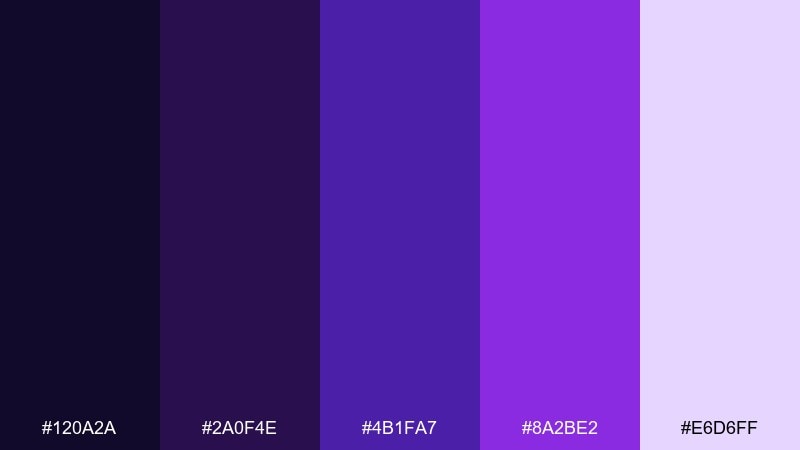
HEX: #120A2A #2A0F4E #4B1FA7 #8A2BE2 #E6D6FF
Mood: moody, luxe, cinematic
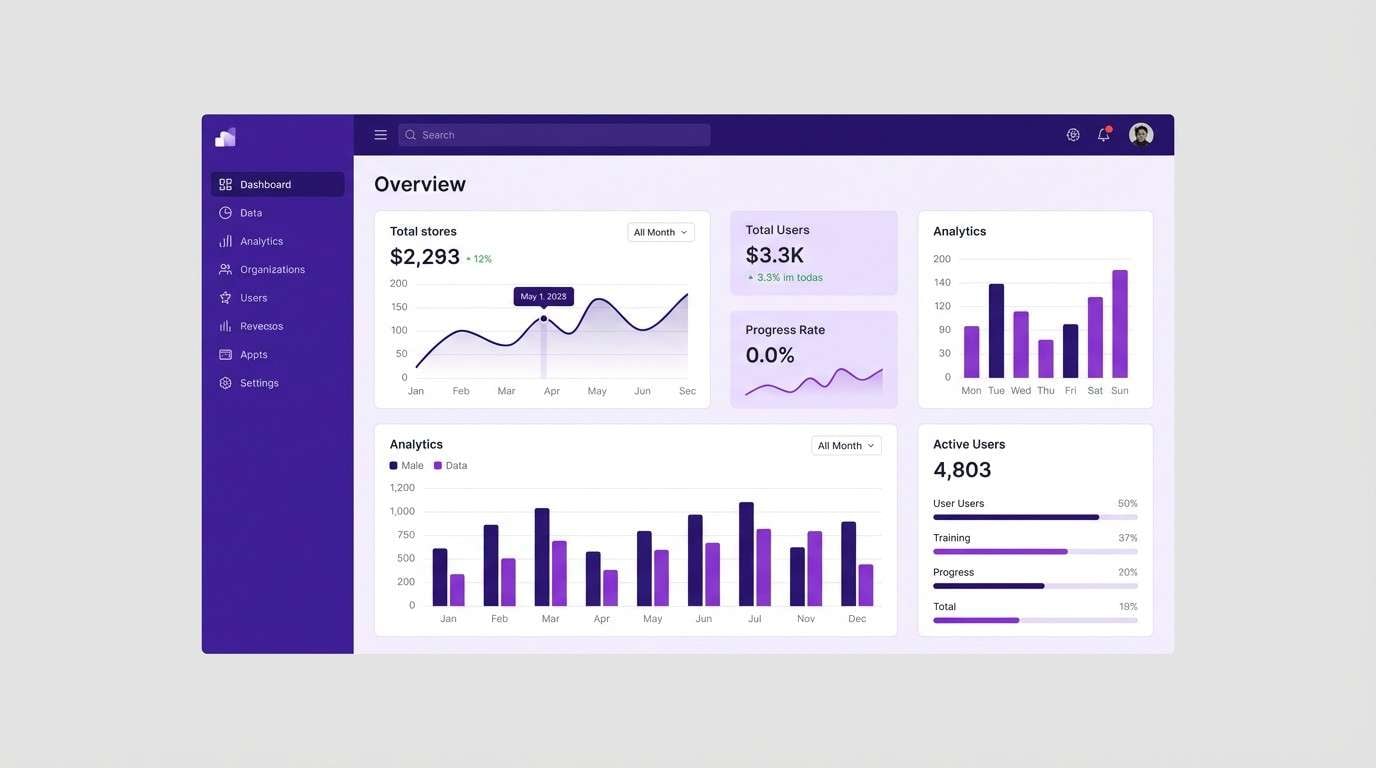
Best for: SaaS dashboard UI
Moody and cinematic like city lights after rain, these tones move from inky violet to bright electric bloom. Use this blue violet color palette for dashboards that need depth without losing clarity. Pair the darkest shade for nav and sidebars, then reserve the neon-like violet for active states and key metrics. Tip: keep body text on the pale lavender to maintain contrast and reduce eye strain.
Image example of midnight orchid generated using media.io
Media.io is an online AI studio for creating and editing video, image, and audio in your browser.


2) Lilac Nebula
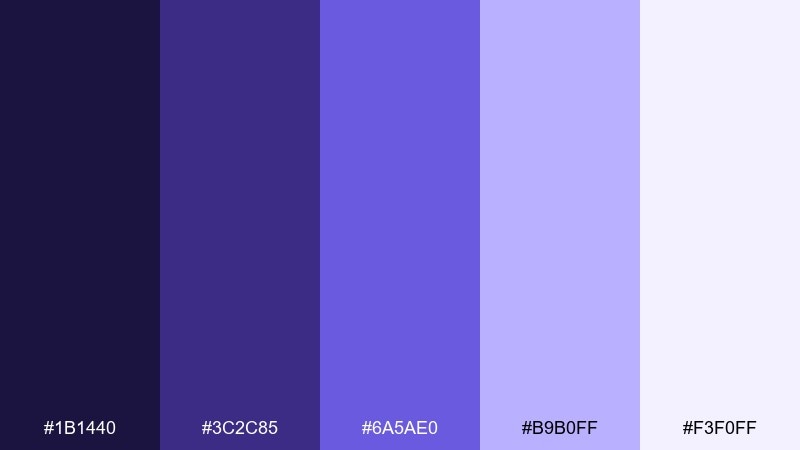
HEX: #1B1440 #3C2C85 #6A5AE0 #B9B0FF #F3F0FF
Mood: dreamy, airy, futuristic
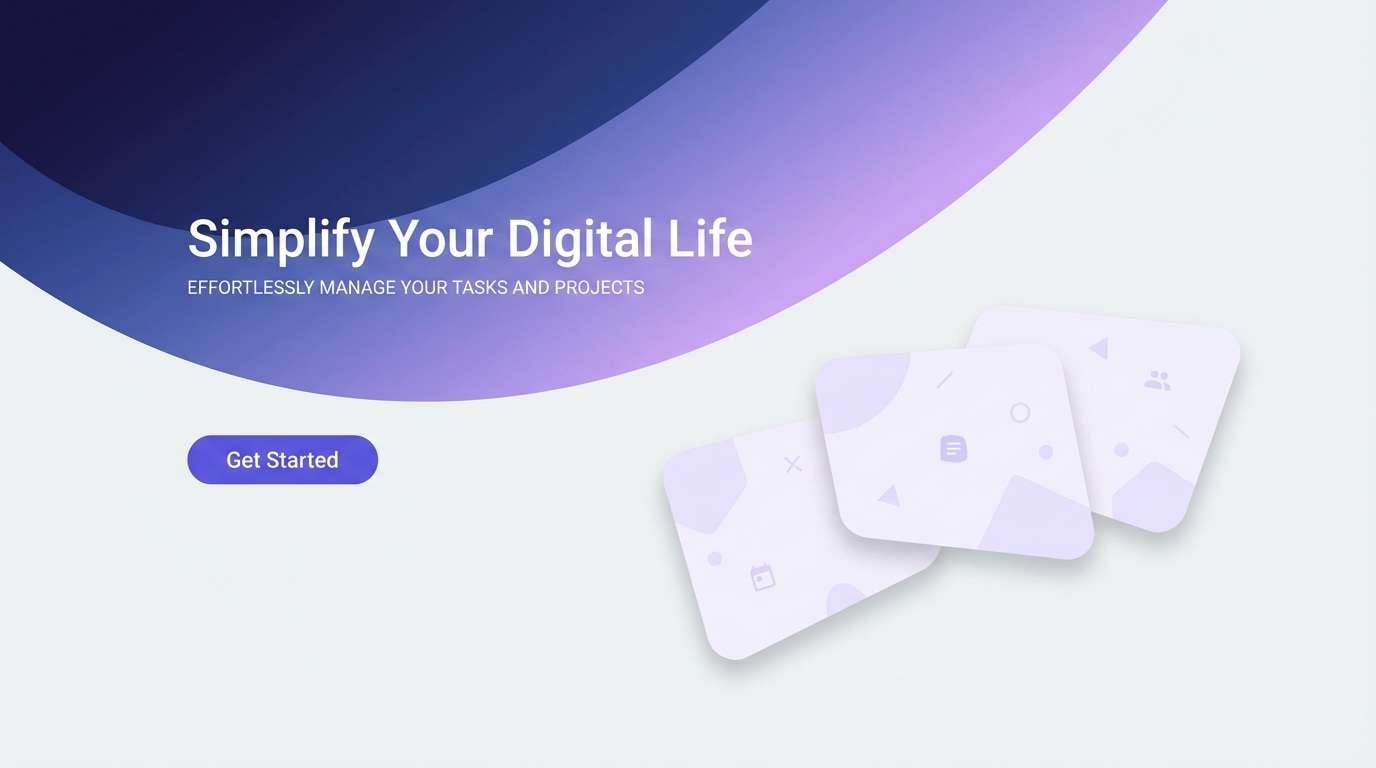
Best for: Landing page hero section
Dreamy and weightless like a nebula haze, these blue and violet combinations feel modern without turning harsh. Build a hero gradient from the indigo base into soft lilac, then let white space do the heavy lifting for readability. This pairing shines with clean sans-serif type and minimal iconography. Tip: add one small high-contrast CTA button in #6A5AE0 to anchor the layout.
Image example of lilac nebula generated using media.io
3) Periwinkle Haze
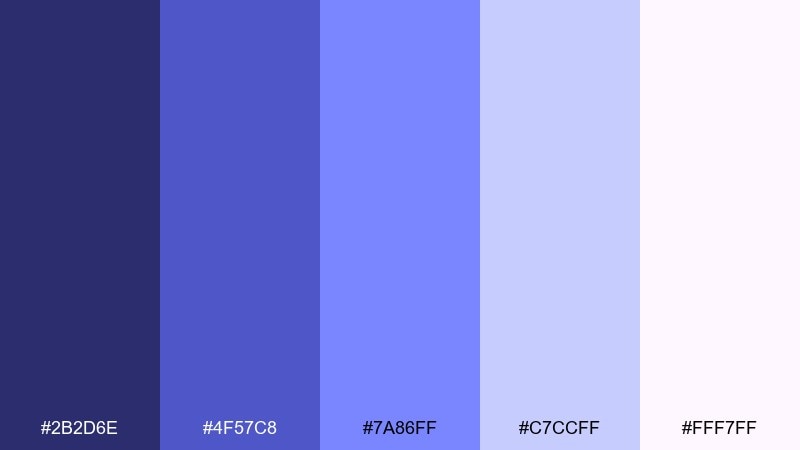
HEX: #2B2D6E #4F57C8 #7A86FF #C7CCFF #FFF7FF
Mood: soft, optimistic, clean
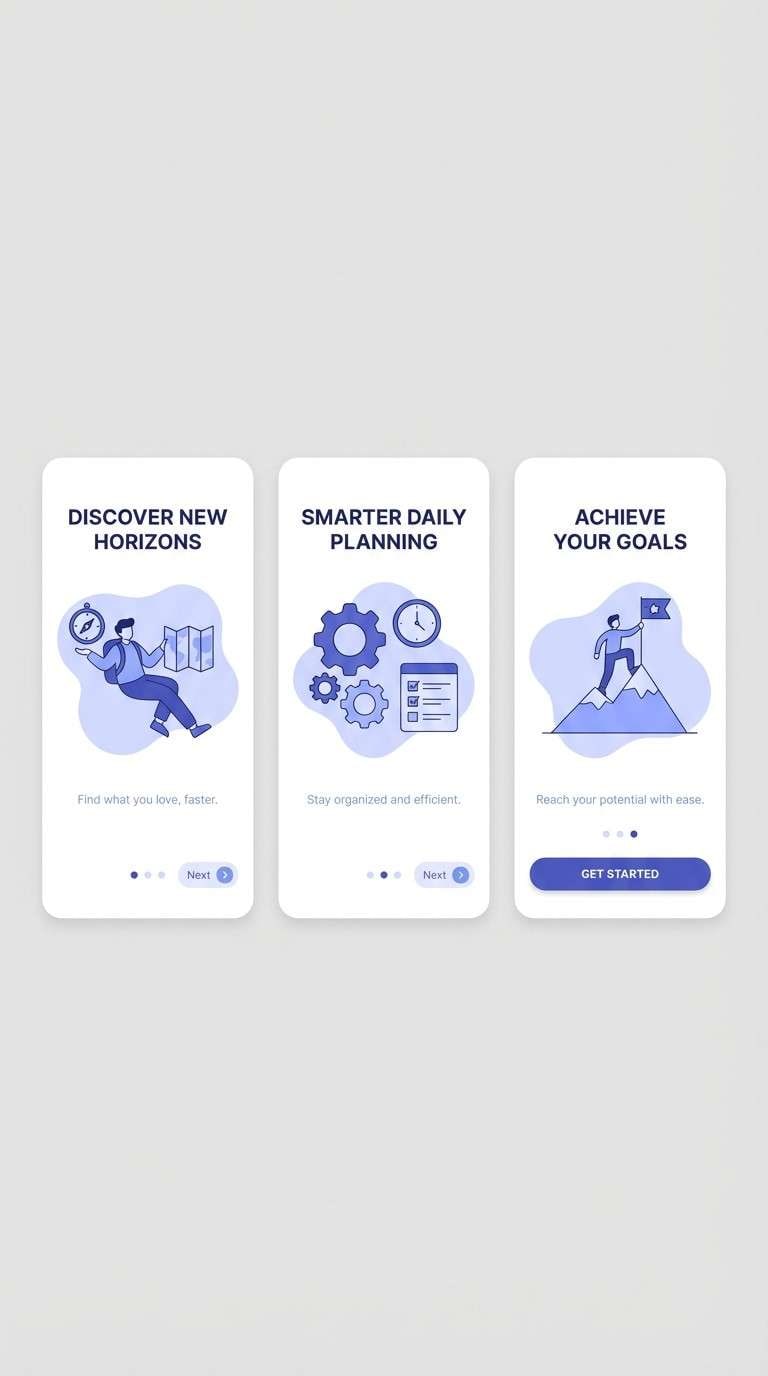
Best for: App onboarding screens
Soft and optimistic like early morning sky, these periwinkle-leaning violets feel friendly and clear. Use the mid tones for illustration fills and the deep indigo for headings and progress indicators. It pairs well with simple line icons and generous spacing so the lighter shades can breathe. Tip: keep one dominant accent (like #7A86FF) consistent across steps to guide the eye.
Image example of periwinkle haze generated using media.io
4) Electric Iris
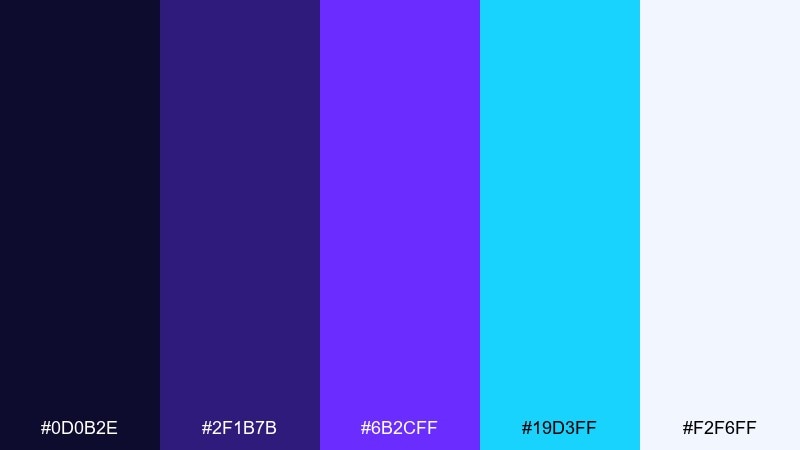
HEX: #0D0B2E #2F1B7B #6B2CFF #19D3FF #F2F6FF
Mood: bold, energetic, techy
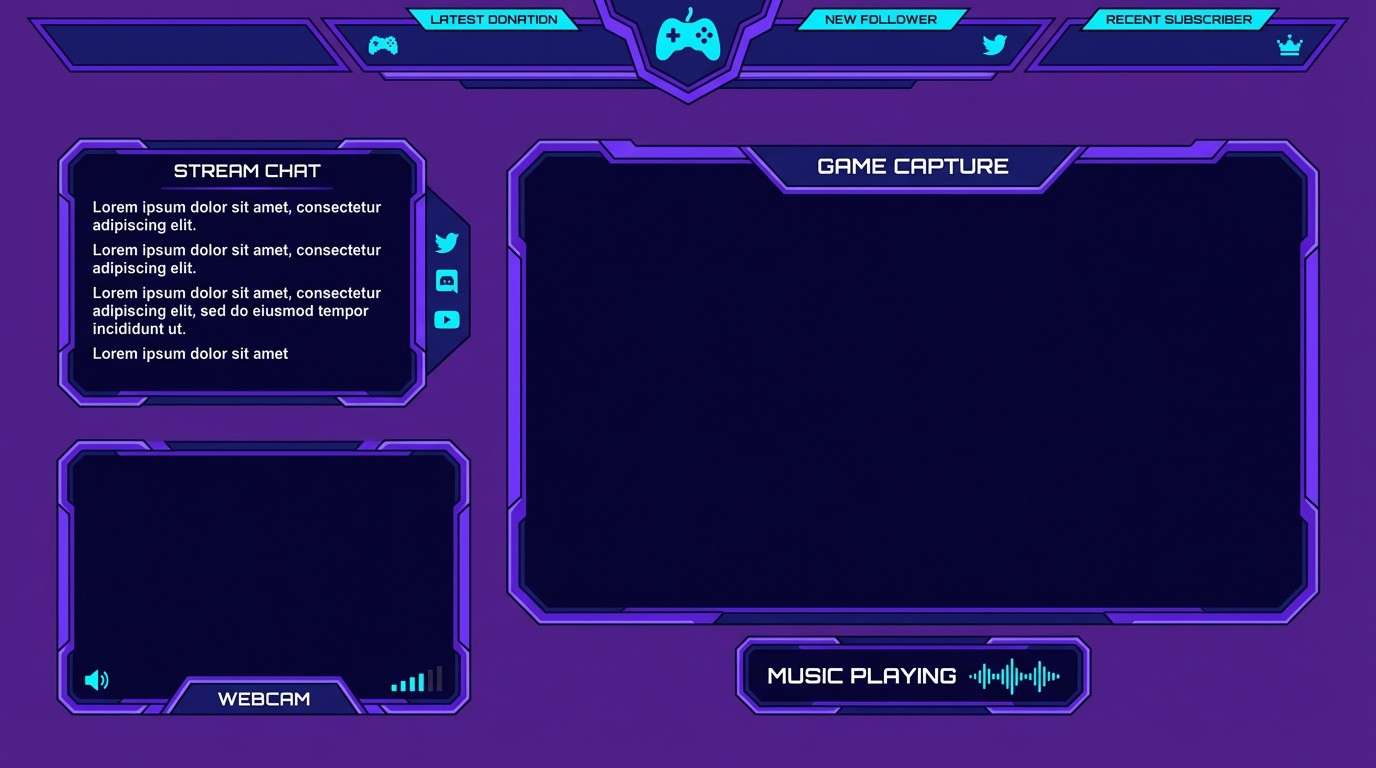
Best for: Gaming stream overlay UI
Bold and energetic like a club laser cutting through midnight, this mix brings instant intensity. For blue and violet color combinations that still feel controlled, let the electric violet carry highlights while cyan stays as a limited pop for alerts and badges. The near-black base keeps everything grounded and readable. Tip: apply cyan only to interactive states so it never competes with the main accent.
Image example of electric iris generated using media.io
5) Plum Denim
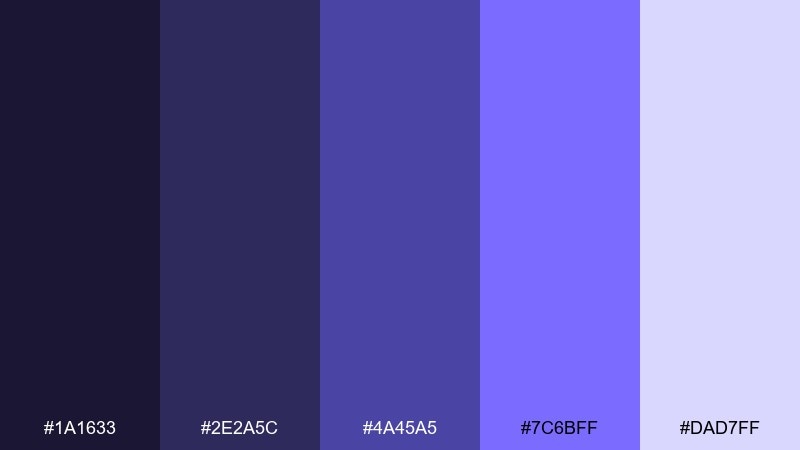
HEX: #1A1633 #2E2A5C #4A45A5 #7C6BFF #DAD7FF
Mood: smart, confident, minimal
Best for: Corporate pitch deck
Smart and confident like dark denim with a violet sheen, these blue and violet shades feel polished and business-ready. Use the deep tones for section dividers and titles, then bring in the brighter violet for charts and callouts. It pairs nicely with cool grays and plenty of negative space for a clean presentation. Tip: keep charts to two series colors to avoid visual clutter.
Image example of plum denim generated using media.io

6) Violet Glacier
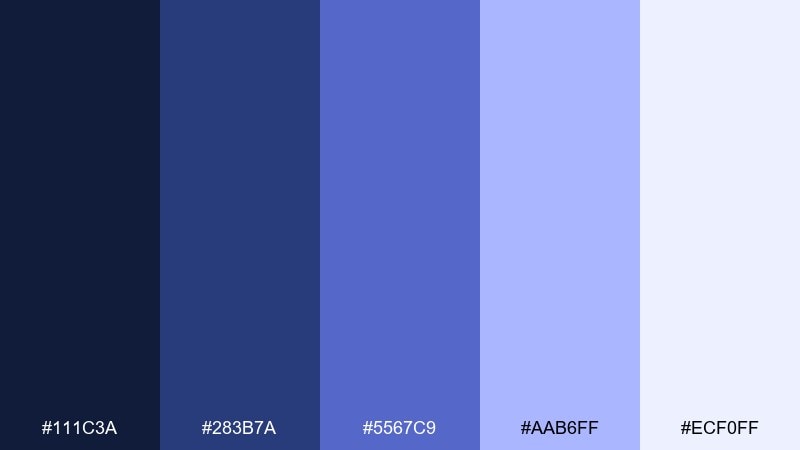
HEX: #111C3A #283B7A #5567C9 #AAB6FF #ECF0FF
Mood: cool, crisp, trustworthy
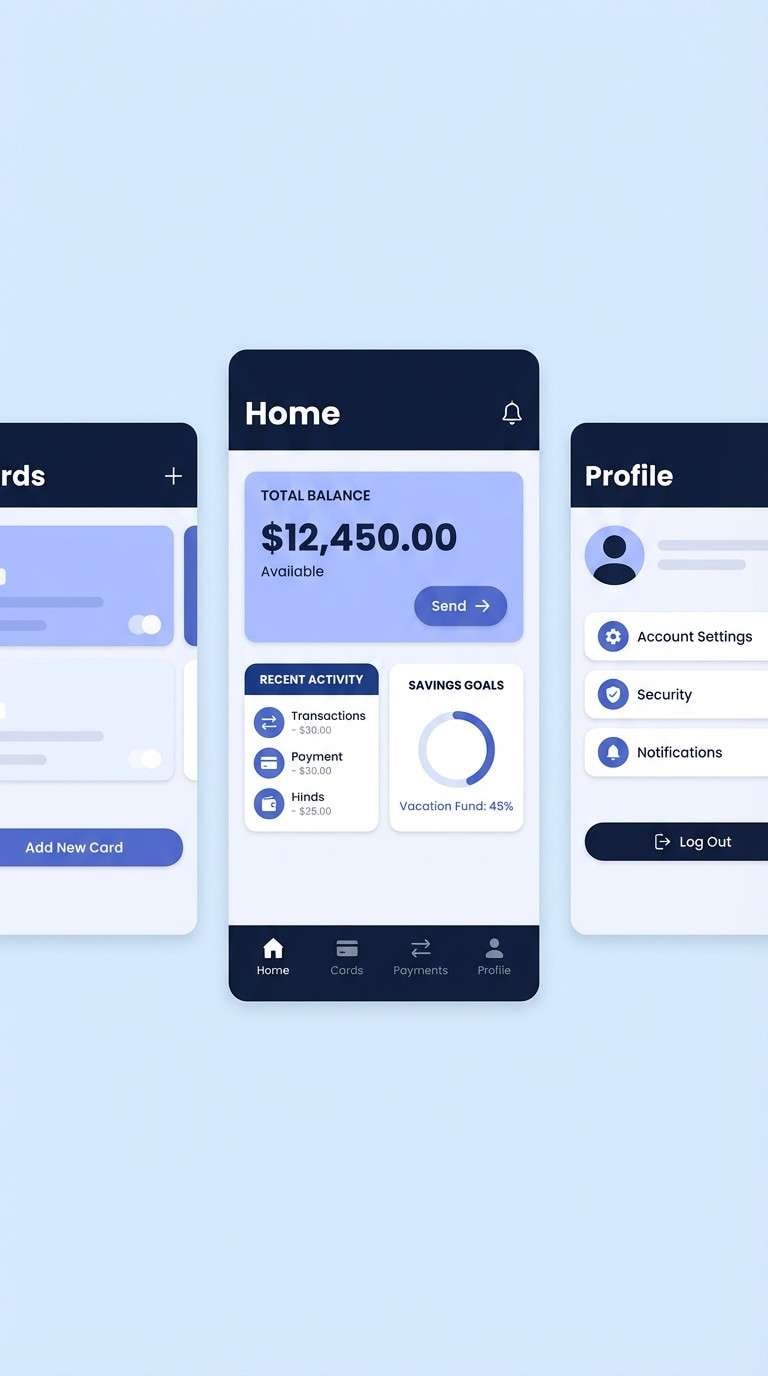
Best for: Fintech mobile UI
Cool and crisp like light bouncing off ice, this range reads calm and reliable. Use the darker blues for navigation and balances, then lean on the lighter tints for cards, separators, and subtle backgrounds. The palette pairs well with thin outlines and quiet micro-interactions. Tip: reserve #5567C9 for primary buttons so key actions are unmistakable.
Image example of violet glacier generated using media.io
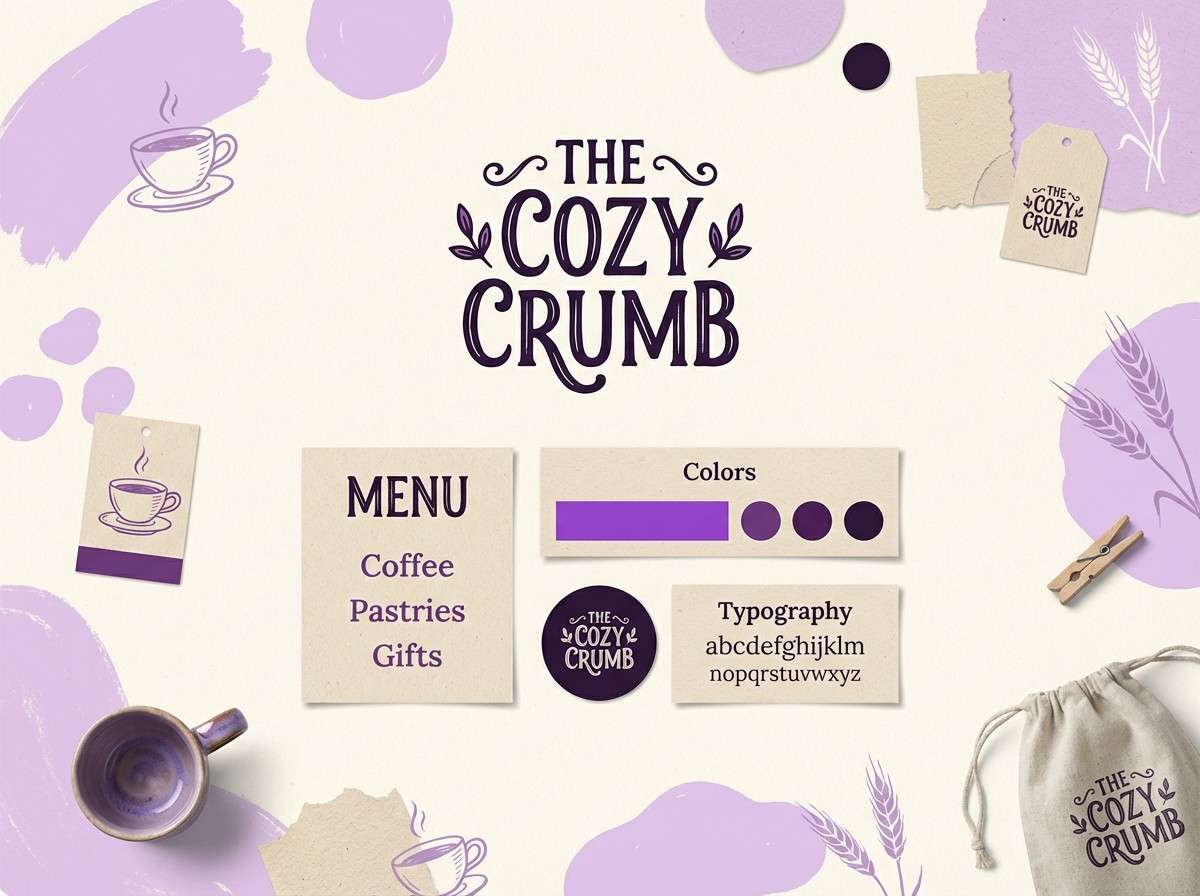
7) Amethyst Latte
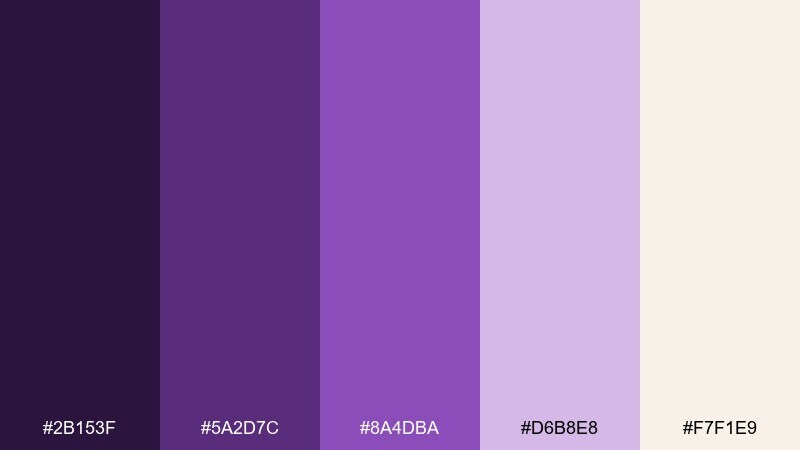
HEX: #2B153F #5A2D7C #8A4DBA #D6B8E8 #F7F1E9
Mood: cozy, artisanal, romantic
Best for: Cafe brand identity
Cozy and artisanal like a warm latte with a violet twist, these blue and violet combinations feel welcoming and handcrafted. The creamy off-white keeps the richer purples from getting heavy, making it great for menus and packaging labels. Pair it with serif typography or a friendly script mark for a boutique vibe. Tip: use #D6B8E8 as a soft background to keep copy legible on print.
Image example of amethyst latte generated using media.io
8) Cosmic Grape
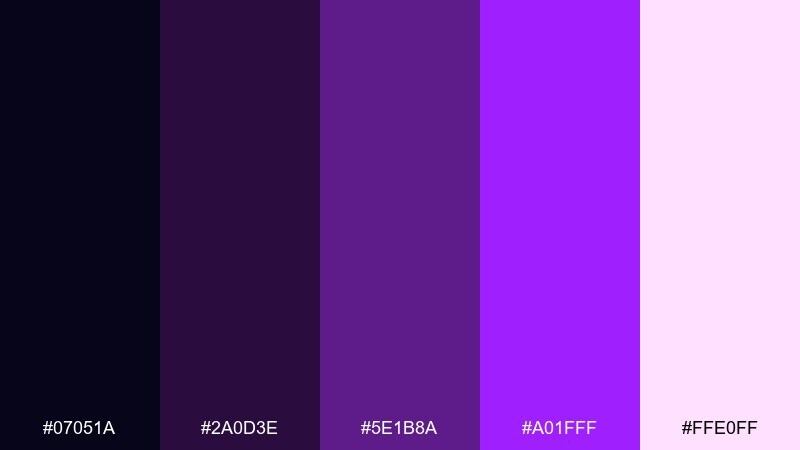
HEX: #07051A #2A0D3E #5E1B8A #A01FFF #FFE0FF
Mood: dramatic, glossy, nightlife
Best for: Music event poster
Dramatic and glossy like neon reflected in a dark window, this blue and violet mix is built for attention. Use the black-violet base for the background and let the hot violet headline do the shouting. It pairs well with bold condensed type and simple geometric shapes. Tip: add a faint glow around #A01FFF text so it stays readable from a distance.
Image example of cosmic grape generated using media.io

9) Soft Wisteria
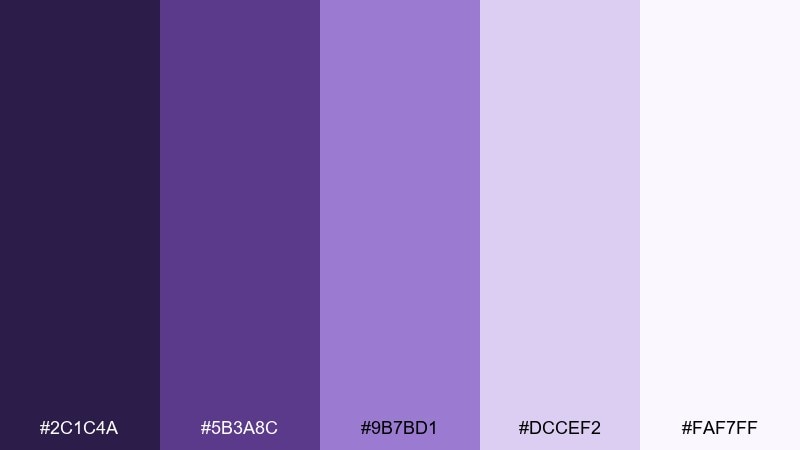
HEX: #2C1C4A #5B3A8C #9B7BD1 #DCCEF2 #FAF7FF
Mood: gentle, floral, soothing
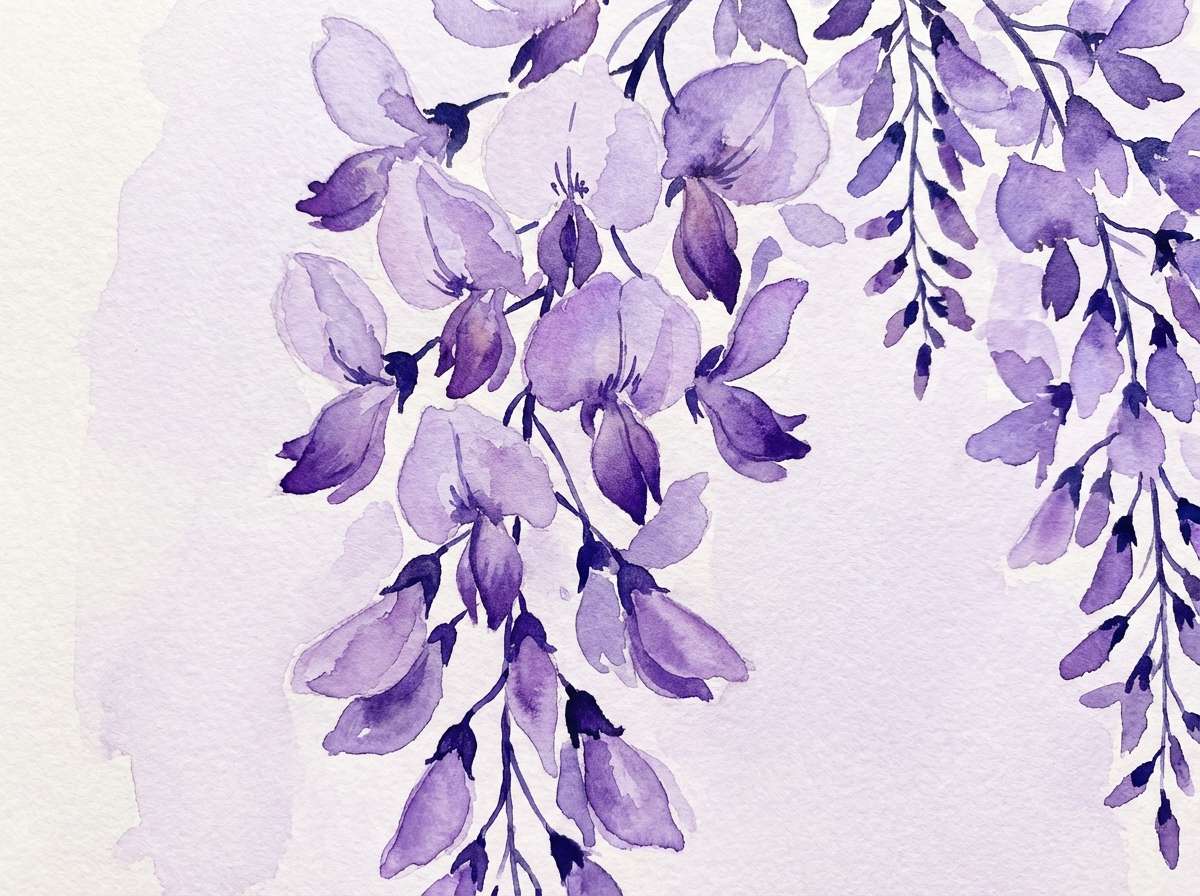
Best for: Watercolor botanical illustration
Gentle and floral like wisteria petals drifting in spring air, these violets feel calm and tender. The pale tints make an ideal paper-like background, while the mid purple works for petal shadows and stems. Pair it with delicate linework and lots of white space for an elegant finish. Tip: keep the darkest shade only for focal points so the illustration stays airy.
Image example of soft wisteria generated using media.io
10) Indigo Petal
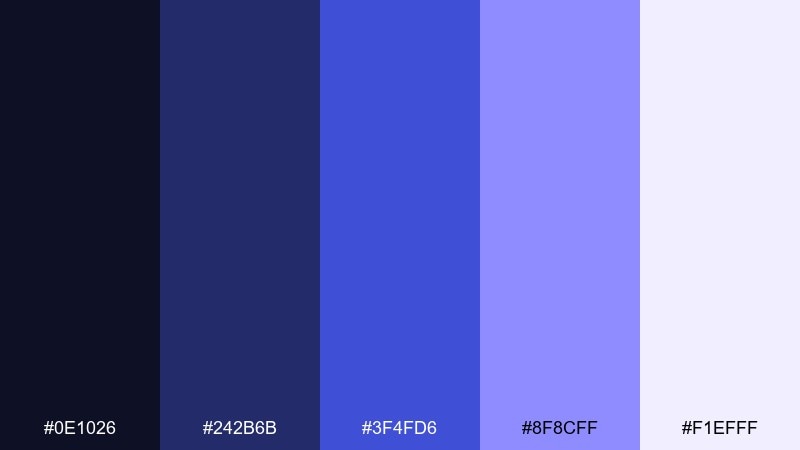
HEX: #0E1026 #242B6B #3F4FD6 #8F8CFF #F1EFFF
Mood: sleek, modern, structured
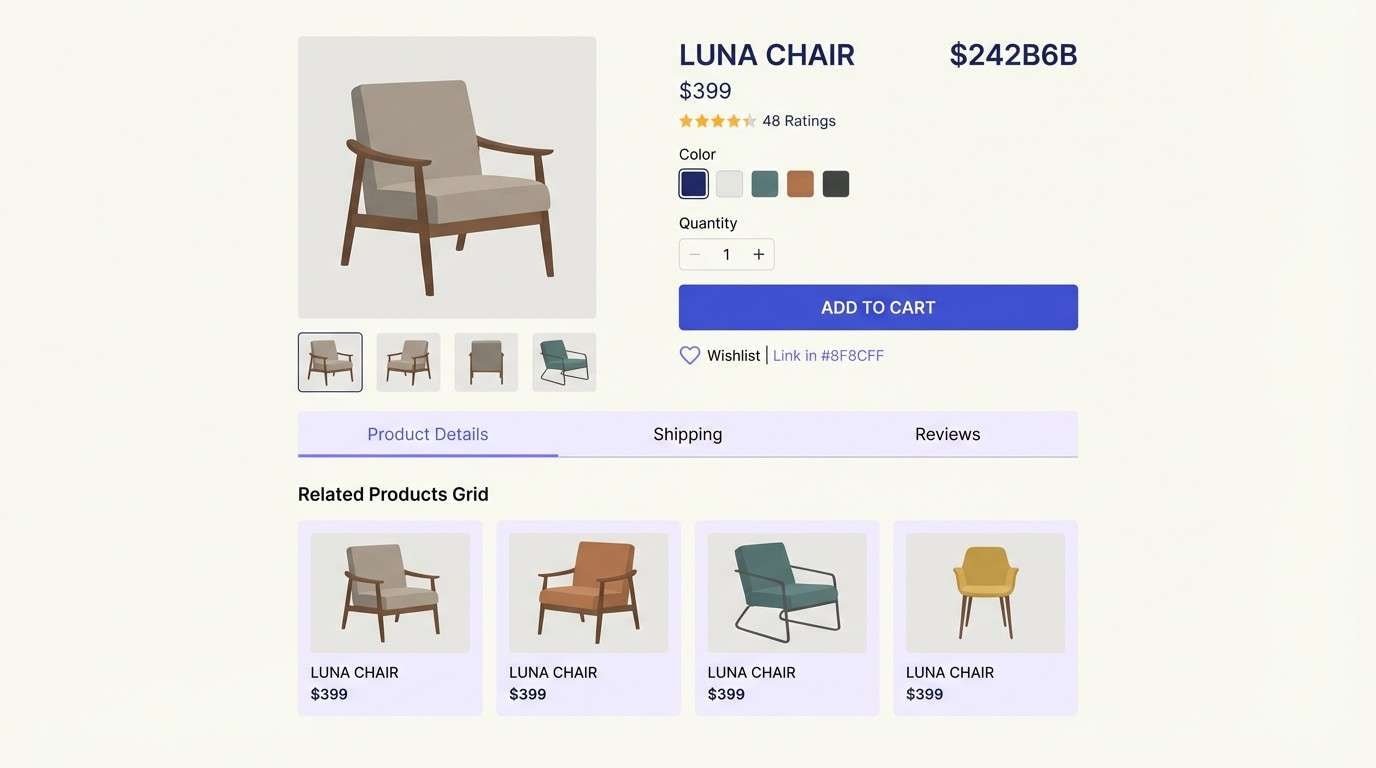
Best for: Ecommerce product page UI
Sleek and structured like a tailored jacket with a violet lining, these blue violet tones feel sharp and organized. Use indigo for headings and prices, then let the lighter lavender support background sections and image frames. It pairs well with minimal product photography and clean grid layouts. Tip: limit accent usage to CTAs and ratings so the page feels premium, not noisy.
Image example of indigo petal generated using media.io
11) Berry Velvet
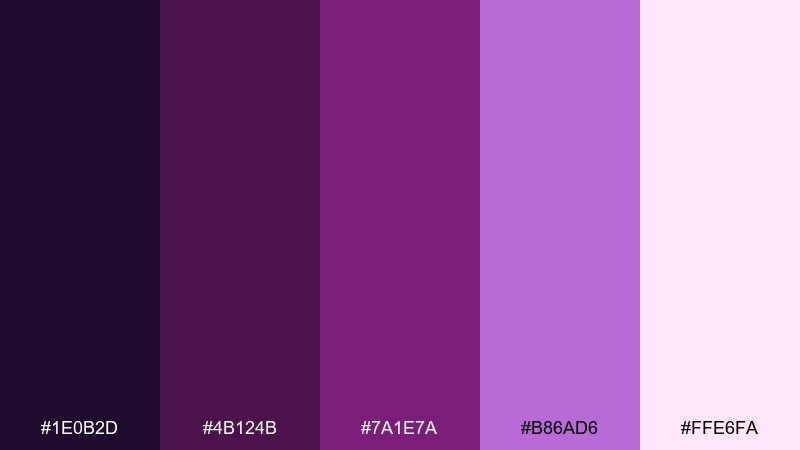
HEX: #1E0B2D #4B124B #7A1E7A #B86AD6 #FFE6FA
Mood: sensual, luxe, boutique
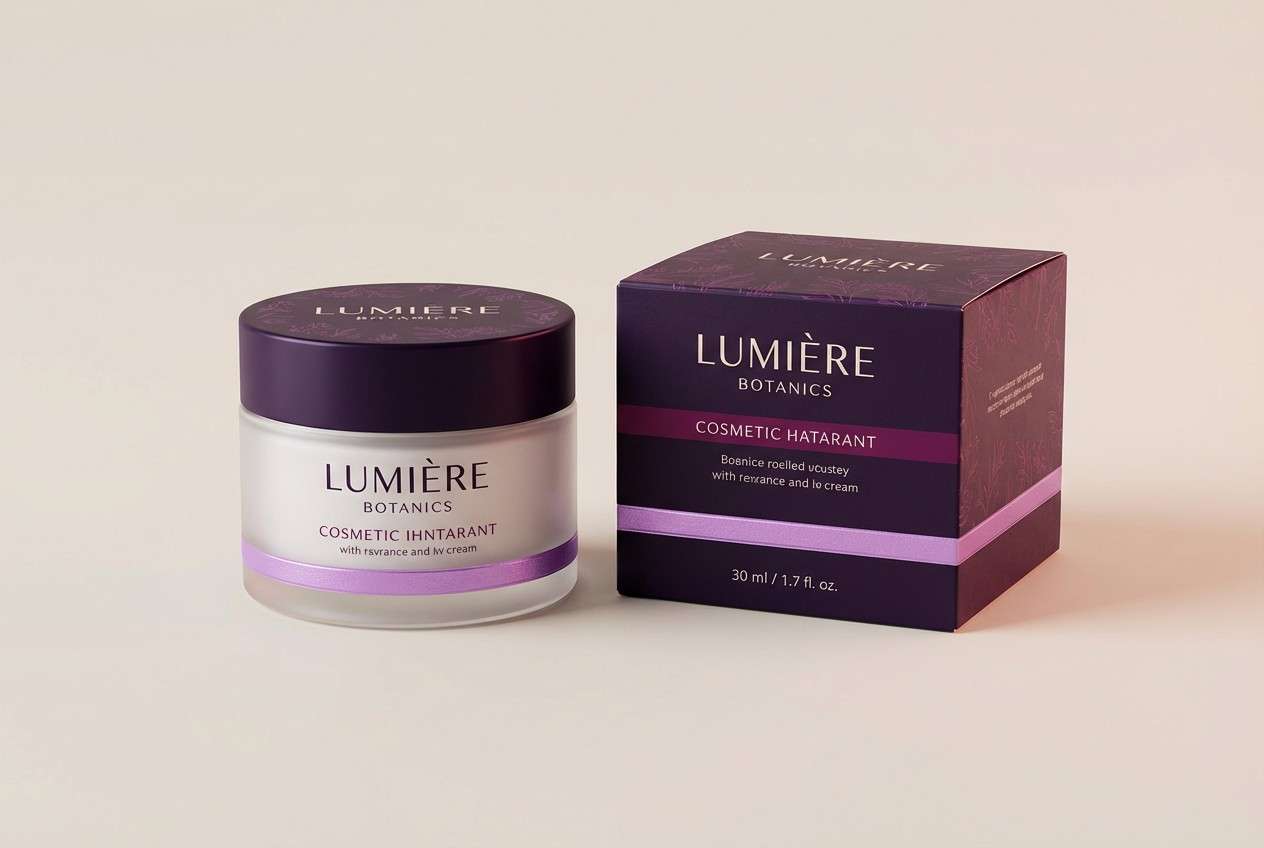
Best for: Beauty product packaging
Sensual and velvety like crushed berries on satin, this blue and violet set feels instantly luxurious. Use the deep plum for typography and brand marks, and the rosy violet for gradients or foil-like accents. It pairs beautifully with matte finishes and minimal layouts that let color do the talking. Tip: keep backgrounds pale so the darker inks print crisp and refined.
Image example of berry velvet generated using media.io
12) Rainy Lavender
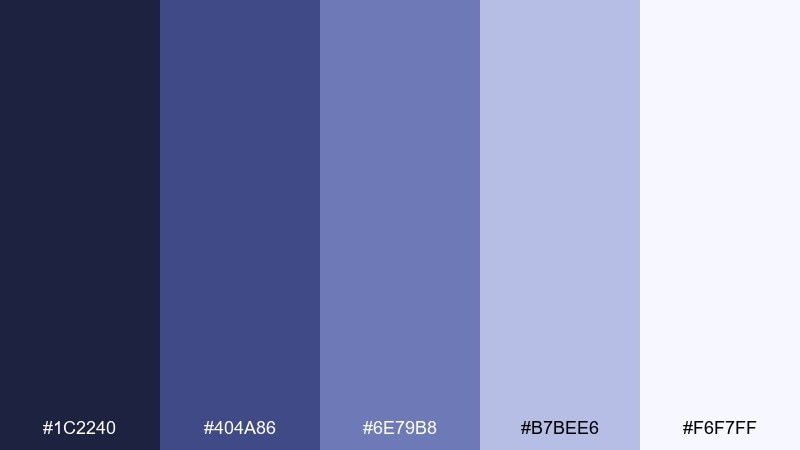
HEX: #1C2240 #404A86 #6E79B8 #B7BEE6 #F6F7FF
Mood: calm, thoughtful, academic
Best for: Educational slide templates
Calm and thoughtful like lavender under a cloudy sky, these blue violet hues support long-form reading. Use the darker tones for titles and section headers, while the pale tints keep slides light and uncluttered. It pairs well with simple diagrams and consistent spacing. Tip: choose one accent color for highlights and apply it to the same element type throughout.
Image example of rainy lavender generated using media.io

13) Royal Violet Gold
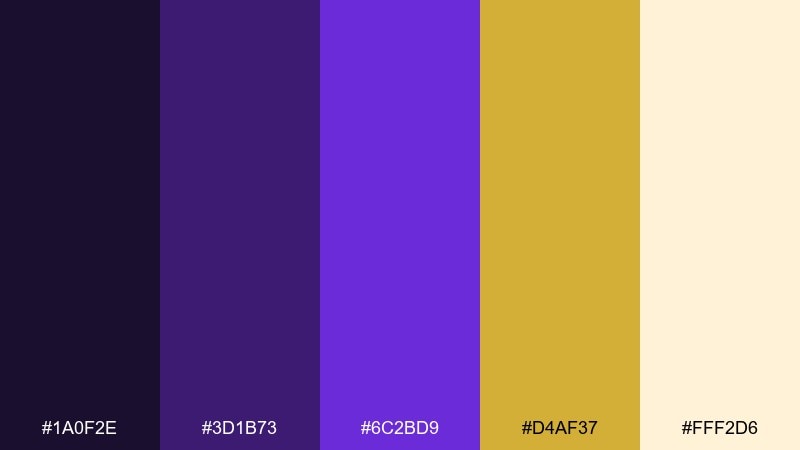
HEX: #1A0F2E #3D1B73 #6C2BD9 #D4AF37 #FFF2D6
Mood: regal, celebratory, premium
Best for: Luxury brand social ad
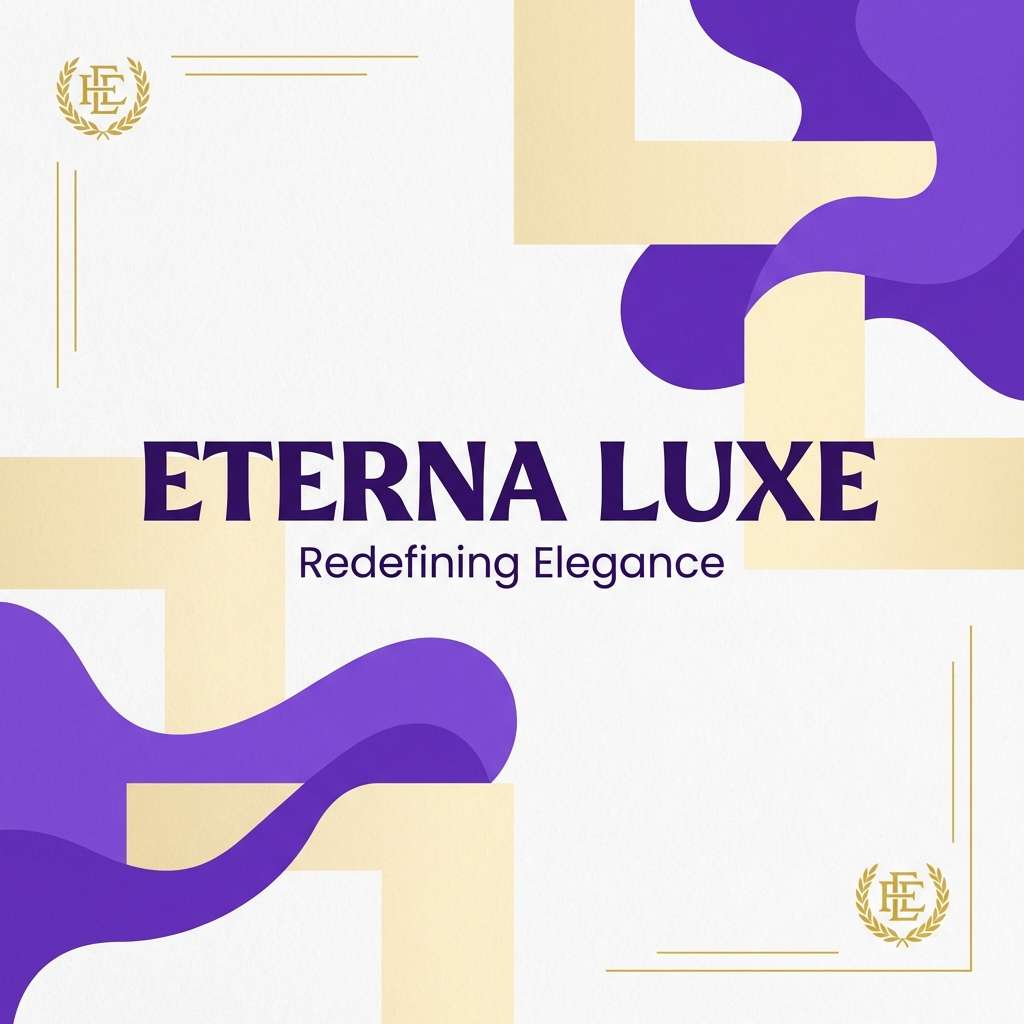
Regal and celebratory like velvet drapes with a gold spotlight, this mix feels premium at first glance. For blue and violet color combinations that read upscale, keep violet dominant and use gold as a tight, deliberate accent on borders, icons, or a single headline. It pairs well with high-contrast typography and minimal copy. Tip: avoid large gold blocks; thin lines and small motifs look more expensive.
Image example of royal violet gold generated using media.io
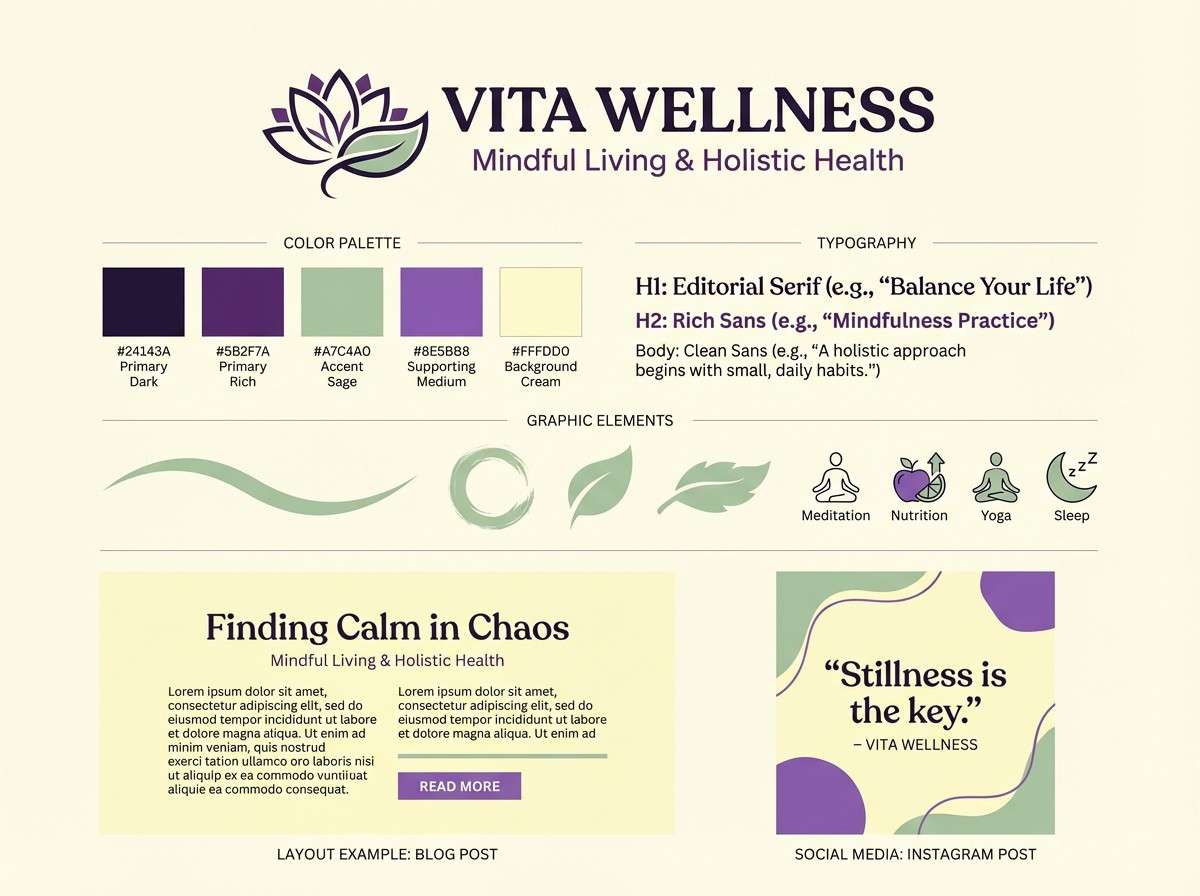
14) Violet Sage
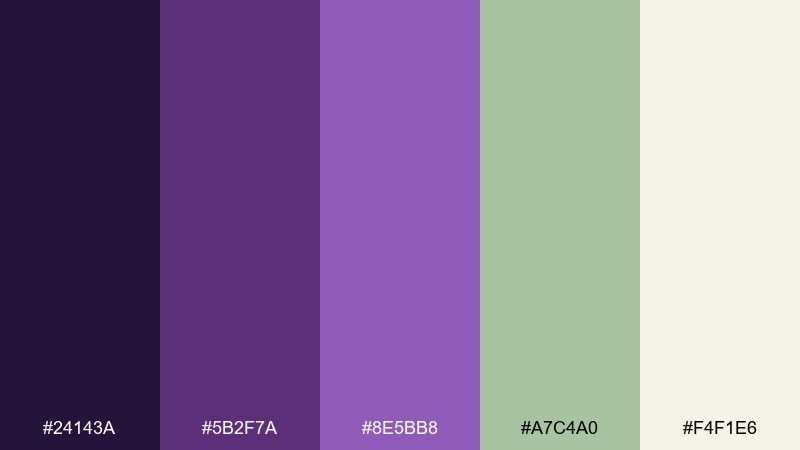
HEX: #24143A #5B2F7A #8E5BB8 #A7C4A0 #F4F1E6
Mood: balanced, natural, modern
Best for: Wellness blog branding
Balanced and grounded like purple shadows in a herb garden, this blue violet color palette mixes calm violet with soft sage. Use the green as a gentle counterpoint for icons, tags, or secondary buttons, while violet anchors headings and brand marks. It pairs well with warm cream backgrounds and organic shapes. Tip: keep saturation moderate so the wellness vibe stays calm, not loud.
Image example of violet sage generated using media.io
15) Candy Orchid
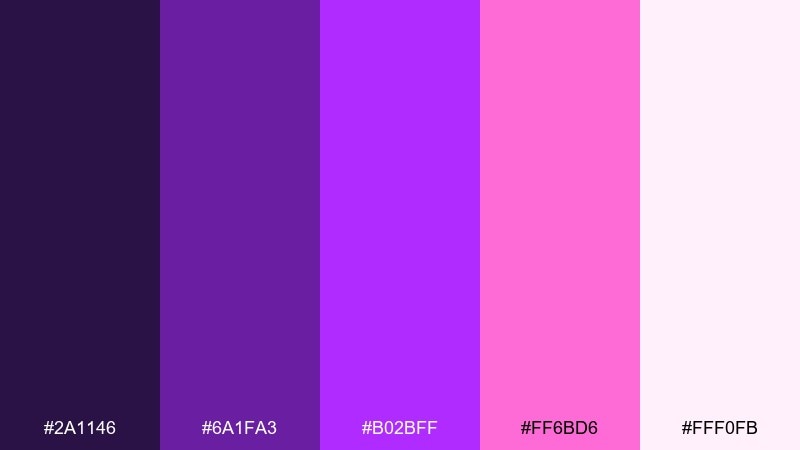
HEX: #2A1146 #6A1FA3 #B02BFF #FF6BD6 #FFF0FB
Mood: playful, pop, youthful
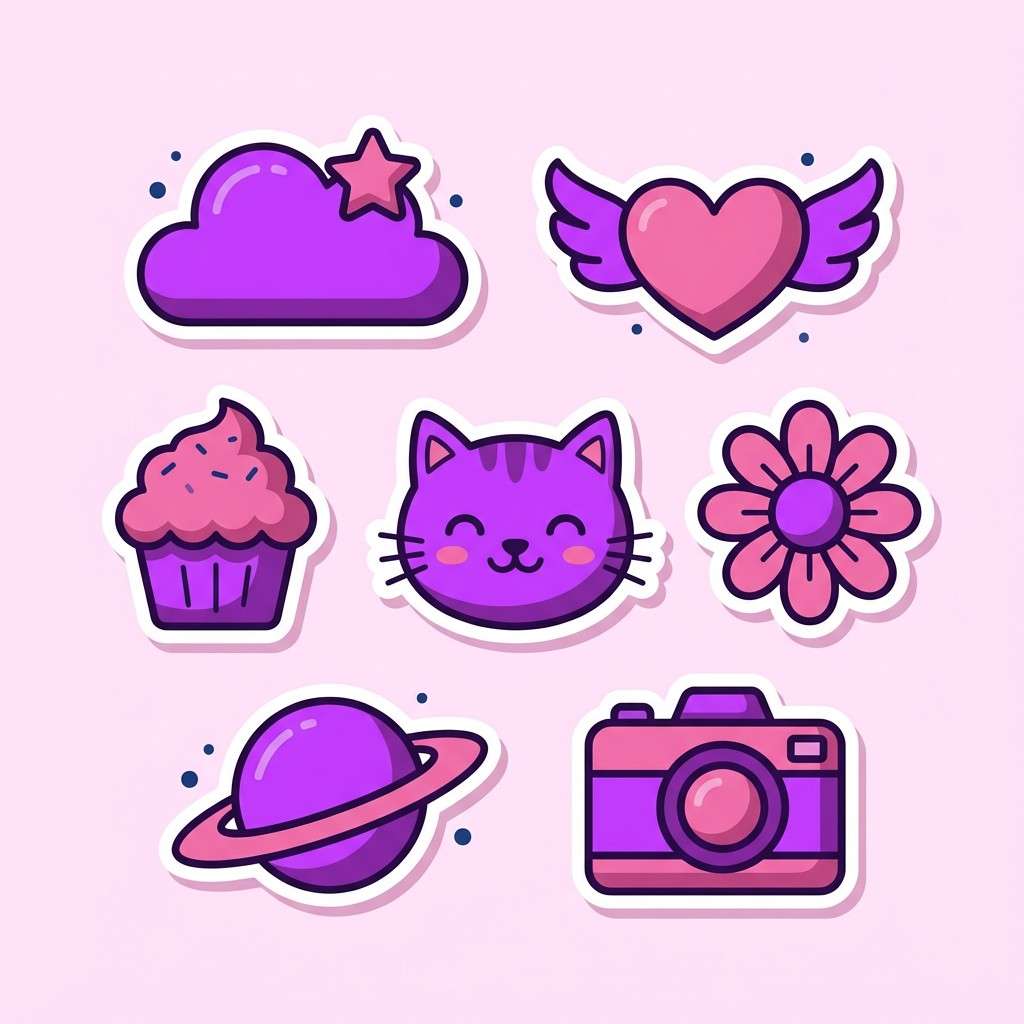
Best for: Sticker pack illustrations
Playful and poppy like candy wrappers and orchid petals, these brights are made for fun visuals. Use the punchy magenta sparingly so it reads as a highlight, not a takeover, and let violet stay as the main voice. It pairs well with rounded shapes, thick outlines, and bubbly type. Tip: keep a pale background to make the stickers feel clean and printable.
Image example of candy orchid generated using media.io
16) Deep Space Violet
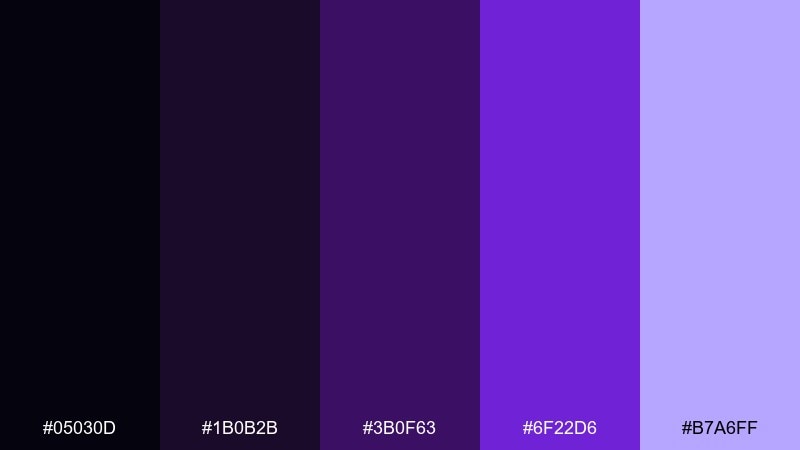
HEX: #05030D #1B0B2B #3B0F63 #6F22D6 #B7A6FF
Mood: mysterious, intense, sci-fi
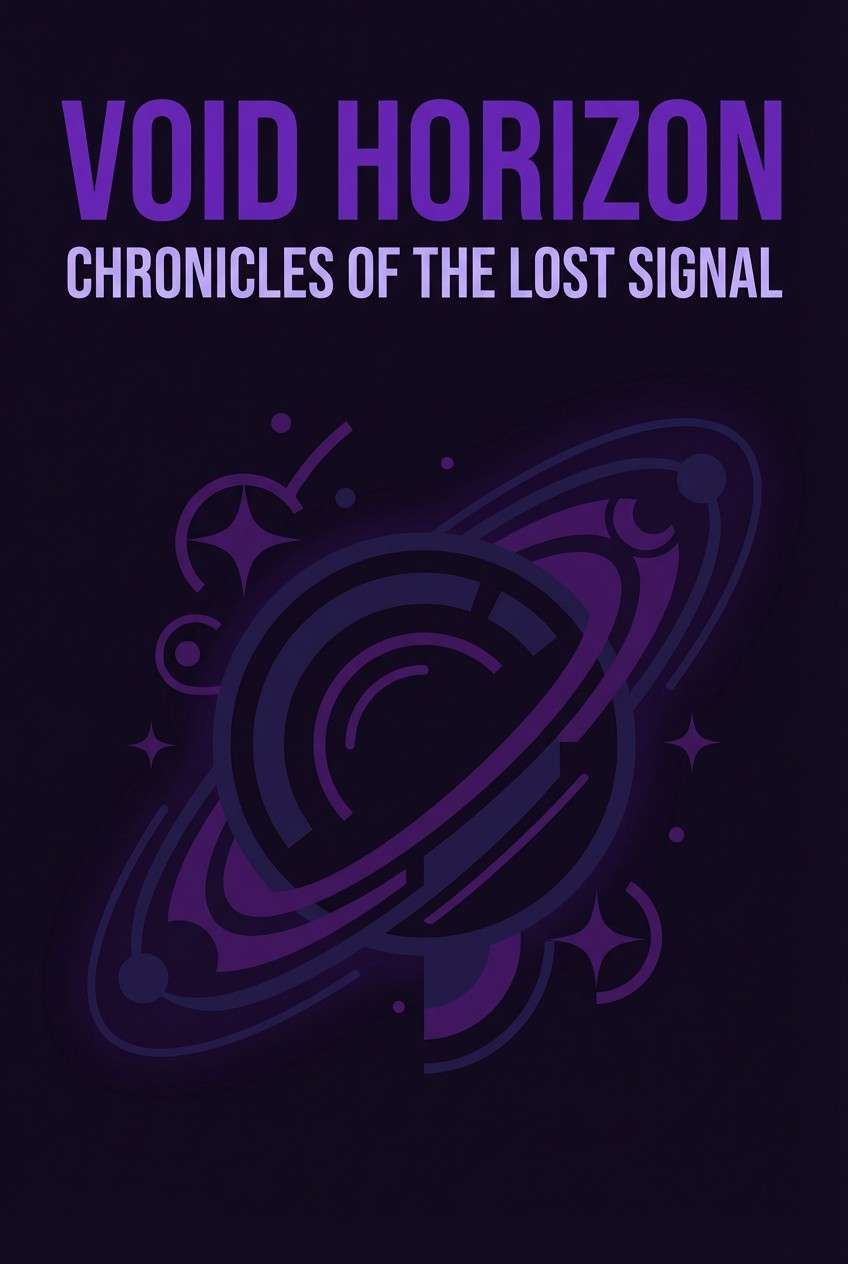
Best for: Sci-fi book cover design
Mysterious and intense like deep space seen through a tinted visor, these violets feel dramatic and modern. Use near-black for the background, then bring in the bright violet for the title to create instant hierarchy. It pairs well with minimal starfield textures and sharp geometric motifs. Tip: keep author text in the pale lavender so it stays readable without stealing focus.
Image example of deep space violet generated using media.io
17) Orchid Clay
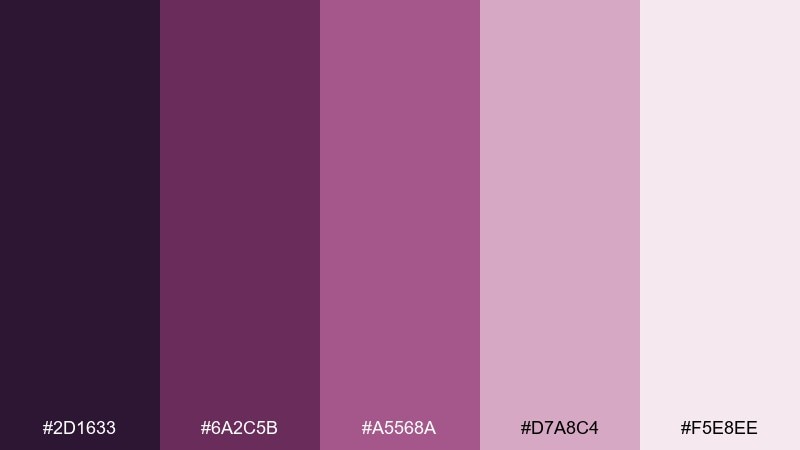
HEX: #2D1633 #6A2C5B #A5568A #D7A8C4 #F5E8EE
Mood: warm, earthy, boutique
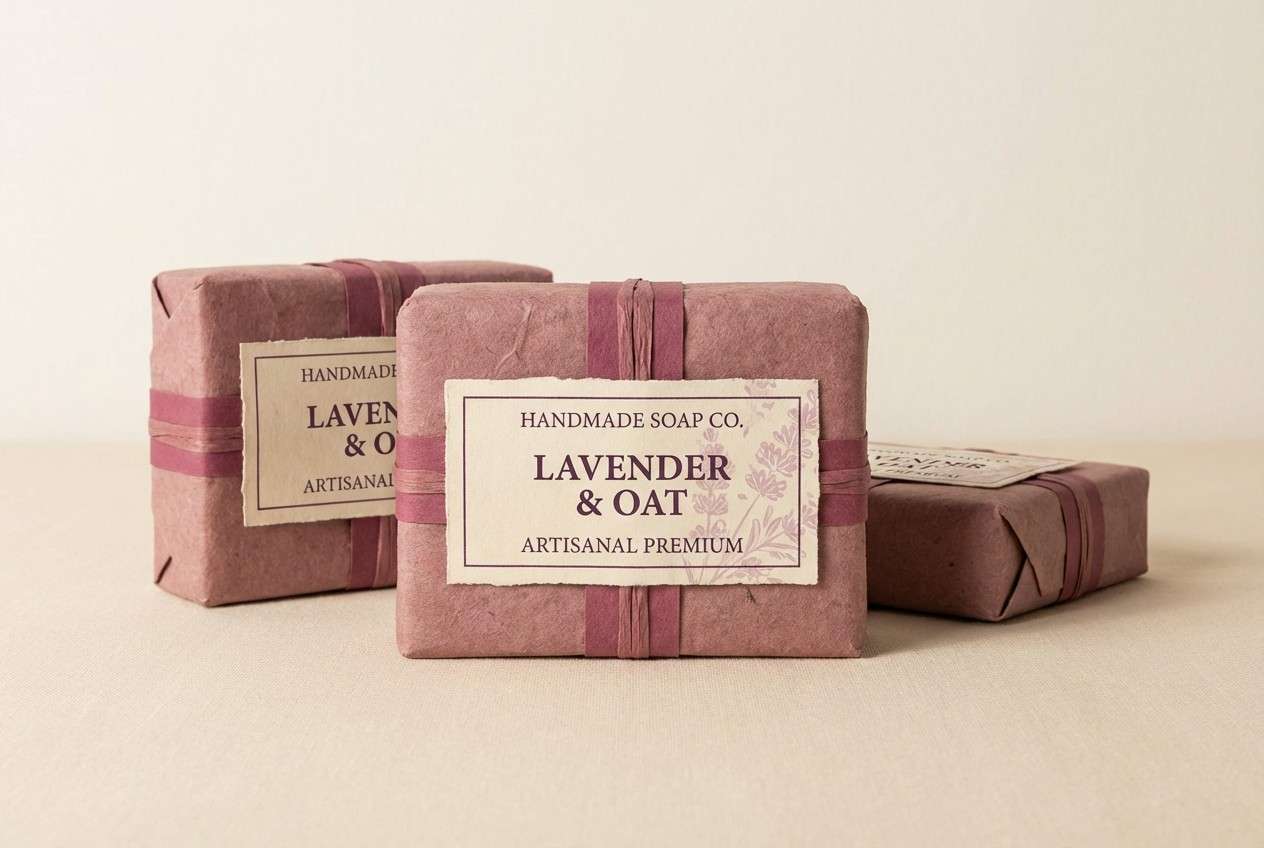
Best for: Handmade soap packaging
Warm and earthy like orchid petals pressed into clay, these mauve violets feel handcrafted. Use the deeper berry tone for labels and ingredient text, and the dusty rose for patterning and wraps. It pairs well with textured paper and minimal line art. Tip: test small text on the lightest tint to keep the packaging looking soft but readable.
Image example of orchid clay generated using media.io
18) Violet Cyan Pop
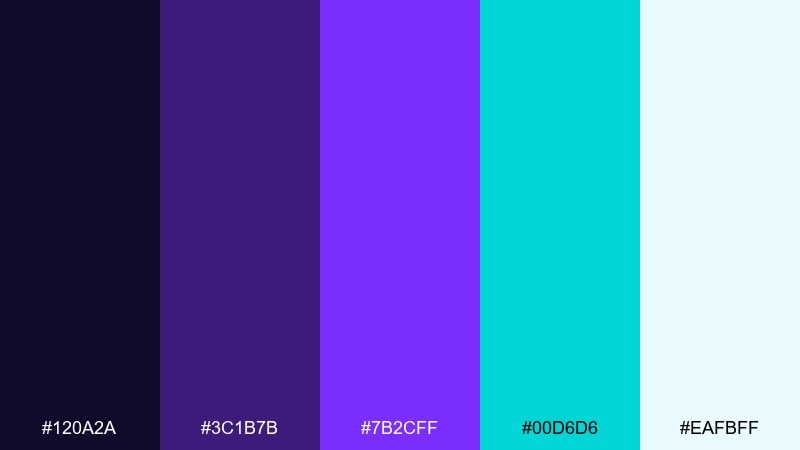
HEX: #120A2A #3C1B7B #7B2CFF #00D6D6 #EAFBFF
Mood: fresh, punchy, modern
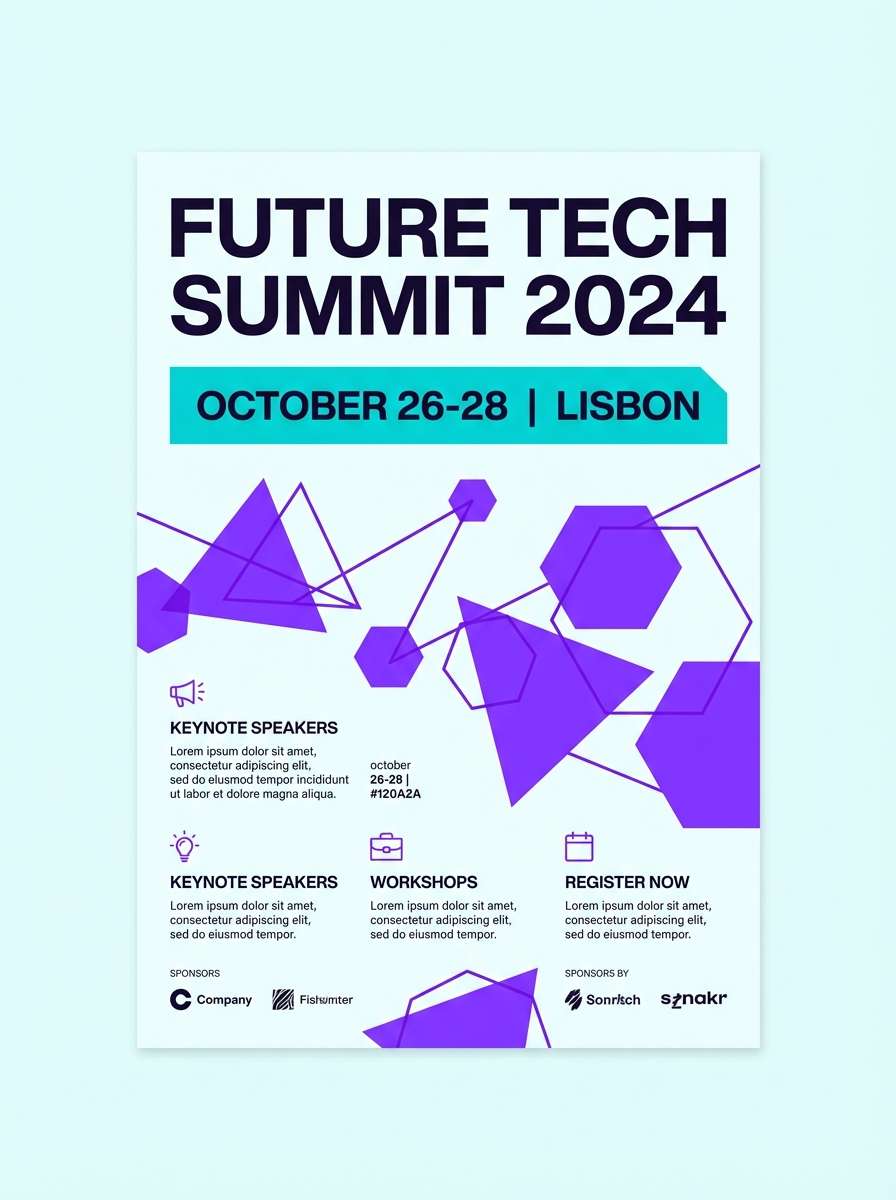
Best for: Tech conference flyer
Fresh and punchy like a cool LED glow, this blue and violet combination feels modern and energetic without getting messy. Use violet for the main structure and typography, then drop cyan in for dates, badges, or a single callout panel. It pairs well with grid-based layouts and simple icons. Tip: keep cyan to under 15 percent of the layout to preserve a strong focal hierarchy.
Image example of violet cyan pop generated using media.io
19) Violet Monochrome
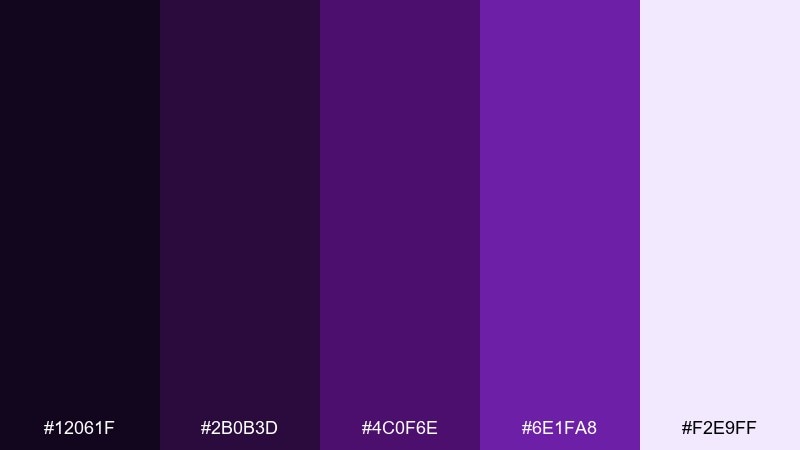
HEX: #12061F #2B0B3D #4C0F6E #6E1FA8 #F2E9FF
Mood: focused, elegant, editorial
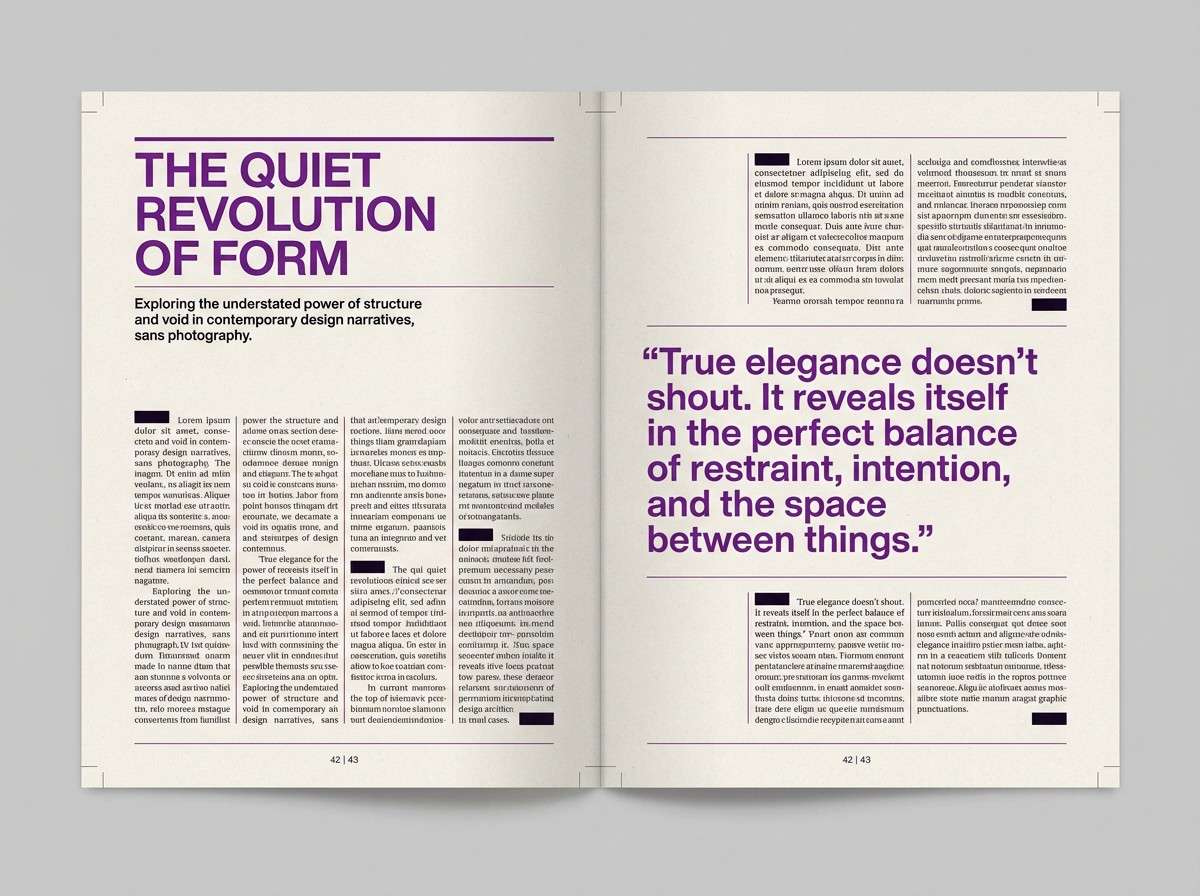
Best for: Magazine editorial layout
Focused and elegant like a monochrome fashion spread, these violets keep attention on typography and spacing. Use the darkest shade for body text and rules, then layer in the brighter violet for pull quotes and section markers. It pairs well with black-and-white photography or simple illustrations. Tip: keep backgrounds mostly light so the page stays airy and premium.
Image example of violet monochrome generated using media.io
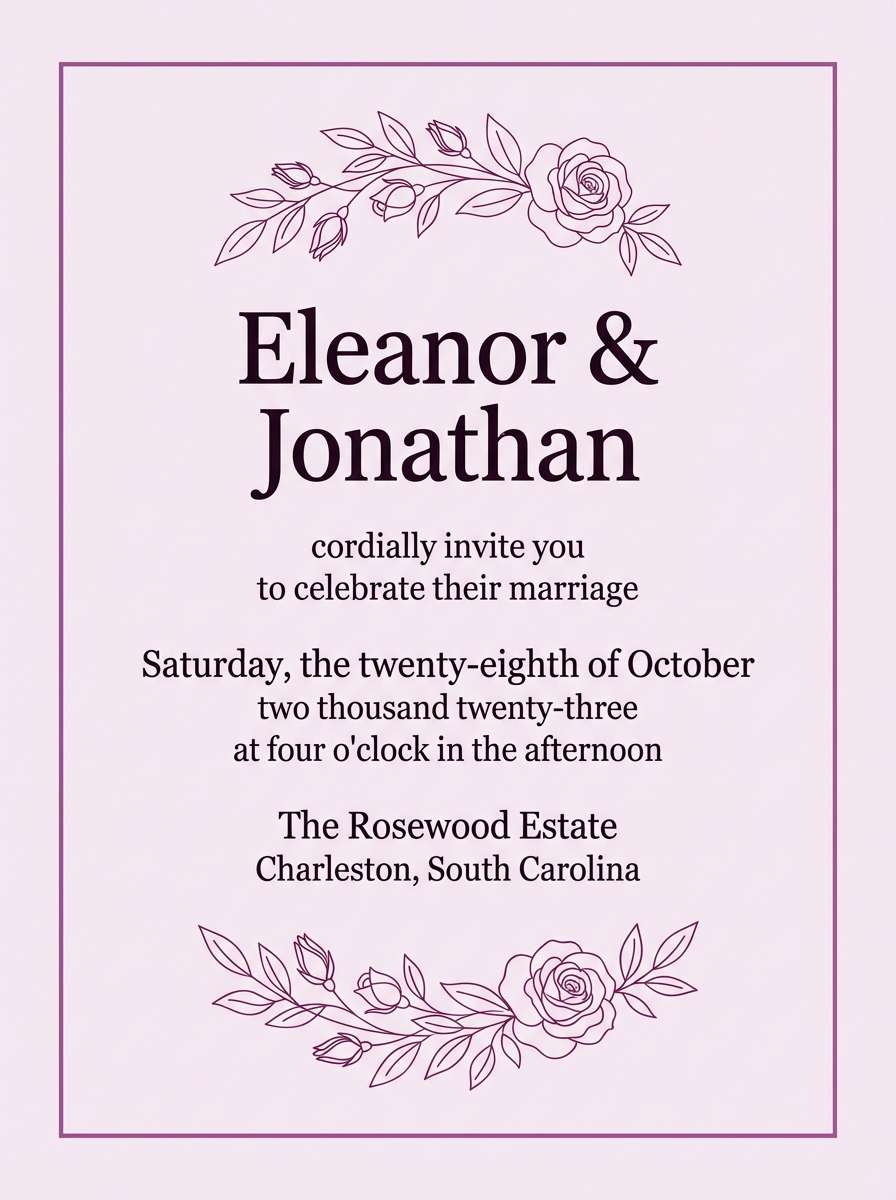
20) Violet Rosewood
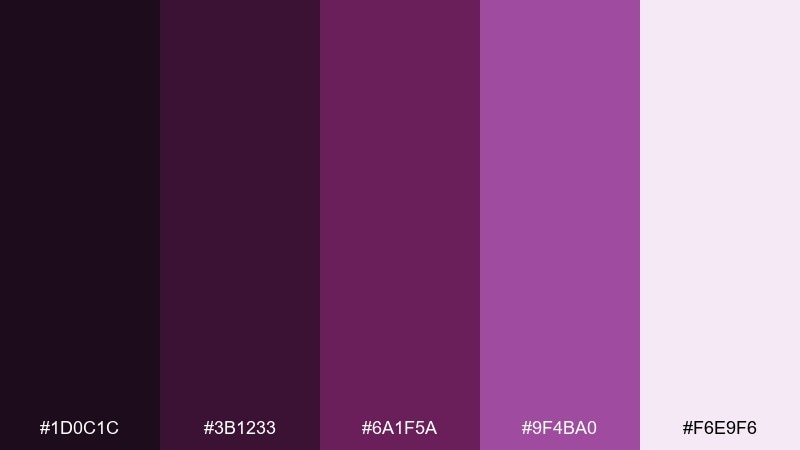
HEX: #1D0C1C #3B1233 #6A1F5A #9F4BA0 #F6E9F6
Mood: romantic, classic, intimate
Best for: Wedding invitation design
Romantic and classic like rosewood with a violet stain, this blue violet color palette feels intimate and timeless. Use deep wine tones for names and headings, then soften the layout with pale blush-lavender as the paper tone. It pairs beautifully with fine line florals and elegant serif type. Tip: add a thin border in #9F4BA0 to frame the invitation without overpowering the text.
Image example of violet rosewood generated using media.io
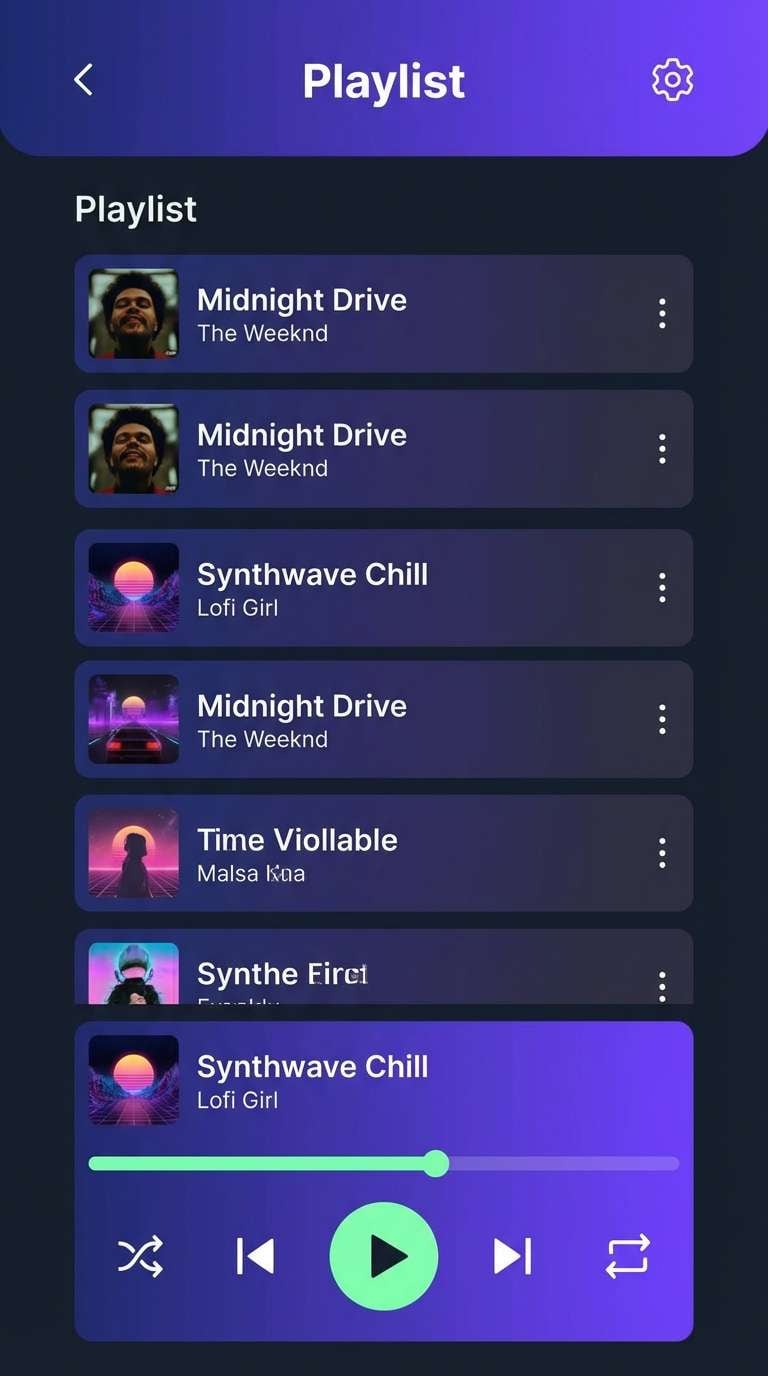
21) Aurora Violet
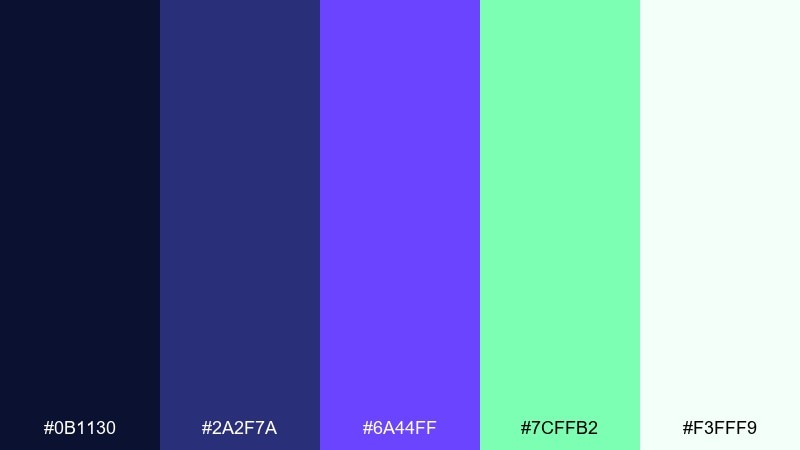
HEX: #0B1130 #2A2F7A #6A44FF #7CFFB2 #F3FFF9
Mood: glowing, optimistic, futuristic
Best for: Music app playlist UI
Glowing and optimistic like an aurora ribboning across a night sky, these colors feel alive. Let violet lead the interface for headers and controls, then use the mint-green accent for play states and progress to create clear interaction cues. It pairs well with dark mode layouts and soft gradients. Tip: keep mint highlights small so the screen stays cohesive and not overly loud.
Image example of aurora violet generated using media.io
22) Studio Violet Neutral
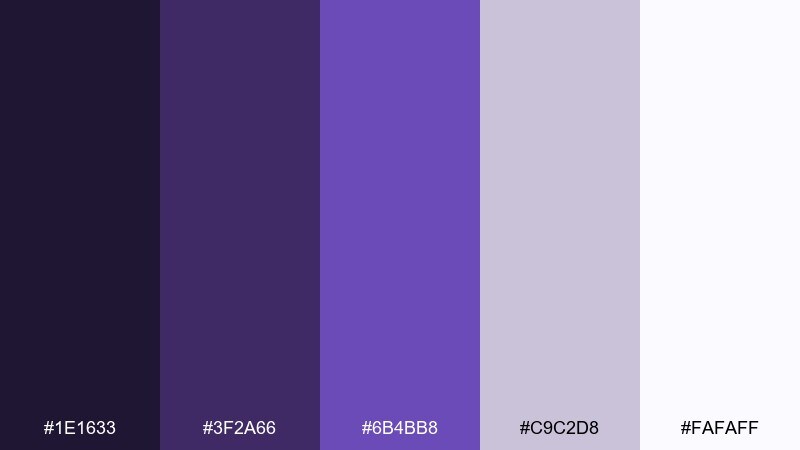
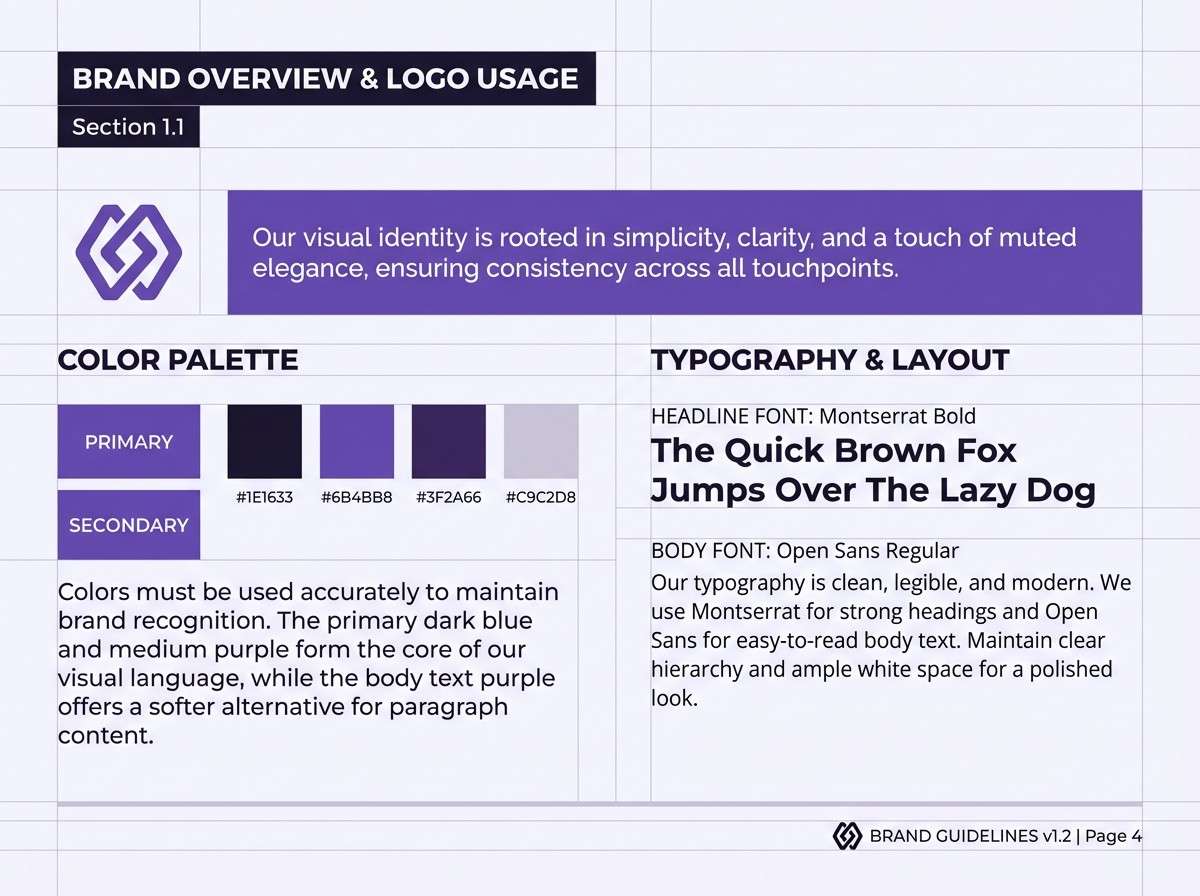
HEX: #1E1633 #3F2A66 #6B4BB8 #C9C2D8 #FAFAFF
Mood: professional, calm, versatile
Best for: Brand guideline PDF
Professional and calm like a tidy studio desk, these blue-violet colors sit comfortably with modern neutrals. Use the mid violet for brand accents and link colors, while the soft gray-lavender supports backgrounds and page structure. It pairs well with clear typography scales and lots of whitespace. Tip: keep charts and icons to two violet steps so the guideline pages feel consistent.
Image example of studio violet neutral generated using media.io
What Colors Go Well with Blue Violet?
Blue violet pairs effortlessly with light neutrals like off-white, cool gray, and pale lavender, which keeps interfaces readable and gives the palette room to breathe. These are especially helpful for backgrounds, cards, and long-form text areas.
For bolder contrast, add bright accents like cyan, mint, or hot magenta in small doses—great for states, badges, and CTA buttons. Metallic gold (or warm beige) also works well when you want a premium, celebratory look.
For a more natural direction, introduce muted greens (sage/olive) or warm, creamy paper tones. This softens the “techy” feel and makes blue violet work for wellness, lifestyle, and packaging.
How to Use a Blue and Violet Combination in Real Designs
Start by assigning roles: pick one deep shade for structure (navigation, headers), one mid blue-violet for primary actions, and a light tint for backgrounds. This simple mapping prevents “everything becoming accent” and keeps hierarchy obvious.
In UI, prioritize accessibility by checking contrast—especially when placing saturated violets on dark bases. If you’re designing for long sessions (dashboards, learning), lean on pale tints for large areas to reduce visual fatigue.
In print and packaging, test your darkest violet on the chosen stock and finish. Matte tends to look elegant and soft, while gloss or foil amplifies the “electric” palettes and makes accent colors pop.
Create Blue Violet Palette Visuals with AI
If you already have a palette, you can turn it into consistent mockups, posters, UI screens, and branding boards using a single prompt. The key is to mention your HEX codes directly and describe the layout style (minimal, editorial, futuristic, etc.).
To stay cohesive across a set, reuse the same composition words (e.g., “clean grid,” “flat illustration,” “dark mode UI”) and only swap the subject (dashboard, flyer, packaging). That gives you a unified look that still feels varied.
Use Media.io Text-to-Image to generate blue violet palette visuals quickly, then iterate by changing just one variable at a time (accent color amount, background tint, or contrast level).
Blue Violet Color Palette FAQs
-
What HEX code is “blue violet” usually associated with?
A common reference for blue violet is around #8A2BE2 (often called “BlueViolet” in CSS). Many modern palettes then expand lighter into lilac tints or deeper into indigo shades. -
Is blue violet more “blue” or more “purple” for branding?
It depends on the tint and surrounding colors. Adding more indigo and cool neutrals pushes it toward “blue” (trustworthy, technical), while adding magenta or warmer purples makes it feel more “purple” (expressive, premium). -
What are the best background colors for a blue violet UI?
Pale lavender, off-white, and cool gray backgrounds are the safest choices for readability. For dark mode, use near-black violet/indigo bases and reserve bright blue-violet for interactive states. -
What accent colors pop the most with blue violet?
Cyan and mint create a crisp, modern contrast, while gold adds a luxury feel. Hot magenta can also work, but it’s best used sparingly so the interface doesn’t become visually noisy. -
How do I keep a blue violet palette from looking too dark?
Balance deep shades with at least one high-value tint (light lavender or off-white) and use saturated violets only for highlights. In layouts, increase whitespace and keep large surfaces light. -
Does blue violet print well on packaging?
Yes, especially on coated stocks where deep violets stay rich. Always test small text and thin lines, because very dark violets can fill in on uncoated paper; lighter tints help keep the design clean. -
Can I generate palette-based mockups automatically?
Yes—include your HEX codes in the prompt and specify the design type (poster, dashboard, packaging). Using the same style keywords across prompts helps you generate a consistent visual set.