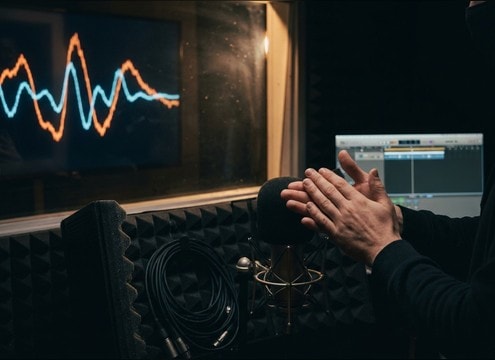


Hand sounds are all about transient shape and the space around it. When you prompt, specify the action (single clap, double clap, finger snap, knuckle crack, hand rub), the perspective (close, arm length, across the room), and how much room reflection you want. Small wording changes like tight, dry, sharp, soft, or airy can dramatically change attack and decay, which is what makes the foley feel synced and believable.
Choose the action and intensity
Start with the exact gesture so the generator targets the right texture. A clap is broadband and percussive, a snap is bright and tiny, a rub is continuous noise, and a knuckle crack is a quick impulse with micro-clicks. Add intensity words to control perceived loudness and low-mid weight.
- Use verbs: single clap, slow applause, finger snap, knuckle crack, palms rubbing
- Add strength: gentle, firm, hard, aggressive, restrained
- Ask for cleanliness: low noise floor, no handling noise, no extra breaths
Match the room and distance
Hand foley feels wrong when the tail does not match the scene. A tight close-up often needs dry sound with minimal reflections, while a hallway or classroom wants a longer decay. Specify distance and space so the tail length and room tone sit naturally under dialogue.
- Distance cues: close-miked, arm length, several meters away
- Space cues: small bedroom, tiled bathroom, large hall, open outdoor
- Tail cues: short decay, medium room tail, noticeable reflections
Control timing, rhythm, and loopability
For edits, you often need predictable spacing. Tell the model if you want a single hit, two hits, a steady tapping pattern, or a continuous rub that can loop. This helps you avoid awkward pauses and makes it easier to cut on beat.
- Timing words: one clap, double clap with even spacing, three quick snaps
- Pattern words: steady taps, irregular fidgeting, accelerating applause
- Loop guidance: continuous texture, consistent level, loop-friendly ending
Avoid common hand-SFX mistakes
Hand sounds can get harsh fast, especially snaps and claps. If the top end is brittle or the tail is too long, it will fight dialogue and music. Use prompts to limit reverb, reduce harshness, and keep the hit readable without sounding synthetic.
- If it is too sharp: ask for softer transient, less high-end, warmer tone
- If it is too roomy: request dry close-mic, minimal reflections, short tail
- If it feels fake: request natural dynamics, subtle skin texture, no digital artifacts