


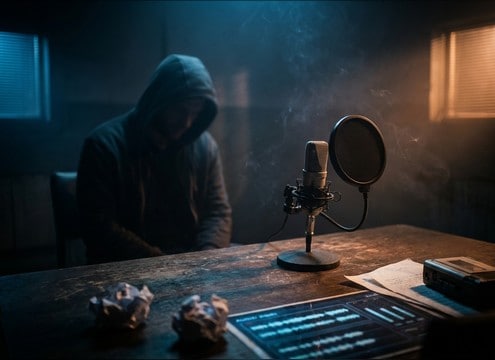


Man-crying SFX usually fails when the intensity is too theatrical or the space does not match the shot. Use prompts that specify emotional restraint, breath pattern, and perspective (close vs distant), then request a clean noise floor so the clip sits under dialogue. Below are practical prompt patterns and quick selection checks for believable sobs, whimpers, and sniffle resets.
Choose the emotional intensity and rhythm
Start by naming the intensity and the cadence of sobs. A restrained cry often has quiet whimpers and repeated inhales, while a breakdown has larger sob bursts and uneven spacing. If you need editorial flexibility, ask for one or two clear sob hits with short gaps.
- Use terms like restrained, controlled, breaking down, or ugly cry
- Ask for specific events: one sob burst, two sobs, breath hitch, sniffle reset
- Avoid vague prompts like very sad unless you add rhythm details
Match perspective: close-mic vs off-screen
Perspective determines how much breath texture and detail you hear. Close-mic takes give you crisp transients and intimacy, while distant takes rely on reflections and reduced high-end. Calling out distance helps avoid a cry that feels disconnected from the camera.
- Close: mention breathy transients, low room tone, dry recording
- Distant: mention hallway distance, early reflections, longer decay
- If the shot is medium, request light room tone with a short tail
Control tail, noise floor, and masking strength
Crying has complex midrange that can mask dialogue. When the line must stay clear, request a cleaner noise floor and shorter decay. When the moment is isolated, allow more room tail and dynamic swings to sell realism.
- For dialogue scenes: short tail, clean noise floor, controlled peaks
- For isolated moments: natural reflections, medium decay, wider dynamics
- If it sounds harsh: prompt for softer transients and less sibilant breath
Make it edit-ready for cuts
Editors often need crying that starts clean and ends clean. Ask for a natural fade, a brief pre-roll silence, or a pause between sobs. This makes it easier to place on reaction shots and cut points without audible clicks or abrupt stops.
- Request a gentle fade-out rather than an abrupt stop
- Ask for one clear sob hit timed for a cut if needed
- Specify no music, no dialogue, and no added effects