


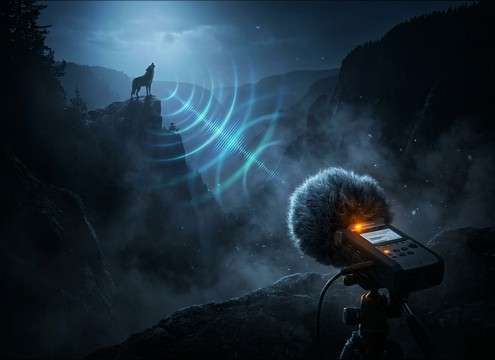
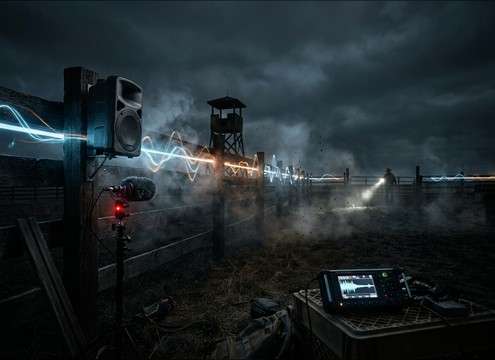


A wolf howl reads "real" when its perspective, pitch character, and tail match the scene. Use this guide to pick the best downloadable clip fast, or write prompts that reliably produce the distance, texture, and pacing you need.
Pick a perspective: close vs distant
Start with where the wolf is relative to the viewer. Close howls need a defined onset and less air loss, while distant howls should feel softer with more space and less high-end detail.
- For close shots, prompt "clear attack, minimal ambience, natural tail."
- For far-off calls, prompt "rolled-off highs, quiet night bed, softer transient."
- If it feels too near, ask for "more distance, lower level, longer outdoor decay."
Decide: lone howl or pack response
A single wolf works as a clean story beat; a pack adds movement and threat. Layered responses should have staggered entrances so it doesn't sound like a chorus hit.
- Lone: "single voice, stable pitch curve, no overlapping howls."
- Pack: "3–5 wolves, staggered timing, different pitches, overlapping tails."
- For realism, avoid perfectly synced starts and identical pitch shapes.
Match the space and tail
The tail tells the listener where the howl happens. Outdoor tails fade naturally; reflective spaces add obvious early reflections and a longer reverb bloom.
- Forest/outdoor: "natural decay, subtle ambience, no strong reflections."
- Cave/canyon: "pronounced reflections, longer echo tail, wider stereo."
- If it smears the scene, ask for "shorter tail, reduced reverb, cleaner end."
Keep it mix-friendly (what to avoid)
The biggest problems are noise that can't be separated and howls that fight dialogue. Aim for clean starts, controlled masking, and endings that can be faded without artifacts.
- Avoid prompts that imply music, drums, or cinematic risers.
- If dialogue is present, request "less harshness, softer highs, lower intensity."
- For looping beds, choose versions with steady noise floor and a fadeable end.