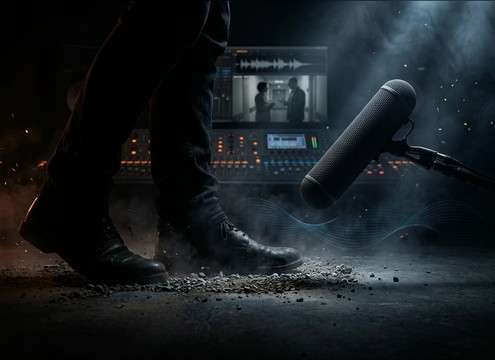



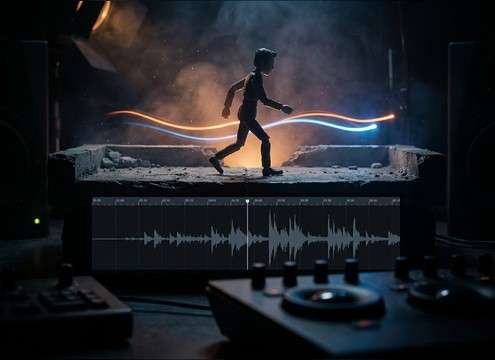



Walking audio is all about texture and timing: the same stride feels completely different depending on surface, footwear, and how much room you hear around it. Use the tips below to choose the right library clip fast, or write a prompt that generates a take with the exact transient snap and decay you need.
Start with the surface, not the mood
Surface choice drives the most obvious details: tile and concrete emphasize sharp attacks, wood adds squeaks and warmth, carpet softens the top end, and gravel introduces debris crunch. If your clip feels "wrong," it's usually the surface texture, not the volume.
- Use "tile click" for bright, defined transients
- Use "wood floorboards" for squeak and midrange body
- Use "loose gravel" for crunchy, irregular debris detail
Define footwear and gait rhythm
Footwear changes the tonal center (heel clicks vs padded thumps), while gait sets the spacing you'll sync to picture. Include pace and stride consistency so the result locks to the cut without sounding rushed or floaty.
- Add "high heels" for tight, bright clicks and short ring
- Add "work boots" for heavier low-end impacts
- Add "steady walk at 110 BPM" (or similar) for predictable step spacing
Pick perspective: close, medium, or distant
Perspective determines how much high-end detail survives and how much room you hear. Close steps are dry and crisp; distant steps lose attack and gain reflections and tail. Choose perspective based on camera distance and whether footsteps should lead attention or stay subtle.
- Use "close mic, dry room" when footsteps must read clearly
- Use "medium distance with light room tone" for natural scenes
- Use "distant corridor, longer tail" for off-screen movement
Make it edit-ready: tails, gaps, and loops
For walking beds, you want consistent cadence and minimal tail buildup; for dramatic passes, you want a natural decay and sometimes a pass-by movement. Avoid clips with inconsistent stride gaps unless you're matching specific blocking on screen.
- Ask for "loopable, consistent stride spacing" for patrols
- Ask for "short decay, minimal reverb" to prevent tail stacking
- Ask for "approach then recede" when the character crosses frame