






Typing is all about transient character and believable rhythm. When browsing clips or writing a prompt, decide what keyboard you're hearing, how close the mic is, and whether you need a clean insert or a loopable bed. Use the tips below to get clicks that read clearly on small speakers without masking speech.
Pick the keyboard personality first
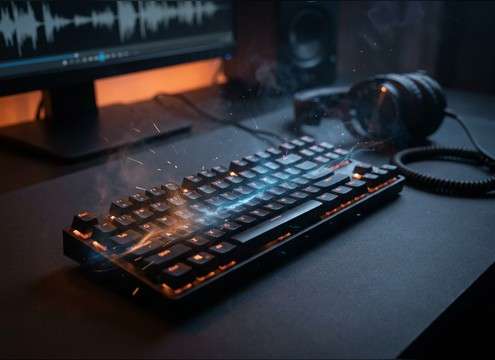
Mechanical boards emphasize sharp clicks and keycap clack; laptops and membranes feel softer with less high-end bite. Typewriters add distinctive mechanical chatter that can dominate a mix, so reserve them for stylized scenes.
- Mechanical: crisp attack, brighter top end, more per-key definition
- Laptop/membrane: muted taps, shorter decay, lower masking
- Typewriter: extra mechanism noise, more midrange texture
Control rhythm: bursts, pauses, and speed
What sells the performance is the cadence. For chat moments, you usually want quick bursts with clean stops; for work scenes, a steadier pace with subtle variation feels natural and can loop.
- Use "start-stop bursts" for texting or message typing on screen
- Use "steady medium speed" for office and tutorial background action
- Add "occasional pause" to avoid machine-gun repetition
Decide on space: dry vs room tone
Dry typing is easier to place anywhere, while a little room reflection can make the keyboard feel grounded in a real location. If your scene already has ambience, keep the typing narrow and low-noise so it layers cleanly.
- Close-mic dry: tight transient, minimal tail, easiest to mix
- Small room: subtle reflections, slightly longer decay
- Open office: gentle ambience and wider feel, but keep noise controlled
Editing and selection pitfalls to avoid
Typing can quickly sound fake when the pattern repeats or the highs are too sharp. Choose clips with consistent level and trim with short fades so the start and end don't pop.
- Avoid overly bright clicks that pierce over dialogue; try a softer take
- Avoid obvious loop seams; pick a clip with a natural ending or regenerate
- Use short fade-ins/outs to prevent clicks at cuts and scene transitions