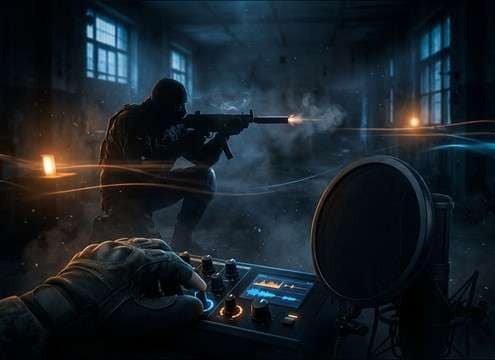
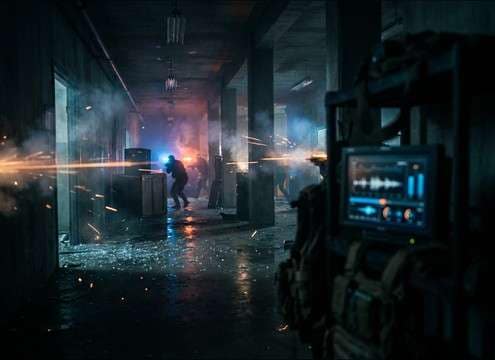
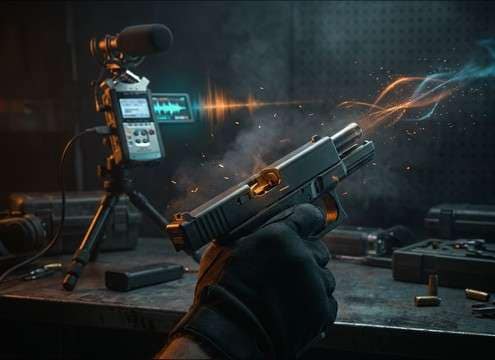
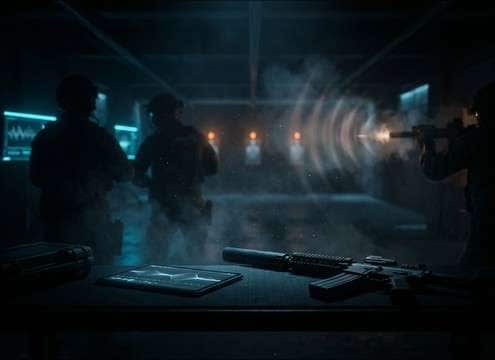


Suppressed shots aren't "silent"—they're compact, controlled, and often more about the transient shape and tail than raw loudness. Use the tips below to pick the right clip or write prompts that match your scene's distance, environment, and weapon behavior.
Start with the shot type and cadence
Before you think about space, decide what the action needs: one discreet hit, a double tap, or a short burst. Cadence changes how the ear reads urgency and how much the shots mask other elements.
- Single shot: keep the transient crisp and the decay short
- Double tap: request consistent spacing so both hits stay readable
- Burst: ask for compact tails so the sequence doesn't blur together
Match distance and environment to the picture
A close-mic suppressed shot can still feel punchy, while a distant one should lose high-end and feel narrower. Indoor spaces introduce short reflections; exteriors should feel drier with more air loss over distance.
- Close: stronger mechanical detail, tighter stereo focus
- Indoor: short reflections and subtle room tone between shots
- Distant: softened attack, reduced high-end, minimal tail
Decide how much mechanical foley you want
With suppressors, the firearm's action can be a big part of realism—especially in tight shots. If it's off-screen or far away, mechanical clicks can sound distracting and should be minimized.
- Ask for slide/bolt movement when you see hands or the weapon
- Reduce casing ticks when dialogue or subtle Foley must stay clean
- For realism, keep mechanical sounds short and not louder than the shot
Avoid common "fake suppressed" cues
Many "silenced" SFX are just EQ'd gunshots or cartoonish puffs. The goal is controlled energy: a believable attack with a natural, cut-friendly decay that matches the space.
- Avoid long reverb tails that make a suppressor sound like a cannon
- Avoid overly airy hiss or plastic 'pew' tones in the high end
- Avoid inconsistent loudness across shots in a sequence