


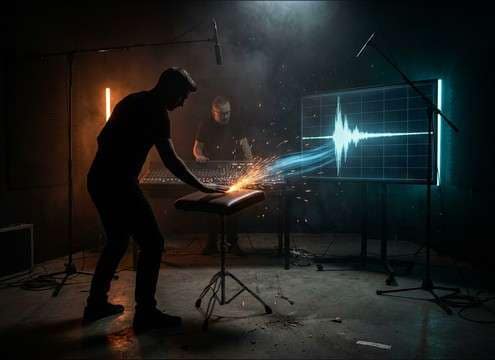


A slap is all about the first 50–150 ms: the crack, the body, and how quickly it gets out of the way. Use the tips below to pick a download that fits your shot, or write a prompt that controls impact type, space, and comedic vs realistic tone without drifting into "punch" territory.
Decide what's doing the hitting
Slaps can be palm-driven, fingers-forward, or fabric-dampened. The "hand shape" changes brightness, low-end body, and how sharp the transient feels.
- Palm slap: louder crack with more body; good for confrontations
- Finger flick: brighter snap with less low-end; reads as quick and light
- Glove/fabric: softened highs; useful when you want impact without harshness
Match the camera distance with the tail
If your shot is close, long reflections can feel fake. If your shot is wide, a super-dry hit can feel pasted on. Choose or prompt the decay and room tone to match the frame.
- Close-up: minimal reverb, tight decay, little room tone
- Medium shot: subtle early reflections, short natural tail
- Wide/hallway: quieter direct hit, longer tail with clear reflections
Choose realistic vs comedic styling
Comedic slaps usually lean brighter and slightly "larger than life." Realistic slaps need believable texture and controlled loudness so they don't sound like a whip crack.
- Comedic: emphasize snap, reduce low-end thud, keep tail short
- Realistic: add skin texture and small body thump, avoid over-brightness
- Avoid: heavy bass booms that turn a slap into a punch hit
Edit quickly for timing and clarity
A tiny timing shift can sell or ruin a slap. Pick the cleanest transient, then trim and level it so it lands exactly on contact without masking dialogue.
- Trim silence so the transient hits on the exact frame of contact
- Use short fades to prevent clicks while keeping the crack intact
- If it's too sharp, dip a little high-mid; if it's too dull, add presence gently