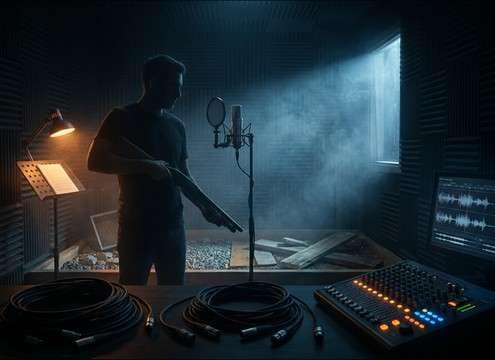



Gunfire changes with weapon type, distance and space. A close handgun crack, a rifle report and an indoor suppressed pop should not share the same transient, tail or reflection.
Start with weapon feel
Give the generator a clear sonic direction before adding scene details.
- Handgun: short crack, controlled tail and strong transient
- Rifle: brighter report, sharper air pressure and more distance
- Suppressed: muted pop, mechanical detail and minimal tail
Define distance and room
Distance changes attack and decay, while the room determines reflections.
- Close: aggressive transient and fast decay
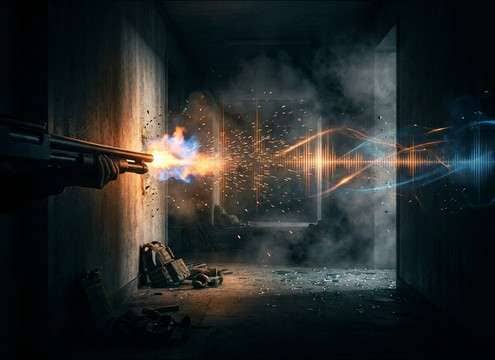
- Indoor: early reflections and concrete or metal slapback
- Distant: softer report, air decay and lower detail
Layer foley when needed
Reloads, slide racks and casing drops make weapon audio feel physical.
- Use mechanical layers under close shots
- Keep foley dry when the visual is close-up
- Avoid adding crowd noise unless the scene needs it
Keep it mix-ready
Clean prompts prevent unusable chaos and make the sound easier to place.
- No music, voices or clipping
- Ask for controlled peaks
- Specify clean background or light ambience