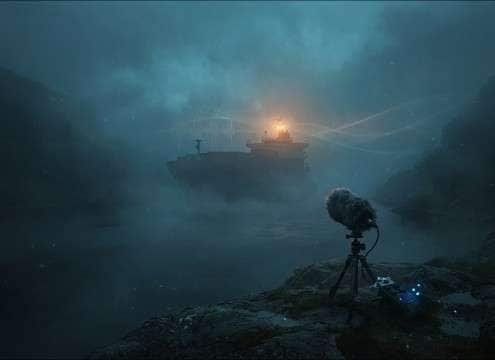

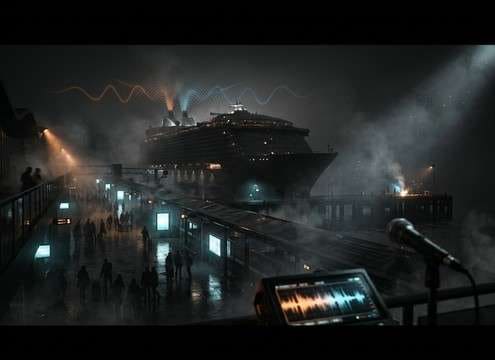

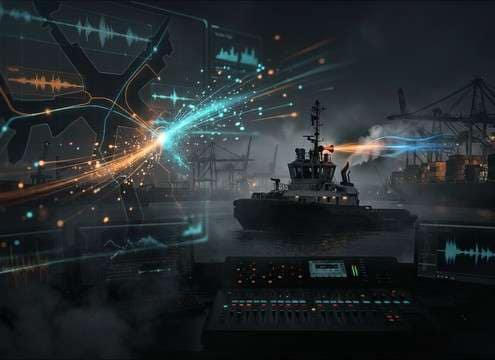
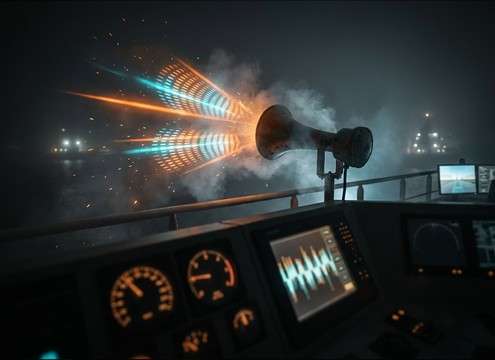



Ship horns can read as "massive vessel," "small tug," or "far offshore" depending on pitch, attack, and how the tail interacts with the environment. Use the tips below to pick a ready-made clip or write a prompt that nails distance, reflections, and timing on the cut.
Pick the horn type and cadence
Start with the story function: a single blast for arrival, short warning toots for maneuvering, or patterned calls for signals. Cadence matters as much as timbre—especially when the horn is the beat that drives the edit.
- Single long blast: authority and scale for arrivals
- Two short blasts: signal-like clarity for instructions
- Compact tug toot: lighter tone for small craft moments
Match camera distance with tone loss
Distance changes more than volume. Far horns lose high frequencies, soften the transient, and feel narrower or more diffuse. Close horns stay bright and defined, so they cut through sea ambience and crowd beds.
- Close: crisp onset, wider stereo body, less air absorption
- Mid: balanced presence with light ambience and reflections
- Distant: softened attack, rolled-off highs, gentler tail
Choose the right space: open water vs harbor
A harbor adds early reflections and a longer, more complex decay, while open water reads cleaner and emptier. If your visual shows docks, cranes, or buildings, an echo tail helps the horn feel "placed."
- Harbor: audible reflections and longer decay support scale
- Open water: cleaner tail keeps the scene spacious
- Industrial shoreline: brighter reflections help definition
Edit for timing without losing realism
Horns often have long tails. When you need a tight cut, choose a shorter-decay version or prompt for a quicker fade, then keep a natural release so the sound doesn't end abruptly.
- Ask for a short tail when dialogue or PA announcements follow
- Trim after the main body, but preserve a gentle fade-out
- Avoid over-compressing; it can exaggerate harsh mids