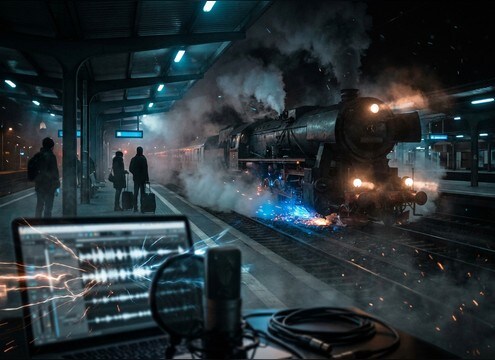
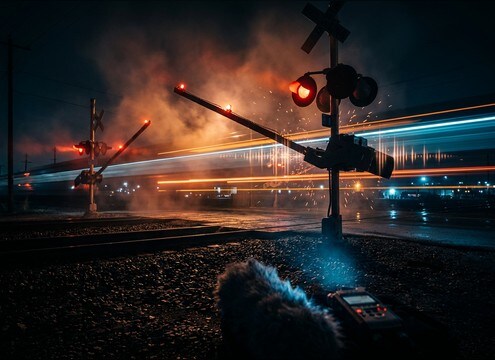
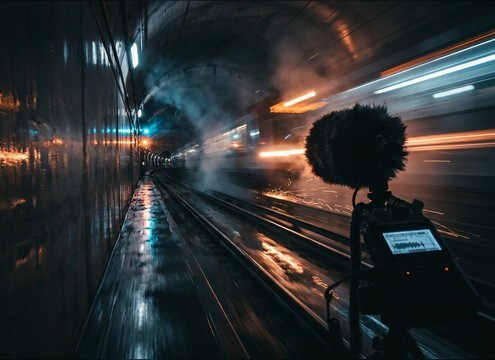
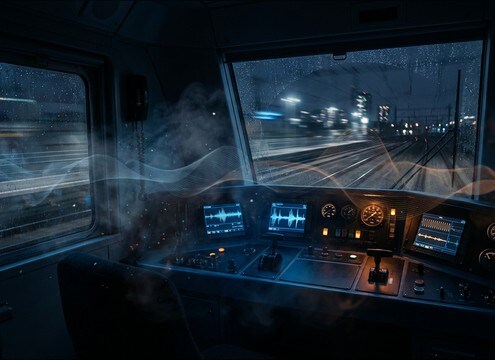
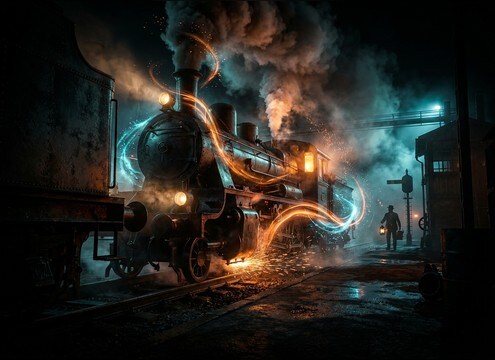
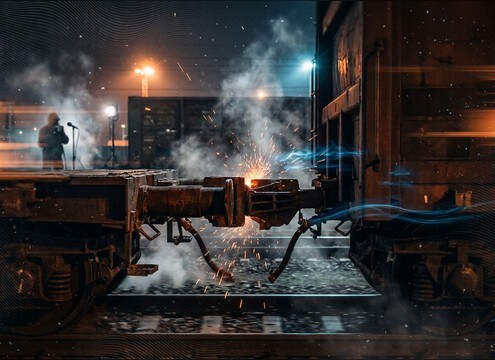
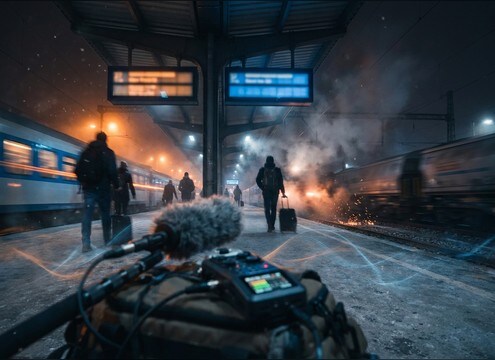


Railway audio can feel wrong fast when the distance, speed, or environment does not match what viewers see. Use prompts that pin down the camera perspective (platform close-up vs wide exterior), the rail moment (arrival braking vs constant-speed pass-by), and the acoustic space (open air, station canopy, or tunnel). Then regenerate a few takes and choose the one with the best transient clarity and decay for your mix.
Start with the exact rail moment
Train audio changes dramatically by action. A pass-by is mostly wind and broadband rush, while an arrival emphasizes braking and wheel noise, and a yard scene is about mechanical impacts and short thuds.
- Use verbs: arriving, departing, idling, passing, coupling, rolling
- Call out key elements: track clacks, wheel squeal, air release, horn optional
- Ask for timing: quick hit, steady bed, or ramp in then out
Lock the perspective and distance
Distance controls transient sharpness and masking. Close takes have a harder attack and stronger low-end, while distant takes blur into ambience with a longer, softer tail.
- Specify distance: close, roadside, across platform, far down the line
- Mention camera context: handheld near tracks, wide establishing shot
- Describe stereo width: narrow and focused vs wide and smeared
Choose the environment for believable tails
The same train sounds different under a station canopy than in an open field. Tails and reflections are what sell the space, especially in tunnels where the decay can dominate.
- Name the space: tunnel, station hall, open countryside, underpass
- Control reflections: dry, small reflections, long tunnel reverb
- Add or remove room tone: clean background vs gritty urban air
Avoid the most common rail SFX mistakes
Many rail clips fail because they include unwanted extras or the texture fights the rest of the mix. Regenerate until the clip has the right detail without becoming noisy or distracting.
- Avoid intelligible speech if you need a language-neutral station bed
- Avoid harsh squeal peaks if the scene is calm or dialogue-led
- Avoid over-long decay if you need tight cuts between shots