





Driving audio is all about perspective and consistency: the same car can sound tight and muffled from inside, or wide and airy outside. Use the sections below to pick the right library clip fast, or to write prompts that generate the exact speed, surface, and space you need without fighting the edit.
Start with camera perspective (interior vs exterior)
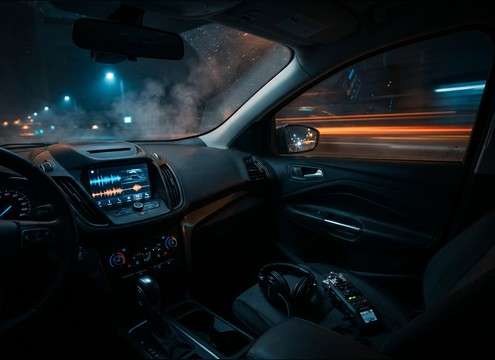
Decide what the microphone "hears." Interior takes emphasize low-end cabin rumble and reduce wind. Exterior takes reveal more tire hiss, air movement, and stereo width. If your shot is roadside or tracking, prioritize spatial movement and a believable tail as the car leaves frame.
- Use "interior cabin, muffled, narrow stereo" for dashboard/POV shots
- Use "exterior, open air, wider stereo, more wind" for follow shots
- Add "distant roadside" when you need less detail and more ambience
Specify speed and throttle behavior
Editors notice when RPM behavior doesn't match motion. A steady cruise works for long shots and graphics, while throttle blips sell city crawling. For pull-aways, you want a clear onset: tire roll begins, engine rises, then stabilizes.
- For steady shots: "constant speed, stable engine note, minimal peaks"
- For city movement: "stop-and-go, light throttle blips, gentle decel"
- For departures: "idle into acceleration, rising RPM, smooth settle"
Choose the road surface to set the texture bed
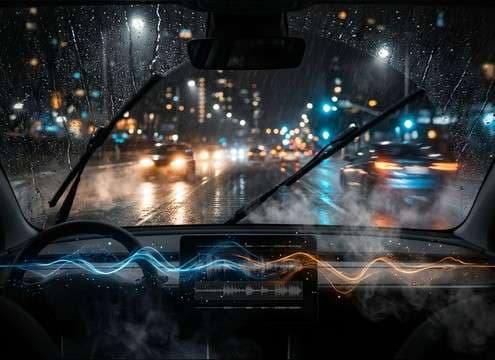
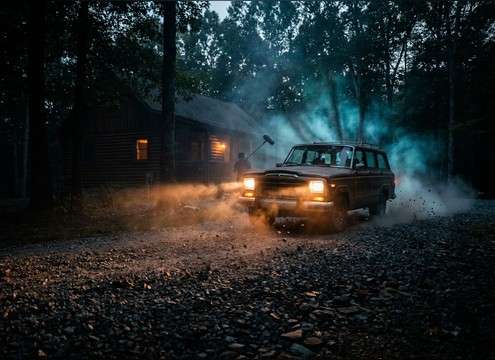
Often the road noise is the giveaway. Wet asphalt adds bright spray hiss; gravel adds crunchy micro-transients; smooth highway adds an even broadband bed that loops well. Pick one primary texture so your sound doesn't get gritty and noisy in the wrong scene.
- Wet scenes: "wet asphalt, tire spray hiss, slightly brighter top-end"
- Rural driveways: "gravel crunch, small stone debris, dry exterior"
- Travel montages: "highway tire hiss, loopable, consistent noise floor"
Match the environment tail (open air vs enclosed echo)
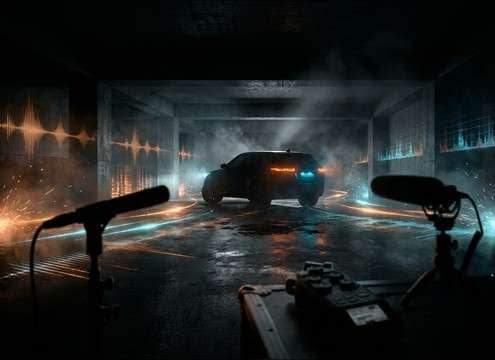
Reflections tell the viewer where the car is. A parking garage or underpass introduces early reflections and short reverb tails; open roads should feel drier. If the tail is too long, it can smear fast cuts—generate a tighter version or choose a cleaner clip.
- Enclosed spaces: "garage reflections, short echo tail, concrete bounce"
- Open spaces: "dry outdoor, minimal reflections, clean decay"
- Avoid: overly long reverb that masks dialogue or makes cuts obvious