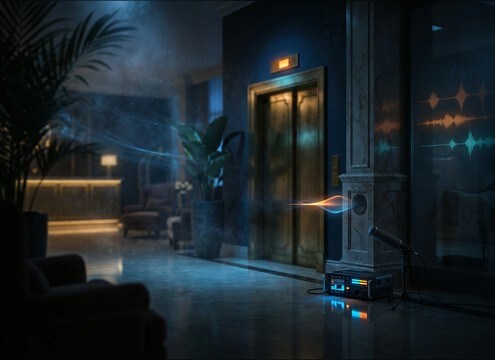
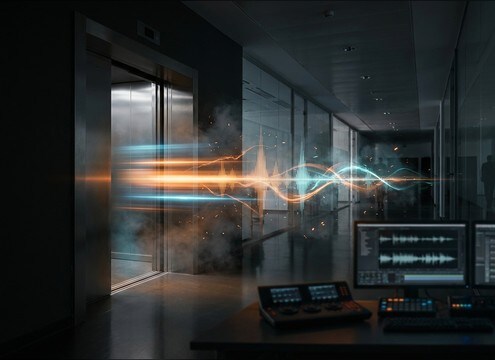



Elevator audio is usually a mix of three parts: a short chime with a clear transient, a door mechanism with a convincing midrange texture, and a movement bed (motor hum, vibration, and faint cable noise). When prompting or selecting clips, decide what the camera is focusing on, how reflective the space is, and whether you need a single action or a loopable ambience.
Pick the perspective: inside cab vs hallway
Inside-cab sounds feel tighter and more mechanical, while hallway perspectives add more reflections and air movement. Matching perspective prevents your door sounds from feeling pasted on top of the scene.
- Inside cab: narrower stereo, less reverb, more motor texture
- Hallway: more room reflection and a softer attack on the chime
- Distant: reduce transient sharpness and add extra room tone
Separate door actions from movement beds
Door opens and closes are short, transient-heavy events. Movement is a steadier bed that should be loop-friendly and not pump in volume. Keeping them separate makes editing faster and more believable.
- Use door clips with a defined latch click and controlled tail
- Choose a ride hum with stable loudness and no bumps
- Avoid beds that include random beeps or door events if you need a loop
Dial in chime character and mix space
A chime can be bright and modern, soft and friendly, or harsh and alarming. Its decay should match the environment: a short tail for treated interiors, longer reflections for stone lobbies or long corridors.
- Modern: clean transient, minimal distortion, short decay
- Vintage: slightly uneven tone, mild grit, longer tail
- If dialogue is present, choose a softer chime with less high-end bite
Build a natural sequence without overdoing it
Elevator scenes often need a simple sequence: arrive, ding, doors open, optional movement, then doors close. Too many mechanical details can sound fake or distract from the story beat.
- Leave small gaps so the door action does not overlap the chime unnaturally
- Keep rattles subtle unless the story calls for a broken lift
- Do not stack multiple chimes or beeps unless you see them on screen