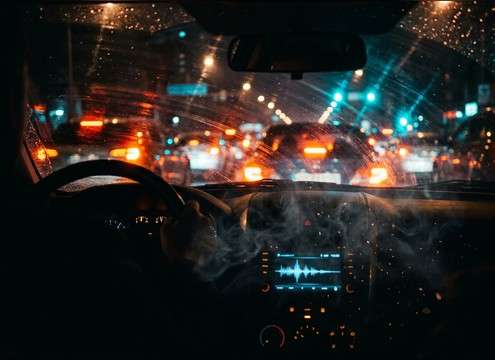
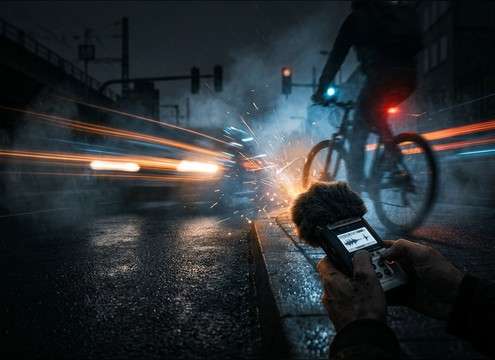
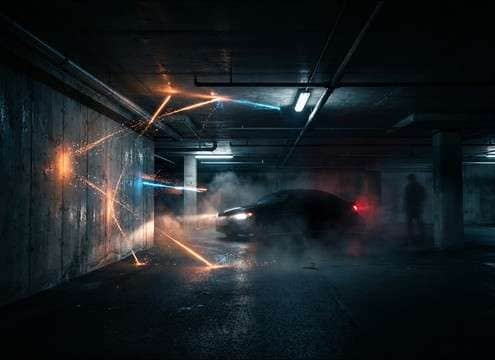
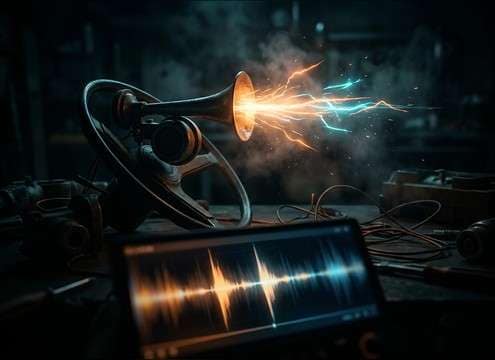
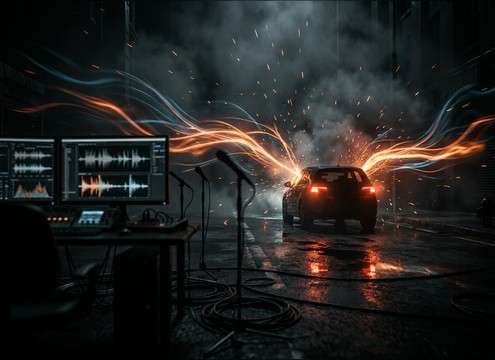
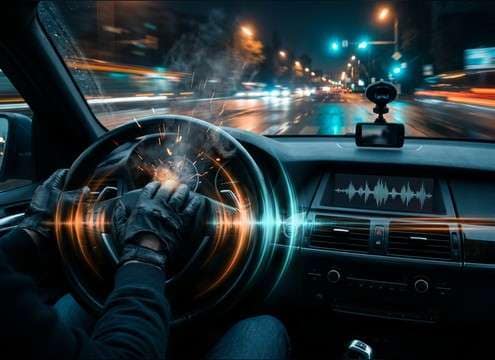



Car horns read as story beats: polite reminder, warning, panic, or anger. To get a usable result fast, write prompts that specify the horn type, timing pattern, and where the listener is (inside the car, curbside, across the street, or inside a garage). Then adjust attack and tail so the horn either punches through the mix or sits behind ambience as a background cue.
Choose the horn behavior (beep vs honk)
Start with the action you need on screen. A single beep feels like a tap, while a sustained honk signals escalation. If your cut is tight, ask for a faster release and shorter decay to avoid stepping on dialogue.
- Use words like single beep, double tap, sustained honk, or repeated bursts
- Ask for polite, urgent, or angry to guide intensity and edge
- Specify clean or gritty if you want distortion character
Set perspective and environment
Distance and location change everything. A far horn should lose high-end and feel narrower, while a garage horn should have early reflections and a longer tail. Describe the listener position to avoid a horn that feels disconnected from the camera.
- Close curbside: sharp transient, minimal room tone
- Across street: softened attack, slight ambience bed
- Parking garage: strong reflections, longer echo tail
Control rhythm so it syncs to picture
Horns often need to hit precise frames. Ask for exact spacing and count, not just a general mood. For comedic moments, keep the pattern simple; for traffic layers, keep events spaced so they do not blur together.
- Call out timing like two taps with a short gap
- Request one clear peak for each horn hit
- For layers, ask for staggered timing and controlled dynamics
Avoid common horn SFX pitfalls
Bad horn clips are often too harsh, too distorted, or have unrelated background audio. Keep prompts strict about what should not be present, and request a balanced loudness that does not clip.
- Exclude sirens, crashes, voices, and heavy music bleed
- Ask for no clipping and no harsh ringing resonances
- If the horn feels cartoonish, request realistic mechanical tone