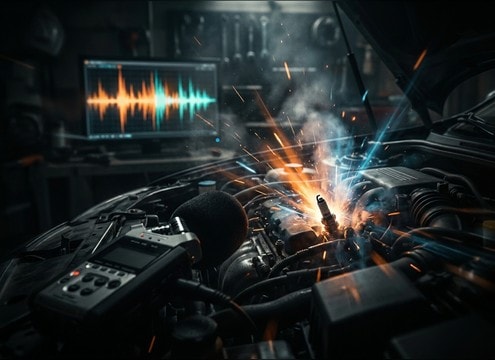



Engine audio sells speed, weight, and distance, but the wrong RPM curve or space can break the illusion. Use prompts that specify what the camera is doing (static, tracking, interior), how the RPM changes over time, and whether you need a loopable bed or a one-shot event like a start, blip, or pass-by. The details below help you get cleaner transients, believable low-end, and usable tails with fewer regenerations.
Choose the event, not just the vehicle
Start by naming the action you need: ignition, idle bed, throttle blip, sustained rev, shift drop, or pass-by. Event language helps control attack and decay, which is more important than brand names in most edits.
- For ignition: ask for a sharp start transient plus a short settle into idle
- For throttle: specify a quick rise and a controlled release to avoid boomy tails
- For shifts: request a rev drop with a small mechanical tick or clutch click
Lock in RPM movement and timing
Most engine cues fail because the RPM change does not match the picture. Describe the shape: linear sweep, stepped climbs, or pulsing surges, and tell it when the peak happens so the transient lines up with the cut.
- Use timing cues like "peaks at 2 seconds" or "two blips" for tighter sync
- Ask for steady intensity if you need an underlay that will not distract
- Request "no abrupt ending" when you plan to cut or loop
Set perspective: close, distant, interior, or garage
Perspective determines stereo width, high-end detail, and the amount of room tone. A close pass needs crisp transients and strong doppler, while a distant pass benefits from softer highs and a longer fade tail.
- Close: wide stereo, clear midrange bite, short tail after the pass
- Distant: narrower stereo, more air, smoother attack, longer decay
- Indoor: add garage reflections or tunnel slap for believable space
Avoid common artifacts in engine SFX
To keep clips mix-ready, prevent harsh clipping, unstable warble, or noisy backgrounds that fight dialogue. A good prompt can reduce issues before you download and edit.
- Ask for "no clipping" and "clean transient" to avoid crunchy peaks
- Request a "stable noise floor" when you need a loopable bed
- Avoid overly specific brand terms if they cause inconsistent texture across takes